
Most real estate professionals assume any decent training tool will sharpen their acquisition skills. That assumption costs deals. Real estate acquisitions training software is a specific category, and the gap between a generic course platform and a purpose-built acquisition tool is enormous. The right software cuts through deal complexity, speeds up underwriting, and builds the negotiation muscle you need to close more contracts. This article breaks down what these tools actually do, which platforms lead the market, and how to pick the one that fits your team.
Table of Contents
- Key takeaways
- What real estate acquisitions training software actually does
- The technology powering today’s acquisition training tools
- Comparing the leading acquisition software platforms
- How training software builds skills and closes more deals
- How to choose and implement the right platform
- My take on what most teams get wrong
- Level up your acquisition calls with Closersleague
- FAQ
Key takeaways
| Point | Details |
|---|---|
| Specialized tools outperform generic ones | Purpose-built acquisition software addresses deal analysis, scripting, and pipeline in ways generic platforms cannot. |
| AI speeds up deal evaluation | AI-powered platforms let teams evaluate 3x more opportunities by processing documents in minutes instead of hours. |
| Integration matters | The best tools connect with your existing Excel models and property systems without forcing you to abandon your workflow. |
| Training software builds real skills | Roleplay, scripted scenarios, and goal tracking reduce trial-and-error and accelerate deal closure rates for new and experienced agents alike. |
| ROI is measurable | Track metrics like deals evaluated per week, time-to-offer, and call conversion rates to confirm your software investment is paying off. |
What real estate acquisitions training software actually does
Not all real estate training tools are built the same. There is a meaningful difference between a platform that teaches you how to get a license and one that trains you to evaluate, negotiate, and close acquisition deals at volume. Understanding that distinction saves you time and money.
Real estate acquisitions training software focuses on the full acquisition lifecycle. That includes:
- Document analysis and underwriting workflows that teach you to read rent rolls, operating statements, and inspection reports quickly
- Negotiation scripting that prepares you for seller objections, price discussions, and motivated seller conversations
- Deal pipeline management so you can track every opportunity from first contact to contract
- Business planning and goal tracking to hold you accountable to weekly and monthly acquisition targets
These features are distinct from what a general property acquisition software does. Tools like Argus Enterprise or Dealpath are built for deal management and financial modeling, not for training agents to get better at their craft. Training software sits alongside those tools, not in place of them.
Pro Tip: If a platform cannot simulate a real negotiation or score your performance on a call, it is not training software. It is a reference library. Know the difference before you buy.
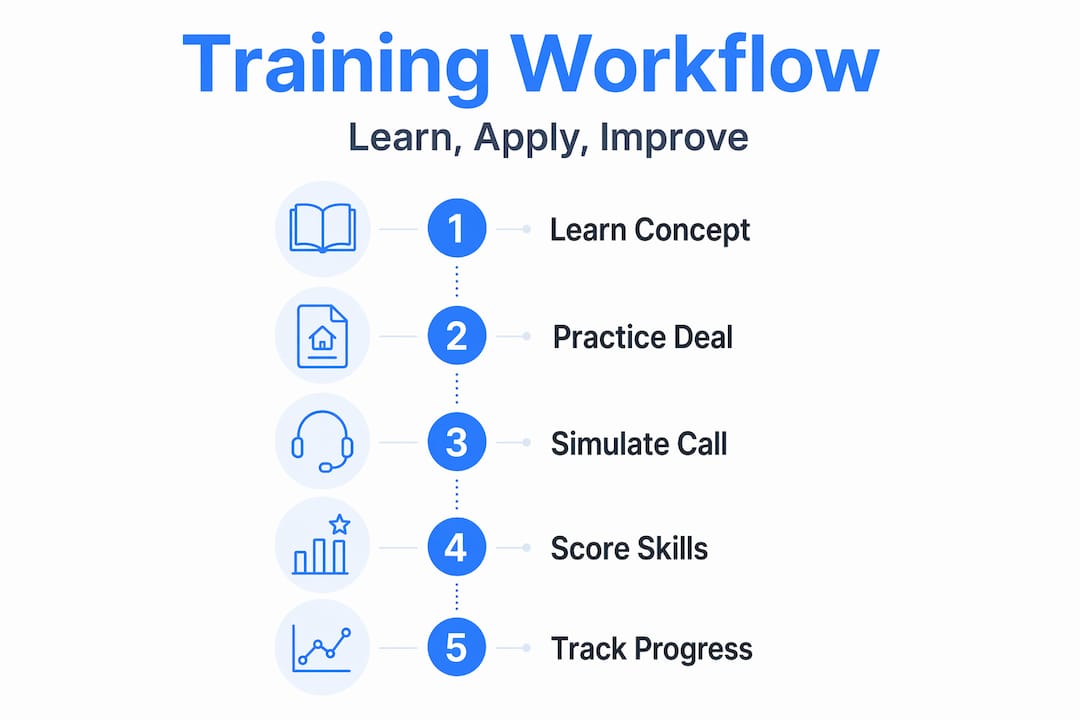
The best real estate investment training platforms combine education with practice. You learn a concept, then you apply it in a simulated environment, then you get scored. That feedback loop is what separates professionals who improve fast from those who plateau after their first few deals.
The technology powering today’s acquisition training tools
The technology gap between what was available five years ago and what you can access today is significant. Modern real estate acquisitions training software is built on AI, and that changes everything about how quickly you can learn and how accurately you can evaluate deals.
Here is what the best platforms are doing under the hood:
- AI document extraction pulls data from offering memorandums, rent rolls, and financial statements and maps it directly into your underwriting model. Tools like Primer offer setup in as little as 48 hours and are preferred by acquisition teams across multiple asset classes.
- Source attribution creates a complete audit trail so every number in your model traces back to its original document. This is critical when you need investment committee trust and rapid memo generation.
- Integration with property management systems lets you validate training data against real portfolio performance, so your learning is grounded in actual market conditions.
- Acquisition intelligence tools track public municipal meetings, zoning changes, and permit activity to surface off-market opportunities before they hit any list. Platforms like Shovels provide categorized real estate decision data that acquisition teams use to get ahead of the market.
“Acquisition intelligence platforms that harmonize local regulatory data and real estate workflows create unique competitive edges inaccessible through traditional lists.” — Shovels ReZone Acquisitions
The practical implication is this: manual data entry consumes 4 to 6 hours per week for the average acquisition analyst. AI extraction tools eliminate most of that. When your team is not buried in spreadsheets, they are evaluating more deals and building sharper instincts faster.
The smartest acquisition teams combine AI extraction with proprietary Excel models. They get the speed of automation without giving up the analytical flexibility they have built over years. That combination is what separates the top performers in competitive markets.

Comparing the leading acquisition software platforms
Choosing the right platform depends on your role, team size, and where you need the most improvement. Here is a practical comparison of the tools acquisition professionals use most in 2026.
| Platform | Core strength | Best for | Approximate cost |
|---|---|---|---|
| Primer | AI document extraction into Excel models | Acquisition analysts at mid-to-large firms | Custom pricing |
| RedIQ | Multifamily financial analysis | Apartment acquisition teams | Custom pricing |
| Argus Enterprise | Complex asset cash flow modeling | Institutional acquisition teams | $300+ per user/month |
| Dealpath | Deal pipeline and workflow coordination | Teams managing high deal volume | Custom pricing |
| Jackie The Happy Investor App | Fast ARV calculation and comp pulling | Novice investors and wholesalers | $19 per month |
| Closersleague | AI cold calling practice and roleplay | Investors and wholesalers building phone skills | Subscription-based |
Each tool has a clear lane. Dealpath excels at workflow coordination but does not perform document extraction or financial modeling. Argus handles complex institutional modeling but has a steep learning curve and a price tag to match. The Jackie The Happy Investor App calculates ARV and pulls comps without MLS access for $19 a month, making it one of the most accessible deal analysis tools for newer investors.
Pro Tip: Do not try to replace your underwriting model with training software. Use training tools to build the skills that make you better at using your underwriting model. They serve different purposes.
Firms that use integrated real estate systems report 50% productivity gains and 65% cost savings by consolidating underwriting and portfolio analytics. That data makes a strong case for choosing platforms that connect with your existing stack rather than operating in isolation.
How training software builds skills and closes more deals
Knowing what software exists is one thing. Understanding how it actually changes your performance is another. The best real estate education software works because it creates deliberate practice, not passive learning.
Here is how structured acquisition training software accelerates skill development:
- Business planning modules set weekly call targets, deal evaluation goals, and revenue milestones. You stop guessing what good looks like and start working toward a defined standard.
- Negotiation scripts and objection handling prepare you for the exact conversations you will have with motivated sellers in foreclosure, probate, or divorce situations. You practice the language until it feels natural.
- AI roleplay and cold calling simulation put you in real scenarios with scored feedback. You learn where you hesitate, where you lose rapport, and where you close well. Structured training with roleplay is how acquisition agents avoid the costly trial-and-error approach that stalls most careers.
- Goal tracking dashboards show your progress over time. You can see whether your call-to-appointment conversion rate is improving and adjust your approach based on actual data.
- Simulated deal analysis exercises walk you through real acquisition scenarios so you build pattern recognition. After enough reps, you start spotting good deals faster and walking away from bad ones sooner.
The confidence factor matters more than most people admit. When you have practiced a conversation 50 times in a simulator, you walk into the real call with a completely different mindset. You are not hoping it goes well. You know what to do when it does not. That shift in confidence directly affects how sellers respond to you, and it shows up in your close rate.
Pro Tip: Treat your training software like a gym membership. Showing up once a week will not move the needle. Daily reps, even short ones, build the muscle memory that makes you a better acquisition professional.
How to choose and implement the right platform
Picking the wrong software wastes time and budget. Before you commit to any platform, work through these questions honestly.
- What is your team size? Solo investors need different tools than a 10-person acquisition team. Platforms priced per seat add up fast, so model the total cost before you sign.
- What asset class do you focus on? Multifamily analysis tools like RedIQ are not built for single-family wholesalers. Match the tool to your market.
- What does your current tech stack look like? If your team runs proprietary Excel models, prioritize platforms with strong AI integration rather than ones that force you into a new system from scratch.
- How much support does the vendor provide? Onboarding matters. A platform with strong training resources and responsive support will get adopted. One that drops you with a PDF manual will not.
- What metrics will you track? Define your ROI benchmarks before you start. Deals evaluated per week, time from first contact to signed contract, and call-to-appointment conversion rate are all measurable signals that your training software is working.
Scalability is worth thinking about early. AI capabilities in acquisition platforms are advancing quickly, and the teams that build AI-fluent workflows now will have a compounding advantage over the next few years. Choose a platform that can grow with you, not one you will outgrow in 12 months.
My take on what most teams get wrong
I have watched a lot of acquisition teams invest in software and see almost no return. The problem is rarely the tool. It is the approach.
Most teams treat training software like a one-time purchase. They buy it, run one onboarding session, and then let it collect digital dust while they go back to doing things the way they always have. That is not a training program. That is a subscription fee.
What I have seen actually work is treating the software as a daily practice environment. The teams that improve fastest are the ones doing short, focused reps every day. They use the roleplay tools before calls, not after. They review their scores, identify one thing to fix, and practice that specific thing until it becomes automatic.
The other mistake I see constantly is buying a deal analysis tool and calling it acquisition training. Knowing how to model a deal is not the same as knowing how to find one, call a motivated seller, handle their objections, and get a contract signed. Those are phone and negotiation skills, and they require a completely different kind of practice. That is exactly why platforms like Closersleague exist. The cold calling and acquisition strategies that actually move the needle get built through repetition, feedback, and realistic simulation. Not through reading another article.
If you are starting your acquisition training journey, pick one skill to focus on first. Get good at that. Then layer in the next tool. Trying to learn everything at once with five different platforms is a fast way to learn nothing well.
— Dave
Level up your acquisition calls with Closersleague
If you have invested in deal analysis tools but your phone skills are still holding you back, that is the gap Closersleague was built to close.
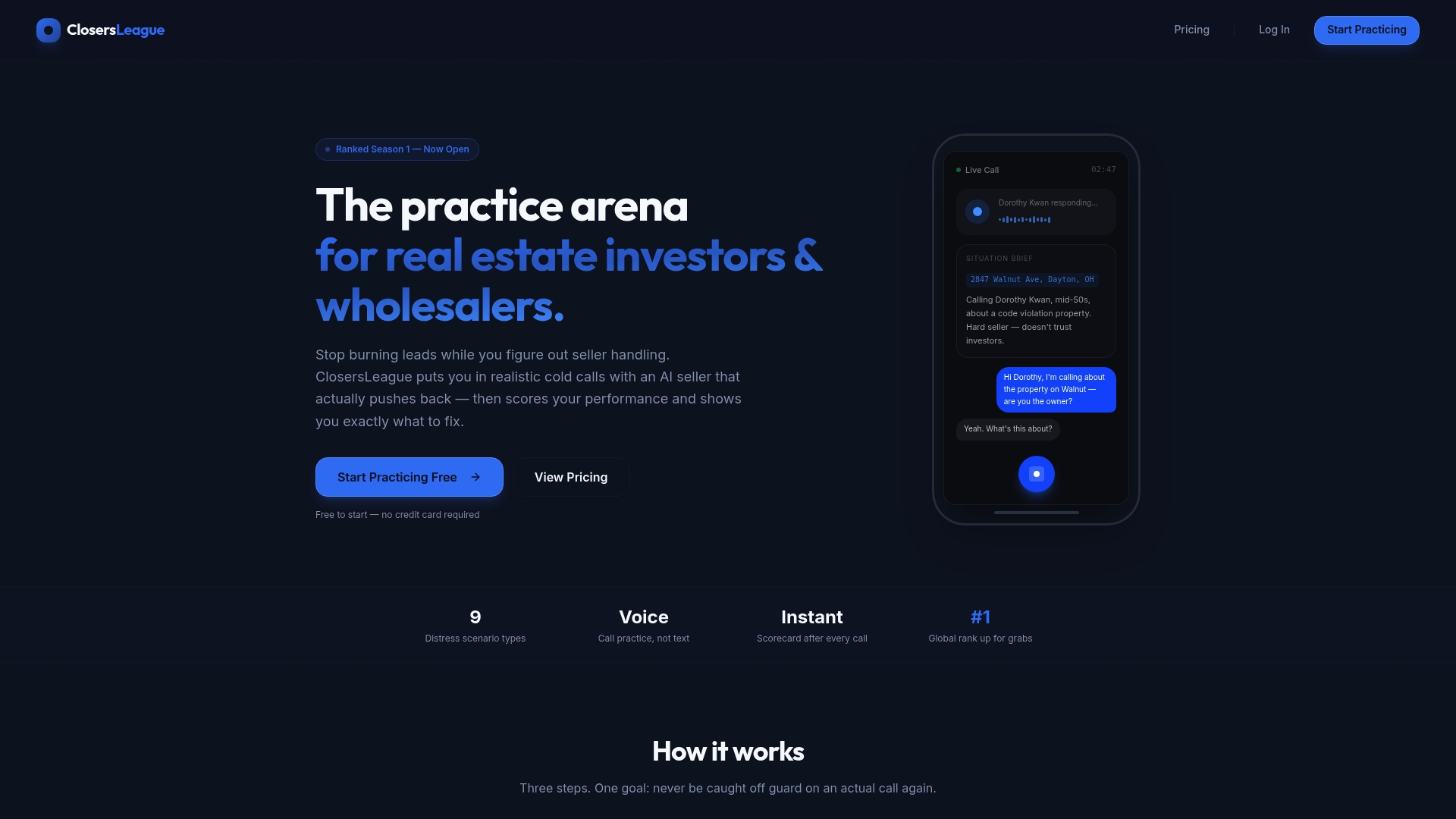
Closersleague is an AI-powered cold calling training platform built specifically for real estate investors and wholesalers. You practice live conversations with AI-simulated sellers in foreclosure, probate, divorce, and tax delinquent situations. Every call gets scored. You see exactly where you lost momentum and what to fix. It is the kind of realistic cold calling practice that turns nervous first calls into confident, consistent conversations. Whether you are brand new to acquisitions or looking to sharpen a skill set that has plateaued, Closersleague gives you the reps that build real results. Stop winging it. Start drilling.
FAQ
What is real estate acquisitions training software?
Real estate acquisitions training software is a category of tools designed to help investors and acquisition agents practice deal analysis, negotiation, and seller communication skills through structured programs, simulations, and AI-powered feedback.
How is acquisition training software different from deal analysis tools?
Deal analysis tools like Argus or Dealpath help you model and manage deals. Training software builds the skills you need to find, negotiate, and close those deals, including cold calling practice, scripting, and goal tracking.
Can AI really improve acquisition skills?
Yes. AI-powered platforms let teams evaluate 3x more opportunities and provide realistic roleplay scenarios that build negotiation confidence through scored repetition. New agents who use structured training tools with roleplay improve deal closure rates significantly compared to those who rely on trial and error.
What should I look for in the best software for real estate training?
Look for platforms that offer realistic simulations, scored feedback, integration with your existing workflow, and scalability for your team size. AI capabilities and vendor support quality are also strong indicators of long-term value.
How do I measure ROI from real estate training tools?
Track concrete metrics before and after adoption: deals evaluated per week, call-to-appointment conversion rate, and average time from first contact to signed contract. Consistent improvement in those numbers confirms your training investment is working.
Recommended
- Real estate acquisitions: Strategies & cold calling success – ClosersLeague Blog
- Real Estate Follow Up: Close More Deals in 2026 – ClosersLeague Blog
- Real estate CRM: Benefits, features, and best practices – ClosersLeague Blog
- Why automation is essential for real estate investors – ClosersLeague Blog