
Wholesaling real estate looks simple from the outside. Find a distressed property, lock it under contract, assign it to a buyer, collect your fee. But once you’re in the middle of a deal, the moving parts multiply fast. Miss one step and you lose the contract, the buyer, or both. That’s why the most productive wholesalers don’t rely on memory or gut instinct. They follow a proven checklist that covers market research, seller outreach, deal analysis, negotiation, and buyer network building. This guide gives you exactly that, structured so you can move with confidence on every deal.
Table of Contents
- Research your market and build your foundation
- Source motivated sellers through smart outreach
- Analyze deals with the proven MAO formula
- Negotiate, contract, and ensure your assignment closes
- Build your buyer network for fast assignments
- What most real estate wholesaler checklists miss
- Advance your wholesaling with roleplay and practice
- Frequently asked questions
Key Takeaways
| Point | Details |
|---|---|
| Know your market | Success starts with understanding local property values, repairs, and buyer demand. |
| Prioritize motivated sellers | Effective cold calling and targeted outreach help you source the best deals. |
| Analyze using MAO | The Maximum Allowable Offer formula ensures you negotiate profitable, low-risk deals. |
| Lock in contracts and buyers | Negotiating clear assignment contracts and building a buyer network are keys to closing fast. |
Research your market and build your foundation
Every profitable wholesale deal starts long before you pick up the phone. You need to understand your local market so well that you can spot a good deal within minutes of seeing an address. That means studying pricing trends, recent comparable sales (comps), typical repair costs, and what buyers in your area actually want to purchase.
The wholesaling process starts with learning your market, including comps, repairs, and buyers. Without this foundation, your offer numbers will be off, and you’ll either overpay or lose deals to competitors who know the numbers cold.
Here’s where to gather the information you need:
- MLS data and Zillow: Pull recent sales within the last 90 days in your target zip codes. Look at price per square foot, days on market, and sale-to-list ratios.
- Public records: County assessor and recorder websites show ownership history, tax status, and recorded liens. This data is free and incredibly useful.
- Local real estate agents: A good agent who works with investors will share comps and give you a realistic read on what buyers are paying right now.
- Contractor walk-throughs: Even a quick conversation with a local contractor helps you build a repair cost reference sheet for common issues like roofing, HVAC, and foundation work.
You also want to identify which neighborhoods have the most investor activity. These are areas where buyers close quickly and comps are easy to find. Check out our wholesaling insights for neighborhood-level research strategies that save you hours.
Pro Tip: Focus your first 90 days on just two or three zip codes. Deep knowledge of a small area beats shallow knowledge of an entire city every time. Pair that local expertise with AI cold calling tools to reach more owners faster without sacrificing call quality.
Source motivated sellers through smart outreach
Once you know your market, it’s time to proactively reach out and connect with motivated property owners. Motivated sellers are people facing real pressure: foreclosure, probate, divorce, code violations, or tax delinquency. They need a solution, and you can be it.
Top outreach channels include cold calling, driving for dollars, and direct mail to pre-foreclosure, probate, and code violation properties. Here’s a numbered checklist of sourcing methods ranked by speed and cost-effectiveness:
- Cold calling distressed owner lists: Pre-foreclosure, probate, and tax delinquent lists give you direct access to owners who have real urgency. This is the fastest way to get a conversation started.
- Driving for dollars: Physically drive neighborhoods looking for signs of neglect. Overgrown yards, boarded windows, and peeling paint signal potential motivated sellers.
- Direct mail campaigns: Postcards and letters sent to targeted lists work well over time. Expect a 1 to 3 percent response rate and plan your follow-up accordingly.
- Code violation lists: Many counties publish these publicly. Owners facing fines often want out fast.
- Probate court records: Heirs managing inherited properties frequently prefer a quick cash sale over the hassle of repairs and listings.
When you’re on a first call, here’s what to listen for:
- Mentions of financial stress, job loss, or health issues
- Frustration with the property or tenants
- Statements like “I just want it gone” or “I don’t want to deal with repairs”
- Urgency around a specific date or deadline
Practice your cold calling practice for wholesalers regularly so you can ask the right questions without sounding scripted. Use effective opening lines that get sellers talking within the first 30 seconds.
Pro Tip: Your first goal on any call is not to make an offer. It’s to understand the seller’s situation. Ask open-ended questions and let them talk. The more they share, the better your offer will fit their actual needs.
Analyze deals with the proven MAO formula
Equipped with seller leads, next you need a reliable formula to evaluate each potential deal’s numbers. The Maximum Allowable Offer (MAO) formula is the standard tool wholesalers use to make sure every deal leaves room for profit.
The MAO formula is: (After Repair Value x 70%) minus Repairs minus Your Fee = MAO. After Repair Value (ARV) is what the property will sell for after it’s fully renovated. The 70 percent rule leaves room for the end buyer’s profit, holding costs, and closing costs.

Here’s a sample calculation:
| Input | Amount |
|---|---|
| After Repair Value (ARV) | $200,000 |
| 70% of ARV | $140,000 |
| Estimated repairs | $30,000 |
| Wholesaler fee | $10,000 |
| Maximum Allowable Offer | $100,000 |
Before you submit any offer, run through this checklist:
- Confirm your ARV using at least three recent comps within one mile
- Get a repair estimate from a contractor or use a per-square-foot benchmark
- Set your fee before you negotiate, not after
- Verify your end buyer’s purchase criteria match the deal
Wholesaler fees typically range from $5,000 to $10,000 for newer investors and $10,000 to $30,000 for experienced ones working larger deals. Visit our deal analysis tips and wholesaler best practices pages for deeper guidance on building your offer confidence.
Negotiate, contract, and ensure your assignment closes
With a verified deal, your focus shifts to negotiation and paperwork to ensure you get paid at closing. This stage is where many new wholesalers freeze up. Don’t. You have the numbers. Trust them.
Here’s the step-by-step process:
- Present your offer with confidence: Share your MAO and briefly explain how you arrived at it. Sellers respect transparency.
- Negotiate with data, not emotion: If the seller pushes back, revisit your repair estimates or ARV together. Don’t just raise your offer without a reason.
- Secure the contract: Use a purchase and sale agreement with a clear assignment clause. This clause allows you to transfer your rights to an end buyer.
- Submit your earnest money deposit (EMD): Contracts need an assignment clause and an EMD of $500 to $2,000 for best results. This shows the seller you’re serious.
- Assign the contract to your buyer: Once you have a buyer, execute the assignment agreement and collect your assignment fee at closing.
Here’s a quick comparison of the two key documents:
| Feature | Purchase contract | Assignment contract |
|---|---|---|
| Parties involved | Buyer and seller | Wholesaler and end buyer |
| Purpose | Locks in purchase terms | Transfers wholesaler’s rights |
| Assignment clause | Must be included | Core document purpose |
| Typical fee collected | N/A | $5,000 to $30,000 |
“A deal without a clear assignment clause is a deal waiting to fall apart. Always review this language with a real estate attorney before you sign.”
Practice your negotiation approach with vacant property cold calling and probate cold calling scenarios to build real confidence before live calls.
Build your buyer network for fast assignments
No assignment closes smoothly without eager buyers lined up. Here’s how to build your list before you need it.
Investors build a buyers list via REIA meetings, Facebook groups, and county records. Start there and expand consistently. Here are your best sources:
- REIA meetings (Real Estate Investor Association): These local groups are full of active buyers who close fast. Attend monthly and introduce yourself.
- Facebook groups: Search for real estate investor groups in your city. Post your deals and engage with other members regularly.
- County deed records: Look for investors who have purchased multiple properties in the last 12 months. These are your most likely buyers.
- Bandit signs and Craigslist: Simple “We Buy Houses” ads attract buyers as well as sellers.
- LinkedIn and BiggerPockets: Professional networks where serious investors connect and share deal flow.
When you find a potential buyer, qualify them before adding them to your list. Ask about their target neighborhoods, price range, and how quickly they can close. A buyer who needs 60 days of financing is not the same as a cash buyer who closes in 10.
Pro Tip: Call your top buyers before you have a deal locked up. Give them a heads-up about what’s coming. This pre-calling habit shortens your assignment time dramatically and builds loyalty with your best buyers. Use pre-foreclosure outreach strategies and foreclosure buyer list tips to sharpen your buyer communication skills.
What most real estate wholesaler checklists miss
Most checklists focus entirely on tasks. Find the deal, run the numbers, close the contract. That’s necessary, but it’s not the whole picture. What they rarely address is the mental and operational discipline required to survive the inevitable setbacks.
Sellers go cold after three great conversations. Buyers back out 48 hours before closing. Title issues surface at the worst time. These aren’t edge cases. They happen regularly. The wholesalers who build sustainable businesses are the ones who have follow-up systems, not just follow-up intentions.
We’ve seen investors with perfect checklists quit after their third failed deal because they had no mentor and no framework for handling rejection. Check out real-world wholesaling stories from investors who pushed through exactly these moments.
The real lesson: build your process to expect delays. Set follow-up reminders at 3, 7, and 14 days for every lead. Partner with someone who has closed more deals than you. Mindset and systems are what separate the investors who do one deal from the ones who do 30 a year.
Advance your wholesaling with roleplay and practice
Ready to put this checklist to use? The fastest way to improve is to practice your calls before they count.
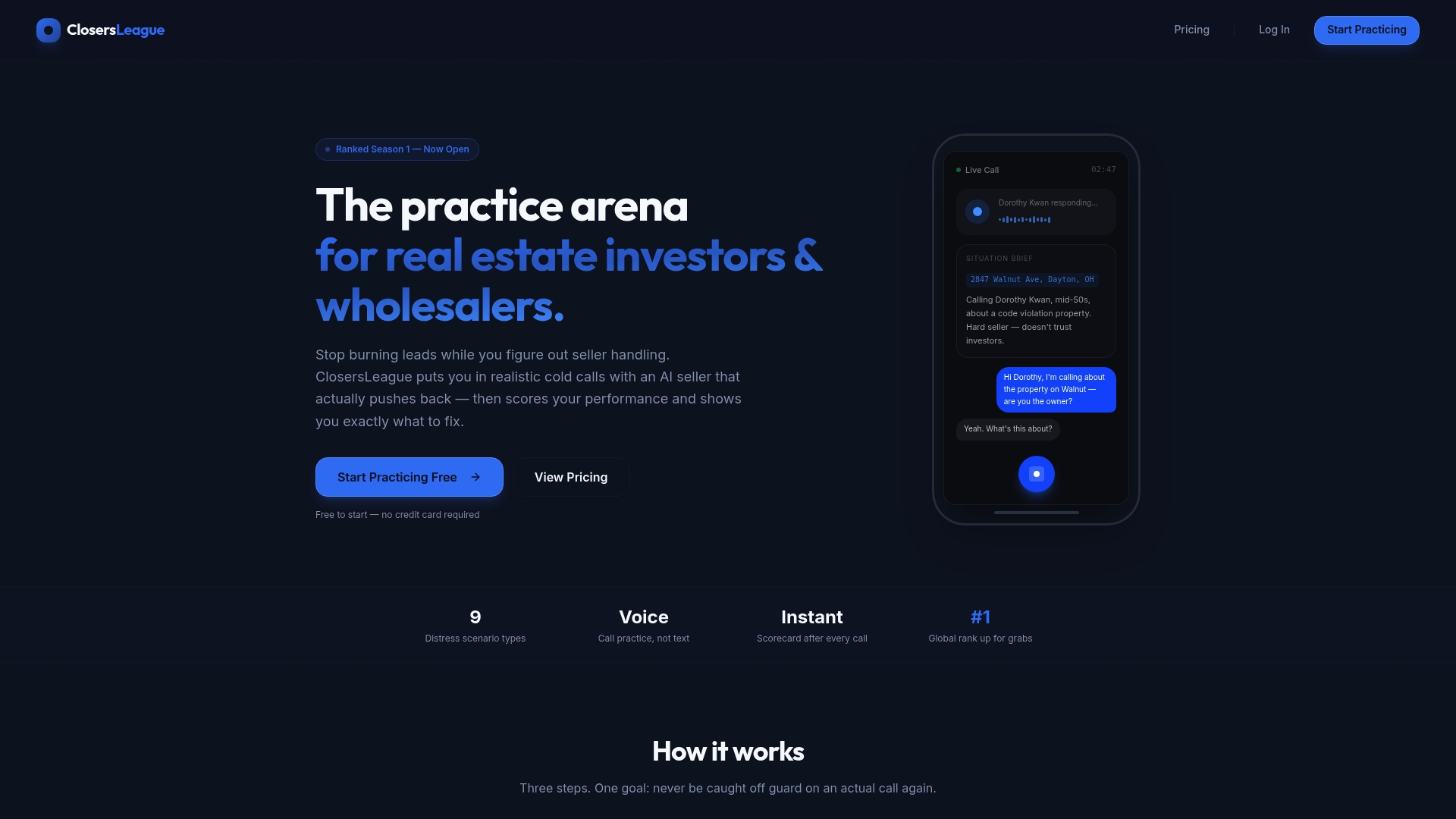
ClosersLeague is an AI-powered cold calling training platform built specifically for real estate investors and wholesalers. You can practice live roleplay scenarios with AI sellers who respond like real distressed homeowners. Whether you’re working pre-foreclosure leads, probate situations, or code violation properties, you’ll build the muscle memory to handle any conversation. Start with real estate cold calling practice to sharpen your opener and objection handling. Then try a code violation lead roleplay to practice one of the most common and high-value seller scenarios. Stop winging it. Start drilling.
Frequently asked questions
What should a real estate wholesaler checklist always include?
Every checklist should cover market research, sourcing motivated sellers, deal analysis, negotiation, contract assignment, and building a buyer list. Skipping any one of these steps creates gaps that cost you deals.
How can cold calling improve wholesaling results?
Cold calling and targeted outreach help wholesalers connect directly with motivated sellers and find distressed properties before competitors ever see them listed.
What is the MAO formula and why is it important?
MAO stands for Maximum Allowable Offer. The MAO formula: ARV x 70% minus repairs minus your fee ensures every deal you pursue has enough margin for you and your end buyer to profit.
How much earnest money should wholesalers put down?
Most assignments use a $500 to $2,000 earnest money deposit to secure the purchase contract and signal to the seller that you’re a serious buyer.
Where can I build a buyers list quickly?
REIA meetings, Facebook groups, and public county deed records are three of the fastest ways to identify and connect with active cash buyers in your market.
Recommended
- Real Estate Cold Calling Practice — AI Roleplay for Every Seller Type | ClosersLeague
- AI Cold Calling Practice for Real Estate Investors & Wholesalers | ClosersLeague
- Cold Calling Tips & Real Estate Wholesaling Blog — ClosersLeague
- The Exact Opening Line to Keep Motivated Sellers Talking — ClosersLeague