
Knowing what to say to a foreclosure seller can make or break a deal before it ever starts. These homeowners are not just facing financial pressure. They are often embarrassed, confused about their options, and deeply distrustful of anyone who reaches out. If your opening words sound scripted, pushy, or vague, the conversation ends fast. But when you approach with genuine empathy, clear information, and the right questions, you position yourself as someone worth talking to. This guide gives you the exact frameworks, phrases, and strategies to do that well.
Table of Contents
- Key Takeaways
- What to say to a foreclosure seller: preparation first
- Opening the conversation with the right phrases
- Negotiating a sale: what to communicate clearly
- Common mistakes when talking to foreclosure sellers
- Effective follow-up strategies for foreclosure conversations
- My honest take on talking to foreclosure sellers
- Practice these skills before your next call
- FAQ
Key Takeaways
| Point | Details |
|---|---|
| Stage-aware communication | Adapt your message based on where the seller is in the foreclosure timeline to stay relevant and helpful. |
| Open with questions, not pitches | Use diagnostic questions early to understand seller urgency before recommending any strategy. |
| Always encourage lender contact | Remind sellers to stay in communication with their servicer, as early contact preserves more options. |
| Written contracts protect everyone | Verbal agreements are not enough. Formal written contracts clarify price, contingencies, and deadlines. |
| Stay in your lane ethically | Never imply you can handle legal outcomes. Refer sellers to independent counselors and attorneys. |
What to say to a foreclosure seller: preparation first
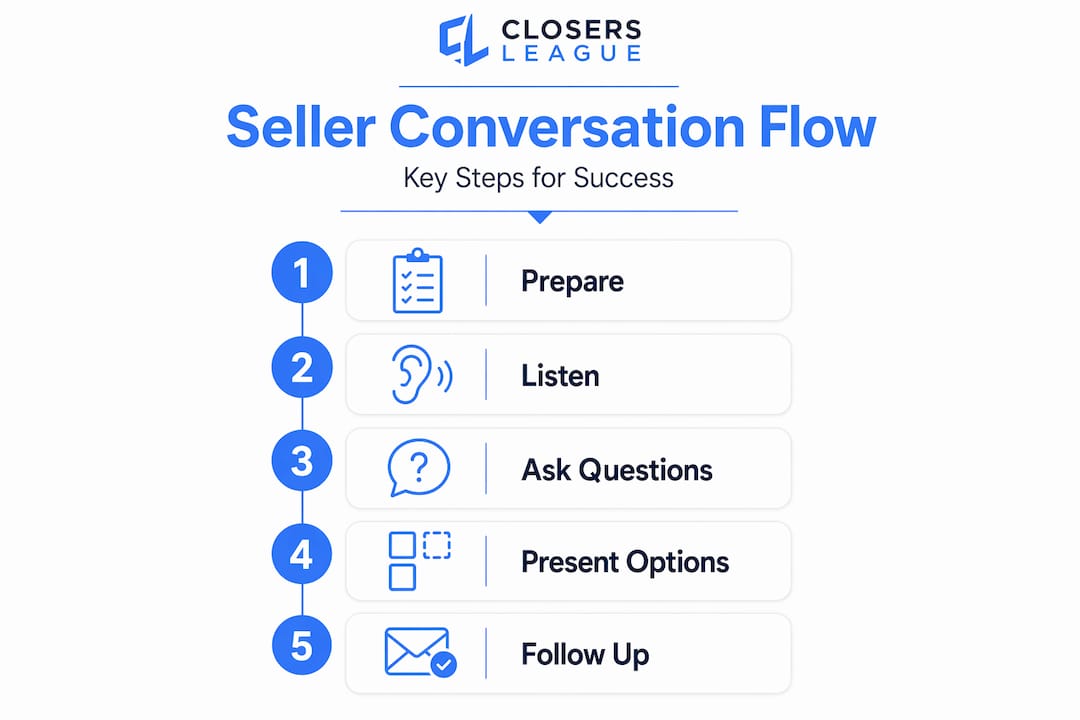
Before you pick up the phone, you need to understand the stage of foreclosure the seller is in. Your options as an agent or investor, and the seller’s available solutions, narrow significantly as the timeline advances. Earlier outreach often leads to more solutions including market exposure, direct sales, and loan modifications. A seller who received a notice of default last week has very different choices than one scheduled for auction in 30 days.
Here is what you need to understand before making contact:
- Pre-foreclosure stage: The seller still has the most flexibility. Options include a traditional market sale, short sale, loan modification, or deed in lieu. Your job is to help them understand these exist.
- Pending auction: Time is compressed. A short sale or quick direct purchase may be the only viable paths. Coordination with the lender becomes urgent.
- Post-auction: The seller typically has no equity options left. Buyer focus shifts entirely to redemption periods and vacating timelines.
Sellers also need to understand the value of staying in touch with their lender. Contact your lender immediately to give them time to work with you and create a financial plan. As the agent or investor, you can reinforce this without giving legal advice.
Pro Tip: Never position yourself as someone who can “stop foreclosure.” Refer sellers to HUD-approved housing counselors, who are independent experts that guide sellers on unbiased options, often for free or low cost.
Know your role before you dial. You are a facilitator of solutions, not a legal advisor or a miracle worker.
Opening the conversation with the right phrases
The first 30 seconds of a foreclosure call are the hardest. The seller may be suspicious, emotional, or already on guard after receiving letters and calls from others who did not have their interests in mind. The goal at this stage is simple: lower the temperature and open a dialogue.
Avoid saying “I know you’re in foreclosure.” Even if it’s true, stating it bluntly triggers shame and defensiveness. Instead, use indirect but caring language that acknowledges difficulty without labeling it.
Strong opening phrases to try:
- “Hi, I’m reaching out because I help homeowners in [area] who may be dealing with challenges around their property. I wanted to see if you had a few minutes to chat.”
- “I work with families who are exploring options around their home, and I just wanted to introduce myself and learn a little about your situation.”
- “I’m not here to pressure you into anything. I just want to understand what you’re dealing with and share what options might be available to you.”
Once the door is open, shift into diagnostic questions. Early calls should be diagnostic to map seller timeline and needs before recommending any sales strategy. This is one of the best tips for communicating with sellers in distress: ask before you tell.
Questions that build trust and gather information:
- “What’s your ideal outcome for the property, if everything went smoothly?”
- “Have you been in touch with your lender recently about your options?”
- “Are you working with anyone else right now, like an attorney or counselor?”
- “Is there a specific timeline you’re working within, or is that still uncertain?”
These questions serve two purposes. They give you the data you need to tailor your approach, and they signal to the seller that you are actually listening.
Pro Tip: When practicing these opening lines, use foreclosure cold call roleplay scenarios to build comfort with silence, objections, and emotional responses before you face them live.
The best conversations feel like a consultation, not a sales call. Your tone matters as much as your words.

Negotiating a sale: what to communicate clearly
Once a seller expresses willingness to explore a sale, the conversation shifts. Now your job is to be transparent, specific, and realistic. This is where many agents and investors lose deals by moving too fast or making promises they cannot keep.
Here is a comparison of the most common sale options and how to frame them in conversation:
| Sale option | What to communicate to the seller | Key caveat to mention |
|---|---|---|
| Traditional market sale | “We list the home, attract buyers, and you keep any equity above what you owe.” | Only works if there is enough time before auction and sufficient equity. |
| Short sale | “The lender agrees to accept less than the full payoff. It takes lender approval and time.” | Lender approval is not guaranteed and timelines vary. |
| Direct sale to investor | “A fast cash purchase that can close quickly and may allow you to avoid foreclosure.” | Price is typically below market value. Seller should get independent advice. |
| Deed in lieu | “You hand the property back to the lender voluntarily, which can be cleaner than foreclosure.” | Lender must agree. Not all situations qualify. |
Before you make any offer, verify debt and title details through official payoff statements and written contracts. Guessing at what the seller owes is one of the fastest ways to blow up a deal at the last minute.
When discussing price, handle unrealistic expectations with data and empathy together. Say something like: “I completely understand that this home means a lot to you. Based on the payoff amount and current market values, here is what the numbers look like. I want to make sure you walk away with the most realistic picture so you can make the best decision.”
Also communicate clearly that a sale with a pending contract might postpone foreclosure proceedings. Coordinating with the lender on timing is a legitimate tool, and sellers need to know this is possible when things move quickly.
Written contracts are the primary communication tool in foreclosure deals. They protect all parties and clarify price, contingencies, and critical dates under pressure. Never let a verbal agreement stand.
Pro Tip: For negotiation tactics that hold up in distressed situations, prepare a written summary of the proposed terms you can send immediately after the call. It reinforces clarity and professionalism.
Common mistakes when talking to foreclosure sellers
Even experienced investors make communication errors that kill deals or damage their reputation. Here are the most common pitfalls and how to avoid them:
- Implying you can “solve” foreclosure legally. You cannot practice law. Telling a seller “I can stop this foreclosure” exposes you to legal liability and sets false expectations. Always recommend independent counseling and legal advice, as direct buyers are not counselors or attorneys.
- Accepting verbal agreements. A handshake deal in a pre-foreclosure situation is not a deal at all. Deadlines are real. Written contracts with contingencies are the only protection for both parties.
- Ignoring lender communication deadlines. Sellers who miss servicer deadlines lose options fast. Keep communicating and meet deadlines to retain more options and potentially postpone foreclosure. Remind sellers of this consistently.
- Moving too fast on an unclear timeline. If you do not know the auction date, you are operating blind. Always clarify the exact timeline early in the conversation.
- Charging upfront fees. This is a major red flag and often illegal. Beware of foreclosure scams requesting upfront fees, as the FTC identifies these as fraudulent. Operate with complete transparency about how you get paid and when.
- Skipping a pre-listing appraisal. Understanding actual property value protects both you and the seller. A pre-foreclosure appraisal can surface lien details and value benchmarks critical to structuring a realistic offer.
Sellers in distress often unknowingly delay exploring options due to stress and confusion. Your job is to cut through that fog with clarity, not add to it with pressure or complexity.
Effective follow-up strategies for foreclosure conversations
One conversation rarely closes a foreclosure deal. Sellers need time to process information, talk to family, and sometimes hit a few more walls before they are ready to move. Your follow-up strategy needs to be persistent without being predatory.
Schedule your next contact before you end the first call. Say something direct: “I want to give you a few days to think this over. Would it be okay if I checked back in on Thursday?” This sets a clear expectation and gives the seller a sense of control over the conversation.
Document everything after every call. Note the date, what was discussed, what questions the seller had, and what their timeline looks like. This protects you legally and helps you personalize each subsequent conversation.
Pro Tip: Strong follow-up is a skill you can practice before you ever pick up a live call. Use follow-up strategies specifically built for investor lead nurturing to sharpen your timing and tone.
In follow-up calls, revisit the seller’s stated goals from the first conversation. Reference something specific they told you. “Last time we spoke, you mentioned you were hoping to avoid moving before the school year ends. Have you had a chance to look into any of the options we discussed?” This shows you were listening and that you see them as a person, not a transaction.
As deals progress, offer to help coordinate timing with the lender or assist with documentation logistics. You are not a legal advisor, but you can be a resource for clarity and process support. That kind of ongoing helpfulness builds the trust that turns a hesitant seller into a willing one.
My honest take on talking to foreclosure sellers
I’ve worked with and coached enough investors to say this plainly: the biggest mistake people make in these conversations is treating the seller as someone to be managed rather than respected.
Foreclosure sellers are not desperate by choice. They are people in a genuinely hard situation, often carrying more stress than they show on a call. When you approach them as active partners who get to make informed decisions, rather than as motivated sellers you need to close, the entire dynamic shifts. Deals move faster. Trust forms quicker. Referrals come naturally.
What I’ve learned about timing is this: the stage awareness piece is not optional. Talking to someone in pre-foreclosure like they’re days from auction will panic them unnecessarily. Talking to someone two weeks from auction like they have all the time in the world is negligent. You have to meet sellers exactly where they are.
The uncomfortable reality of foreclosure negotiations is that transparency is not always comfortable in the short term. Telling a seller their home will not net what they hoped, or that a short sale may take longer than they have, is hard. But withholding that truth to keep them engaged is worse. It damages your reputation and rarely leads anywhere good.
Prioritize their access to independent advice. Send them to a HUD counselor. Encourage them to talk to an attorney. When sellers feel like you want them to be informed rather than dependent on you, they trust you more, not less. That is how you build a reputation in this business.
— Dave
Practice these skills before your next call
Real communication skill in foreclosure conversations is not built in theory. It is built through repetition, feedback, and honest scoring on what you’re actually saying in the moment.

Closersleague is built for exactly this. The platform offers AI-powered cold calling practice specifically designed for real estate investors and wholesalers working with distressed sellers, including foreclosure and pre-foreclosure scenarios. You get real-time feedback, objection handling drills, and scenario-based roleplay that mirrors the emotional complexity of these conversations. The result is more confidence, fewer fumbled calls, and better outcomes on live deals. Stop winging it. Start drilling.
FAQ
What should I say first when calling a foreclosure seller?
Start with a warm, non-judgmental introduction that does not reference foreclosure directly. Ask open-ended questions about their situation and goals before mentioning any solutions.
How do I avoid sounding pushy when talking to foreclosure sellers?
Focus on questions instead of pitches during early calls. Give sellers a clear timeline for follow-up and let them set the pace of the conversation.
What questions should I ask a foreclosure seller?
Ask about their ideal outcome, their current lender communication status, their timeline, and whether they are working with any other advisors. These diagnostic questions map seller needs before you recommend anything.
Can I promise a foreclosure seller I’ll stop the foreclosure?
No. That claim creates legal liability and sets false expectations. Always recommend independent counseling and legal advice for sellers who need guidance on their legal rights.
What are the best phrases for foreclosure negotiations?
Lead with data and empathy. Phrases like “based on the current numbers, here is what this looks like for you” and “I want you to have the full picture before making any decision” build trust while managing expectations honestly.