The fastest way to lose a code-violation seller is to argue with their first “no.” Validate the concern in one sentence, ask a single diagnostic question, then redirect toward a two-minute callback or a walkthrough of options. That sequence, backed by a repeatable workflow and verbatim scripts, keeps the call open long enough to find out whether this is a deal. Practicing it out loud before your next dial is what actually changes your close-rate.
TL;DR:
- Most code-violation sellers respond with stress or distrust, making it crucial to validate their concerns and ask targeted questions before redirecting.
- Using a consistent five-step call flow—verify, empathize, diagnose, offer, and confirm—improves the chances of securing a meaningful next step or callback.
- Slow, tone-sensitive practice is more effective than scripted rebuttals, with metrics like micro-commitment and objection recovery rates guiding improvement.
- Addressing vulnerable sellers requires permission-based language and referral to local aid, especially when they mention crisis or feelings of shame.
- Practice with AI-driven roleplay helps build tone, pacing, and redirect skills needed to handle real code-violation seller objections confidently.
Table of Contents
- Top Code-Violation Seller Objections and One-Line Rebuttals
- Micro-Scripts: Openers, Legitimacy Lines, and Short Templates
- The 5-Step Call Flow for Code-Violation Sellers
- Handling Vulnerable Sellers Without Adding Pressure
- What Actually Moves the Needle in Practice
- Practice These Scripts Before Your Next Call
- Sources
- FAQ
Top Code-Violation Seller Objections and One-Line Rebuttals
Every code-violation call runs into a short list of predictable objections. The seller isn’t rejecting you personally. They’re reacting to stress, a citation letter, or a neighbor who already tried to lowball them. Handle each one with Validate → Question → Redirect, a structure widely used in investor cold-calling training, and you keep the door open instead of slamming it shut.
- “I’m not interested.” Validate: “Totally fair, most people hang up here.” Question: “Can I ask, is it the violation itself or the cost of fixing it that’s the bigger headache?” Redirect: “Either way, I can walk you through options in under two minutes.”
- “No one warned me about this.” Validate: “That’s frustrating, a lot of owners find out from a letter with no explanation.” Question: “Did the notice give you a repair deadline?” Redirect: “I can tell you what other owners in that spot usually do next.”
- “I can’t afford repairs.” Validate: “That’s exactly why a lot of sellers call us instead of contractors.” Question: “Would you rather sell as-is than sink money into it?” Redirect: “Let me show you what an as-is offer looks like.”
- “Code enforcement told me to comply.” Validate: “They’re doing their job, but compliance isn’t your only option.” Question: “Do you know the fine or deadline if repairs don’t happen in time?” Redirect: “Selling before that deadline is one way to avoid it entirely.”
- “I already have an agent.” Validate: “Good, it’s smart to have options.” Question: “Has your agent listed it with the violation disclosed, or is it still sitting?” Redirect: “I buy houses with open violations directly, no listing needed.”
- “I need to talk to family.” Validate: “Makes sense, this shouldn’t be a solo decision.” Question: “Who else is involved, and when could we all talk?” Redirect: “I’ll call back at a time that works for everyone.”
- “This is a scam.” Validate: “I get that reaction a lot, especially after a violation notice.” Question: “Would it help if I told you exactly how I got your information?” Redirect: “Here’s my honest answer, then you can decide.”
- “Leave me alone, stop calling.” This is a red line. Do not push a rebuttal. Acknowledge the request, confirm you’ll remove them from your list, and end the call. Repeated contact after this point crosses from persistence into harassment.
Rushing it signals you’re reading a script instead of listening, and code-violation sellers are already primed to distrust anyone who sounds rehearsed.*
Micro-Scripts: Openers, Legitimacy Lines, and Short Templates
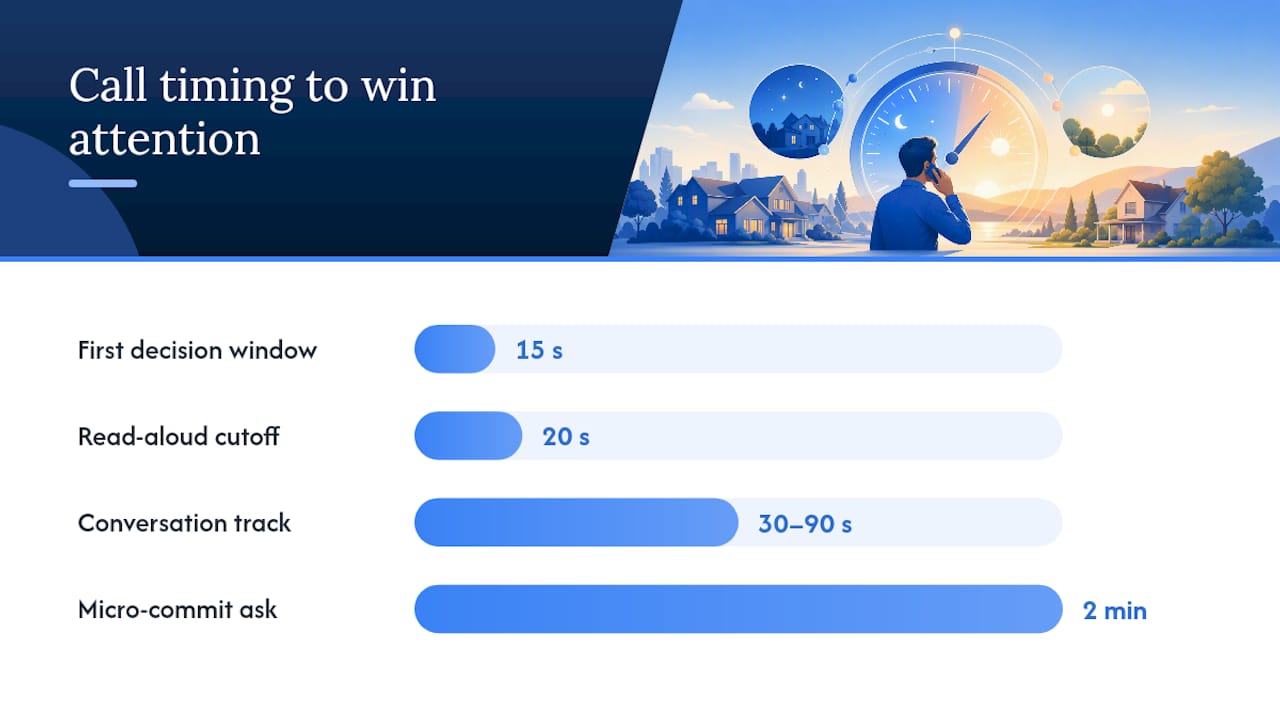
Your first fifteen seconds decide whether the seller stays on the line. These templates are built to sound human, not corporate, and each one flows into a 30 to 90 second track that ends with a small yes.
- Cold intro opener: “Hi, is this [name]? I’m calling because I saw your property on [street] came up with an open code violation, and I buy houses in that situation directly. Is now a bad time, or do you have two minutes?”
- Mail follow-up opener: “Hi [name], this is [caller] following up on a letter I sent about your property on [street]. I wanted to see if the violation issue got resolved or if it’s still hanging over you.”
- Inbound caller opener: “Thanks for calling back. Before anything else, tell me what’s going on with the property so I understand what you’re dealing with.”
- Legitimacy line: “Good question. Your address showed up on a public code enforcement filing, that’s how a lot of investors like me find these. I’m not with the city, I’m a local buyer.”
- Transition to a micro-commitment: “I don’t need an answer today. Can I grab two minutes to ask a few questions, then call you back tomorrow with real numbers?”
- Second transition (skeptical tone): “Fair enough if you’re not sure yet. What if I text you my name and number so you can look me up, then we talk later this week?”
Match the template to tone, not just the objection. A clipped, defensive voice usually needs the legitimacy line first, before any offer talk. A tired or overwhelmed voice responds better to the mail follow-up phrasing, because it signals you already know their situation instead of making them repeat it.
Pro Tip: Read every opener out loud, timed, before your first live call of the day. If it runs past 20 seconds, cut a clause. Sellers decide whether to keep listening in the first two sentences.
The 5-Step Call Flow for Code-Violation Sellers
A structured objection-handling workflow keeps you from freezing when a seller pushes back mid-call. Run it in this order every time:
- Verify. Confirm the address and that you’re speaking with the owner, not a tenant or family member handling the property temporarily.
- Empathize and normalize. One sentence acknowledging that code violations are stressful and common, not shameful.
- Diagnose with three questions. Ask about the repair deadline, whether they’ve gotten a repair estimate, and who else is involved in deciding what happens next.
- Offer one low-friction option. Present a single next step, like an as-is cash offer or a walkthrough, rather than listing every possible path.
- Confirm a micro-commitment. Lock in a specific callback time or a two-minute follow-up, not a vague “I’ll think about it.”
If the seller sounds distressed, angry, or mentions a family emergency tied to the property, pause the pitch and schedule a callback with no pressure attached. Pushing forward in that moment costs you the relationship. Rehearsing this exact sequence inside scenario-based code violation practice builds the muscle memory so it holds up under a live, unpredictable seller.
Handling Vulnerable Sellers Without Adding Pressure
Code enforcement notices don’t just threaten a fine, they threaten a person’s sense of control over their own home. Research on housing instability shows that owners often conceal mortgage and repair problems out of shame, which pushes them toward isolation and makes them more vulnerable to pressure tactics from outside actors. Housing disrepair itself correlates with measurable psychological distress, and the perceived severity of a problem often matters more than its objective size, according to research on housing quality and mental health.
Code enforcement can feel less like a government process and more like a personal attack, especially for owners already stretched thin financially. Reporting from Atlanta found that low-income homeowners frequently describe code citations as something that pushes them toward losing their homes rather than helping them keep them, a dynamic documented in coverage of code enforcement’s social impact.
Sellers who feel stigmatized react badly to urgency. Avoid phrases like “you need to act fast” or “this won’t last.” Use permission-based language instead: “Would it help if I explained your options?” or “No pressure, take whatever time you need.” If a seller mentions eviction, a mental health crisis, or safety concerns, stop the sales conversation and point them toward local housing or legal aid resources instead of pushing for a commitment.
What Actually Moves the Needle in Practice
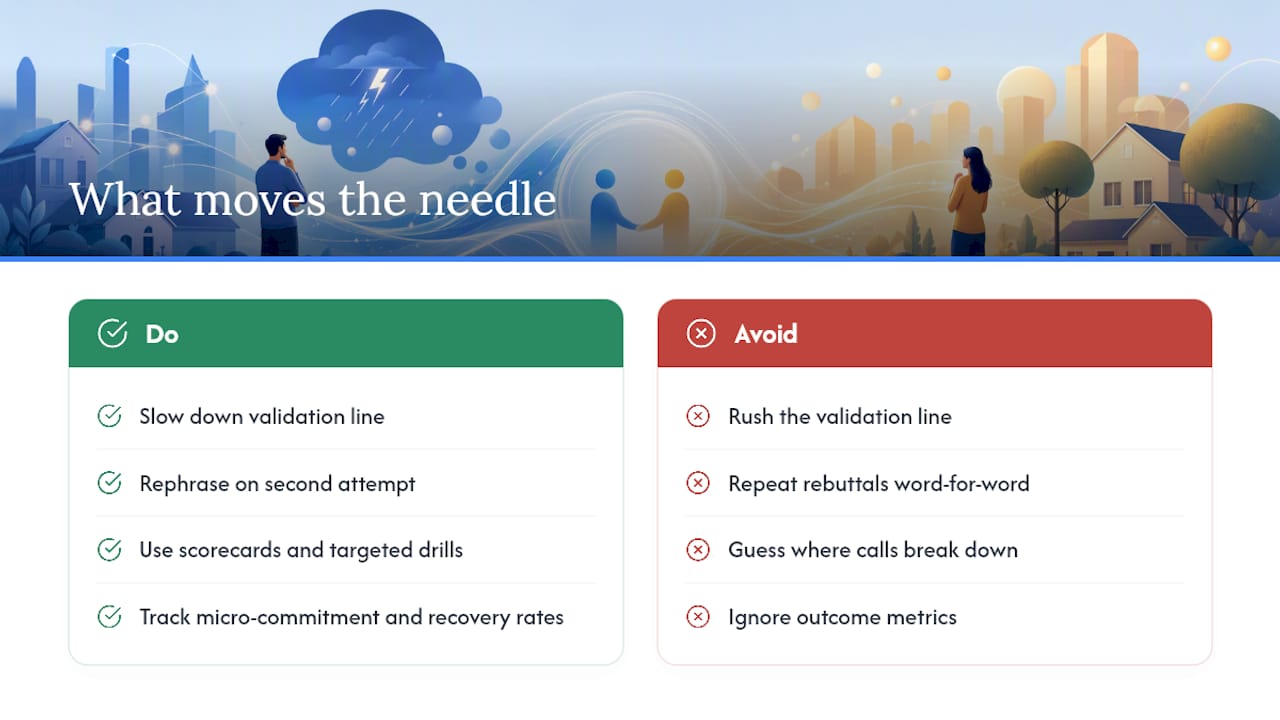
Two corrections come up constantly when reviewing calls: callers rush the validation line, and they repeat the same objection rebuttal word-for-word instead of adjusting to tone. Slowing down and rephrasing on the second attempt changes outcomes more than any clever line does.
Scorecards and targeted drills matter because they isolate exactly where a call breaks down, tone, pacing, or redirect timing, instead of leaving you guessing. After running these scripts, track two numbers: your micro-commitment rate, the share of calls that convert to a two-minute next step, and your objection recovery rate, how often an initial “not interested” turns into a real conversation.
— Dave
Practice These Scripts Before Your Next Call
ClosersLeague is built for exactly this gap: generic sales training can’t simulate a seller who just got a code citation letter and feels cornered by it. Real code-violation calls hinge on tone and timing that only repetition sharpens.
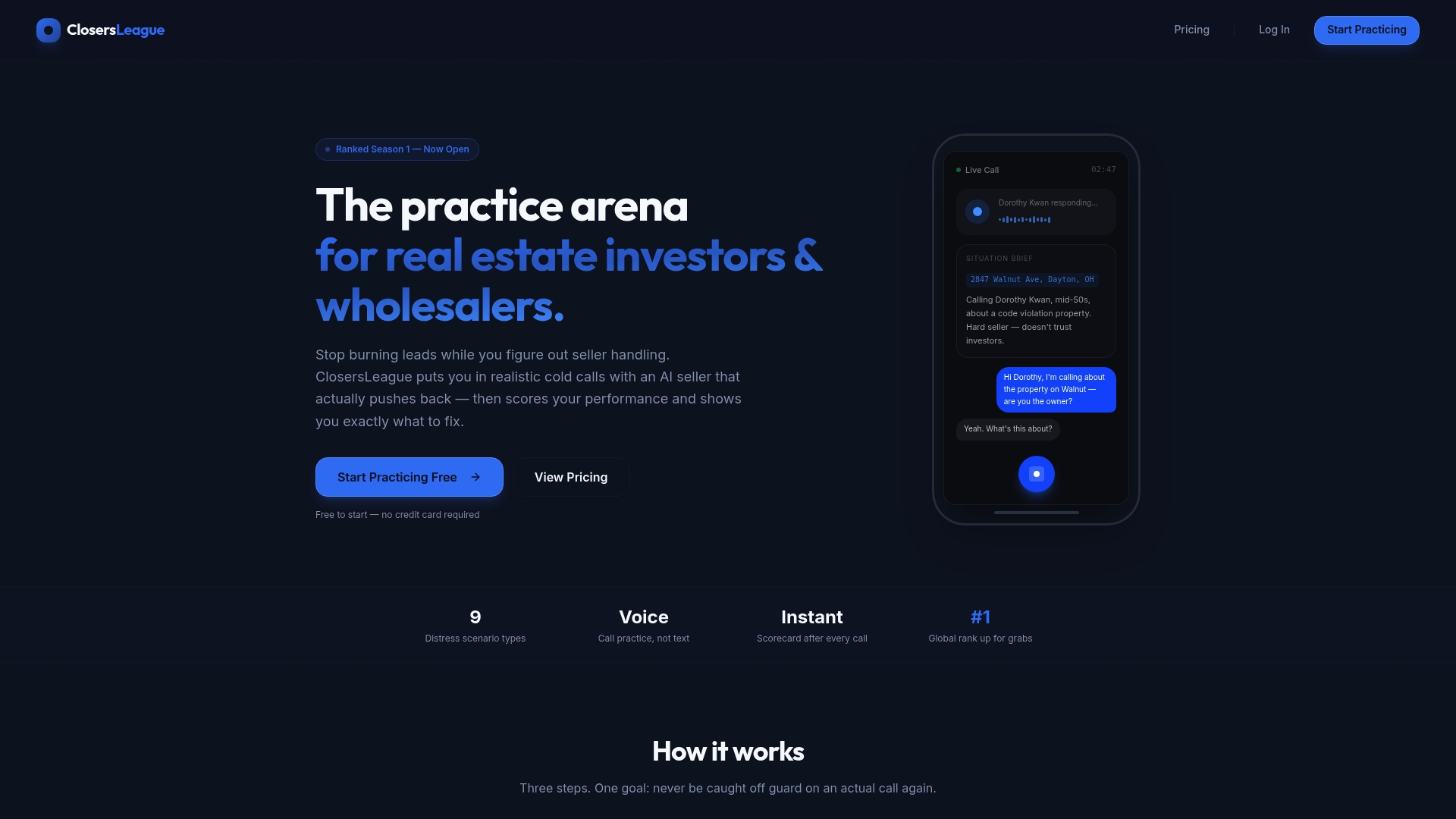
ClosersLeague’s Code Violation Property Cold Calling Practice puts you against AI-driven roleplay built specifically for this seller type, complete with instant scorecards, detailed feedback, and drills targeting whatever part of the call you’re weakest on. You get honest scoring on tone, pacing, and redirect quality instead of guessing whether a script worked. Plans start at $5 a month on the Starter tier, scaling up through Growth and Pro as your call volume grows. Run a few practice sessions this week and see exactly where your redirects need work before you dial a real seller.
Sources
- Housing instability and mental health (qualitative findings)
- When city code feels like a weapon against Atlanta’s low-income homeowners
FAQ
What Is the Best First Response to “I’m Not Interested”?
Validate the reaction, then ask one question that separates the violation itself from the cost of fixing it. This keeps the call open without arguing against the seller’s initial response.
How Do I Prove I’m Not Running a Scam?
Tell the seller exactly how you found their information, usually a public code enforcement filing, and state plainly that you’re a local buyer, not affiliated with the city, using an AML/CTF compliance checklist for real estate agents to ensure your legitimacy and documentation are in order. Specific, honest answers resolve this objection faster than reassurances alone.
What Should I Do if a Seller Sounds Distressed or Threatening?
Stop pursuing the sale immediately. If a seller mentions crisis-level distress, pause the conversation and point them toward local housing or legal aid resources rather than pushing for a commitment.
How Can I Practice These Scripts Before a Real Call?
ClosersLeague’s code violation cold calling practice lets you rehearse these exact objections against AI roleplay with scorecards, so you can fix tone and timing issues before they cost you a real seller.
What Metrics Should I Track After Using These Rebuttals?
Track your micro-commitment rate, the share of calls that convert to a two-minute next step, and your objection recovery rate, how often an initial “not interested” turns into a conversation. Both numbers reveal where your script or delivery needs adjustment.
Recommended
- Code Violation Property Cold Calling Practice — AI Roleplay for Real Estate Investors & Wholesalers
- Distressed Seller Cold Calling Scripts That Convert
- Inherited Property Cold Calling Practice — AI Roleplay for Real Estate Investors & Wholesalers
- Pre-Foreclosure Cold Calling Practice — AI Roleplay for Real Estate Investors & Wholesalers