
Most real estate investors make 50 to 100 calls before they book a single appointment. That kind of rejection wears you down fast, especially when you’re dialing distressed homeowners who are already stressed, guarded, and not exactly excited to hear from a stranger. The good news? The gap between a wasted call and a booked appointment often comes down to your first 15 seconds. Real estate cold calling statistics show that top-performing investors convert as many as 5.2% of calls into contracts, while the average investor hovers well below 2%. The difference is preparation, and it starts with your opening script.
Table of Contents
- Why your opening script matters
- The anatomy of an effective opening script
- Step-by-step: Crafting your opening script
- Common mistakes and how to fix them
- What to expect: Measuring your results
- The real truth: Scripts are a tool, not a crutch
- Take your cold calling to the next level
- Frequently asked questions
Key Takeaways
| Point | Details |
|---|---|
| Scripts increase conversions | Carefully crafted opening scripts can boost appointment and contract rates for real estate investors. |
| Customization is key | Tailor your opener to each seller’s situation for higher engagement. |
| Practice brings results | Ongoing practice and refinement using roleplay boosts effectiveness and confidence. |
| Track performance metrics | Monitor call connects, appointments, and contracts to evaluate script success. |
Why your opening script matters
Now that you know the challenge and potential, let’s see exactly how your script influences every stage of the cold calling process.
Your opening script is not just a greeting. It is the mechanism that determines whether a homeowner keeps listening or hangs up. When you understand cold calling basics, you quickly learn that the first 10 to 20 seconds set the emotional tone for the entire conversation. A weak opener signals uncertainty. A strong one signals credibility and respect.
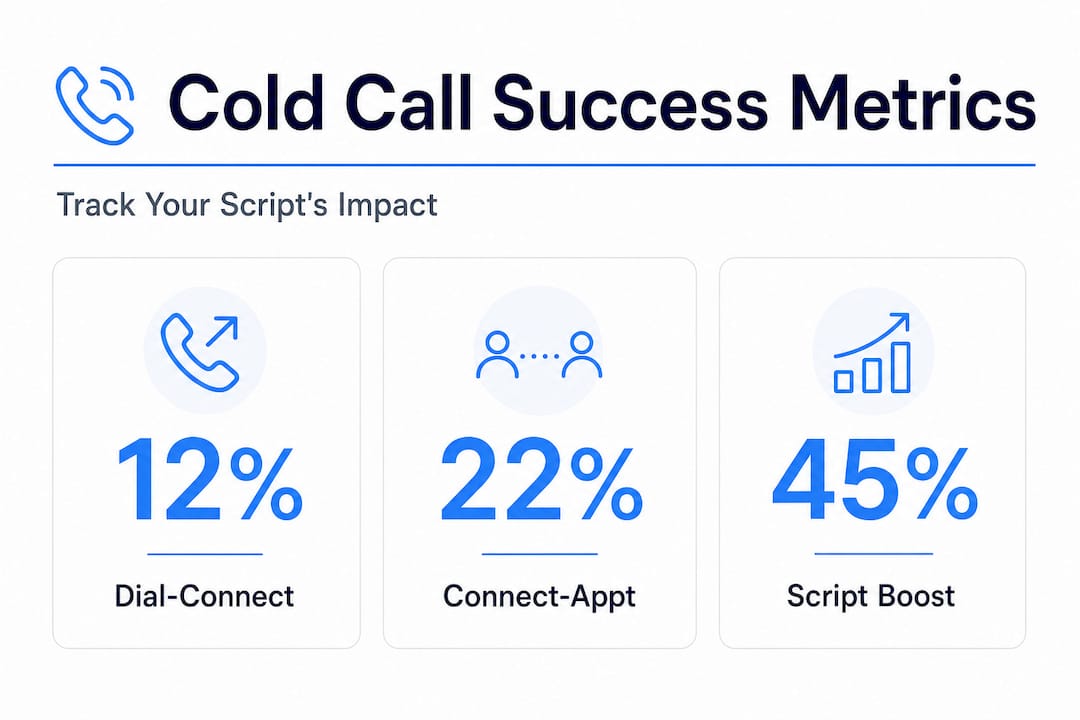
Here’s what the data actually looks like for real estate cold callers:
| Metric | Average performer | Top performer |
|---|---|---|
| Dial-to-connect rate | 8-12% | 12-15% |
| Connect-to-appointment rate | 12-20% | 25-35% |
| Cold-to-appointment rate | 1.7-2.3% | 3.5-5.2% |
| Cold-to-contract rate | Below 2% | Up to 5.2% |
| Dials per qualified lead | 3,000-5,500 | 300-800 |
| ROI per dial | Below $5 | $12 or higher |
These numbers matter because they show you exactly where improvement pays off. Moving your connect-to-appointment rate from 12% to 25% essentially doubles your deal flow without making a single extra call. That improvement almost always traces back to the quality of your opening script.
Strong scripts also help you segment leads more effectively. When you’re calling a homeowner facing foreclosure versus someone who inherited a property, the emotional context is completely different. A generic opener misses that entirely. A situation-specific opener, on the other hand, signals that you understand their circumstances, which immediately lowers their guard.
Key reasons why your opening script drives results:
- It establishes credibility before the homeowner has a reason to distrust you
- It creates an emotional connection by acknowledging their specific situation
- It frames the conversation as helpful, not transactional
- It controls the pace and direction of the early call
- It reduces your own anxiety, which improves your tone and delivery
The ability to turn cold calls into deals is almost always linked to how well you’ve prepared your opener before you ever dial.
The anatomy of an effective opening script
Understanding what makes an effective opener, let’s walk through each component so you can apply them immediately.
Every strong opener has four core components. Miss any one of them and you’ll notice your connect-to-appointment rate drop. According to real estate cold calling statistics, connect-to-appointment rates rise to 25-35% when scripts are applied effectively, compared to 12-20% for callers using no structured approach.
Here’s how the four components break down:
-
Introduction. State your name and your company clearly. Don’t mumble, don’t rush. “Hi, my name is Jason with Clearview Property Solutions” takes three seconds and immediately tells the homeowner who they’re dealing with.
-
Permission question. Ask if now is a good time. This is not just courtesy. It gives the homeowner a sense of control, which dramatically reduces their defensiveness. “Is this an okay time for a quick two-minute call?” is far more disarming than launching straight into your pitch.
-
Value statement. Tell them, in one sentence, why this call benefits them. Not you. Them. “I work with homeowners in [City] who are looking for flexible options to sell without the hassle of the traditional market” speaks to their pain point directly.
-
Empathy cue. Acknowledge their situation. This is especially critical for distressed sellers. A homeowner in pre-foreclosure is carrying enormous stress. Saying “I know this isn’t an easy time” before asking questions changes the entire energy of the call.
Here’s a quick comparison of generic versus situation-specific openers:
| Approach | Generic opener | Situation-specific opener |
|---|---|---|
| Foreclosure | “I buy houses in your area.” | “I work with homeowners going through foreclosure who want options before the bank takes over.” |
| Probate | “Want to sell your property fast?” | “I often work with families dealing with inherited properties and the challenges that come with them.” |
| Divorce | “I’m a cash buyer in your area.” | “I help couples navigate the sale of a shared home so both parties can move forward quickly.” |
| Tax delinquent | “I’m looking for properties to buy.” | “I work with homeowners behind on taxes who need a solution before the county acts.” |
The difference is obvious when you see it side by side. Situation-specific openers show you did your homework. They communicate empathy before you’ve even asked a question.
Pro Tip: Before you make your first live call with a new script, run through it with a fellow investor or a coach who can give you honest feedback. Hearing how you sound from the outside is completely different from how you think you sound in your head. Use this rehearsal time to catch filler words, awkward pauses, and rushed phrasing. Check out these cold calling tips for more on refining your delivery, and review a proven script workflow to see how top investors structure their full calls.
Step-by-step: Crafting your opening script
With the anatomy in hand, let’s turn that into a repeatable process you can execute for every lead type.
Building a strong opener is a process, not a one-time task. Here’s how to create a customized script for any distressed homeowner scenario:
-
Identify the seller’s situation before you dial. Pull your lead data and know whether you’re calling a pre-foreclosure, probate, tax delinquent, or divorce lead. Each situation carries unique emotional weight and requires a different empathy cue.
-
Draft a conversational introduction. Write your name, company name, and city in one sentence. Avoid industry jargon in the intro. “Hi, I’m Marcus with Prime Home Buyers in Atlanta” is clean and professional.
-
Add a permission or empathy statement. Choose based on context. For sensitive situations like probate or divorce, lead with empathy: “I realize this might not be the easiest thing to talk about, and I’ll keep this brief.” For less emotionally charged leads, a simple permission question works well: “Is now an okay time for just two minutes?”
-
State your value proposition quickly. Keep this to one sentence. Focus on what you solve, not what you want. “I help homeowners in difficult situations sell on their timeline without the stress of listings, showings, or waiting for bank approvals” covers the key benefits in plain language.
-
Close your opener with a soft question. A low-stakes question keeps the conversation going without pressure. “Would it be okay if I asked you a couple of questions about the property?” is easy for the homeowner to say yes to.
Here’s an example script for a pre-foreclosure lead:
“Hi, this is Sarah with Sunbelt Property Group in Phoenix. I know you may be getting a lot of calls right now, and I appreciate you picking up. I work specifically with homeowners who are in the early stages of foreclosure and need options before things go further. Is now an okay time for just a couple of minutes? I’d love to learn a bit about your situation and share how we’ve helped others in similar circumstances.”
This script hits every component. It’s conversational, empathetic, and focused on the seller’s needs.

Pro Tip: Pay attention to how the homeowner responds to your opener. If they hesitate or say “I’m not interested” immediately, it often means your value statement didn’t connect with their pain point. Adjust your next call accordingly. Consistent real estate cold calling practice helps you recognize these patterns faster and sharpen your adjustments in real time. The ROI on that refinement is significant. Well-executed campaigns consistently return $12 per dial or better when scripts are dialed in.
Common mistakes and how to fix them
Even with a well-built script, mistakes can sabotage your results. Here’s how to spot and fix them effectively.
Most cold calling errors fall into predictable patterns. Recognizing them is the first step to eliminating them.
- Using a generic opener for every call. Calling a probate lead the same way you’d call a tax delinquent wastes both your time and theirs. Customize every opener to the lead type.
- Speaking too fast. Nervousness drives speed. When you rush, the homeowner can’t process what you’re saying, and you sound untrustworthy. Slow down by 20% from what feels natural to you.
- Overselling in the opener. The goal of your opener is to start a conversation, not close a deal. Launching into a sales pitch before you’ve built any rapport almost always triggers a hang-up.
- Ignoring the homeowner’s emotional state. If someone sounds stressed or distracted, acknowledge it. “You sound like you’ve got a lot going on right now. I completely understand.” That kind of awareness builds trust instantly.
- Skipping the permission question. Jumping straight into your pitch without asking if it’s a good time signals that you don’t respect their schedule. That one small step significantly improves receptivity.
“Scripts don’t fail. Callers who stop improving do. Top performers who refine their script regularly convert 5.2% of calls into contracts, not because they found the perfect script once, but because they kept getting better.”
When you lose engagement mid-call, don’t panic. Pause, acknowledge the shift, and redirect with a question. “I can tell this might not be the right time. Would it be okay if I called back later this week when things are less hectic?” leaves the door open rather than forcing a dead-end conversation.
It also pays to understand how to qualify real estate leads so you’re not just improving your opener but filtering your conversations from the start for the highest-potential sellers.
What to expect: Measuring your results
After optimizing your script and process, it’s crucial to understand how to evaluate your progress and success.
Tracking your performance is what separates a gut feeling from an actual improvement plan. Without metrics, you’re guessing. Here’s what to watch:
| Metric | What it tells you | Target range |
|---|---|---|
| Dial-to-connect rate | Whether your call timing and list quality work | 8-15% |
| Connect-to-appointment rate | Whether your opener is working | 12-35% |
| Appointment-to-offer rate | Whether your conversations are qualifying leads | 30-60% |
| Cold-to-contract rate | Overall campaign effectiveness | 1.7-5.2% |
| Cost per deal | ROI across your total dial volume | As low as possible |
Start tracking immediately, even before you’ve refined your script. That baseline gives you a benchmark to measure improvement against. Many investors overlook this and then can’t tell if their script changes are actually working.
Short-term, within the first 30 days of using a structured opener, you should expect your connect-to-appointment rate to climb. The longer you practice and refine, the more your overall cold-to-contract ratio improves. According to real estate cold calling statistics, it often takes 300 to 5,500 dials to produce one qualified lead, but campaigns with optimized scripts and tracking in place regularly achieve 10x ROI.
Understanding why direct outreach wins in a market where digital channels are getting more crowded helps reinforce why your dial-to-connect and conversion metrics are worth protecting and improving over time.
The real truth: Scripts are a tool, not a crutch
Here’s something we’ve seen consistently across hundreds of coaching sessions with investors and wholesalers: the callers who obsess over having the “perfect script” are often the ones who underperform. They read their lines woodenly, stumble when the homeowner goes off-script, and miss the emotional signals that would have opened the door to a real conversation.
Scripts are starting points. They give you a framework, a direction, and a confidence anchor. But the moment you try to follow a script word-for-word during a live call with a stressed homeowner, you lose the most important thing: genuine human connection.
The best investors we’ve coached do something different. They internalize the structure of their script so well that it becomes instinct. They know the four components. They know their value statement cold. But they stay present during the call, listening for the homeowner’s real pain points, adjusting their language in real time, and responding to what’s actually being said rather than what they planned to say.
A probate homeowner who starts crying mid-call doesn’t need your next scripted line. They need you to pause, acknowledge their grief, and let them know you’re not in a hurry. That kind of flexibility is what converts a conversation into a relationship, and a relationship into a deal.
The lead conversion guide we’ve built reflects this philosophy. Scripts are your foundation. Adaptability is your edge. Both are skills you can practice and develop deliberately.
Stop winging it. But also stop hiding behind your script. The goal is to sound like someone having a real conversation, not someone reading from a teleprompter.
Take your cold calling to the next level
Ready to see the difference the right script and plenty of practice can make in your real conversations?
Building a great opener is just the beginning. The real improvement happens when you practice out loud, get feedback, and drill your responses to the objections and emotional reactions that real distressed homeowners throw at you. Our AI-powered platform at ClosersLeague lets you do exactly that.
Practice specific scenario types with targeted AI roleplay sessions built for investors like you. Work through your inherited property script to handle the nuance of probate and estate situations. Sharpen your approach with code violation script practice for landlords and distressed owners facing municipal pressure. And build your confidence with pre-foreclosure script practice designed to help you have empathetic, effective conversations with homeowners who are running out of time. Every rep makes your live calls sharper.
Frequently asked questions
What is the best opener for distressed property leads?
The best opener acknowledges the seller’s situation with empathy, asks permission to continue, and offers a clear value proposition focused on solving their specific problem. Personalized openers consistently push connect-to-appointment rates toward the higher end of the 12-35% range.
How many calls does it take to get a qualified real estate lead?
It depends heavily on your list quality and script, but 300 to 5,500 dials are typically needed to connect with one qualified lead. Investors with refined scripts and well-targeted lists land at the lower end of that range.
How do I track the effectiveness of my opening script?
Track your connection rate, appointments set per 100 dials, and contracts secured over time. Dial-to-connect and connect-to-appointment metrics are your primary indicators of whether your opener is working or needs adjustment.
Should I use the same script for every kind of seller?
No. Each seller situation, whether probate, foreclosure, divorce, or tax delinquent, carries different emotional weight and requires a customized opener that acknowledges their specific circumstances. A one-size-fits-all script signals that you don’t understand their situation, which kills trust early.
What conversion rates can I expect from cold calling with effective scripts?
With a well-practiced, situation-specific script, you can expect connect-to-appointment rates of 12-35% and cold-to-contract rates between 1.7% and 5.2% depending on your market, list quality, and consistency.
Recommended
- Boost Real Estate Deals with a Proven Investor Script Workflow – ClosersLeague Blog
- 10 proven cold calling tips for real estate investors – ClosersLeague Blog
- Vacant Property Cold Calling Practice — AI Roleplay for Real Estate Investors & Wholesalers
- Pre-Foreclosure Cold Calling Practice — AI Roleplay for Real Estate Investors & Wholesalers