Most cold calls to foreclosure homeowners end within the first 30 seconds. Not because investors lack motivation, but because generic, high-pressure scripts trigger an immediate defensive reaction from people who are already scared and overwhelmed. Empathy-first positioning, a calm tone, and a discovery-driven flow are what separate callers who get conversations from those who get hang-ups. This article gives you a practical, roleplay-based system to practice every scenario you’ll face in the field, including objection handling, compliance requirements, and how to measure your progress so you can keep improving with every session.
Table of Contents
- Getting ready: Tools, best practices, and mindset for foreclosure cold call roleplay
- Step-by-step foreclosure cold call roleplay: Core script framework and discovery flow
- Edge case handling: Objections, compliance, and what most roleplays forget
- Measuring your roleplay results: Benchmarks, scorecards, and continuous refinement
- What most guides miss about foreclosure cold call roleplay
- Practice smarter: Next steps for mastering foreclosure cold call roleplay
- Frequently asked questions
Key Takeaways
| Point | Details |
|---|---|
| Empathy and discovery win | Leading with empathy and asking discovery questions builds trust and reduces hang-ups. |
| Use a four-step framework | Structure calls with a warm opener, pain-point exploration, value proposition, and a clear transition to next steps. |
| Roleplay every scenario | Practice different objections and compliance workflows to be fully prepared during live calls. |
| Document and track results | Measure objection patterns and outcomes after each session to continually refine scripts. |
| Compliance is non-negotiable | Following legal guidelines in every roleplay prevents future risk and maintains reputation. |
Getting ready: Tools, best practices, and mindset for foreclosure cold call roleplay
With the challenge defined, it’s time to set yourself up for success by preparing the right tools, habits, and roleplay approach before you ever dial out.
You would not practice basketball without a hoop. The same logic applies here. Good roleplay requires the right environment and equipment so your practice mirrors the real experience as closely as possible.
Here is what you need to have in place before your first roleplay session:
- CRM (Customer Relationship Management) software to log calls, track homeowner status, and flag follow-up timelines
- A predictive or power dialer to simulate realistic call pacing and call volume scenarios
- Call recording tools to review conversations and spot missed opportunities
- A DNC (Do Not Call) list scrubber to practice compliance habits from day one
- Printed or digital script sheets organized by scenario type (pre-foreclosure, tax delinquent, probate, etc.)
- An objection log where you document every objection heard and the response that worked best
These are not optional extras. They are the foundation of cold calling performance that holds up under pressure.
Must-have tools for foreclosure roleplay
| Tool | Primary purpose | Why it matters in roleplay |
|---|---|---|
| CRM | Contact management and follow-up | Builds the habit of logging calls immediately |
| Power dialer | Call pacing and efficiency | Simulates real-world call volume pressure |
| Call recorder | Post-session review | Reveals tone, hesitations, and missed pivots |
| DNC scrubber | Legal compliance | Prevents habit of skipping compliance steps |
| Script/scenario bank | Structured practice flow | Keeps roleplay from becoming unstructured |
| Objection tracker | Script refinement | Identifies patterns and weak spots over time |
Rehearsing multiple objection and scripting scenarios with a team and tracking outcomes systematically is one of the most effective ways to improve cold calling performance. Rotate your roleplay partner regularly. Fresh voices create fresh challenges and stop you from getting too comfortable with predictable responses.
One concept worth building into your practice from the start is script fluency. This means knowing your framework well enough that you can set it down. Fluent callers do not recite lines. They use the structure as a mental map and adjust their language in real time based on what the homeowner says. That adaptability is what you are building through repetition.
Pro Tip: After every roleplay session, spend five minutes writing down every objection you heard, the response you used, and whether the conversation moved forward. This simple habit gives you a personalized coaching log that compounds in value every week. Combine this with the proven investor script workflow to structure your improvement over time.
Step-by-step foreclosure cold call roleplay: Core script framework and discovery flow
With your tools and preparation dialed in, now practice the actual format. Here is a practical roleplay framework you can rehearse and adapt right away.
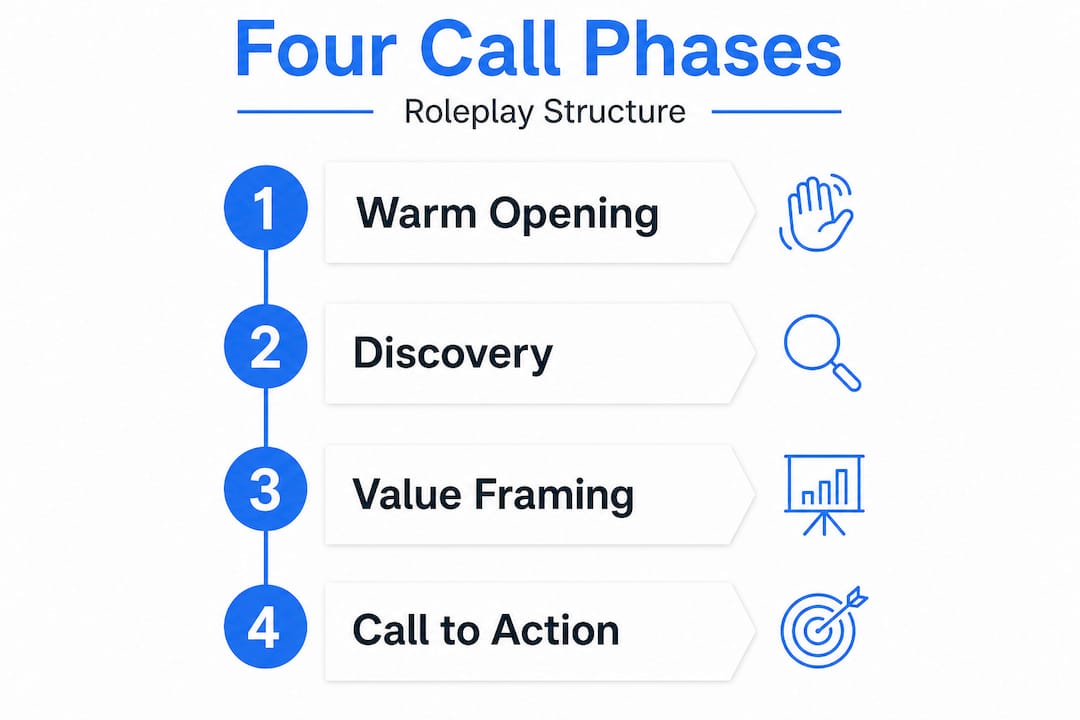
A workable script framework for pre-foreclosure calls includes four core phases: a warm opening, identifying pain points through discovery questions, a clear value proposition, and a smooth transition to next steps or an appointment. Practice each phase separately before linking them together.

The four-phase foreclosure call structure
1. Warm opening
Your first goal is not to sell anything. It is to stay on the line. Introduce yourself clearly and calmly. State why you are calling without surprises or pressure.
Example: “Hi, this is [Your Name]. I work with homeowners in [City] who are navigating some tough situations with their property, and I just wanted to reach out and see if I could ask you a couple of quick questions.”
2. Discovery questions
This is where most callers lose deals by talking too much. Ask open-ended questions and listen. Your goal is to understand their timeline, their relationship with their lender, and what outcome they actually want.
Example questions to practice in roleplay:
- “How long have you been in this situation with the property?”
- “Have you had any recent communication with your lender about options?”
- “What would the ideal outcome look like for you right now?”
3. Value framing
Only after listening do you introduce what you offer. Frame it as an option, not a rescue mission. Homeowners in distress are extremely sensitive to pressure or false promises.
Example: “Based on what you’ve shared, one option some homeowners explore is working with a buyer who can close quickly and handle a lot of the process for them. I’m not here to pressure you, just to see if that might be worth a conversation.”
4. Call to action or appointment
Keep it low-stakes. A yes to a 15-minute follow-up call is a massive win at this stage.
Example: “Would it be okay if we set up a quick 15-minute call this week? No obligation, I just want to make sure you have all your options in front of you.”
Generic vs. psychology-first openers
| Approach | Example opener | Typical outcome |
|---|---|---|
| Generic/high-pressure | “Hi, I buy houses in your area, are you interested in selling?” | Immediate hang-up or defensive response |
| Psychology-first | “Hi, I work with homeowners in tough situations and just wanted to reach out and ask a couple of questions.” | Higher likelihood of continued conversation |
| Curiosity-gap opener | “I came across some information about your property and wanted to make sure you had access to all your options.” | Moderate engagement, requires quick empathy follow-up |
A high-integrity roleplay pattern for foreclosure leads means acknowledging stress first, introducing yourself clearly without creating alarm, asking discovery questions before making any offer, and presenting only truthful options without guarantees. Practice this sequence until it feels natural, not scripted.
Pro Tip: In roleplay, ask your partner to respond as an emotionally stressed homeowner, not just a neutral one. The real conversations will come with fear, frustration, and grief mixed in. Training against a calm roleplay partner will leave you underprepared for the field. Check out the foreclosure cold calling practice scenarios and pre-foreclosure cold calling roleplay modules for structured emotional scenario practice.
Edge case handling: Objections, compliance, and what most roleplays forget
Knowing your core script is only half the game. You also need to be ready for curveballs, legal rules, and the realities that trip up most beginners.
Most investors practice a smooth call and stop there. Real calls are almost never smooth. Preparing for the friction points is what makes the difference between a caller who folds under pressure and one who consistently moves conversations forward.
Common objections and roleplay responses
Practice saying these responses out loud until they are reflexive:
- “I’m not interested.” Response: “That’s completely fair. Can I just ask, is that because the timing isn’t right, or more that you’ve already figured out your next step?”
- “I already have a realtor.” Response: “That’s great. I work differently than a traditional agent, and I’m not trying to replace them. I just wanted to make sure you knew all your options.”
- “How did you get my number?” Response: “I work with publicly available property records to reach out to homeowners who may be going through a tough time. I can absolutely remove you from my list right now if you’d prefer.”
- “We’re handling it ourselves.” Response: “I totally respect that. If you ever want to compare notes on what a quick cash offer might look like just to have a number, I’m happy to help. No pressure either way.”
- “Stop calling me.” Response: Acknowledge it immediately, confirm removal from your list, and document it. Do not push back.
Compliance is not optional in roleplay either
This is where most investors take shortcuts that cost them later. Compliance process and recordkeeping are part of the roleplay itself. That means scrubbing DNC lists before sessions, respecting calling hours (generally 8am to 9pm local time), documenting consent and opt-outs, and using truthful messaging without making any guarantees about outcomes.
When it comes to text-based follow-up, express written consent requirements for automated systems can differ significantly from voice call consent rules. Build those distinctions into your roleplay scenarios, including a clear opt-out handling workflow.
A note on compliance risk: If you skip compliance steps in roleplay, you will skip them under call pressure. One ignored opt-out or one call outside permitted hours is not just a mistake; it is a potential legal or reputational disaster that can derail your business. Train compliance into your muscle memory now, before it counts.
Also check out real estate cold call regulations for a full breakdown of what you need to know before scaling your outreach.
Pro Tip: Build a dedicated “edge case” scenario into every single roleplay session. Assign one person to play the hostile or non-compliant responder. This keeps compliance reflexes sharp and ensures you always have a practiced, calm response ready when things get difficult on a live call.
Measuring your roleplay results: Benchmarks, scorecards, and continuous refinement
To close the loop, you need to know whether your roleplay investment is driving results. Here is how to measure, compare, and iterate to maximize your effectiveness.
Feeling like a call went well is not enough. Consistent improvement requires tracking data across both practice sessions and real calls so you can identify what is working and what needs adjustment.
Industry benchmarks for cold calling performance
| Metric | Reported range | Source context |
|---|---|---|
| Calls to interested seller ratio | Approx. 0.4% (62 per 15,000 calls) | Case study data from 96-hour cold calling experiment |
| Qualified leads from total calls | Approx. 0.58% (32 per 5,500 calls) | Same experiment, tighter qualification criteria |
| Generic script conversion rate | Approx. 1.2% | Marketing training analysis |
| Psychology-first script conversion | Approx. 14.3% | Same source, significant variation reported |
These numbers are directional, not a guarantee. Your results will vary based on your market, your list quality, your call volume, and how consistently you practice. Use these benchmarks as a starting point, not a ceiling.
Metrics to track in every roleplay session
- Hang-up rate: At what point in the script does the roleplay partner hang up?
- Objections triggered: How many objections came up before reaching discovery questions?
- Discovery questions reached: Did you get to ask at least two open-ended questions?
- Tone feedback: Did your partner feel heard and respected, or pressured?
- Compliance actions completed: Did you document opt-outs and confirm calling hours?
- Positive handover rate: Did the call end with a follow-up commitment?
The goal is to push your hang-up rate later in the call and your discovery question rate higher with each session. Track these numbers weekly and review trends monthly.
Pro Tip: Schedule a fixed weekly review session with your team or accountability partner. Listen to recorded roleplays together, score each call against your metrics, and give honest feedback. One hour of structured review per week produces more improvement than three hours of unguided practice. Consistent AI cold calling practice tools can add structured feedback loops between your live review sessions.
What most guides miss about foreclosure cold call roleplay
Here is the honest take: most training content focuses on the script and nothing else. Nail the opener, memorize the objection handler, close for the appointment. That approach misses the deeper skill that actually drives consistent results.
The biggest differentiator between callers who close deals and those who spin their wheels is not a secret word or a magic phrase. It is fluency in three areas at once: empathy, legal awareness, and discovery-centric listening. A caller who genuinely hears what the homeowner is saying, stays compliant without thinking about it, and guides the conversation with questions rather than pitches will outperform a smooth-talking script reader every time.
Most training guides also shortcut compliance, treating it as a legal footnote rather than a core competency. That shortcut creates risk. One ignored opt-out, one call made outside permitted hours, or one message that implies a guaranteed outcome can expose you to regulatory action or destroy trust in a community where your reputation matters.
Another thing most guides get wrong: roleplay is not just for new investors. The most consistent closers we see review and actively update their scripts and scenarios every single month. Markets shift. Homeowner sentiment shifts. What worked in a rising market sounds tone-deaf when foreclosures spike and people are genuinely panicking. Regular roleplay keeps your approach current and your empathy authentic.
Finally, here is the hard truth. A deal is rarely lost because you forgot a line. It is lost because you did not review the call, did not identify what triggered the hang-up, and did not adjust before the next one. The roleplay resources for real estate cold calling that compound over time are not the scripts themselves. They are the review habits that sharpen your scripts after every session.
Stop winging it. Start drilling with intention and feedback.
Practice smarter: Next steps for mastering foreclosure cold call roleplay
Ready to go beyond basics and keep growing? Here is where to continue your roleplay journey and dial in your competitive edge.
Knowing the framework is one thing. Drilling it against realistic, emotionally charged scenarios is what actually moves the needle. ClosersLeague is built specifically for real estate investors and wholesalers who want to practice cold calling the right way, with scenario-based modules, live feedback, and AI-powered coaching that scores your calls and tells you exactly where to improve.
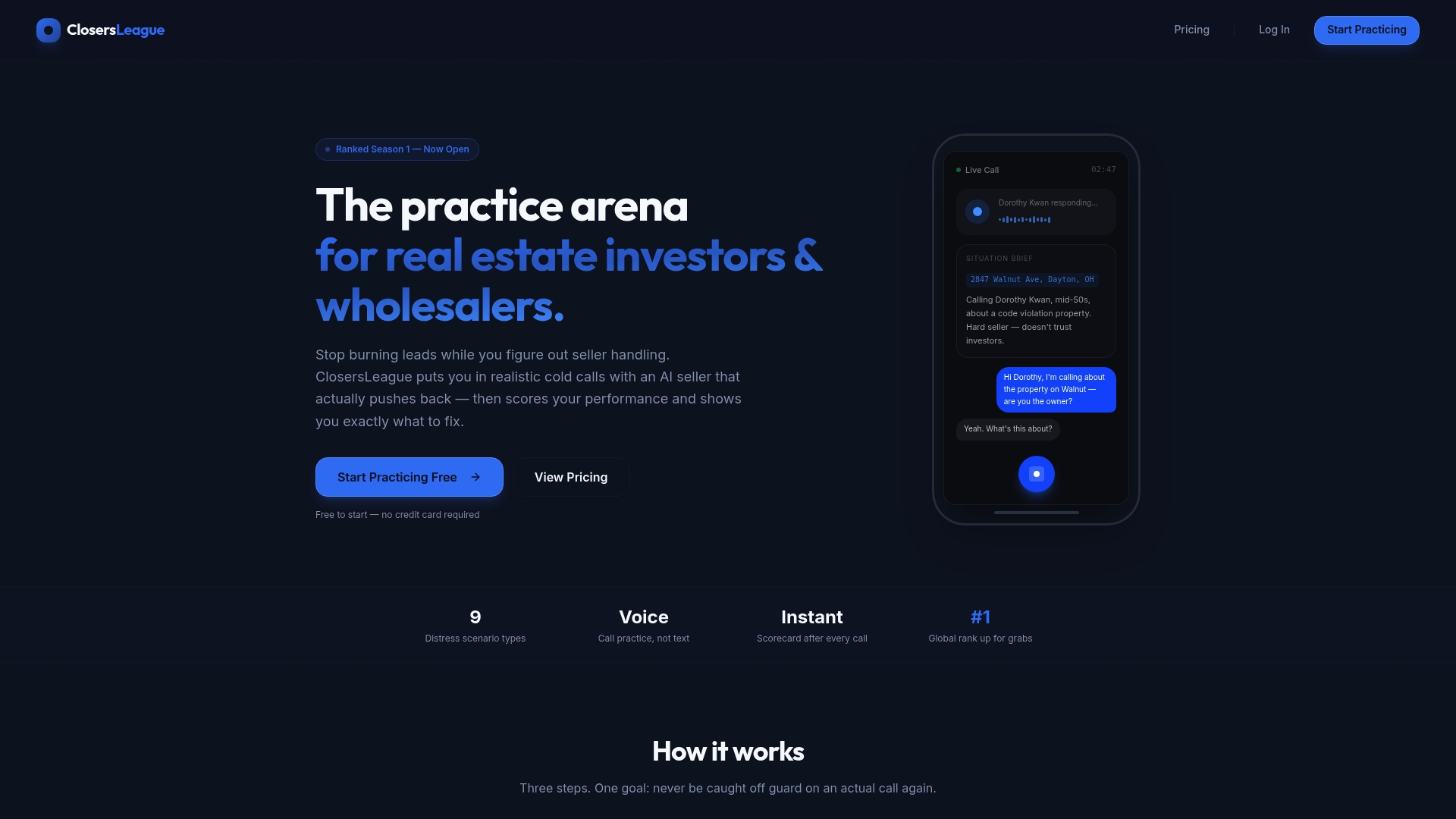
You can access the foreclosure cold calling practice module and the pre-foreclosure practice tool to work through scripted scenarios, objection challenges, and compliance drills at your own pace. Whether you are brand new or looking to sharpen your edge, the AI cold calling practice platform gives you the structured repetition and honest feedback that transforms average callers into consistent closers. Practice more. Wing it less.
Frequently asked questions
What is the best script opener for foreclosure cold calls?
Empathy-based openers that introduce you clearly and focus on the homeowner’s situation work best. Psychology-first approaches report conversion rates as high as 14.3%, compared to just 1.2% for generic scripts.
How can I legally comply when roleplaying foreclosure cold calls?
Always scrub DNC lists, honor opt-outs, call only during permitted hours, and document any consent or opt-out actions. Build these steps into every roleplay session so they become automatic.
Does roleplay really improve real-life cold calling results?
Yes. Rehearsing objection scenarios with a team and tracking outcomes consistently leads to measurable improvement in conversion rates and call confidence over time.
What performance benchmarks should I expect from cold calling?
Results vary significantly, but data shows 15,000 calls producing 62 interested sellers at the lower end, while psychology-first scripts can reach up to 14.3% conversion. Most beginners start closer to the lower benchmarks and improve with deliberate practice.
What is a discovery question in foreclosure cold call roleplay?
Discovery questions are open-ended prompts that uncover the homeowner’s pain points, timeline, and recent lender communications so you can personalize your approach rather than pitch a one-size-fits-all solution.
Recommended
- Foreclosure Cold Calling Practice — AI Roleplay for Real Estate Investors & Wholesalers
- Pre-Foreclosure Cold Calling Practice — AI Roleplay for Real Estate Investors & Wholesalers
- Tired Landlord Cold Calling Practice — AI Roleplay for Real Estate Investors & Wholesalers
- Vacant Property Cold Calling Practice — AI Roleplay for Real Estate Investors & Wholesalers