
Real estate investors chase a lot of lead types, but foreclosure leads sit in a category of their own. The seller is not casually browsing offers. They face a hard deadline, mounting legal pressure, and often a desperate need for a solution. That combination creates genuine motivation. Yet most investors approach these leads the wrong way, contacting homeowners too early, too late, or with the wrong message entirely. U.S. foreclosure activity has risen 18% year over year as of April 2026, meaning there are more opportunities than ever. The question is whether you know how to reach them before your competition does.
Table of Contents
- Key takeaways
- Understanding foreclosure leads
- Finding and sourcing foreclosure leads
- Timing and messaging for outreach
- Buying at foreclosure auctions
- Building a sustainable foreclosure lead system
- My take on what most investors get wrong
- Practice your foreclosure outreach with Closersleague
- FAQ
Key takeaways
| Point | Details |
|---|---|
| Timing is everything | Reach homeowners between 14 and 60 days post-filing for the highest chance of a real conversation. |
| Lead types differ significantly | Pre-foreclosure, NOD, Lis Pendens, auction, and REO leads each require different strategies and risk calculations. |
| Diversify your sourcing | Public records, paid platforms, and skip tracing each offer different data depth and freshness levels. |
| Empathy converts leads | Solution-oriented, empathetic messaging outperforms hard sales pitches with distressed homeowners every time. |
| Auctions demand cash readiness | Most foreclosure auctions require certified funds immediately at sale, with no room for financing contingencies. |
Understanding foreclosure leads
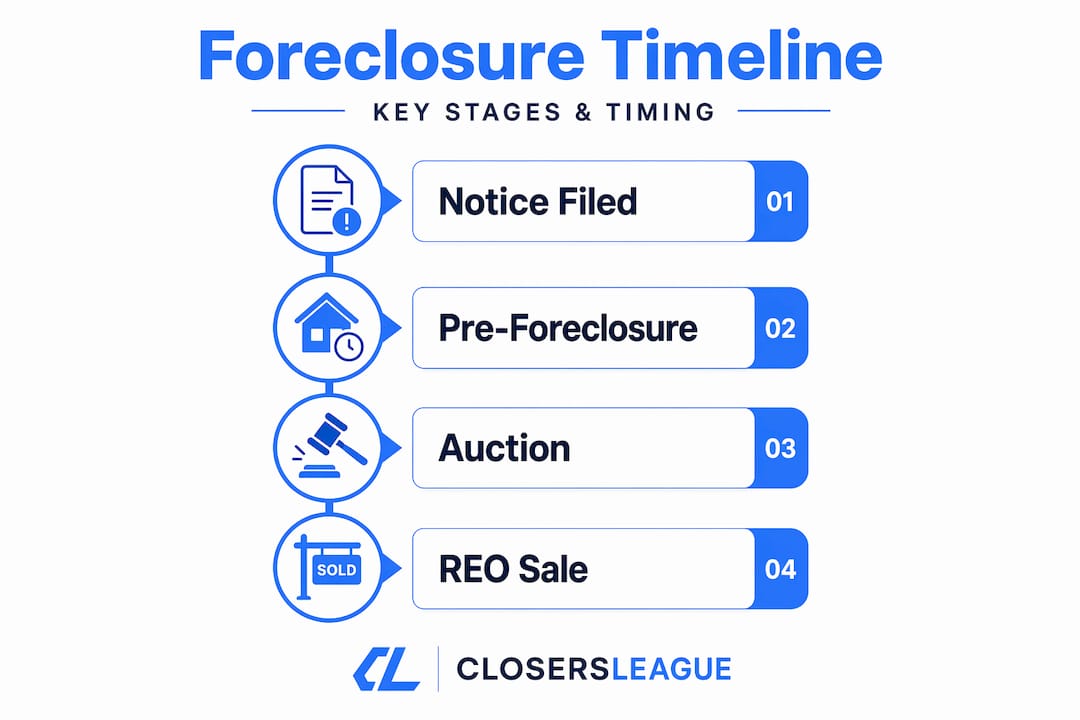
Not all foreclosure leads are the same. Grouping them together is one of the most common mistakes new investors make. Each stage of the foreclosure process produces a different type of lead, with its own timeline, legal context, and seller mindset.
Here is how the stages break down:
- Pre-foreclosure: The homeowner has missed payments but no public notice has been filed yet. These are often sourced through tax delinquency lists or direct lender data. Motivation exists, but urgency is lower.
- Notice of Default (NOD): The lender has formally notified the borrower of the missed payments and impending action. This is the first public record filing in many states, and it creates a firm clock for the homeowner.
- Lis Pendens: Filed in judicial foreclosure states, this signals that the lender has initiated a lawsuit against the borrower. The legal process has started, which sharpens homeowner urgency considerably.
- Auction listings: The property is scheduled for a public foreclosure auction. At this stage, outreach windows are tight and homeowner options are narrowing fast.
- REO (Real Estate Owned): The bank or lender has taken possession after an unsuccessful auction. These become standard bank-owned listings, and you are now dealing with the lender rather than the original homeowner.
The typical timeline from NOD filing to auction ranges from 90 to 180 days depending on state law. Judicial foreclosure states like Florida and New York can stretch that timeline well beyond a year. Non-judicial states like Texas and California tend to move faster. Knowing your state’s specific process is not optional. It directly determines how much time you have to reach a homeowner before their options disappear.
| Lead Type | Seller Motivation | Investor Access | Financing Possible? |
|---|---|---|---|
| Pre-foreclosure | Moderate | High | Often yes |
| NOD / Lis Pendens | High | High (public records) | Often yes |
| Auction | Very High | Limited (tight window) | Rarely |
| REO | N/A (bank-owned) | Moderate | Often yes |
Finding and sourcing foreclosure leads
Knowing where to get real estate foreclosure leads separates investors who close deals from those who spin their wheels. The good news is that most foreclosure data originates from public records. The bad news is that public records require legwork to access and interpret correctly.
County clerk and recorder offices are your starting point. NOD filings, Lis Pendens documents, and trustee sale notices are all filed with the county. Many counties have online portals now, though some still require in-person visits or third-party data pulls. PACER also covers federal filings for bankruptcy-related foreclosure activity.

Paid data platforms exist specifically to aggregate and refresh this information daily. These services compile foreclosure listings from across counties and states, attach property details, and often include owner contact information. They save enormous time, but you need to evaluate them carefully on two criteria: data freshness and geographic coverage. A list that is 60 days old in a fast-moving foreclosure market is nearly useless.
Skip tracing fills the gap when raw data lacks phone numbers or updated addresses. You pull a name and property address from public records, then run it through a skip tracing service to surface cell numbers, email addresses, and relative contacts. This is standard practice for cold calling foreclosure lists effectively.
Additional sourcing methods worth building into your system:
- Driving for dollars in neighborhoods with visible distress signs, then cross-referencing with foreclosure filings
- Monitoring legal newspapers that publish foreclosure notices (still required in many counties)
- Building relationships with foreclosure attorneys who see filings before they hit public databases
- Subscribing to court e-filing notification systems where available
Pro Tip: When evaluating paid data providers, always ask how often the database is refreshed and whether they scrub records that have been reinstated or sold. Stale leads waste your time and your outreach budget.
Timing and messaging for outreach
This is where most investors fail even when they have solid data. Pre-foreclosure homeowners are not casual sellers. They are people in crisis, often in denial at first and increasingly desperate as deadlines approach. Your timing and message must match exactly where they are in that emotional arc.
Outreach between 14 and 60 days post-foreclosure filing consistently hits the sweet spot. Too early, and the homeowner is still in denial, not yet ready to accept that their situation is serious. Too late, and the legal process has moved so far that your options for creative solutions have narrowed drastically.
Here is a recommended sequence for multi-touch outreach:
- Days 1 to 30 after NOD filing: Send educational mail. Acknowledge the situation without pressure. Explain that you work with homeowners in foreclosure and that options exist. The goal is to be a resource, not a buyer.
- Days 30 to 60: Shift to solution-focused messaging. Introduce a specific offer framework. Reference the timeline and what happens at auction. This is where most homeowners become receptive because denial is harder to sustain.
- Days 60 to auction date: Increase urgency and contact frequency. Use phone calls combined with mail. Time is running out for both of you, and the messaging should reflect that honestly without being exploitative.
Response rates of 3 to 5% from well-timed pre-foreclosure direct mail are realistic, which beats generic motivated seller campaigns. The key is frequency and relevance, not a single blast.
On the phone, empathy is not optional. A homeowner who feels heard is far more likely to talk than one who gets a scripted pitch. Learn to ask open questions, listen for the real problem (behind on payments, going through divorce, lost a job), and then position your offer as the solution to that specific problem. Your prospecting process needs to reflect that flow consistently.
Pro Tip: Never mention that you found the homeowner through a foreclosure filing in your first contact. Lead with empathy and your ability to solve problems. Most homeowners are embarrassed about their situation, and leading with the legal record creates immediate defensiveness.
There are also legal considerations. The Fair Debt Collection Practices Act does not directly govern real estate investors, but many states have laws regulating solicitation of homeowners in foreclosure. California, for example, has specific equity purchase laws. Always know the rules in your state before sending mail or picking up the phone.
Buying at foreclosure auctions
If your strategy involves buying foreclosure properties at auction rather than directly from homeowners in pre-foreclosure, you need to understand what you are walking into. The auction environment is unforgiving and moves fast.
Auction purchases typically require a 10% down payment at the time of sale via certified funds, with the remaining balance due within a short window afterward. There is no negotiation after your bid is accepted. No contingencies. No financing approval period. If you cannot close, you lose your deposit and potentially face additional legal liability.
Foreclosures sold at auction are purchased entirely as-is. The seller, which is now either the lender or a trustee, provides no disclosures and no warranties. You are responsible for any liens, code violations, or title issues that carry over. This is why a thorough title search before bidding is not a suggestion. It is a requirement.
Utilities are often off in foreclosed properties, which creates two problems. You cannot fully inspect the home without active systems, and many lenders will not finance a property without functional utilities. This pushes most auction purchases into cash-only territory, which is why knowing your numbers in advance and having access to capital matters more here than in almost any other lead type.
REO properties, those already repossessed by the bank, offer a different dynamic. REO properties can often be financed conventionally if conditions meet lender standards, which opens the buyer pool significantly. You are also dealing with a more predictable seller, though bank response times tend to be slower and negotiations more rigid. Check out Boca Raton foreclosure opportunities for a regional example of what REO inventory and auction activity looks like in a competitive market.
Building a sustainable foreclosure lead system
One-off tactics do not build a real estate business. A system does. The investors who consistently close deals from foreclosure investment opportunities are not doing anything magical. They have built a process that generates lead flow daily, not just when they feel motivated to search.
Here is what a real system looks like:
- Daily data pulls: Subscribe to a platform that updates foreclosure filings every day. Set geographic filters for your target counties. Know every new NOD or Lis Pendens the moment it hits public record.
- Automated direct mail sequences: Trigger mail drops based on filing age. When a new filing enters your database, it automatically enters a sequence. No manual processing per lead.
- Cold calling integrated with mail: Mail builds familiarity. Calls convert it. Use skip-traced numbers to reach homeowners after the first or second mail piece has had time to land.
- Attorney and title company relationships: Foreclosure attorneys see filings before they enter public databases. A referral relationship with even one or two foreclosure attorneys in your market can give you a meaningful timing advantage over investors relying solely on public records.
- Consistent follow-up tracking: Track every contact attempt, every conversation, and every outcome in a CRM. Many deals from pre-foreclosure investing close on the fifth or sixth contact, not the first.
A diversified system combining data feeds, targeted direct mail, and human networking consistently outperforms any single-channel approach. Build all three pillars and you will rarely face a dry pipeline.
My take on what most investors get wrong
I have watched a lot of investors get excited about foreclosure leads and then burn out within 90 days. Here is what I have seen go wrong repeatedly, and what I think actually matters.
The timing nuance is real. I used to think reaching homeowners early was always better. It is not. A homeowner who filed a Notice of Default two weeks ago often still believes the bank will work with them or that they can sell retail in time. They are not ready to hear your offer. If you call too early and get rejected, you might not get a second chance. Waiting until the 30 to 45-day window is the right call, even when it feels like you are leaving time on the table.
The condition issues are worse than beginners expect. I have walked properties where the copper wiring was stripped from the walls, the HVAC was missing, and the interior had been gutted. None of that shows up in a foreclosure listing. You need to budget for contingency costs before you ever make an offer, not after you win at auction.
The paperwork complexity is the thing nobody warns you about enough. Clearing title on a property that carries multiple liens from unpaid HOA fees, contractor judgments, and IRS tax liens can take months and cost thousands. Learn to qualify real estate leads for title risk before you commit serious time to them.
The relationships matter more than the data. The best deal I ever sourced from a foreclosure situation came from a title company employee who called me because they knew I could close fast. No list. No mail. Just a reputation for being prepared and professional. Build that reputation in your market and some of your best leads will start coming to you.
— Dave
Practice your foreclosure outreach with Closersleague
Getting foreclosure leads is only half the job. Converting them on the phone is where deals actually get made. Cold calling a homeowner in pre-foreclosure is one of the most emotionally demanding calls in real estate investing. The objections are intense, the emotional stakes are high, and one wrong word can end the conversation.
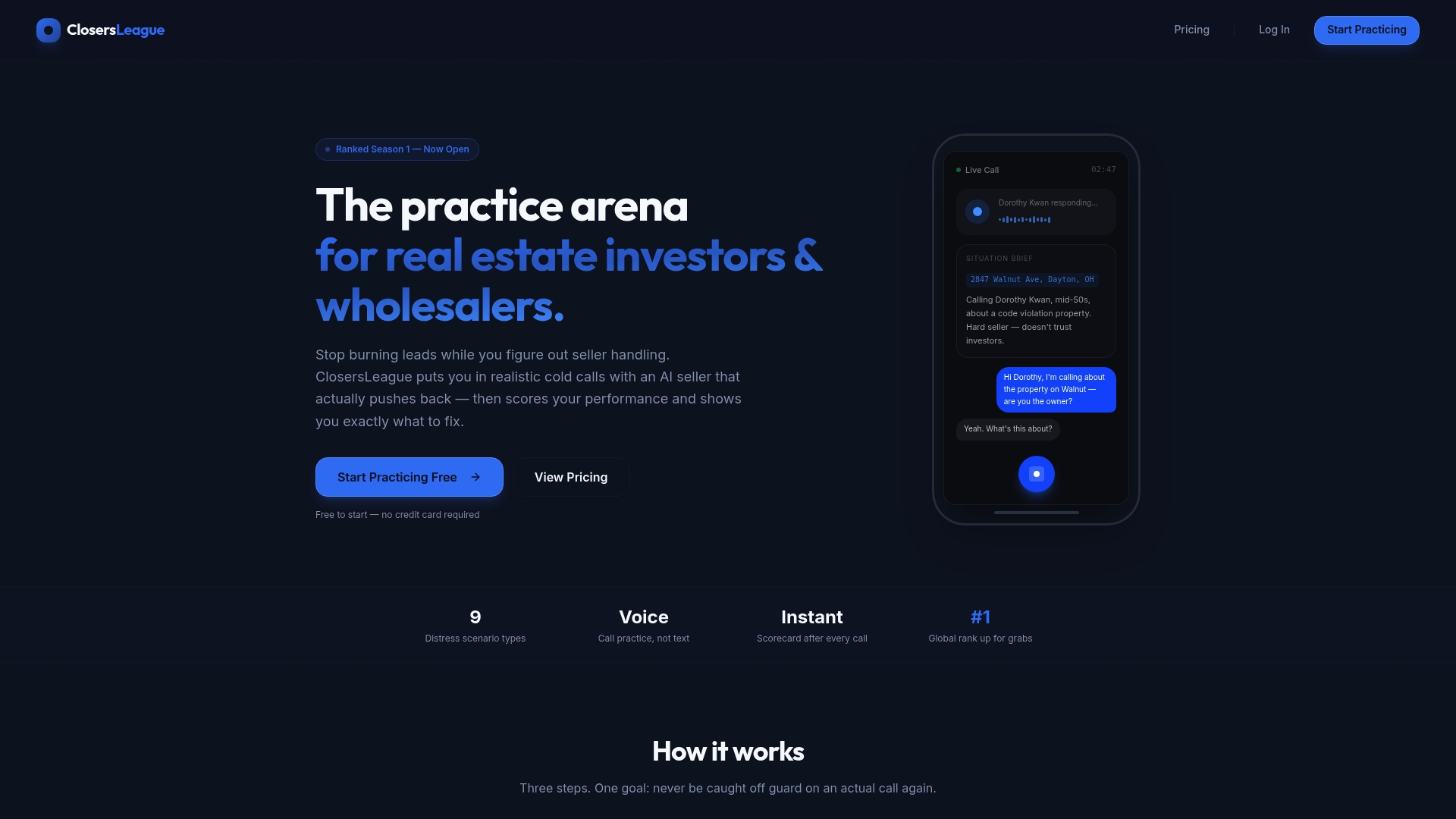
Closersleague built an AI-powered roleplay platform specifically for this. You can practice foreclosure cold calling scenarios in a realistic environment that scores your performance and helps you sharpen the exact moments where most investors lose deals. Whether you are handling denial, working past the “I’m not interested” wall, or learning to present your offer with confidence, deliberate practice is what separates closers from callers. You can also explore the broader real estate cold calling practice tool to work across all distressed seller types. Stop winging it. Start drilling.
FAQ
What are foreclosure leads in real estate?
Foreclosure leads are homeowners who have entered some stage of the foreclosure process, from initial missed payments through Notice of Default, Lis Pendens filing, or scheduled auction. They represent high-motivation seller opportunities because they face real legal deadlines.
How do you find foreclosure leads for free?
County clerk and recorder offices file all foreclosure-related documents as public records, including Notices of Default and Lis Pendens. You can access these directly through county portals, legal newspapers, or in-person at the courthouse at no cost beyond your time.
When is the best time to contact a foreclosure lead?
Outreach between 14 and 60 days after the initial foreclosure filing produces the highest engagement rates. Too early and homeowners are in denial; too late and their options have narrowed significantly.
Can you finance a foreclosure property purchase?
It depends on the stage. Auction purchases nearly always require cash or hard money financing with certified funds ready at sale. REO properties that meet lender condition standards can often be financed with a conventional or FHA loan.
What is the biggest risk when buying a foreclosed property?
Foreclosures are sold as-is with no seller disclosures, meaning you inherit all liens, code violations, and condition problems. Conducting a thorough title search and budgeting conservatively for repairs before bidding is critical to avoiding costly surprises.