
Burning real leads while you’re still learning is one of the costliest mistakes a new real estate investor or wholesaler can make. Knowing how to practice cold calling without real leads is not just a nice-to-have skill. It’s the difference between showing up confident on your first real call or stumbling through a conversation that could have turned into a deal. This article walks you through a structured, risk-free method to build genuine cold calling skill before you ever dial a motivated seller.
Table of Contents
- Key takeaways
- How to practice cold calling without real leads: the foundation
- Using AI simulation for realistic practice
- Mastering objection handling through practice
- Using feedback to close your skill gaps
- My honest take on AI practice vs. live calling
- Build your cold calling skills with Closersleague
- FAQ
Key takeaways
| Point | Details |
|---|---|
| Practice before you prospect | Rehearsing in safe environments protects real leads and builds confidence faster than live trial and error. |
| Build your script foundation first | Internalize a permission opener, value pitch, and clear close before running any simulated cold calling session. |
| Use AI roleplay for realism | AI personas give you unpredictable, pressure-tested conversations that traditional peer roleplay cannot replicate consistently. |
| Track specific performance metrics | Monitor your talk-to-listen ratio, filler word count, and objection recovery to target real skill gaps. |
| Short, frequent sessions win | Practicing 3 to 5 focused sessions per week drives faster improvement than occasional marathon drills. |
How to practice cold calling without real leads: the foundation
Before you run a single simulated call, you need a baseline to work from. Walking into roleplay without a script structure is like drilling free throws without knowing where the basket is.
Start with three core components every cold call needs:
- Permission opener: A brief, respectful introduction that tells the homeowner who you are and asks for a moment of their time. For distressed seller situations like pre-foreclosure or probate, this opener sets the emotional tone for the entire call.
- Value pitch: One or two sentences that explain why this call could benefit them. Not a sales pitch. A genuine statement about what you offer and why it matters to their situation.
- Clear close: A defined ask. Whether that’s scheduling a follow-up conversation, getting their preferred contact time, or simply confirming their interest, know exactly what you want before the call ends.
Once you have those three components mapped out, memorize the structure rather than the exact words. Scripted calls sound scripted. Forming a hypothesis about your prospect before you practice creates more natural, expert-level conversations. If you’re practicing a probate call, ask yourself: what is this person probably going through right now? What would make them open to a conversation? That mental preparation changes your tone before you say a single word.
Pro Tip: Before every practice session, write down one assumption about your mock prospect’s situation. This small habit trains you to personalize calls rather than recite them.
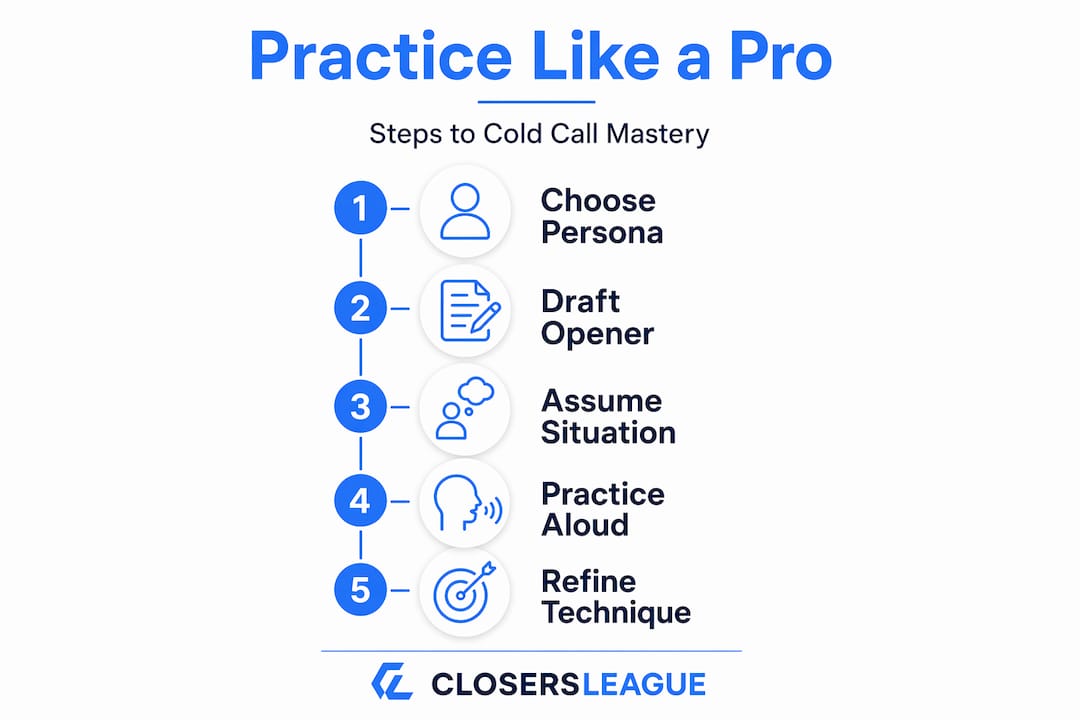
Practice your opener out loud at least ten times before touching any roleplay tool. Most call failures happen in the first 10 to 20 seconds, and targeted repetition of your opening delivers disproportionate confidence gains faster than rehearsing the full call from end to end.
Using AI simulation for realistic practice
This is where modern cold calling practice genuinely separates itself from what was possible five years ago. AI roleplay tools give you access to realistic, on-demand practice scenarios without scheduling a partner, without risking a real lead, and without getting a “nice try” from a colleague who lets you off too easy.
Here’s how to use AI simulation effectively, step by step:
- Choose your seller persona. Start with a straightforward scenario: a motivated seller who is slightly hesitant but open. Build complexity as your confidence grows. Progress to a skeptical out-of-state owner, a grieving probate heir, or an angry homeowner facing foreclosure. Each persona tests a different emotional and conversational skill.
- Set the conditions. Effective practice demands no interruptions, no note reading, and no pausing. Replicate real call pressure by standing up, putting your script out of reach, and treating the simulation as a live call. That cognitive pressure is exactly what builds muscle memory.
- Run the full scenario. Do not stop mid-call to correct yourself. Finish the conversation, then review. Stopping and restarting trains you to freeze under pressure. Completing calls, even bad ones, trains resilience.
- Rotate personas across sessions. Do not repeat the same scenario back to back. Variety is what makes your responses flexible rather than scripted. AI gives you repeatable, unbiased, on-demand practice that peer roleplay simply cannot match for consistency.
- Increase difficulty gradually. Once you can handle a cooperative seller, add interruptions, budget objections, and requests to call back later. These micro-stressors during simulated cold calling sessions are exactly what prepares you for real calls.
Here is a quick comparison of practice methods to show where AI simulation fits:
| Practice method | Realism | Availability | Consistency | Feedback quality |
|---|---|---|---|---|
| Peer roleplay | Medium | Scheduled | Low | Varies widely |
| Self-recording | Low | On-demand | Medium | Subjective |
| AI simulation | High | On-demand | High | Objective, instant |
| Live prospect calls | Very high | Limited | N/A | Costly mistakes |
Pro Tip: Build a personal library of 5 to 7 different seller personas before starting your practice schedule. Having them ready means you spend your session time drilling, not setting up scenarios.
For real estate investors and wholesalers specifically, you can explore scenario-specific roleplay modules built around the exact seller types you will encounter in the field.
Mastering objection handling through practice
Objections are not the problem. Fear of objections is. The good news is that fear responds well to exposure, and you can get that exposure without ever calling a real homeowner.

Roleplay builds a mental map of objections, reducing the fight-or-flight response your brain triggers when a prospect says “I’m not interested” or “Send me something in the mail.” The more times you hear an objection in a safe environment, the less it registers as a threat during a real call.
A few cold calling practice tips that will accelerate your objection handling:
- Practice using the SPIN questioning framework to shift from monologue to dialogue. SPIN stands for Situation, Problem, Implication, and Need-payoff. Instead of defending yourself against an objection, ask a question that redirects the conversation toward the prospect’s actual concern.
- Develop responses that feel flexible, not rehearsed. When a homeowner in a tax-delinquent situation says “I don’t want to sell,” your response should acknowledge their position, not override it. Something like, “That makes sense. A lot of people I talk to feel the same way initially. Can I ask what’s making you hesitant right now?” keeps the conversation moving.
- Intentionally practice with the toughest personas. Practicing with overly cooperative partners does not prepare you for the skeptical, distracted, or outright hostile homeowners you will encounter. Simulating tough personas is not optional. It’s the whole point.
- Focus one full session per week on a single objection type. Narrow focus beats broad repetition when building reflexive responses. If “I already have an agent” trips you up, spend an entire 20-minute session on nothing else.
When you rehearse sales calls this way, you stop reacting to objections and start navigating them. That shift in behavior is what separates closers from callers. You can also study real estate cold calling scripts to see how successful openers handle common pushbacks before they escalate.
Using feedback to close your skill gaps
Practicing without feedback is just repeating mistakes with confidence. The quality of your improvement depends almost entirely on the quality of the data you review after each session.
Here’s what to track after every simulated call:
| Metric | What it reveals | Target benchmark |
|---|---|---|
| Talk-to-listen ratio | Whether you’re dominating or engaging | 20% talk, 80% listen |
| Filler word count | Confidence and preparation level | Under 5 per minute |
| Objection recovery rate | How often you redirect vs. stall | 70% or higher |
| Opening delivery time | Efficiency of your permission opener | Under 20 seconds |
| Call completion rate | Whether you finish calls under pressure | 100% in practice |
AI-powered platforms enforce an 80/20 listening to speaking ratio, which is one of the most direct levers for improving engagement and conversion without ever burning a real lead.
Once you have data, use it to prioritize. If your filler word count is high, run five sessions focused only on pausing instead of saying “um” or “like.” If your objection recovery rate is low, go back to the objection handling drills described above. Feedback without action is just information. Feedback followed by targeted practice is how you actually improve.
Sales reps using AI roleplay see measurable improvements in delivery, objection handling, and confidence through just 3 to 5 short sessions per week. You do not need to spend hours drilling. You need to show up consistently with a specific focus for each session.
Pro Tip: After every session, write down one thing you did well and one specific thing to fix in the next session. This two-minute habit keeps improvement focused and prevents you from practicing the same weak patterns on repeat.
My honest take on AI practice vs. live calling
I’ve seen a lot of new investors make the same mistake. They figure the fastest path to improvement is to jump straight into live calls. Get reps in. Learn by doing. The logic sounds right. The results are usually painful.
Practicing cold calls on live prospects wastes valuable leads and damages your brand before you’ve even built one. In real estate wholesaling, your reputation with homeowners in a specific market is a long-term asset. Stumbling through a probate call or fumbling a pre-foreclosure conversation doesn’t just lose that one deal. It costs you the referral that could have come from it.
What I’ve found through working with investors is that repetition in safe simulated conditions builds confidence faster than live prospect learning, full stop. Not because it’s easier. Because you can isolate and fix specific weaknesses without consequences. You can run the same objection ten times in a row until your response is automatic. You cannot do that on a real call.
My take is that modern AI simulation has removed the last remaining excuse for skipping structured practice. The tools are there. The personas are realistic. The feedback is immediate and objective. What separates reps who improve quickly from those who plateau is not raw talent. It’s the willingness to treat practice seriously before the stakes are real. When you finally do dial that first motivated seller in foreclosure or probate, you want your skills to show up automatically, not get tested for the first time.
— Dave
Build your cold calling skills with Closersleague
If you are ready to stop guessing and start drilling, Closersleague was built exactly for this.
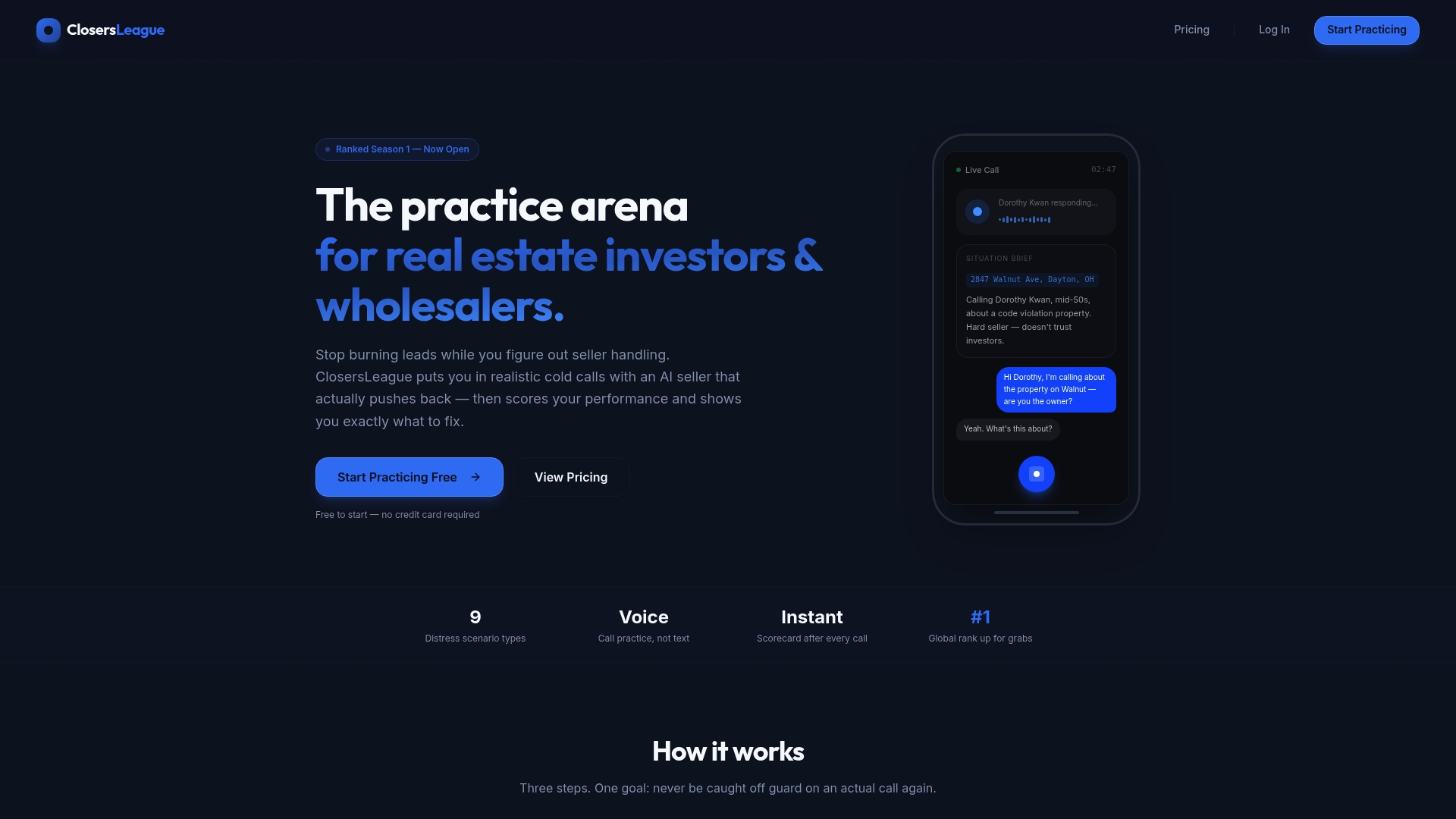
Closersleague is an AI-powered cold calling training platform built specifically for real estate investors and wholesalers. The platform gives you access to realistic seller roleplay scenarios covering every major distressed seller type, including pre-foreclosure, probate, divorce, tax delinquent, and tired landlord situations. Each session scores your performance across key categories and delivers instant feedback so you know exactly what to fix. Whether you’re brand new to wholesaling or you want to sharpen a specific skill before a big push, Closersleague gives you a safe, repeatable environment to practice pre-foreclosure calls and every other seller scenario on your list.
FAQ
What is the best way to practice cold calling without real leads?
AI-powered roleplay platforms give you the most realistic simulated cold calling experience available, with on-demand access, varied personas, and instant performance feedback. Pairing AI simulation with focused objection drills and regular script review builds skill faster than live prospect calling.
How often should you practice cold calling?
Research shows 3 to 5 short sessions per week with a specific focus for each session drives the fastest improvement in delivery, objection handling, and confidence.
Why is role play cold calling better than live practice?
Live prospect practice wastes valuable leads and risks your reputation, while roleplay lets you repeat difficult scenarios, isolate weaknesses, and build reflexive responses without any real-world consequences.
What metrics should I track during cold calling practice?
Focus on your talk-to-listen ratio, filler word count, objection recovery rate, and how long your opening takes. These four metrics reveal the most common skill gaps and give you clear targets for improvement.
How do I handle objections better on cold calls?
Practice the same objection repeatedly in dedicated sessions rather than mixing objection types. Role-play desensitizes the brain’s rejection response and builds automatic, flexible rebuttals that work across different seller situations.