
Boost Real Estate Deals with a Proven Investor Script Workflow
Most real estate investors and wholesalers spend hours on the phone with little to show for it. The problem isn’t effort. It’s the absence of a structured script workflow. When you’re calling distressed homeowners facing foreclosure, probate, or divorce, every word matters. A proven workflow keeps you focused, builds trust faster, and turns more conversations into qualified leads. Scripts boost conversion by 22% and the average cold calling success rate sits between 2% and 5%, which means your process has to work harder than your volume alone.
Table of Contents
- What you need before starting your script workflow
- Crafting and customizing your script for each seller type
- Executing the script: Step-by-step cold calling process
- Measuring results and improving your workflow
- Expert perspective: Why most investors fail (and how to win)
- Level up your cold calling with ClosersLeague
- Frequently asked questions
Key Takeaways
| Point | Details |
|---|---|
| Preparation matters | Proper setup with scripts, tech, and lead lists boosts your contact quality from the start. |
| Customize scripts | Adapting your approach for each distressed seller profile increases your engagement rate. |
| Follow-up doubles deals | Persistence and structured follow-up can double your conversions from cold calling. |
| Track your metrics | Consistent measurement is the fastest way to find and fix problems in your calling workflow. |
| Practice beats volume | Roleplay and data-driven revision turn average calls into repeat deals—quality wins over quantity. |
What you need before starting your script workflow
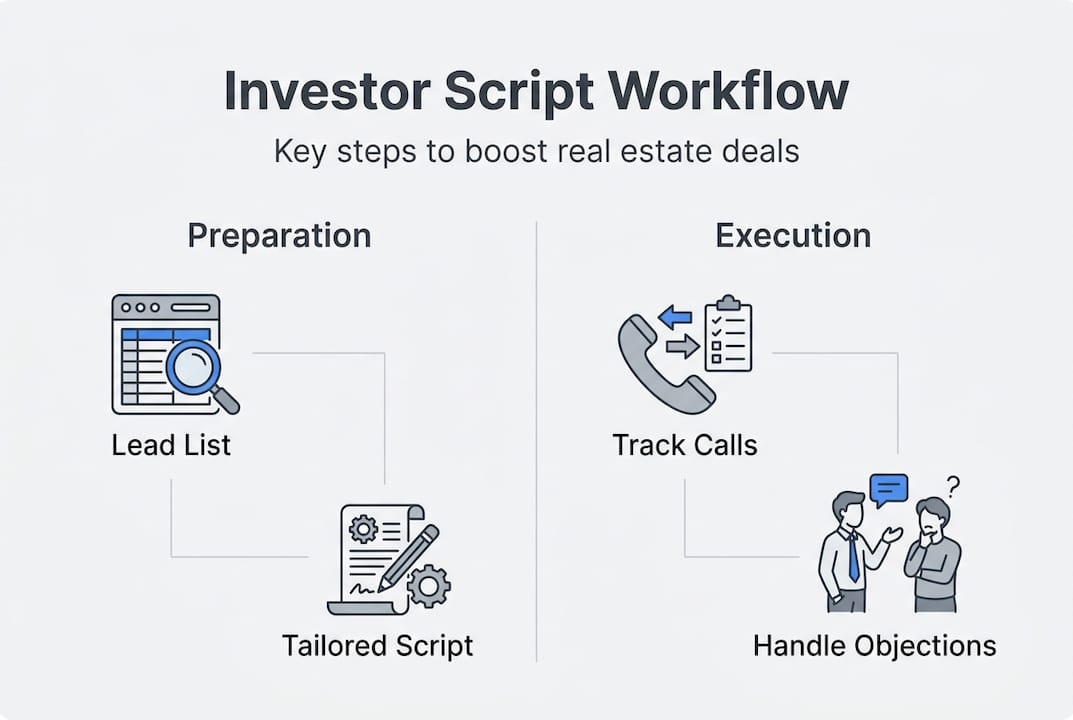
Preparation is the difference between a calling session that produces results and one that burns your time. Before you dial a single number, make sure you have the right tools, the right lists, and the right mindset in place.
Start with your script templates. You need separate scripts for each distressed seller situation: probate, foreclosure, divorce, and absentee owners. A generic opener falls flat when you’re talking to a grieving executor or a homeowner who just received a notice of default. Sellers in these situations respond to empathy and specificity, not a one-size-fits-all pitch. Learning the cold calling basics for each scenario is the first foundation block.
Next, research seller motivation before you call. Pull public records, check for tax delinquency, and note how long the property has been in distress. A few minutes of preparation per lead changes the energy of the call completely.
Tech setup checklist before your first call:
- CRM platform: Log every call, note outcomes, and set follow-up reminders
- Dialer: Use a predictive or power dialer to maximize session efficiency
- Call recording: Review your tone, pacing, and objection handling after each session
- Lead list: Segment by distress type, zip code, and contact status
Key preparation benchmarks:
| Preparation task | Why it matters |
|---|---|
| Script template per seller type | Builds rapport and relevance fast |
| Pre-call motivation research | Enables tailored, empathetic opener |
| CRM logging system | Tracks pipeline and follow-up timing |
| Organized lead list | Reduces wasted dials and confusion |
The scale of the effort required is real. 5,500 calls generated just 32 qualified leads and 8 contracts in one documented campaign, which shows exactly why preparation and list quality are non-negotiable.
Pro Tip: Before every calling session, spend 10 minutes reviewing your lead list and refreshing your memory on each seller’s situation. Even a small amount of context dramatically improves your opening line.
Crafting and customizing your script for each seller type
Once you’re set up with tools and lead lists, it’s time to build a tailored script. A strong script is not a rigid monologue. It’s a flexible conversation guide that adapts to the human on the other end.
Your opening line carries most of the weight. It needs to acknowledge the seller’s situation without sounding intrusive. Something like, “I noticed your property on [street name] and wanted to reach out because I work with homeowners in situations like yours” is specific enough to feel personal without being aggressive.
How to adjust your approach by seller type:
- Foreclosure: Lead with urgency and empathy. Acknowledge the timeline and position yourself as a solution, not a vulture.
- Probate: Open gently. Executors are often overwhelmed. Focus on relieving burden, not maximizing speed.
- Divorce: Be neutral. Both parties may be involved. Avoid taking sides and emphasize a clean, fast resolution.
- Absentee owner: Focus on the hassle of remote management. Offer simplicity and certainty.
Role-playing objections is just as important as the script itself. Practice pushbacks like “I’m not interested,” “I already have an agent,” and “How did you get my number?” For foreclosure seller scripts and probate scripts for investors, the emotional weight is higher, so your response has to feel practiced and calm, not rehearsed and robotic.
Script quality comparison by approach:
| Script type | Personalization level | Objection coverage | Conversion potential |
|---|---|---|---|
| Generic template | Low | Minimal | Below average |
| Seller-type script | Medium | Moderate | Average |
| Situation-specific + roleplay | High | Thorough | Above average |
Structured scripts improve contact-to-appointment rates by 22%, and the gap between a generic script and a tailored one is where that improvement lives. You can get hands-on cold calling practice for every seller type to tighten your delivery before you go live.

Pro Tip: Write a “branching” script with three possible paths after your opener: interest, hesitation, and refusal. Preparing for all three means you’re never caught off guard.
Executing the script: Step-by-step cold calling process
With customized scripts in hand, you’re ready to start your calling sessions. Execution is where preparation pays off, but only if you follow a disciplined process.
Step-by-step call structure:
- Open with your personalized, situation-specific line. Keep it under 20 seconds.
- Qualify early. Ask one open question about their timeline or current situation.
- Listen actively. Let the seller talk. Emotional sellers often reveal their true motivation within the first two minutes.
- Handle objections using your pre-prepared responses. Stay calm and redirect to their pain point.
- Close for a next step, not necessarily a deal. A follow-up call or a scheduled appointment is a win.
- Log immediately. Before moving to the next dial, note the outcome, tone, and any relevant details in your CRM.
CRM logging is not optional. Investors who skip notes between calls lose critical context and miss follow-up timing, which directly kills conversion. For out-of-state owner calling practice, logging is especially important because the seller’s sense of urgency can shift fast without your awareness.
“The fortune is in the follow-up. Most sellers need more than one touchpoint before they’re ready to talk seriously.”
This is supported by data. The average cold calling success rate sits at 2% to 5%, but consistent follow-up can double conversion. That means your seventh call to a hesitant probate executor might be the one that gets the deal. Practicing your pre-foreclosure call roleplay ahead of those high-stakes moments builds the composure you need when it counts.
Pro Tip: Set a hard rule: log every call within 60 seconds of hanging up. Memory fades fast. A quick “expressed interest, mentioned probate attorney involvement, call back in two weeks” is all you need to keep the lead alive.
Measuring results and improving your workflow
Now that you’re executing the workflow, ongoing improvement is the final step. Tracking your numbers is not just about knowing how you’re doing. It’s about knowing exactly where to fix the process.
The three ratios that matter most:
- Call-to-contact rate: How many dials result in a live conversation
- Contact-to-lead rate: How many conversations produce a qualified lead
- Lead-to-contract rate: How many leads convert to signed agreements
If your call-to-contact rate is low, your list quality or dial timing needs work. If your contact-to-lead rate suffers, your opener and qualifying questions need refinement. If lead-to-contract is low, your follow-up system or offer needs adjustment. Each ratio points to a specific fix.
Workflow KPI tracking table:
| Metric | Benchmark | Action if below target |
|---|---|---|
| Call-to-contact rate | 10-15% | Improve list quality and dial times |
| Contact-to-lead rate | 5-10% | Refine opener and qualification questions |
| Lead-to-contract rate | 3-5% | Strengthen follow-up cadence and offer clarity |
| Calls per session | 50-80 | Improve dialer setup and time blocking |
Industry data shows 40 qualified leads per month per caller produces roughly two contracts from every 65 to 75 leads. Use that as your baseline and work backward from the number of contracts you want each month to set your daily calling targets.
For specific property segments, tracking results from vacant property cold calling separately from other lead types helps you identify which distress categories are most productive in your market.
Pro Tip: Review your KPIs every Friday. A weekly check lets you catch a script problem before it costs you an entire month of leads. Make one small adjustment per week, not five at once, so you can isolate what works.
Expert perspective: Why most investors fail (and how to win)
Here is an uncomfortable truth. Most investors who struggle with cold calling are not making too few calls. They are making too many calls with no system, no feedback loop, and no iteration. They copy a script from a YouTube video, dial for a week, get frustrated with rejection, and quit. That cycle does not produce deals. It produces burnout.
The investors who win consistently treat cold calling like a skill that is built through deliberate repetition, not volume. They roleplay their scripts before live calls. They review recordings and score their own performance. They adjust one variable at a time and measure the result. That discipline is rare, which is exactly why it creates an edge.
Generic scripts fail not because scripts are bad but because they were never tested against real objections in high-pressure simulations. If you have never practiced your probate opener with someone pushing back hard, you will freeze when a real executor does it. AI cold calling practice gives you that pressure without the stakes. The investors who use structured feedback and data-driven refinement are not luckier. They are simply better prepared.
Level up your cold calling with ClosersLeague
You now have the framework: prepare your tools, build tailored scripts, execute with discipline, and track your metrics. The next step is practice. Not passive reading. Live, pressure-tested repetition.
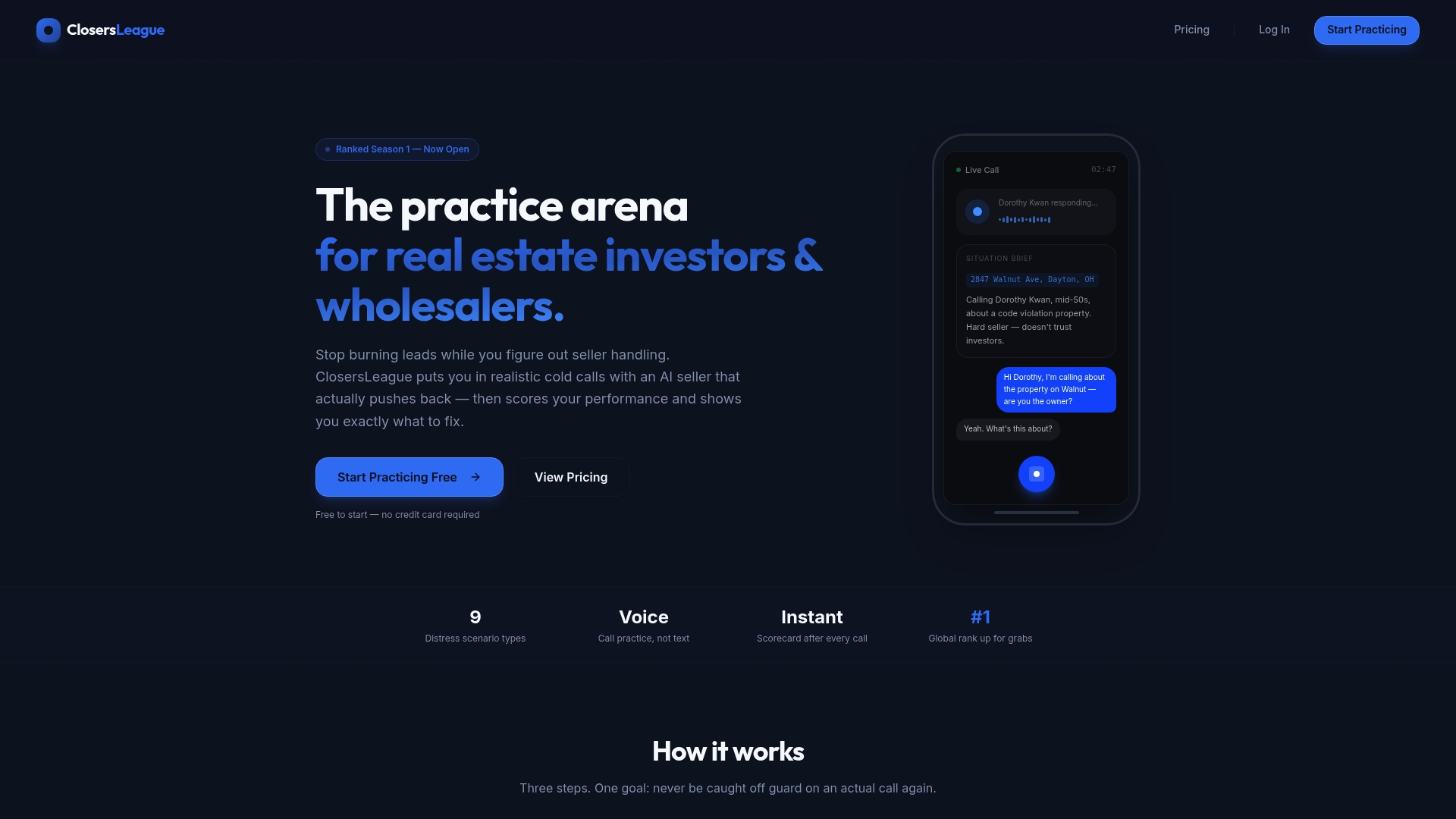
ClosersLeague is an AI-powered cold calling training platform built specifically for real estate investors and wholesalers. You can practice inherited property roleplay, sharpen your response to code violation roleplay scenarios, and build confidence across every distressed seller situation before you ever dial a live lead. Our AI practice for investors delivers real-time feedback so you improve with every simulated call. Stop winging it. Start drilling.
Frequently asked questions
How many cold calls does it take to get a real estate deal?
Expect roughly 100 calls per deal on average. The typical success rate sits between 2% and 5% per call, so consistent volume and follow-up are both essential.
Does using a script really help with cold calling results?
Yes. Structured scripts can improve appointment rates by up to 22% compared to unscripted calls, especially when customized by seller situation.
What’s the most important metric to track in my workflow?
Focus on your call-to-lead and lead-to-contract ratios. Industry benchmarks show 40 leads per month typically yields two contracts, so those ratios reveal exactly where your workflow is leaking.
How can I handle rejections and objections during calls?
Build objection responses directly into your script for each seller type and practice them through roleplay before going live. Preparation turns rejection from a wall into a redirect.
Recommended
- Real Estate Cold Calling Practice — AI Roleplay for Every Seller Type | ClosersLeague
- Pre-Foreclosure Cold Calling Practice — AI Roleplay for Real Estate Investors & Wholesalers
- Foreclosure Cold Calling Practice — AI Roleplay for Real Estate Investors & Wholesalers
- Vacant Property Cold Calling Practice — AI Roleplay for Real Estate Investors & Wholesalers
- Your Trusted Realtor in Singapore | Aesthetic Havens