
You’ve made the calls, pulled the lists, and spent hours tracking down homeowners. But too many of those conversations go nowhere. The seller isn’t motivated, the property is tied up in legal complications, or you’re talking to someone who has no authority to make a decision. That frustration is the reality of unqualified leads. Distressed situations like foreclosure, probate, and divorce add emotional layers that make qualification even harder. This guide walks you through exactly what you need, what to ask, and how to tell a real lead from a dead end so you stop wasting time and start closing deals.
Table of Contents
- Essential tools and prerequisites for qualifying leads
- Steps to qualify distressed property leads
- Verifying motivation and intent: Key questions to ask
- Avoiding common mistakes in lead qualification
- Why lead qualification knowledge is your best investment
- Sharpen your qualification skills with ClosersLeague
- Frequently asked questions
Key Takeaways
| Point | Details |
|---|---|
| Find the decision-maker | Skip tracing and direct contact with the seller is essential for qualifying distressed property leads. |
| Verify urgency and motivation | Leads from probate or pre-foreclosure filings should be vetted in conversation to confirm their intent and deadline. |
| Use tailored lead magnets | Generic lead magnets attract low-intent prospects; situation-specific approaches yield more qualified leads. |
| Ask targeted questions | Scripts with scenario-specific questions uncover urgency, motivation, and deal constraints. |
| Avoid common pitfalls | Speaking to the wrong person or using generic scripts wastes time and opportunities. |
Essential tools and prerequisites for qualifying leads
With context on why qualifying leads is important, let’s look at what you need before starting.
Before you dial a single number, you need the right setup. Working distressed leads without the right tools is like showing up to a construction site without your equipment. You might get some things done, but you’ll be slower, sloppier, and more likely to miss something important.
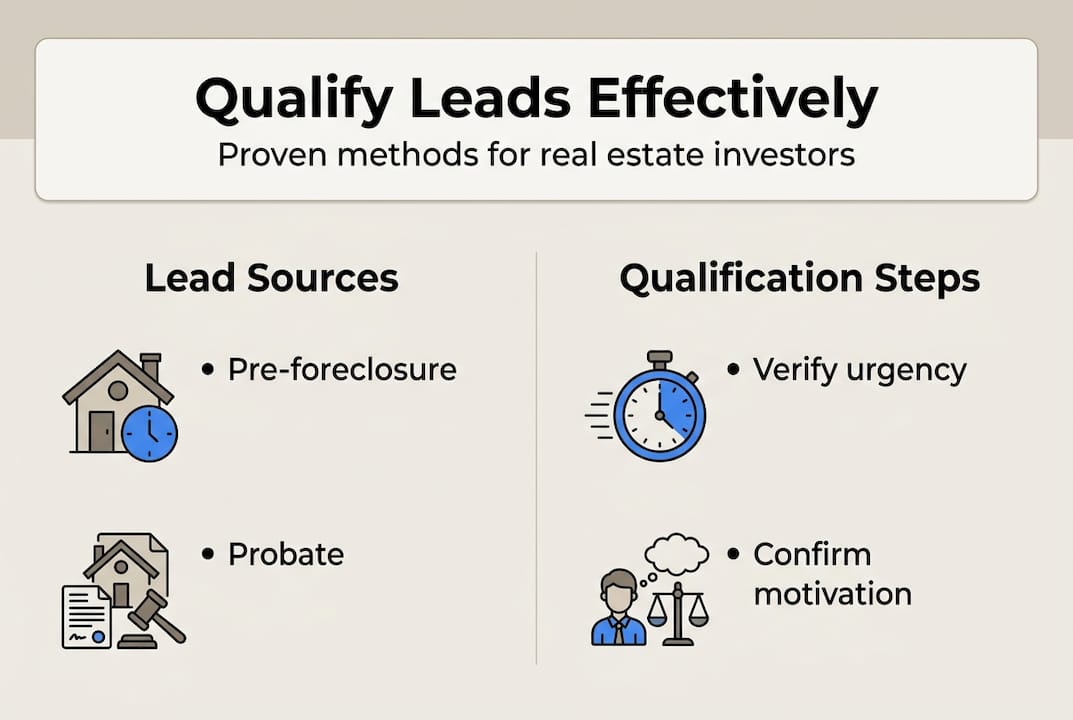
The foundation starts with your data sources. Pre-foreclosure filings, probate court records, and divorce case filings are publicly available in most counties. These documents signal that a homeowner is under pressure. A notice of default (NOD) in a pre-foreclosure situation, for example, means the homeowner has missed mortgage payments and a legal clock has started ticking. Probate filings show that an estate is being settled, often requiring heirs to liquidate property quickly.
As distressed lead experts note, you should treat those records as the starting point and not the deal itself. You still need to confirm motivation by speaking directly with the decision-maker and validating urgency and real constraints. A filing is just a signal. The conversation is the confirmation.
Here are the core tools every investor and wholesaler needs:
- Phone and reliable internet connection for consistent outreach
- Skip tracing service (such as BatchSkipTracing or PropStream) to locate current contact information for property owners
- CRM (customer relationship management) software to log every contact, note follow-up dates, and track lead status
- Lead data sources including county probate records, tax delinquent lists, MLS pre-foreclosure data, and divorce filings
- Proven call scripts tailored to each distressed situation (foreclosure, probate, divorce)
- Calendar and task management tools so no follow-up falls through the cracks
Understanding the cold calling basics before you reach distressed sellers gives you a real edge. These calls carry emotional weight. Sellers are often scared, grieving, or overwhelmed. You need to show up prepared.
Pro Tip: Always verify you are speaking with the actual decision-maker before investing time in any conversation. In probate situations, there may be multiple heirs with legal authority. In foreclosure, the homeowner may have already handed off communication to an attorney. Ask directly: “Are you the person who would be making decisions about the property?”
Here is a quick overview of which data source maps to which distressed situation:
| Lead type | Primary source | Urgency level |
|---|---|---|
| Pre-foreclosure | Notice of default, lis pendens filings | High |
| Probate | County probate court records | Moderate to high |
| Divorce | Family court filings | Moderate |
| Tax delinquent | County tax assessor records | High |
Getting familiar with a real estate CRM before you scale your outreach will pay off fast. When you’re working 50 to 100 leads at once, memory alone won’t cut it.
Steps to qualify distressed property leads
Once you have your tools and data, here’s how to actually qualify distressed leads.
Qualification isn’t a single moment. It’s a process. Each step narrows the field and confirms whether a lead deserves more of your time and attention.
-
Identify the lead from public records or inbound inquiry. Start with a specific list: pre-foreclosure notices, probate filings, or tax delinquent records. Inbound inquiries from direct mail or bandit signs also count, but they still need full qualification.
-
Skip trace to find the decision-maker. The record shows a property address and often a name. Skip tracing finds the current phone number, email, and sometimes additional household contacts. This step is non-negotiable. Calling the wrong person is a guaranteed dead end.
-
Make initial contact with a clear opening. Your first words set the tone. Lead with empathy and clarity. Identify yourself, acknowledge their situation without being intrusive, and ask an open-ended question that invites them to talk. A solid opening line for sellers makes the difference between a hang-up and a real conversation.
-
Confirm motivation and urgency. This is the heart of qualification. Ask about their timeline, what’s driving their need to sell, and whether they’ve explored other options. A seller with a firm deadline (a probate court date, a foreclosure auction date) has real urgency. A seller who is “just thinking about it” does not.
-
Document constraints. Every distressed situation comes with constraints. Probate sellers may need court approval to sell. Divorce sellers may need agreement from an estranged spouse. Pre-foreclosure sellers may owe more than the property is worth. These details belong in your CRM immediately.
Distressed leads carry natural deadlines built into their situations. A pre-foreclosure lis pendens (a legal notice that a property is involved in a lawsuit) starts a ticking timeline. Probate courts often impose their own schedules. These deadlines are your allies because they create genuine urgency that you do not have to manufacture.
“Property listings are not the deal. You must find the person, the decision-maker, and confirm motivation through real conversation.”
Studies on distressed lead pipelines show that when urgency is confirmed in the first call, conversion rates improve significantly compared to leads where urgency was assumed but never verified. Following a consistent investor script workflow helps you hit every qualification checkpoint without missing a beat.

Verifying motivation and intent: Key questions to ask
After you’ve made contact, the conversation is your chance to truly qualify motivation.
The questions you ask reveal everything. Sellers who are truly motivated answer with specificity. They know their timeline. They understand their problem. They want a solution. Sellers who are not motivated give vague answers, change the subject, or focus only on price.
Here is a comparison of questions that separate low-intent from high-intent sellers:
| Question | Low-intent response | High-intent response |
|---|---|---|
| “What’s your timeline for selling?” | “No rush, whenever the right offer comes.” | “We need to close before the auction in 6 weeks.” |
| “What’s driving your decision to sell?” | “Just exploring options.” | “We can’t keep up with the mortgage payments.” |
| “Have you talked to other buyers or agents?” | “Not really, just testing the market.” | “We tried listing but couldn’t sell fast enough.” |
| “Are there any legal or family factors involved?” | “No, it’s straightforward.” | “There are two other heirs and we need everyone to agree.” |
| “What would the ideal outcome look like for you?” | “Getting top dollar, obviously.” | “Getting enough to cover what we owe and move on.” |
Look for these green lights in a seller’s responses:
- They mention a specific date or deadline
- They acknowledge financial pressure without being prompted
- They have already ruled out other options (listing, refinancing, waiting)
- They are willing to discuss numbers openly
- They show emotional readiness to let go of the property
Watch for these red flags:
- They can’t confirm who has final decision-making authority
- They insist on retail price with no flexibility
- They have no timeline or sense of urgency
- They are gathering information for someone else
- They become defensive or evasive when asked about constraints
Generic lead sources attract low-intent prospects because they are not situation-specific. A targeted approach, reaching out to sellers based on their specific legal or financial situation, connects you with people who already understand why they might need to sell. That context makes your questions land differently.
Pro Tip: Always probe for urgency, timeline, and obstacles before you ever discuss price. Price is the last thing a qualified seller cares about. Urgency and relief are what they want most.
Practicing your questioning technique with AI cold calling roleplay helps you get comfortable handling hesitation and pushback without losing your footing. The more you practice, the faster you can read a conversation and steer it in the right direction. Review cold calling tips and put a solid follow-up plan in place for leads that need more time before they’re ready to commit.
Avoiding common mistakes in lead qualification
Qualification is more than asking questions. It’s about avoiding the pitfalls that cost investors deals.
Even experienced investors fall into patterns that sabotage their results. Here are the most common mistakes and what to do instead.
Common mistakes in lead qualification:
-
Using a generic script for every situation. A foreclosure seller and a probate seller are in completely different emotional and legal situations. One is fighting to save their credit. The other may be grieving a parent. The same script won’t work for both. Customize your approach to the specific situation you’re calling into.
-
Talking to the wrong person. This is the single biggest time-waster in distressed lead calls. Family members, tenants, and neighbors sometimes answer the phone. Always confirm you are speaking with the actual owner or authorized decision-maker before sharing any details about your interest.
-
Assuming motivation instead of verifying it. A pre-foreclosure filing doesn’t mean the homeowner wants to sell. Some are actively working with lenders on loan modifications. Others are paralyzed and haven’t decided anything. You must ask directly and listen carefully to the answer.
-
Skipping documentation. If you have a great conversation and forget to log it, you’ve lost that progress. Every call detail, every objection, every piece of timeline information belongs in your CRM immediately after the call.
-
Giving up after one contact attempt. Most distressed sellers don’t respond on the first call. They’re scared, overwhelmed, and sometimes embarrassed. A consistent, respectful follow-up sequence builds trust over time.
Targeted outreach to situation-specific leads consistently outperforms generic lead magnets because it attracts prospects who are already in a relevant context and stage of decision-making. Specificity drives conversion.
The fix for each of these mistakes comes down to preparation and discipline. Build situation-specific scripts. Confirm the decision-maker on every call. Ask, don’t assume. Log everything. Follow up consistently. Understanding why direct outreach wins over passive strategies helps reinforce the value of every qualifying conversation you have.
Investors who treat qualification as a discipline, not a formality, close more deals with fewer calls. That’s not a coincidence. It’s the result of precision over volume.
Why lead qualification knowledge is your best investment
Here is a hard-won lesson every investor should hear: more leads are not always better.
The instinct in this business is to pull bigger lists, make more calls, and cast the widest possible net. We get it. Volume feels productive. But chasing 200 unvetted leads burns your time, your energy, and your reputation. Sellers talk. If you’re calling everyone with a pulse and showing no real understanding of their situation, word gets around.
Ten well-qualified distressed leads will outperform 100 random names on a list. Every time. A truly motivated seller, one facing a real deadline with real urgency, is ready to engage. They want someone who understands their situation. When you show up prepared, with the right questions and genuine empathy, you become the obvious choice.
Motivation is never assumed. It’s uncovered through conversation, specifically through the kinds of motivated seller insights that come from deliberate practice and pattern recognition. The investors who build that skill early are the ones who build sustainable deal flow. Stop measuring success by the number of calls you make. Start measuring by the quality of the conversations you have.
Sharpen your qualification skills with ClosersLeague
Ready to put these strategies to work? ClosersLeague gives you the tools to practice and refine your qualification approach before you ever risk a real conversation.

Our AI-powered cold calling practice platform lets you rehearse distressed seller scenarios with instant feedback so you build confidence fast. Practice handling objections, testing opening lines, and running full qualification sequences in a low-stakes environment. You can sharpen your approach specifically for inherited property calls or pre-foreclosure outreach, two of the most emotionally charged lead types in the business. Stop winging it. Start drilling with scenarios that actually prepare you for the real thing.
Frequently asked questions
What is the fastest way to qualify a distressed property lead?
The quickest path is to contact the decision-maker directly and confirm urgency and motivation in conversation. As distressed lead guidance makes clear, public records are the starting point, but a direct conversation with the right person is where real qualification happens.
How can I tell if a seller is truly motivated?
Ask specific questions about their timeline, reason for selling, and willingness to discuss obstacles. Motivated sellers in distressed situations have natural deadlines built into their circumstances and respond with clarity and urgency when asked directly.
Are generic lead magnets effective for qualifying real estate leads?
No. Generic lead magnets attract low-intent prospects who are not ready to act. Targeted outreach tied to a specific situation, such as a foreclosure notice or probate filing, consistently produces more relevant and motivated leads.
What types of records are best to start with for distressed leads?
Pre-foreclosure, probate, and divorce filings are your best starting points because they signal both motivation and a built-in deadline. Probate and pre-foreclosure records in particular carry timelines that create genuine seller urgency.
Should I use scripts when qualifying real estate leads?
Yes, but treat them as frameworks, not rigid scripts. A structured approach helps you hit every qualification checkpoint, but you must adapt your language and tone based on the specific situation and how the seller is responding in real time.
Recommended
- Master Real Estate Lead Generation: Cold Calling Basics – ClosersLeague Blog
- Cold calling for investors: why direct outreach still wins – ClosersLeague Blog
- Real estate CRM: Benefits, features, and best practices – ClosersLeague Blog
- Real Estate Cold Calling Practice — AI Roleplay for Every Seller Type | ClosersLeague