
Real Estate Follow Up: Close More Deals in 2026
Most investors spend thousands generating leads, then lose those deals not to better-priced competitors, but to silence. They follow up once or twice, hear nothing, and move on. The truth is, 78% of deals go to the first responder who stays consistent, not the one who made the best first impression. Real estate follow-up is the system that separates investors closing 2 deals a month from those closing 10. This guide breaks down what follow-up really means for wholesalers and investors working distressed sellers, why it matters more than your opening script, and exactly how to build a process that keeps you in the game long enough to win.
Table of Contents
- What is real estate follow up?
- Why consistent follow up unlocks more deals
- Manual vs. automated follow up: Which works best?
- Designing an effective real estate follow up strategy
- Our take: What most investors get wrong about follow up
- Level up your follow up with ClosersLeague
- Frequently asked questions
Key Takeaways
| Point | Details |
|---|---|
| Follow-up is process-driven | Consistent, multi-touch follow-up wins more deals than one-off outreach. |
| Automation boosts consistency | CRMs and AI tools nearly double follow-up success by organizing and automating outreach. |
| Speed and patience both matter | Rapid first contact plus months of nurturing dramatically improve chances with distressed sellers. |
| Customization is king | Adapting your message to seller motivation and using multiple channels drives better results. |
What is real estate follow up?
With the stakes for missed deals so high, it’s essential to clarify what follow-up truly means in the real estate context.
Real estate follow-up is the practice of systematically reconnecting with seller leads who haven’t yet made a decision. It’s not about pestering people. It’s about staying present, building trust, and being the investor a homeowner thinks of when they’re finally ready to act. For wholesalers and investors working distressed leads, this is especially critical because the timeline from first contact to signed contract can stretch weeks or even months.
Distressed homeowners, whether facing foreclosure, probate, divorce, or tax delinquency, are often emotionally overwhelmed. They may not be ready to sell today. Fear, indecision, and family pressure all slow the process. Your job is to stay in their orbit without being pushy, so that when the moment of decision arrives, you’re the trusted contact they call.
The core goals of real estate follow-up are:
- Establish trust by showing up consistently and respectfully
- Qualify motivation by learning more about their situation with each conversation
- Keep communication open so the seller doesn’t disappear into a competitor’s pipeline
Here’s what makes this harder than it sounds. Most wholesalers follow up only 1.3 times on average, but research shows 8 to 12 touches are needed to convert a motivated seller. That gap is where deals die.
“The fortune is in the follow-up. Most investors quit right before a seller is ready to say yes.”
Strong follow-up starts with understanding real estate lead generation basics so you know which leads deserve the most attention. Not every lead is equal. Pre-foreclosure sellers with a court date in 60 days need a different cadence than an inherited property owner who isn’t sure they want to sell at all. Segmenting your leads by urgency and motivation level is the first step toward a follow-up system that actually works.
Follow-up is not a single call. It’s a structured sequence of touches across multiple channels, including phone calls, text messages, emails, and even handwritten notes, designed to meet the seller where they are emotionally and logistically.
Why consistent follow up unlocks more deals
Understanding what follow-up means is just the start. Let’s look at why frequency and method are critical for actually closing more deals.
The data here is hard to ignore. Leads followed up within 5 minutes convert 21 times more than those contacted later, and consistent follow-up can produce 60 to 80 percent more closed deals. Speed matters at the start, but consistency is what carries you across the finish line.

Here’s how follow-up frequency impacts conversion:
| Follow-up cadence | Average touches | Estimated conversion rate |
|---|---|---|
| Single touch | 1x | Very low (under 5%) |
| Average investor | 1.3x | Low (5-10%) |
| Optimal cadence | 8-12x | High (30-50%+) |
80% of sales require 5 or more follow-up attempts before a lead converts. Yet the majority of investors give up after one or two. That’s not a lead problem. That’s a follow-up problem.
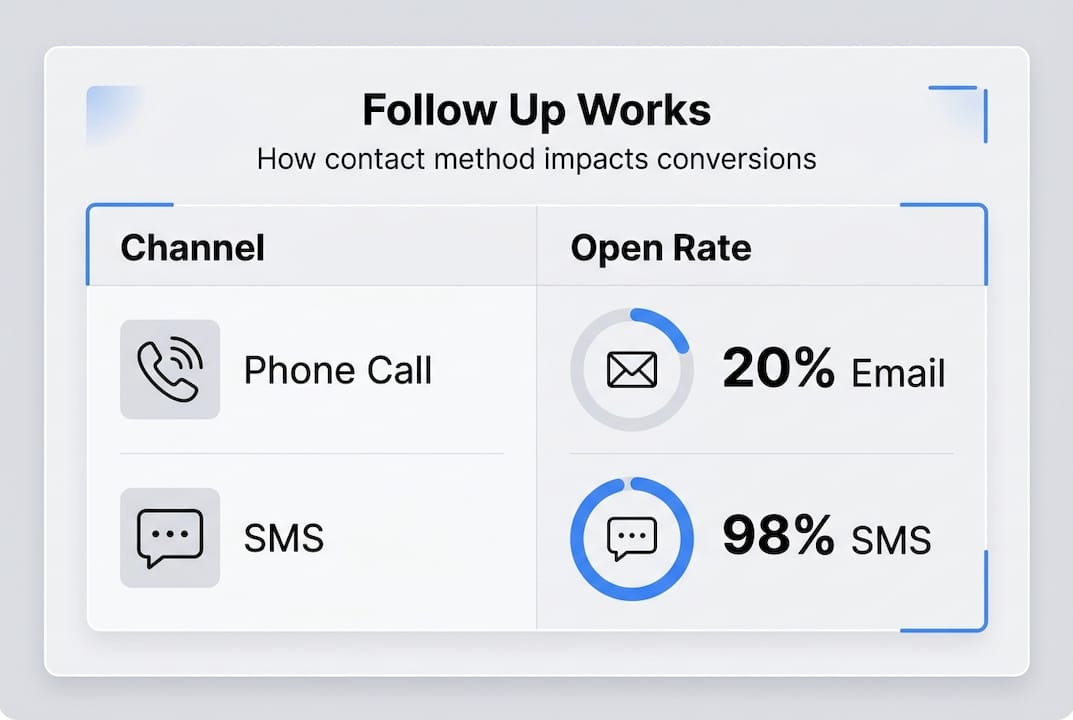
Channel choice also matters. SMS has a 98% open rate compared to roughly 20% for email. That doesn’t mean you abandon email, but it does mean text messages should be a primary tool in your outreach sequence. Calls are still the most personal and effective for building real rapport, especially with emotionally distressed sellers.
Pro Tip: Build a simple tracking spreadsheet or use a CRM from day one. Log every contact attempt, the seller’s response, and the next scheduled follow-up date. This one habit alone puts you ahead of 80% of your competition. Pair it with cold calling tips to sharpen what you say on each touch.
For a repeatable framework you can apply immediately, study a proven investor script that walks through the full workflow from first call to follow-up sequences. Structure your words as carefully as you structure your schedule.
Manual vs. automated follow up: Which works best?
Once you recognize the power of consistent follow-up, the next question is how: should you do it yourself, or use technology to help?
The honest answer is both, but in the right combination.
Manual follow-up means you personally call, text, or email each lead on your own schedule. The upside is a genuine personal touch that builds real rapport. The downside is that humans forget, get busy, and deprioritize leads that haven’t responded. Most investors doing manual follow-up average just 1.3 touches per lead, which we already know is far too few.
Automated follow-up uses CRM software or AI tools to send scheduled messages, trigger reminders, and track responses without you having to remember every lead. Top performers use AI or CRM tools to achieve near-100% follow-up consistency, compared to manual’s 1.3 touches.
Here’s a quick comparison:
| Method | Pros | Cons |
|---|---|---|
| Manual | Personal, flexible, builds rapport | Inconsistent, time-intensive, easy to forget |
| Automated (CRM/AI) | Scalable, consistent, trackable | Can feel impersonal if not customized |
Pros of manual follow-up:
- Builds genuine human connection
- Allows real-time tone adjustment based on seller mood
- Ideal for high-priority, high-motivation leads
Cons of manual follow-up:
- Hard to maintain at scale
- Leads fall through the cracks without a strict system
Pros of automated follow-up:
- Handles large lead volumes without extra effort
- Keeps long-nurture leads warm over months
- Provides data on open rates, response rates, and timing
Cons of automated follow-up:
- Generic messages can feel cold to distressed sellers
- Requires setup time and ongoing management
Pro Tip: Blend both approaches. Use automation to keep leads warm with scheduled texts and emails, then jump in personally for calls at key intervals. This hybrid approach gives you scale without losing the human connection that closes deals. Practice your personal outreach with AI cold calling practice so when you do pick up the phone, you sound confident and prepared.
For investors just starting out, even basic cold calling basics can help you understand how to structure your outreach before automating anything.
Designing an effective real estate follow up strategy
Now that you know your options, it’s time to build a repeatable follow-up strategy designed to succeed with even the toughest leads.
One critical reality to accept first: 63% of leads require more than 3 months of nurturing before they convert. Your strategy must be built for the long game, not just the quick win.
Here’s a step-by-step approach:
- Qualify the lead on first contact. Understand their situation, motivation level, and timeline before investing heavy follow-up effort.
- Segment by motivation. High urgency leads (foreclosure, code violations) get aggressive short-term cadences. Low urgency leads (tired landlords, inherited properties) get longer, softer nurture sequences.
- Set your follow-up cadence. For high-urgency leads: contact attempts on days 1, 3, 7, 14, and 30. For low-urgency leads: monthly or bi-monthly touches over 3 to 6 months.
- Use multiple channels. Rotate between calls, texts, and emails. Each channel reaches sellers differently and at different moments in their day.
- Monitor and adjust. Track what’s working. If texts get responses but calls go unanswered, adjust your channel mix accordingly.
Best practices to layer in:
- Personalize every message. Reference something specific from your last conversation. “I know you mentioned your mom’s estate is still in probate” lands better than a generic check-in.
- Time your outreach. Calls between 8 to 9 a.m. and 4 to 6 p.m. tend to get the best answer rates for homeowners.
- Handle objections with patience. Distressed sellers often say “I’m not ready” as a reflex. Acknowledge it, respect it, and schedule the next follow-up before you hang up.
For pre-foreclosure sellers, urgency is your ally. For inherited property owners, empathy and patience win. For tired landlords, focus on the relief of a fast, clean sale. Tailor your message to their specific pain point, and use negotiation tactics to handle the harder conversations when sellers push back on price or timeline.
Our take: What most investors get wrong about follow up
Putting it all together, it’s important to reflect on what separates merely good follow-up from the habits of top performers.
Most investors treat follow-up like a chore they do until they feel rejected. Two ignored calls and they move on, convinced the lead is dead. But here’s the reality: silence is not a no. It’s usually fear, distraction, or bad timing. The investor who shows up calmly and consistently for 90 days wins the deal that 20 others gave up on.
Personalization and timing matter far more than having a perfect script. Sellers don’t remember your exact words. They remember how you made them feel. Did you listen? Did you follow through? Did you call when you said you would?
The real competitive edge in this business is being the last trusted contact standing when the seller finally decides to move. That’s not luck. That’s a system. Build yours around patience, consistency, and genuine curiosity about each seller’s situation. Sharpen your phone skills with real estate cold calling tips so every touch counts, not just the first one.
Stop winging it. Start drilling.
Level up your follow up with ClosersLeague
If you want to refine your own process, you can leverage tools that make consistent, confident follow-up second nature.
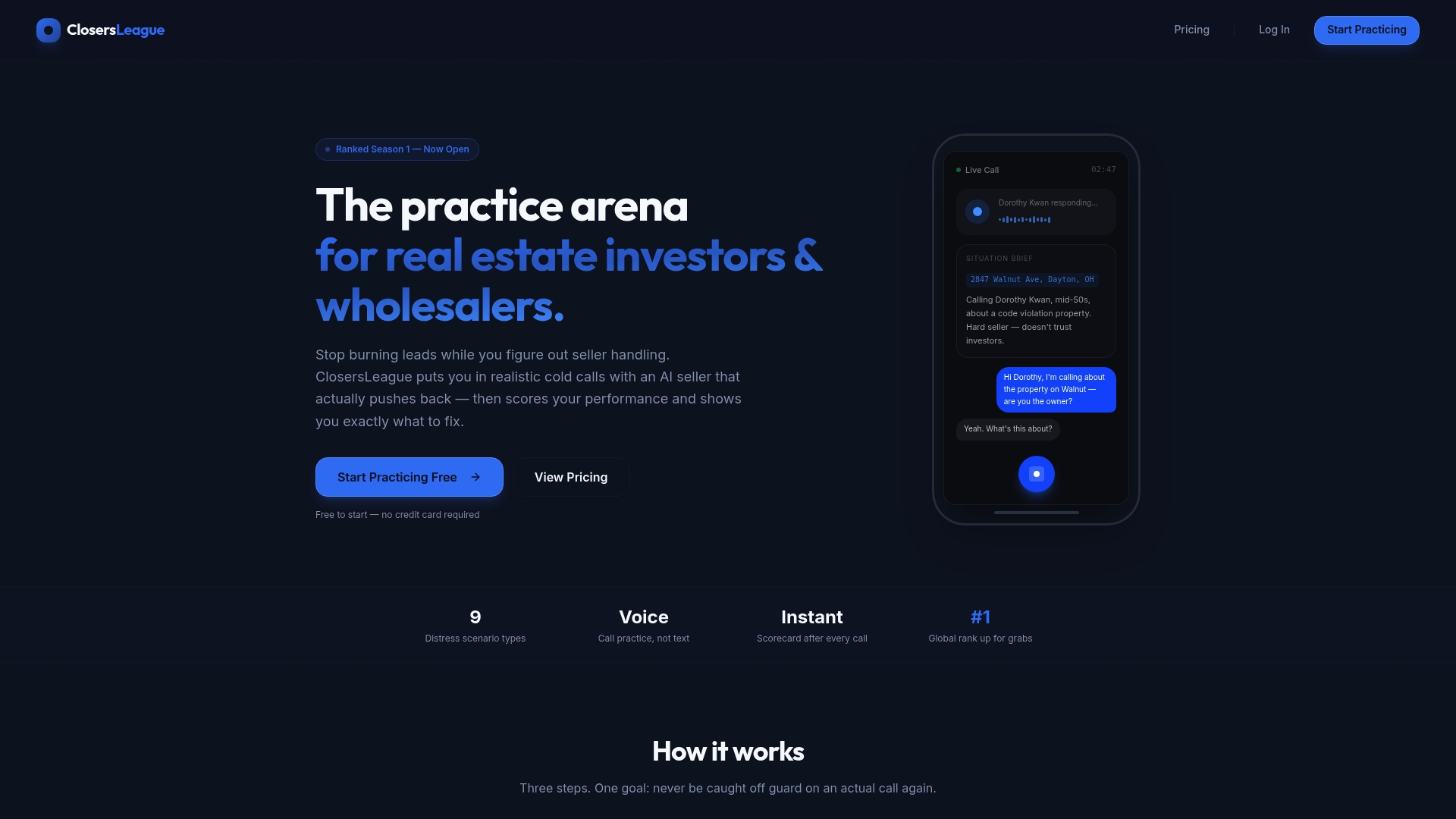
ClosersLeague is an AI-powered cold calling training platform built specifically for real estate investors and wholesalers. Our platform lets you practice real follow-up conversations with distressed sellers before you ever pick up the phone on a live lead. Try inherited property follow-up practice or work through code violation follow-up scenarios to build the confidence and consistency your follow-up system needs. Whether you’re just starting out or scaling your operation, ClosersLeague gives you the reps that turn follow-up from a weak point into your biggest competitive advantage.
Frequently asked questions
How many follow up attempts are best for real estate leads?
Optimal follow-up requires 8 to 12 touches for maximum conversion, which is far more than most investors attempt. Starting with a structured cadence and tracking every contact ensures you stay in the game long enough to win.
What’s the difference between manual and automated follow up?
Manual follow-up is personalized but easy to forget, while automated tools like CRMs ensure near-100% follow-up consistency across every lead in your pipeline. The best approach combines both for scale and human connection.
How long does it take a distressed seller to decide?
63% of leads require more than three months of consistent follow-up before they convert, so patience and a long-term nurture system are essential for working distressed homeowner leads.
What’s the fastest way to boost my real estate deal conversion rates?
Responding to new leads within 5 minutes can increase conversions up to 21 times compared to delayed responses, making speed on initial contact one of the highest-leverage moves you can make.
Recommended
- Boost Real Estate Deals with a Proven Investor Script Workflow – ClosersLeague Blog
- Real Estate Cold Calling Practice — AI Roleplay for Every Seller Type | ClosersLeague
- 10 proven cold calling tips for real estate investors – ClosersLeague Blog
- Master Real Estate Lead Generation: Cold Calling Basics – ClosersLeague Blog