
Most investors treat outreach like a numbers game. Dial enough people, send enough mail, and something will eventually stick. That approach wastes time, burns through lists, and leaves deals on the table. Real estate outreach, done right, is the outbound process of contacting distressed owners to start real conversations about selling, not just spraying your number across a county. This guide breaks down what outreach actually is, which channels produce results, how to build a targeted list, and what messaging gets sellers to respond. Let’s get specific.
Table of Contents
- Understanding real estate outreach: Beyond cold calls
- Types of outreach channels: Choosing what actually works
- Building your motivated seller list: Data-driven targeting
- Messaging and timing: Crafting approaches that get answers
- Measuring outreach success and improving results
- The truths most investors overlook about real estate outreach
- Level up your outreach with advanced practice tools
- Frequently asked questions
Key Takeaways
| Point | Details |
|---|---|
| Targeted outreach drives deals | Strategic, data-driven contact with distressed owners unlocks more sales opportunities than generic outreach. |
| Channel selection matters | Matching your outreach method to each owner’s unique situation increases response and deal rates. |
| Data quality is key | Effective outreach starts with well-filtered lists of motivated sellers by need and property signals. |
| Messaging and timing boost ROI | Scripts tailored for owner situations and timely outreach lead to higher engagement. |
| Measure and adapt | Track outreach metrics to continuously refine your process for better investing results. |
Understanding real estate outreach: Beyond cold calls
Outreach is not just cold calling. It is a focused, intentional process of identifying property owners who are likely to consider selling and then reaching out with relevance and timing on your side.
Real estate outreach is the outbound process of contacting property owners in distressed or off-market situations to start conversations about potential sales, with every channel and message aligned to the seller’s specific circumstance.
Think about what that means in practice. You are not calling random homeowners hoping someone says yes. You are matching channel and messaging to the situation of a specific type of owner. That shift in mindset is what separates investors closing multiple deals a month from those grinding through hundreds of calls with nothing to show for it.
So who qualifies as a distressed or off-market owner? These are the situations you should be targeting:
- Pre-foreclosure owners who have received a notice of default and face a shrinking window to act
- Tax lien or tax delinquent owners who owe back taxes and risk losing their property
- Vacant property owners who may be out of state or simply overwhelmed with a property they no longer manage
- Code violation owners who have received notices from their local municipality about property conditions
- Probate property owners who inherited property and may not want the responsibility or cost
Knowing these categories is not enough. The real work starts at understanding how to learn more about lead generation basics and then applying that knowledge to each category with a different approach. A probate owner needs empathy and patience. A tax delinquent owner needs urgency and a clear exit path. Generic scripts fail because they ignore these distinctions.
Effective outreach also differs from general cold calling in one key way: context. When you reach out to someone facing a code violation, you already know something real about their situation. That knowledge is power. Use it in your opening line, and your connect rate climbs immediately. Ignore it, and you sound like every other caller who just grabbed a list from the internet.
Types of outreach channels: Choosing what actually works
With outreach defined, let’s break down your options for actually contacting motivated sellers. Every channel has tradeoffs, and picking the wrong one for the right lead wastes effort.
| Channel | Reach | Personalization | Cost | Compliance complexity |
|---|---|---|---|---|
| Direct phone call | High | High | Low to medium | Moderate (DNC rules) |
| SMS / text | High | Medium | Low | High (TCPA rules) |
| Direct mail | Medium | Medium | Medium to high | Low |
| Medium | Low | Low | Low to medium | |
| Door knocking | Low | Very high | High (time) | Low |
Understanding why cold calling works for investors is about recognizing that no other channel gives you real-time feedback on seller motivation. A letter gets ignored. A phone call tells you immediately whether someone is stressed, curious, or ready to talk numbers.
Here is how to match the channel to the situation:
- Pre-foreclosure owners: Call first. Time is short, and a live conversation accelerates trust faster than a letter.
- Tax delinquent owners: Phone plus direct mail combo. Mail establishes name recognition before you call.
- Vacant or out-of-state owners: Direct mail followed by a phone call once you have confirmed contact information.
- Code violation owners: Phone is ideal because the problem is immediate and your timing matters.
- Probate leads: Mail or a soft phone call works well. These owners are often grieving and need a gentler approach.
Building a solid understanding of telemarketing for investors helps you navigate compliance while staying aggressive enough to generate real volume.
Pro Tip: Start every new campaign by calling your highest-probability list first. This might be pre-foreclosures in a specific zip code with equity above 40%. Phone that segment hard, then supplement with direct mail to reinforce your name. Do not spread yourself thin across every channel at once.
The core principle here, as with every part of outreach, is that matching channel and messaging to the owner’s situation produces better results than defaulting to whatever is cheapest or easiest.
Building your motivated seller list: Data-driven targeting
Once you have chosen your outreach channels, you need a quality list to make every effort count. A great message on a bad list produces nothing. A decent message on a great list can still generate deals.

Here is what a useful distressed property owner record should include:
| Field | Why it matters |
|---|---|
| Owner name | Personalization in your opener |
| Mailing address | Mail campaigns and skip tracing |
| Property address | Verify it is not owner-occupied |
| Distress type | Drives channel and script selection |
| Equity estimate | Filters out low-margin situations |
| Last known contact | Prevents duplicate outreach |
| Lead score | Prioritizes your call order |
Segmenting by distress type and equity lets you assign a simple lead score. A pre-foreclosure with 50% equity and no contact in 30 days scores higher than a tax lien with underwater financing. This is not complicated. It is just intentional.
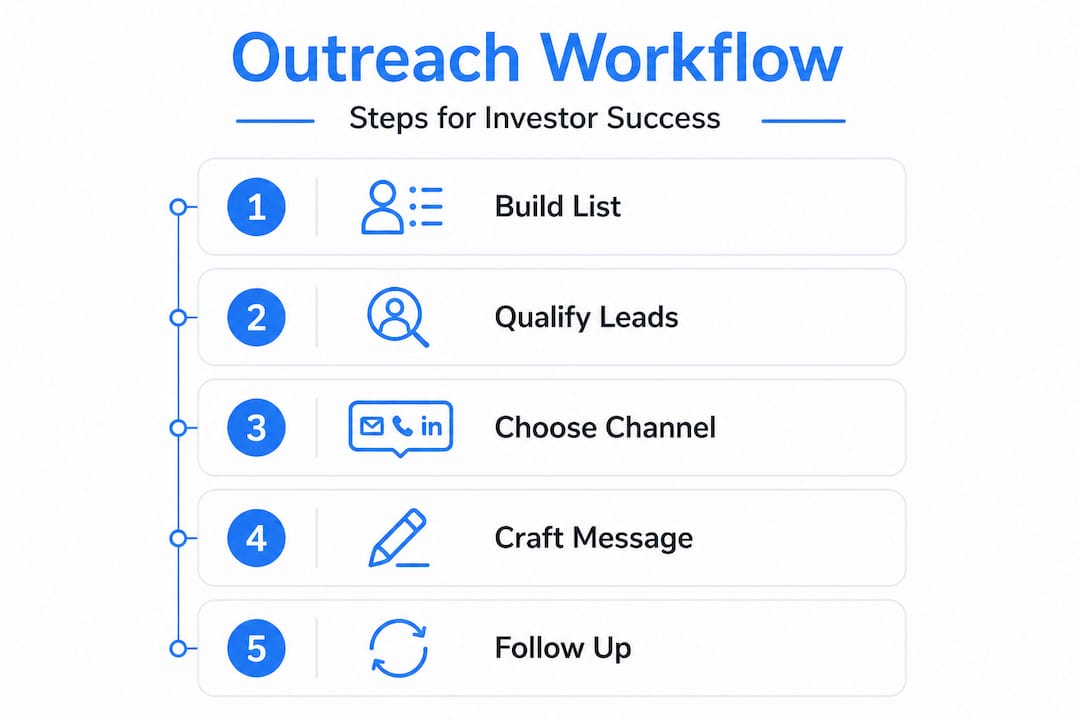
Here are the steps to build and filter a quality list:
- Pull public records from your county courthouse, tax assessor, or a data provider like PropStream or ATTOM for pre-foreclosure, tax lien, and code violation data.
- Filter by equity to focus on properties where you have room to make an offer that works for both parties. A minimum of 30 to 40% equity is a solid starting filter.
- Skip trace your list to find current phone numbers and mailing addresses for each owner. Services like BatchSkipTracing or REISkipTracing are widely used.
- Segment by distress type so you are not mixing probate leads with code violation leads in the same call session. Different situations require different scripts and emotional preparation.
- Score and rank your records based on equity, distress urgency, and days since last contact. Work the highest-scored records first.
- Load into a CRM and track every touchpoint so no lead falls through the cracks.
Learning to apply solid lead qualification methods before you ever dial is what separates productive call sessions from wasted hours. A well-filtered list of 200 records will outperform a raw list of 2,000 every single time.
Stat callout: Targeted outreach to verified distressed lists can produce response rates three to five times higher than cold outreach to general homeowner lists, simply because the message aligns with a real, current problem the owner is already facing.
Understanding the real estate CRM benefits and how to use one properly is the foundation of a system that keeps deals moving without losing momentum between contacts.
Messaging and timing: Crafting approaches that get answers
With your leads organized, the next critical step is connecting, so let’s examine what actually gets sellers to respond. You can have the best list in your market and still get ignored if your message sounds like every other investor who called that week.
The core of high-response messaging is relevance. When an owner gets a letter or a call that specifically references their situation, their guard drops. They feel seen, not sold to. That shift changes the entire conversation.
Here are the elements every high-response outreach message should include:
- A specific reference to their situation. Mention the code notice, the tax lien, or the property directly. Vague openers kill credibility in the first five seconds.
- A clear, low-pressure purpose. Tell them why you are calling in plain language. “I help property owners explore their options when a situation becomes difficult to manage” is better than “I want to buy your house.”
- Empathy without condescension. Acknowledge that their situation is stressful without making them feel judged. These are real people going through difficult moments.
- A single, easy call to action. Ask one thing. A conversation. A callback. Do not overwhelm them with questions or offers in the first contact.
- Short and direct delivery. Whether it is a voicemail, letter, or live call, get to the point in under 30 seconds or two sentences.
Timing is equally important. Matching channel and messaging to the seller’s situation also means reaching out at the right moment in their distress timeline. A pre-foreclosure owner who received a notice of default two weeks ago is far more receptive than one who received it two days ago and is still in shock.
Pro Tip: Personalize your calls with a recent property event. If you know a code violation was filed 14 days ago, reference the general issue without quoting specifics. Something like, “I understand there may be some property maintenance concerns” signals awareness without sounding invasive. It builds trust and breaks down resistance fast.
For more structure on what to say from the first word to the close, reviewing a proven investor script workflow gives you a framework you can customize for each distress category. And when you are ready to present an offer, knowing the fundamentals of pitching wholesale deals ensures you do not lose a motivated seller at the finish line.
Measuring outreach success and improving results
After launching an outreach campaign, the work is not done. Tracking what works and adjusting what does not is what turns a decent campaign into a deal-generating machine.
Here are the key performance indicators every investor should be watching:
- Connect rate: The percentage of dials that result in a live conversation. Industry averages for cold outreach hover around 5 to 10%, but targeted lists can push this higher.
- Response rate: For mail or SMS, how many owners respond to your initial contact.
- Appointments set: The number of leads that agreed to a follow-up call or property walkthrough.
- Deals closed: The number of contracts signed as a result of outreach.
- Cost per deal: Total outreach spend divided by closed deals. This tells you which channel is actually profitable.
Here is how to set up a simple tracking system and start learning from your data:
- Log every touchpoint in your CRM. Date, channel, outcome, and any notes about seller sentiment. Even a brief note like “sounded stressed, open to callback in a week” is gold.
- Review connect and response rates weekly. If your connect rate drops below 5%, your list quality or skip tracing may need attention.
- Track script performance by distress type. A tax delinquent script that converts at 3% and a probate script that converts at 8% tells you where to focus.
- A/B test your mail pieces. Change one element at a time, a headline, a call to action, an envelope color, and measure the difference over 30 days.
- Debrief after every call session. What objections came up most often? What responses surprised you? Adjust your messaging accordingly.
Quick wins and common pitfalls to watch for:
- Quick win: Calling your list within 48 hours of a distress event (a new filing, a notice issuance) doubles your relevance.
- Pitfall: Skipping follow-up after one attempt. Most deals close on the second, third, or fifth contact, not the first.
- Quick win: Personalizing your voicemail to the property address increases callback rates noticeably.
- Pitfall: Using the same script for every distress category. A divorce lead and a pre-foreclosure lead are emotionally in very different places.
Building and refining your investor follow-up strategies is one of the highest-leverage things you can do to improve your close rate without spending more on leads.
The truths most investors overlook about real estate outreach
Here is something we have seen play out over and over. Investors who struggle with outreach are not usually lazy. They are unfocused. They blast a list without segmenting it. They use the same script on a grieving probate heir that they use on a pre-foreclosure owner who got a default notice three days ago. The results reflect that lack of precision.
The best-performing investors we have worked with are not the ones with the cleverest scripts. They are the ones who obsess over small process improvements. They test one thing, measure it, then adjust. They call at different times of day to find when their specific list picks up. They rewrite their voicemail based on actual callback rates, not gut feeling.
Automation is a powerful tool, but it has a hard limit. An automated text sequence cannot read the emotional temperature of a reply. It cannot pivot when a seller mentions a family illness or a job loss. Distressed owners have real, messy situations, and they respond to real, attentive human interaction. Automation handles volume. Skill handles conversion.
The long game matters more than most investors admit. A seller who says “not now” in January and gets consistent, respectful follow-up from you is far more likely to call you in June than to call a stranger they found online. Every touchpoint is a deposit in a trust account. High-performance follow-up is not pestering. It is staying visible for when the seller is finally ready.
Consistent outreach wins over clever scripts every time.
That quote lives at the center of every successful investor’s operation. Show up regularly, with relevance, and deals will come.
Level up your outreach with advanced practice tools
Knowing the strategy is one thing. Executing it under pressure, on a live call with a stressed seller, is another challenge entirely. Mastery comes from guided, deliberate practice, not from hoping your next call goes better than the last.

At ClosersLeague, we built an AI cold calling practice platform specifically for real estate investors and wholesalers. You can run realistic simulated conversations with distressed seller personas, get scored on your approach, and identify exactly where your calls break down. If you work code violation leads, try our targeted code violation practice module to sharpen your opener and objection handling. If tax delinquent lists are your focus, our tax delinquent cold calling practice sessions prepare you for the exact conversations you will face. Stop winging it. Start drilling.
Frequently asked questions
What makes a property owner “distressed” for outreach?
Distressed owners are those facing financial or legal pressure like pre-foreclosure, tax liens, or code violations that create urgency around their property. These circumstances make them more likely to consider an off-market sale.
Is cold calling still effective for real estate outreach in 2026?
Yes, direct calling remains highly effective when paired with targeted lists and messaging matched to the seller’s situation. The key is relevance, not just volume.
How do investors find lists of potential motivated sellers?
Most investors pull from public records and then use data providers to identify owners facing pre-foreclosure, tax liens, or code issues. A CRM helps you organize and prioritize those contacts for outreach.
What is the best channel for initial property owner contact?
Phone calls give you the fastest feedback on seller motivation, but combining channels based on the owner’s situation produces the best overall results. Start with calls, then reinforce with mail.
Recommended
- Cold calling for investors: why direct outreach still wins – ClosersLeague Blog
- Top follow-up strategies for investors: boost deal closures – ClosersLeague Blog
- Real estate telemarketing: A complete guide for investors – ClosersLeague Blog
- Qualify real estate leads: proven methods for investors – ClosersLeague Blog