You dial a distressed homeowner’s number, someone facing foreclosure or a messy probate situation, and within ten seconds they hang up. Sound familiar? Most investors hit this wall constantly, not because cold calling is dead, but because they skip the process that makes it work. A structured, repeatable prospecting system is what separates wholesalers closing deals every month from those stuck spinning their wheels. This guide walks you through every critical stage, from targeting the right leads to mastering follow-up, so you can build a pipeline that actually converts.
Table of Contents
- Understanding the real estate prospecting process
- Preparing to prospect: tools, scripts, and targeting distressed leads
- The step-by-step cold calling process
- Qualifying and following up with prospects
- Why most investors overcomplicate the prospecting process
- Take your prospecting to the next level with ClosersLeague
- Frequently asked questions
Key Takeaways
| Point | Details |
|---|---|
| Structure boosts results | A repeatable prospecting process leads to more conversions and less overwhelm. |
| Preparation is key | Having targeted lists, scripts, and CRM tools in place sets the stage for success. |
| Consistent follow-up matters | The majority of deals are closed thanks to systematic, timely follow-up. |
| Simple tools outperform complexity | You don’t need endless tech—mastering the basics yields the best results. |
Understanding the real estate prospecting process
Prospecting is simply the act of finding and qualifying potential sellers before you pitch an offer. For real estate investors and wholesalers, that means reaching out to homeowners who may be motivated to sell quickly, often because of financial pressure, life circumstances, or property problems. The cold calling basics framework makes it clear: effective prospecting relies on following a repeatable process tailored to lead types like foreclosure or probate.
The pain points are real. You deal with unqualified leads who waste your time, rejection from emotionally raw homeowners, and situations where legal complexity, like probate court timelines or active foreclosure proceedings, makes sellers hesitant to talk. Distressed seller outreach requires a different touch than marketing to a typical home seller listing on the MLS (Multiple Listing Service). These owners are often scared, embarrassed, or confused. Your call needs to communicate empathy first, business second.
Compare what most new investors do versus what works:
| Approach | Scattershot calling | Structured process |
|---|---|---|
| Lead targeting | Random lists, no filtering | Foreclosure, probate, tax delinquent lists |
| Script preparation | Wing it on the call | Practiced, scenario-specific scripts |
| Objection handling | Freeze or give up | Prepared responses for common pushbacks |
| Follow-up | Maybe one callback | Systematic multi-touch sequence |
| Data tracking | Post-it notes or memory | CRM with logged outcomes and tasks |
| Results | Inconsistent, low conversion | Predictable, improving over time |
The core stages of a prospecting process include identifying leads, qualifying them, making contact, and following up. Each stage builds on the last. Skip one and the whole chain breaks down.
“Consistency is what separates the investor who closes one deal every few months from the one closing weekly. A process you can repeat is more valuable than any single great call.”
You also need a solid understanding of what the telemarketing guide covers about how real estate cold calling differs from other telemarketing contexts. Distressed homeowners are not passive buyers browsing options. They are people under pressure, and your job is to be the calm, knowledgeable voice who shows them a way out.
Preparing to prospect: tools, scripts, and targeting distressed leads
Good calls start long before you pick up the phone. Preparation is the difference between a confident opening and a stumbling mess that kills trust in the first fifteen seconds. Here is what you need in place:

| Tool | Purpose | Examples |
|---|---|---|
| Phone or dialer | Make and track calls | MOJO, BatchDialer, REI RainMaker |
| CRM | Log calls, notes, and follow-ups | REsimpli, Podio, HubSpot |
| Skip tracing | Find contact info for property owners | BatchSkipTracing, PropStream |
| Data lists | Identify distressed leads | ATTOM Data, ListSource, county records |
| Script library | Guide conversations | Customized by seller scenario |
Targeting distressed leads means going beyond generic lists. Foreclosure leads come from lis pendens (Latin for “suit pending,” a legal notice that foreclosure is in progress) filings at the county courthouse. Probate leads require pulling court filings for estates with real property assets. Divorce leads, while sensitive, come from public records when real estate is part of the settlement. Each category requires a different opening script because the emotional context is completely different.
Here is a numbered checklist to prep your call sheet before a session:
- Pull your lead list and filter by lead type (foreclosure, probate, divorce, tax delinquent).
- Skip trace each contact to verify phone numbers and add any secondary contacts.
- Research the property using county records or a platform like PropStream.
- Note key details: estimated equity, time in ownership, any recorded liens or court activity.
- Assign the right script template for each lead type.
- Load everything into your CRM so outcomes can be logged in real time.
- Block a focused calling block of at least 90 minutes without interruptions.
CRM best practices confirm that custom scripts and CRM tools boost conversion efficiency and help maintain accurate prospect data. When your call notes are organized, your follow-up becomes sharper and more personal.
Practicing your script before live calls is not optional. Your delivery has to sound natural, not robotic. The investor script workflow is a great reference for building a script that moves the conversation from opener to qualification without sounding pushy.
Pro Tip: Use AI roleplay or peer practice to rehearse your scripts out loud. Hearing your own delivery in a low-stakes environment reveals hesitations, filler words, and pacing issues you would never catch by just reading the script silently. Repetition builds confidence, and confidence closes calls.
The step-by-step cold calling process
Now you are ready to actually make the calls. Here is the process broken down into actionable steps that any investor or wholesaler can follow.
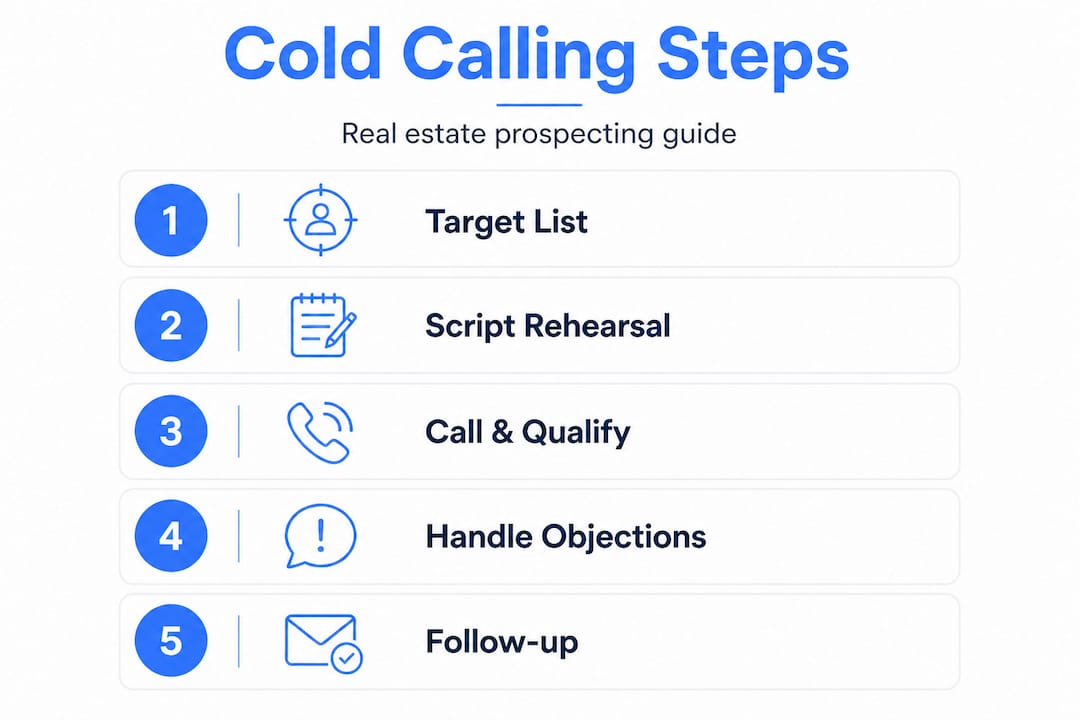
Step 1: Prioritize your target list.
Not all leads are equal. Sort your list by urgency indicators. A homeowner three weeks from foreclosure auction is a hotter lead than one who just received a first notice. Start with the most time-sensitive situations each session.
Step 2: Review and rehearse your opening script.
Before you dial, say your opener out loud one more time. Your first sentence sets the emotional tone of the entire call. Keep it simple: identify yourself, name the reason you are reaching out, and ask a low-resistance question to get them talking.
Step 3: Call and qualify.
This is where you uncover motivation. Ask open-ended questions about the property, their current situation, and what matters most to them right now. Listen more than you talk. The seller who feels heard is far more likely to keep talking.
Step 4: Handle objections and listen for motivation.
Common objections include “I’m not interested,” “I already have an agent,” and “How did you get my number?” Each one has a prepared response that keeps the conversation moving. The cold calling tips resource shows that investors using methodical steps report 30% higher contact rates. That stat exists because structure reduces hesitation on both ends of the call.
Step 5: Log outcomes and set follow-up tasks.
After each call, immediately log the outcome in your CRM. Note the seller’s emotional state, any key details they shared, and the agreed-upon next contact date. Never leave a call without a defined next step.
Structured follow-up increases conversion rates significantly. Most deals in distressed property investing do not close on the first call. They close on the fourth, sixth, or eighth touch point, so every call needs a clear path forward.
Statistic to know: Research from the prospecting world consistently shows that over 80% of deals require at least five follow-up contacts before a seller commits. One call is almost never enough.
Pro Tip: Always leave a voicemail with a curiosity-based hook if no one answers. Instead of “Hi, I want to buy your house,” try something like: “Hi, I came across some information about your property on [street name] and had a quick question. Please give me a call back at [number].” Curiosity drives callbacks.
Pair voicemails with the follow-up to close deals strategies to build a multi-touch sequence that keeps you top of mind without being annoying.
Qualifying and following up with prospects
Once you get a seller talking, your next job is to qualify them efficiently. Asking the right questions early saves you hours of wasted follow-up on leads that will never convert.
Here are the key qualifying questions every investor should ask distressed owners:
- “What is your ideal timeline for selling or resolving the situation with the property?”
- “Are there any mortgages, liens, or other obligations currently attached to the property?”
- “What condition is the property in right now, would you say it needs a lot of work or is it in decent shape?”
- “Has anyone else approached you about the property, or have you listed it anywhere?”
- “What would need to happen for this to feel like the right solution for you?”
These questions reveal motivation, timeline, and property condition. Proven qualification methods confirm that effective qualification questions reveal motivation, timeline, and property condition simultaneously, which is exactly what you need to know before investing more time in a prospect.
After qualifying, segment your leads into three buckets:
Hot leads: Motivated, have a clear timeline within 30 to 60 days, and are open to your offer. These get priority follow-up within 24 to 48 hours.
Warm leads: Interested but not urgent. Maybe they have time before the foreclosure date or are still weighing options. Schedule a follow-up call in one to two weeks and add them to a nurture sequence.
Cold leads: Not ready or not motivated right now. Keep them in your CRM and touch base monthly. Circumstances change. A cold lead in January can become a hot lead by March.
Follow-up channels and cadence to use:
- Phone calls: Primary channel, especially for hot leads. Call within 24 hours of the initial conversation.
- Text messages: Great for a quick, personal touchpoint. Reference something specific from your last call.
- Voicemails: Use for warm and cold leads between scheduled calls to stay visible.
- Handwritten notes or postcards: Unexpected and memorable, particularly for probate and inherited property situations.
- Email: Useful for sending property analysis or offer details after a positive conversation.
Pro Tip: After a promising call, send a personalized text within an hour referencing something specific the seller mentioned. For example: “Hi [name], it was great speaking with you today about the property on [street]. Just wanted to follow up as promised. I will send over some numbers by tomorrow afternoon.” That personal detail signals that you actually listened, which builds trust faster than any script line.
Learn how to qualify leads at a deeper level to sharpen your instincts for spotting real motivation versus polite interest during calls.
Why most investors overcomplicate the prospecting process
Here is an unpopular opinion: most investors struggle with prospecting not because they need better tools, but because they keep abandoning the basics in search of a shortcut.
We see it constantly. Someone builds a 12-step CRM automation sequence, spends three weeks customizing drip campaigns, and then makes 15 calls in a month. The automation becomes a substitute for action. That is “shiny object syndrome,” the habit of chasing the newest tool or tactic instead of just doing the work.
Direct outreach consistently wins because it is personal, immediate, and requires no algorithm to work. Successful investors attribute their consistency to sticking with basic, repeatable processes, not to having the most sophisticated tech stack.
The basics that actually produce results:
- Making a fixed number of calls per day, every day, without exception
- Using one proven script and refining it over time rather than rewriting it weekly
- Logging every call outcome accurately so you can see patterns
- Following up on time, every time, without overthinking the message
- Practicing objection responses until they feel natural, not rehearsed
One experienced investor put it plainly: “I closed my best deals in a quarter where I had a broken CRM and a legal pad. I made calls, wrote down what happened, and called back when I said I would. That was the whole system.”
The technology layer exists to support these fundamentals, not replace them. If you are not closing deals, the answer is rarely a new dialer. It is more calls, better preparation, and tighter follow-up. That is it.
Take your prospecting to the next level with ClosersLeague
Knowing the process is step one. Executing it under pressure, when a seller is frustrated or throwing objections at you, is where the real skill gap shows up. That is where deliberate practice becomes essential.

ClosersLeague is an AI-powered cold calling training platform built specifically for real estate investors and wholesalers. You can practice realistic conversations with distressed sellers before you ever face them live. Work through foreclosure scenarios, inherited property situations, or code violation roleplay practice to sharpen your responses to the toughest objections. Try the inherited property roleplay to practice sensitive conversations around probate and estate sales. When you are ready to sharpen your overall skills, explore all available AI cold calling practice scenarios to build the confidence and consistency your prospecting process needs.
Frequently asked questions
What is the most important step in the real estate prospecting process?
Structured follow-up is the most critical step because most distressed property deals require multiple touches before a seller commits. Consistent, personalized follow-up is what converts interest into a signed contract.
How can I find more quality distressed property leads?
Use skip tracing, county courthouse records, and targeted lead lists to identify owners in foreclosure, probate, or code violation situations. Effective prospecting relies on using a repeatable process tailored to each distressed lead type, so targeting precision matters as much as list size.
Why are scripts important for cold calling distressed owners?
Scripts keep you focused and help you handle objections without freezing up. Custom scripts and CRM tools boost conversion efficiency and ensure you capture the data points needed to move each conversation forward confidently.
How do I handle rejection or negative responses?
Treat rejection as data, not failure. Note what triggered the negative response, adjust your opener or objection response, and move on to the next call. Volume and refinement are both part of a healthy prospecting mindset.
What tools are essential for tracking prospecting activity?
A reliable CRM, a dialer for volume calling sessions, and call tracking software are the core tools you need. Custom scripts and CRM tools directly improve your ability to stay organized, follow up on time, and close more deals from the same lead list.
Recommended
- Master Real Estate Lead Generation: Cold Calling Basics – ClosersLeague Blog
- 10 proven cold calling tips for real estate investors – ClosersLeague Blog
- Real Estate Cold Calling Practice — AI Roleplay for Every Seller Type | ClosersLeague
- Cold calling for investors: why direct outreach still wins – ClosersLeague Blog