AI for cold calling, in the context that matters for wholesalers, means AI-powered roleplay and coaching that simulates distressed sellers so you can rehearse before you dial live leads. It’s not an automated system that places calls for you. Used correctly, it compresses the ramp time for new callers and lifts your conversation-to-appointment rate, and platforms like ClosersLeague are built specifically for this kind of practice.
TL;DR:
- AI roleplay helps wholesalers rehearse objection handling and emotional cues for distressed sellers, improving conversation-to-appointment rates.
- Effective platforms offer scenario-specific packs, real-time feedback, call recordings, dialer integrations, and detailed analytics for targeted training.
- Teams should integrate daily 10 to 20-minute AI practice sessions, starting each shift with warm-ups and aligning scenarios with current campaign data.
- Key operational KPIs include connect rates, talk time, and per-rep conversion rates, with a focus on initial attempts since most conversions occur within three dials.
- AI training enhances skills but cannot replace real lead experience, requiring ongoing live practice to master the unpredictable nuances of actual seller calls.
Table of Contents
- What AI Roleplay for Investor Cold Calling Actually Does
- Core Features Worth Evaluating in an AI Training Platform
- Building AI Practice Into Your Daily Calling Routine
- The KPIs That Actually Predict Improvement
- Practice Drills That Turn Scores Into Better Live Calls
- Data Privacy and Compliance When You Add AI to Cold Calling
- Where AI Roleplay Falls Short
- What Successful AI Cold Calling Programs Look Like in Practice
- What to Expect When You Actually Adopt This
- Try ClosersLeague’s AI Roleplay Before Your Next Cold Calling Sprint
- Sources
- FAQ
What AI Roleplay for Investor Cold Calling Actually Does
AI roleplay for cold calling puts you on a simulated call with a synthetic homeowner who argues back, stalls, or hangs up, just like a real seller would. The scope covers scenario-based voice practice, objection and emotional-state simulation, and instant scoring with a transcript you can review afterward. That combination replaces the old method of learning on the job, where every fumbled call was a lead you probably lost for good.
AI roleplay is already the most common sales training method used across industries, and platforms that deliver it on demand with real-time feedback speed up improvement compared to classroom-only sessions. The reason it works is repetition without consequence. You can run the same probate objection ten times in one lunch break and never once damage a real relationship.
What this looks like in practice:
- Scenario-based voice calls where the AI persona argues, deflects, or gets emotional, mirroring how real sellers in foreclosure or divorce situations actually talk.
- Objection and tone simulation that adapts to your responses, so the pushback gets harder or easier depending on how well you’re handling it.
- Instant scorecards and transcripts that flag exactly where a call went sideways, instead of leaving you to guess.
The payoff isn’t abstract. It’s standardized coaching, so your newest wholesaler gets the same quality of correction your top closer got a year ago.
Core Features Worth Evaluating in an AI Training Platform
Not every tool marketed for “AI sales strategies” is built for distressed-property cold calling. Before you commit budget or time, check for five specific capabilities that actually move your numbers.
Scenario libraries built for your lead types. You need practice packs for probate, pre-foreclosure, tax delinquent, code violation, divorce, out-of-state owners, vacant properties, and tired landlords, not generic sales scripts borrowed from SaaS demos. Each seller type has a different emotional trigger. A platform that treats them identically wastes your practice time.
Real-time feedback and performance scorecards. You want a score after every call, not a vague summary at the end of the week. Conversation intelligence that flags talk-over rate, pacing, and objection handling in the moment is what separates ai call coaching from a glorified quiz.
Call recordings and micro-coaching snippets. The ability to pull a 60 to 90 second clip of a specific stumble matters more than a full-call review nobody has time to watch.
Dialer and CRM integration. Your practice should be able to mirror the actual objections your live campaigns are hitting this week, not objections from six months ago.
Segmented analytics. Look for reporting that breaks results down by zip code, time of day, and individual rep, not just a single company-wide average.
Pro Tip: Run a new hire through at least three scenario packs before their first live shift. It costs you nothing but time, and it means their first real conversation isn’t also their first hard “no.”
Building AI Practice Into Your Daily Calling Routine
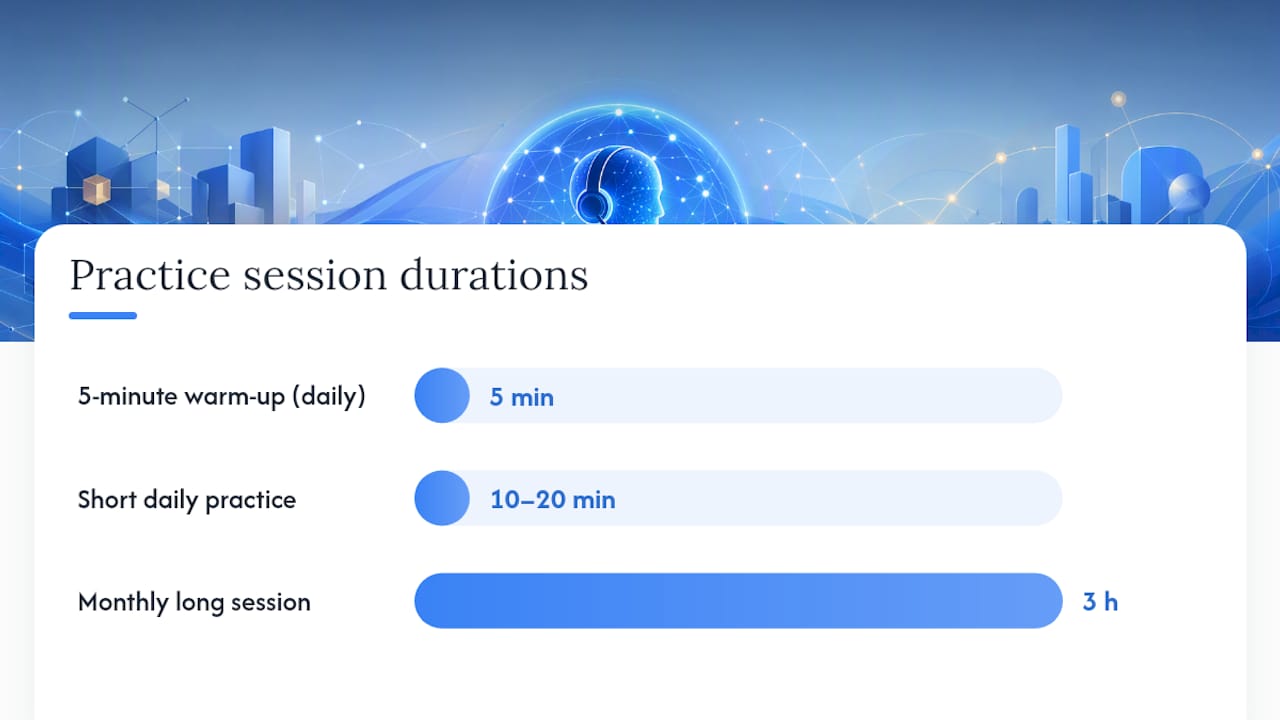
The mistake most teams make is treating AI cold calling training as a one-time onboarding step instead of a daily habit. Consistency beats intensity here. Short, daily 10 to 20 minute warm-ups produce faster and more reliable skill gains than occasional long sessions, the same way five minutes of batting practice every day beats one three-hour session once a month.
Here’s a workflow that actually gets used instead of ignored after week one:
- Start each shift with a five-minute warm-up. One scenario, one objection type, before the first live dial goes out.
- Mirror your real campaign data in the practice scenarios. If your CRM shows pre-foreclosure leads are pushing back hard on “why now,” build that exact objection into the next session, an approach that platforms like Sierra Interactive’s integration with AI roleplay tools are designed to support.
- Run small experiments, not company-wide overhauls. Swap two reps into your peak calling window for a week, or test two script openers against each other for seven days, then compare results.
- Have managers pull weak-point clips weekly. A short recording of a rep freezing on the “how did you get my number” objection is worth more coaching value than an hour of general feedback.
- Pilot before you scale. Run a 30-day test on your highest-value zip codes, track the lift, and only then roll changes out to the whole team.
Pro Tip: Don’t skip the warm-up on your busiest days. That’s exactly when rushed, unprepared calls burn your best leads.
The KPIs That Actually Predict Improvement
Most wholesalers track dials and nothing else. That’s like judging a workout by how long you were at the gym instead of what you lifted. A real funnel view tracks dials, connects, conversations, conversion to appointment, and appointment to show, and each of those numbers tells you something different about where the breakdown is happening.
Operational metrics matter just as much:
- Wrong-number percentage, which tells you if your list quality is the real problem, not your script.
- Talk time and calls per hour, which reveal pacing issues before they show up in your close rate.
- Per-rep conversion rate, which is the only number that tells you who needs coaching this week.
High-volume teams break these numbers down by zip code, caller, and time of day, and reallocate calling effort in real time rather than sticking to a flat schedule that ignores when leads actually pick up.
One diagnostic rule matters more than people expect: most conversions happen within the first one to three attempts on a given lead, though some leads take eight to ten dials before they convert. That single fact should reshape how you order your dial list. If your dashboard can’t show attempt count against outcome, you’re flying blind on when to give up on a lead and when to keep pushing.
Your dashboard’s real job is surfacing which specific rep is weak on which specific objection, so coaching stops being generic.
Practice Drills That Turn Scores Into Better Live Calls
Scoring a call is useless if nobody changes their behavior afterward. The drills below are what actually close that gap.
- Curiosity openers, 30 to 60 seconds. Practice the first line of the call in isolation, since that’s where most hang-ups happen before you ever get to pitch anything.
- Three-level objection escalation. Run the same objection at mild, moderate, and hostile intensity, so you’re not caught flat when a seller who’s three months behind on the mortgage snaps at you.
- Closing-line rehearsals. Practice the exact words you’ll use to lock an appointment, not a vague “so, are you interested.”
- Micro-coaching loop. Identify the specific deficit, pull a short audio snippet showing it, run a focused roleplay drill targeting that one skill, then re-score to confirm it improved.
- A/B test script changes on a small group before rolling them out to the full team, since a script tweak that works for one caller’s delivery can flop for another’s.
Behavioral triggers like curiosity, urgency, and social proof in your script consistently outperform logic-heavy templates, which is exactly why testing openers matters more than testing your closing pitch. For seller types with the highest emotional stakes, start your drill rotation with pre-foreclosure practice packs, then move into out-of-state owner scenarios, where gatekeeping and skepticism dominate the first thirty seconds.
Data Privacy and Compliance When You Add AI to Cold Calling
Adding AI to your cold calling workflow means you’re now storing more data, not less, so treat it with the same care you’d apply to any seller’s personal information sitting in your CRM. Practice call recordings, transcripts, and scorecards should live behind the same access controls you’d expect from any platform handling business data, with clear policies on who inside your team can pull a rep’s individual scores.
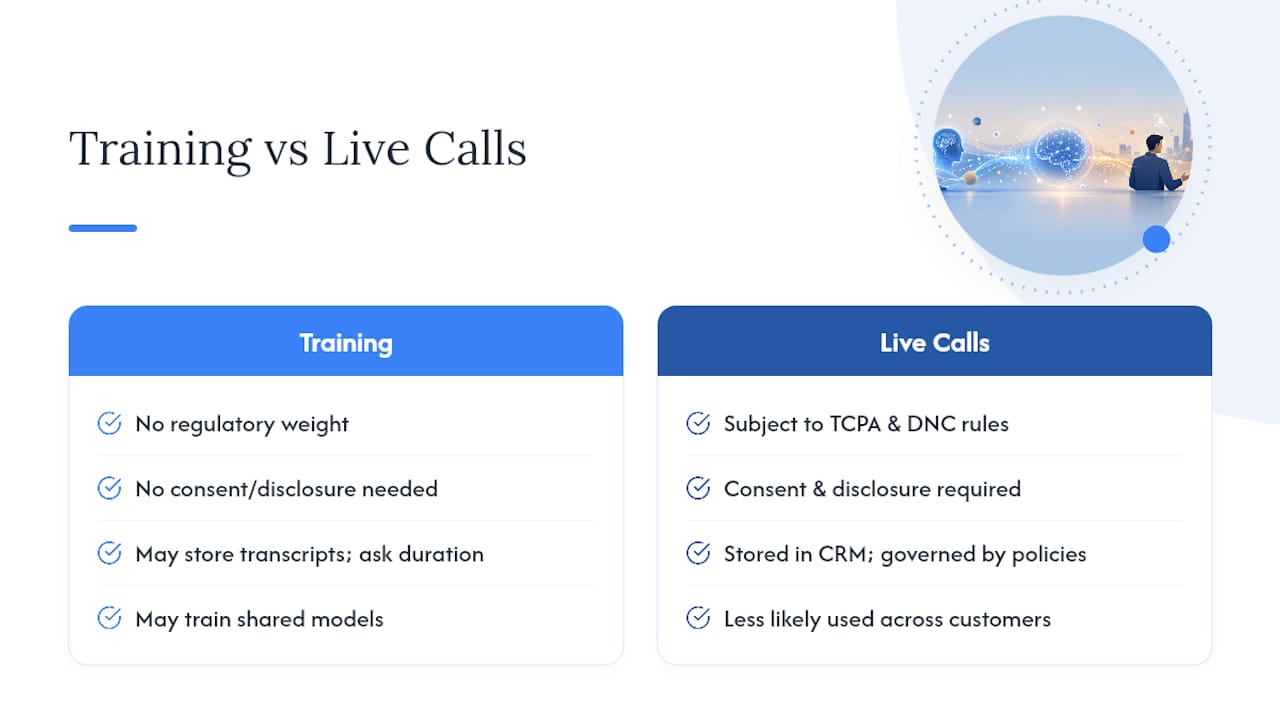
The compliance conversation splits into two separate issues. AI roleplay training, where you’re talking to a simulated persona, carries none of the regulatory weight that live outbound calling does. Your actual seller calls are still governed by the Telephone Consumer Protection Act and state-level do-not-call rules, regardless of how well-trained your callers are. No amount of practice exempts you from consent and disclosure requirements on real dials.
Where it gets murkier is data retention. If your training platform stores your rep’s call transcripts or your CRM’s objection data to build better scenarios, ask directly how long that data is kept and whether it’s used to train models shared across other customers. A vendor that can’t answer that clearly is a vendor you should be cautious about handing your lead list objections to.
Practical baseline: keep practice data separate from live seller data wherever possible, confirm your platform doesn’t sell or share transcripts, and make sure whichever tool you pick has a plain-language answer to “where does our data go.”
Where AI Roleplay Falls Short
AI practice isn’t a substitute for a real lead list, a real market, or real judgment on your part. A scenario library can simulate a probate seller’s grief or a tired landlord’s exhaustion reasonably well, but it can’t replicate the specific tone of a call where someone’s spouse just walked out mid-conversation. Some emotional nuance only live reps encounter live.
There’s also a real risk of over-fitting to the simulation. A rep who scores well against AI personas can still freeze on a live call if the seller’s accent, background noise, or unpredictable tangents don’t match anything they practiced. The fix isn’t to abandon the practice, it’s to keep feeding real call objections back into the scenario library so the simulation stays current instead of stale.
Cost and adoption friction are real too. A platform is only useful if your team actually opens it daily, and any tool that adds five extra steps before a rep can start a session will get ignored inside two weeks. The simplest platform your team will actually use beats the most feature-rich one sitting unopened.
Finally, AI scoring is a proxy, not a verdict. A scorecard tells you where a call diverged from best practice, but a manager still needs to interpret whether that divergence mattered in context. Treat the score as a diagnostic starting point, never the final word on a rep’s ability.
What Successful AI Cold Calling Programs Look Like in Practice
The teams that get real value from AI roleplay share one habit: they connect practice data to live campaign data instead of treating them as separate systems. A wholesaling team running heavy volume in tax-delinquent zip codes, for example, gets far more value out of a scenario pack built around that exact seller type than a generic “handle objections” module, because the emotional register of a tax-delinquent owner is different from a divorcing couple.
Teams pairing AI roleplay with manager-led coaching report faster ramp time and stronger conversion rates than classroom or ride-along-only training, largely because new hires stop learning through live mistakes and start learning through repeated, corrected reps. A wholesaler onboarding three new callers a month, for instance, can run each one through a week of scenario drills covering foreclosure and inherited property conversations before their first live dial, cutting the number of burned leads during the learning curve.
The common thread across implementations that stick: leadership treats the scorecards as a coaching tool for the team, not a punishment system for individual reps, and that framing is what keeps adoption alive past the first month.
What to Expect When You Actually Adopt This
Don’t expect a dramatic spike in closed deals in week one. What you’ll see first is smaller and more mundane: fewer wasted first minutes, fewer hang-ups on predictable objections, tighter appointment-setting language. Volume gains come later, after the habit sticks.
The biggest pitfall isn’t the technology, it’s how teams use it. Over-reliance on a script kills the natural read a good caller develops, and no amount of AI drilling fixes a bad lead list. Regular practice sessions each month, paired with weekly micro-coaching pulled from real call snippets, are effective. Judge ROI against your conversation-to-appointment rate over 60 to 90 days, not against gut feel. If that number moves, expand the ai call analysis program to your next hire cohort. If it doesn’t, the problem is probably your list, not your reps.
— Dave
Try ClosersLeague’s AI Roleplay Before Your Next Cold Calling Sprint
ClosersLeague gives you exactly what this guide describes: scenario packs built around real distress types, real-time scoring instead of guesswork, and leaderboards that turn practice into something your team actually wants to show up for.
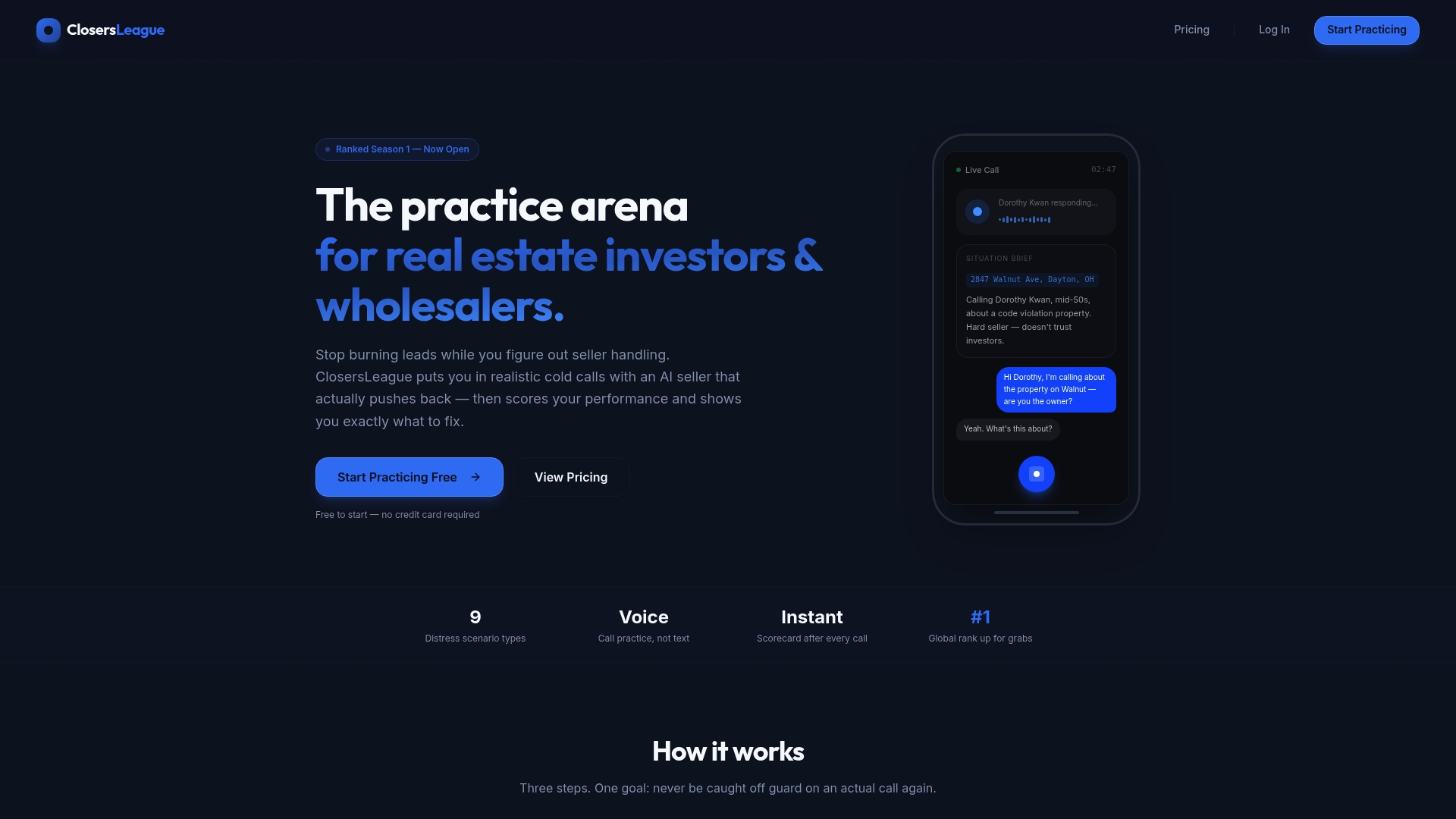
Instead of hoping a new hire figures out probate objections on live calls, you run them through targeted drills first, then check their scorecard against the team average. The platform tracks performance the same way the KPI dashboards in this guide recommend, per rep, per scenario, so you can see exactly where coaching needs to happen instead of guessing from gut feel. For teams that also lean on AI for other parts of the deal pipeline, tools built for mortgage qualification workflows show a similar pattern: AI handles the repetitive groundwork so people focus on the conversation that actually closes.
A simple pilot recipe works best: pick one scenario pack, like inherited property calls, run it with your team for 30 days, and compare your conversation-to-appointment rate against your prior month’s baseline. Start a trial on the ClosersLeague platform and get your first practice session running before your next calling shift.
Sources
The practices in this guide draw on cold calling funnel data, roleplay training research, and real estate script design.
- Data-driven cold calling strategies for real estate teams — DealMachine blog
- How Real Estate Roleplay Can Help You Close Tough Deals | Exec Learn
- 7 Best Cold Calling Tips for Real Estate Investors 2026 | Televista Blog
FAQ
What Does “AI for Cold Calling” Mean for Real Estate Investors?
It means AI-powered roleplay and coaching platforms, like ClosersLeague, that simulate distressed sellers so you can practice objection handling and get scored before you dial live leads.
How Is AI Roleplay Different From an AI Cold Calling Agent?
AI roleplay trains a human caller through simulated practice conversations, while an AI calling agent places and manages calls automatically. This guide covers only the training and coaching use case.
How Many Dials Does a Lead Usually Take to Convert?
Most conversions happen within the first one to three attempts, though some leads need eight to ten dials before they convert.
How Often Should My Team Practice With AI Roleplay?
Daily 10 to 20 minute sessions produce more reliable gains than infrequent long sessions, according to roleplay training research.
Can AI Roleplay Replace Live Cold Calling Experience?
No. AI roleplay builds the skills and confidence needed for live calls, but it can’t fully replicate every real seller’s unpredictable tone, so live practice still matters alongside simulated drills.