
The fastest way to ramp new cold callers is a 30 to 60-day plan that moves them from roleplay drills to live calls to booked appointments, gated by an objective QA score instead of a calendar date. The core components: targeted distressed-owner data, a 100 dials/day ramp goal, roleplay-first practice before any live list, a scoring rubric with clear pass thresholds, and a multi-touch follow-up cadence. Two trained callers working full days with good data typically generate two to four real leads daily, which is the benchmark your ramp should be built to hit.
- Targeted lists (probate, pre-foreclosure, tax delinquent, tired landlord)
- A 100 dials/day ramp target using a multi-line dialer
- Roleplay drills before any caller touches a real seller, using a tool like Closers League
- A QA scoring rubric with a numeric readiness gate
- Scheduled, multi-touch follow-up (call, text, email)
Key Takeaways
A 30 to 60 day ramp works when roleplay precedes live calls, a numeric QA rubric gates promotion, and follow-up runs on a scheduled multi-touch cadence rather than a single call attempt.
| Point | Details |
|---|---|
| Roleplay before live calls | No caller touches a real seller list until week two, after scripted rehearsal reps. |
| Target 100 dials/day | Ramp gradually toward this using a multi-line dialer once shadowed calls are complete. |
| Gate on QA score, not tenure | Promote callers at an 80% rubric score across categories like opening, discovery, and the ask. |
| Follow up relentlessly | Most conversions happen after multiple touches, so schedule call, text, and email sequences. |
| Use Closers League for scenario drills | AI roleplay and performance scorecards give new callers reps and objective readiness data before live calls. |
Table of Contents
- Ramp Timeline at a Glance: Days 1 to 60
- Hiring and First-Day Onboarding Essentials
- Building a 4-Week Training Calendar That Actually Works
- What Scripts Work Best for Distressed Sellers?
- KPIs and the QA Rubric That Clear Callers for Live Work
- Setting Up a Minimal Tech Stack Without Overcomplicating It
- Scaling the Team Without Losing Your Best Callers
- Staying Compliant: TCPA, DNC, and Recording Basics
- How Closers League Shortens the Ramp
- Sources
- FAQ
Ramp Timeline at a Glance: Days 1 to 60
Days 1 through 30 are about building muscle memory before it costs you a lead. Callers spend the first week in roleplay only, no live dials. Weeks two and three introduce shadowed live calls with a coach listening in real time. By week four, callers run their own call blocks against warm, scrubbed lists.
Days 31 through 60 shift toward specialization and volume. Callers who’ve hit rubric thresholds graduate to cold, distressed-owner lists full time and start owning a niche, like pre-foreclosure or absentee owners.
- Week 1: Scripts memorized, AI roleplay daily, zero live dials.
- Week 2: Shadowed live calls, 25 to 50 dials/day, coach on every call.
- Week 3: Solo live calls, ramping to 100 dials/day.
- Week 4: First independent appointment booked; QA score reviewed for promotion.
- Days 31 to 60: Full list ownership, specialization, and coaching shifts to weekly.
- Milestone: first live connect by day 10 to 12
- Milestone: first appointment booked by day 20 to 30
- KPI threshold for promotion: rubric score of 80% or better, sustained over one week
Hiring and First-Day Onboarding Essentials
You can’t train grit into someone. Hire for it. The traits that separate a caller who lasts from one who burns out in three weeks are consistent: genuine curiosity about people’s situations, thick skin against rejection, and the ability to actually listen instead of waiting to talk. During screening, run a five-minute mock call on the spot. How someone handles an unscripted objection in an interview tells you more than any resume.
Screening checklist:
- Can they handle a live objection without freezing?
- Do they ask follow-up questions naturally, or just recite lines?
- Have they worked any high-rejection role before (sales, fundraising, service industry)?
Preboarding, before day one:
- CRM login and permissions set up
- Dialer license activated
- Lists scrubbed against the National Do Not Call Registry
- NDA and standard paperwork signed
First-day agenda:
- Role expectations and compensation structure walkthrough
- Script review, line by line, with the “why” behind each line explained
- Call-list prep and CRM tour
- One-on-one roleplay session before they leave for the day
Budgeting matters here too. A lean DIY setup can run close to $1,169 a month before the first dial goes out, and full cost-per-deal often lands between $1,000 and $2,000 once salaries and data are factored in. Plan your onboarding budget with that in mind, not just the caller’s hourly rate.
Building a 4-Week Training Calendar That Actually Works

Structure beats improvisation. A caller who “just wings it” on live calls in week one is a caller you’ll be replacing in month two. Build the calendar around one rule: nobody touches a real seller until they’ve proven the skill in a low-stakes setting first.
Week one is entirely rehearsal. Callers run scripted openers against AI roleplay scenarios covering probate, pre-foreclosure, and inherited-property sellers, then review the recording with a coach. Ten to fifteen reps a day is realistic. Week two introduces shadowed live calls, where the caller dials but a coach sits in and takes over if things go sideways. Week three removes the safety net; the caller runs solo blocks, working toward the 100 dials/day target that research on real estate cold calling shows yields roughly two to three meaningful conversations per 100 dials for new callers. Week four is about consistency: full call blocks, full follow-up logging, first independent appointment.
| Week | Primary Focus | Daily Target |
|---|---|---|
| 1 | AI roleplay, script memorization | 10 to 15 roleplay reps |
| 2 | Shadowed live calls | 25–50 dials, coach on every call |
| 3 | Solo live calls | 25 to 100 dials |
| 4 | Independent call blocks | 100 dials, full follow-up logging |
- Warm-up with 3 to 5 practice calls before any live block
- Record every call for review, no exceptions
- Gate advancement to real lists on a rubric score, not tenure
Progress checkpoints matter more than the calendar itself. A caller who’s still fumbling openers at the end of week two should repeat roleplay drills rather than move forward. Speed kills ramps when it isn’t earned.
What Scripts Work Best for Distressed Sellers?
Distressed sellers hang up on generic pitches in the first five seconds. The fix is a pattern-interrupt opener: a permission-based line, a reason for the call, and one open-ended question that gets the seller talking instead of defending. Wholesaling calls that follow a strict three-move structure, open, discovery, close, consistently outperform pitches that jump straight to an offer.
Three openers to memorize:
- Probate: “Hey, this is [name] with [company]. I know this might be an odd time to call, I saw the property on [street] came through probate records. Is that something you’re dealing with right now?”
- Pre-foreclosure: “Hi, [name] here. I work with homeowners in tough spots on [street], and I wanted to check in, is everything okay with the property, or are you looking at options?”
- Absentee owner: “Hi, quick question, are you still the owner of the property on [street]? I buy houses in the area and wanted to see if it’s something you’d consider selling.”
Common objections need short, calm responses, not scripts read verbatim. “I’m not interested” often means “I don’t trust you yet,” not a hard no. Respond with curiosity: “Totally fair. Can I ask what’s kept you from selling so far?” For “How much are you offering?” on a first call, redirect to a walkthrough instead of a number: “I’d rather see the place first so I can give you something real, not a guess.”
Pro Tip: Aim for a listening ratio close to 70/30 in the seller’s favor. If you’re talking more than they are, you’re pitching, not discovering, and pitching too early is why most first calls stall.
KPIs and the QA Rubric That Clear Callers for Live Work
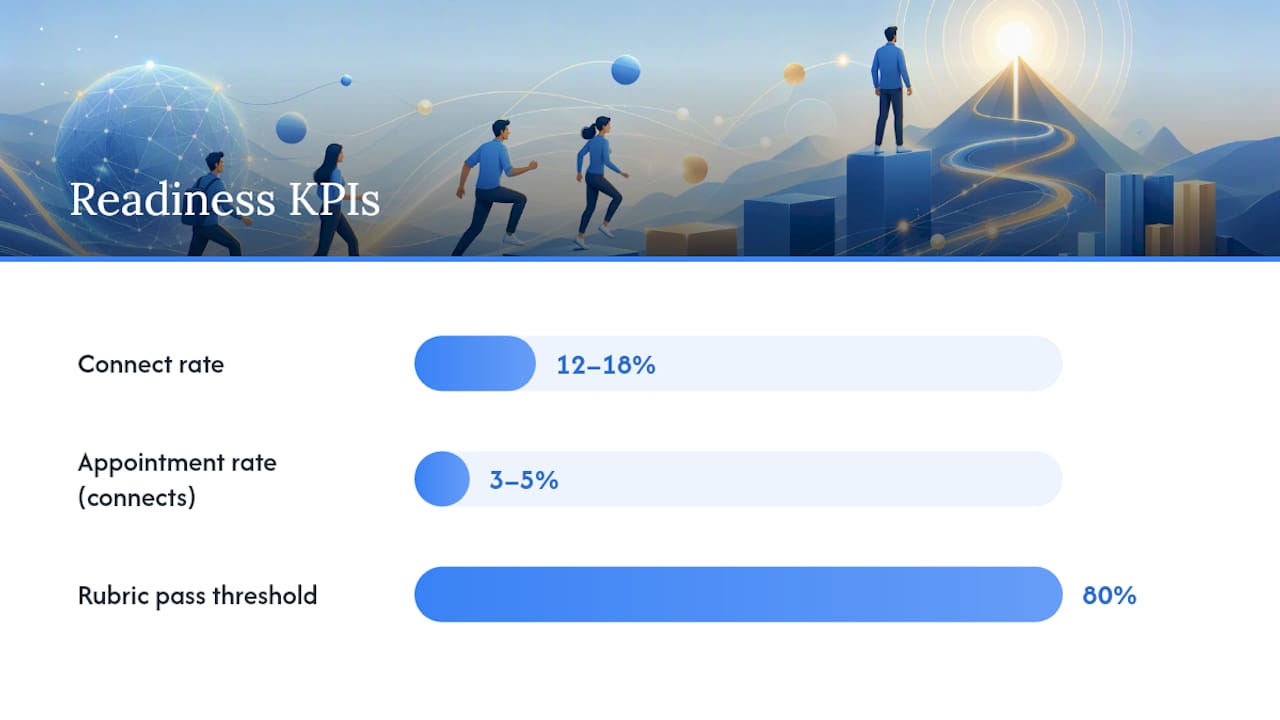
Objective numbers beat gut feel every time you decide who’s ready. Track dials, connects, appointment rate, and appointments booked per week as your core metrics. Solid benchmarks for distressed-seller outreach put connect rates around 12 to 18%, appointment rates at 3 to 5% of connects, with wide variation depending on list quality.
Build a QA rubric that scores five categories: opening, discovery, empathy, objection handling, and the ask. Score each 1 to 5, then average across categories to get a percentage.
- Readiness threshold: 2+ meaningful conversations per day, sustained over a week
- OR a rubric score of 80% or better across three consecutive reviewed calls
- Either signal alone can clear a caller; both together mean they’re ahead of schedule
Setting Up a Minimal Tech Stack Without Overcomplicating It
You don’t need a dozen tools to run a competent cold-calling operation, but skipping the essentials will bottleneck even your best hires. A triple-line dialer speeds up your daily volume so the 100-dial target becomes realistic within a normal work block, rather than eating the whole day. Pair it with a CRM for tracking every touch, a DNC scrub tool to clean lists before dialing, and call recording so coaches can review without sitting in on every conversation.
- Dialer: triple-line capable, with local presence dialing if available
- CRM: logs every call outcome and schedules follow-up automatically
- DNC scrub: run before every new list, not just once a month
- Call recording: every call, reviewed weekly for QA scoring
The daily workflow: prep the list, scrub it against DNC, run a five-minute roleplay warm-up, work the call block, then log outcomes and schedule follow-ups before logging off. Managers should check connect rates and QA notes each morning, not just at week’s end. For CRM selection specifically, a buyer’s guide to real estate CRMs is worth a look if you haven’t settled on one yet.
Scaling the Team Without Losing Your Best Callers
Growth without a retention plan just means retraining new hires every quarter. Tiered bonuses per appointment booked, leaderboard rewards for weekly top performers, and skill-based raises tied to QA scores give callers a reason to stay past month three.
- Daily two-minute huddles to reset focus and flag issues early
- Weekly one-on-ones reviewing calls and QA scores together
- Monthly scorecard reviews tied to raises or role changes
- Career path: caller → senior caller → closer → team lead → trainer, each gated by KPI thresholds, not seniority alone
Burnout shows up fast in this role. Rotate list types weekly so nobody’s grinding the same rejection-heavy segment for a month straight, and treat a dip in connect rate as a signal to check in, not a performance write-up.
Staying Compliant: TCPA, DNC, and Recording Basics
Compliance mistakes get expensive fast, so build this into onboarding, not as an afterthought. Scrub every list against the National Do Not Call Registry before it reaches a caller, and restrict calling hours to 8 a.m. to 9 p.m. local time for the recipient, not your office.
- Scrub lists against the National DNC Registry before every campaign
- Never use auto-dialers or prerecorded voice messages without prior express written consent
- Document consent protocols for every recorded call
- Run a weekly spot audit on 10 to 15 random calls for DNC and consent compliance
Pro Tip: Assign one team member to own the weekly compliance audit. Catching a DNC gap on a Tuesday costs you nothing. Catching it after a complaint costs you a fine.
Manager Perspective: Common Mistakes and the Fixes That Work
Most managers rush the ramp. They promote a caller to a real list after one good day, then wonder why the appointment rate craters. The fix is boring but effective: gate every promotion on the QA score, not a manager’s gut feeling. Roleplay gets skipped too, treated as busywork instead of the thing that actually builds the muscle memory. One manager who moved a caller to live lists after three days without roleplay watched that caller burn 200 dials with zero appointments; a coach who reviewed the recordings found the opener was the problem the entire time. Daily coaching loops catch that in hours, not weeks.
How Closers League Shortens the Ramp
Every week saved in training is a week your callers spend booking real appointments instead of practicing on live sellers who deserve better. AI-powered roleplay lets new hires rehearse probate, pre-foreclosure, and inherited-property scenarios on demand, get instant feedback on tone and objection handling, and rack up reps without waiting for a coach’s calendar to open up.
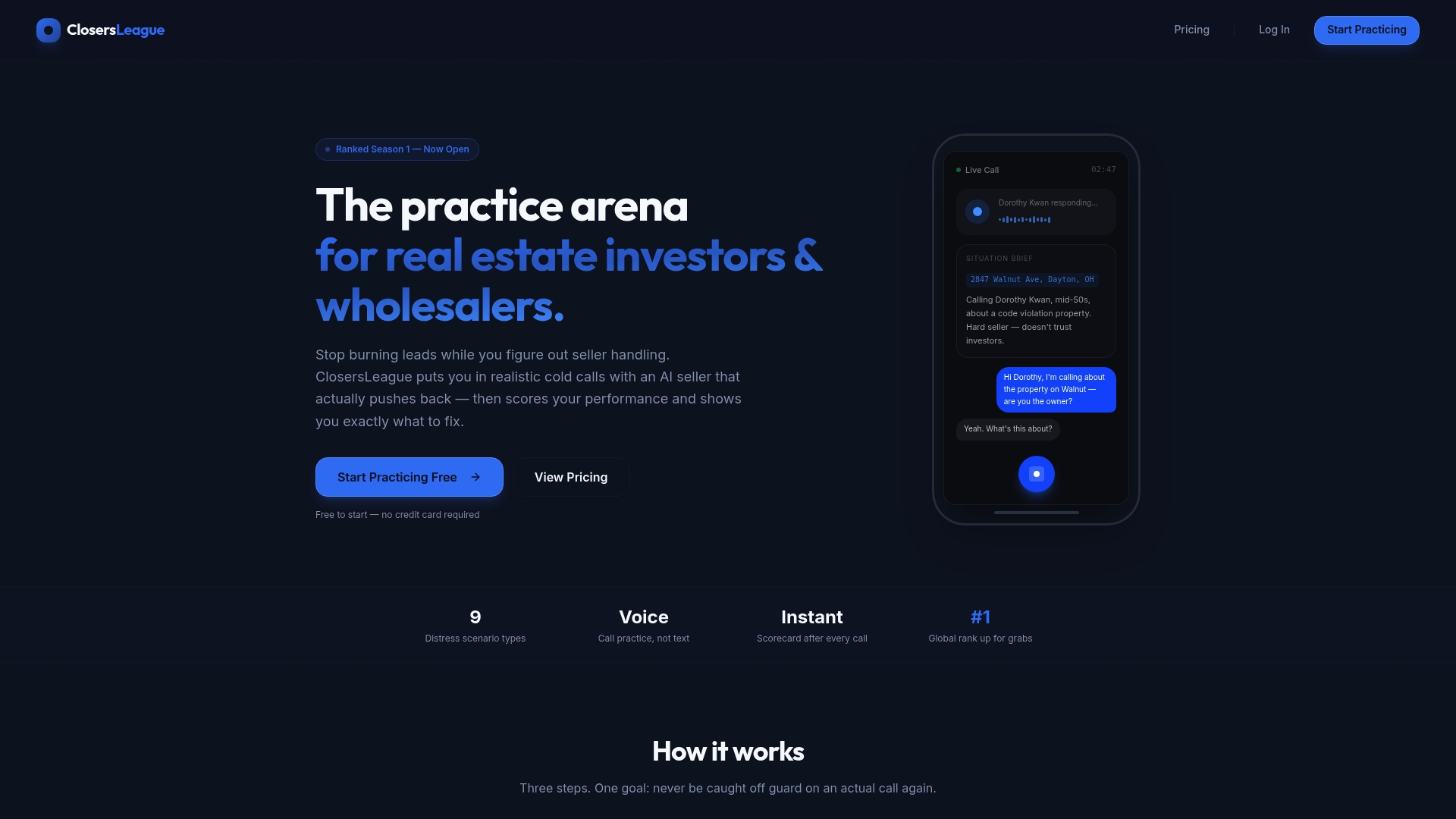
Performance scorecards replace guesswork with a number, so you’re not debating whether someone’s “ready,” you’re checking whether they cleared the threshold. That objective gate is what cuts weeks off the timeline in this article’s own training calendar, especially in weeks two and three where coaching bandwidth usually becomes the bottleneck. If you’re building out scenario practice for inherited property calls specifically, that’s a solid place to start your team’s first roleplay block this week.
Sources
- Cold Calling Distressed Properties: Best ROI in 2026 | Televista Blog
- How to Cold Call Real Estate: Scripts & System (2026)
- Real Estate Cold Calling 2026 | Is It Still Worth It?
- Wholesaling Cold Call Script That Actually Works
FAQ
How Long Does It Take to Ramp a New Cold Caller?
Most callers can move from roleplay to live appointments in 30 to 60 days if they train through weekly roleplay drills and clear a QA rubric score before touching a real list.
What’s a Realistic Daily Dial Target for New Callers?
A 100 dials/day target is standard, though new callers usually ramp toward that number gradually across weeks two and three rather than starting there.
How Do I Know a Caller Is Ready for Live Lists?
Can AI Roleplay Actually Replace Live Shadowing?
AI roleplay through a tool like Closers League handles the repetition and instant feedback loop well, but shadowed live calls in week two still matter for exposing callers to real, unscripted reactions.
What Compliance Steps Matter Most When Ramping New Callers?
Scrub every list against the National Do Not Call Registry, call only between 8 a.m. and 9 p.m. local time, and never use auto-dialers without express written consent.