AI objection detection uses speech recognition and natural language processing to scan cold-call audio, flag the moment a seller pushes back, and label what kind of pushback it is. For investors and wholesalers, that means every “I need to think about it” or “my son handles this stuff” gets pulled out of the call, timestamped, and sorted into a pattern you can actually train against. Platforms like ClosersLeague, built on the same class of language models behind ChatGPT and Claude, turn that raw detection into battlecards your team drills on before the next call.
TL;DR:
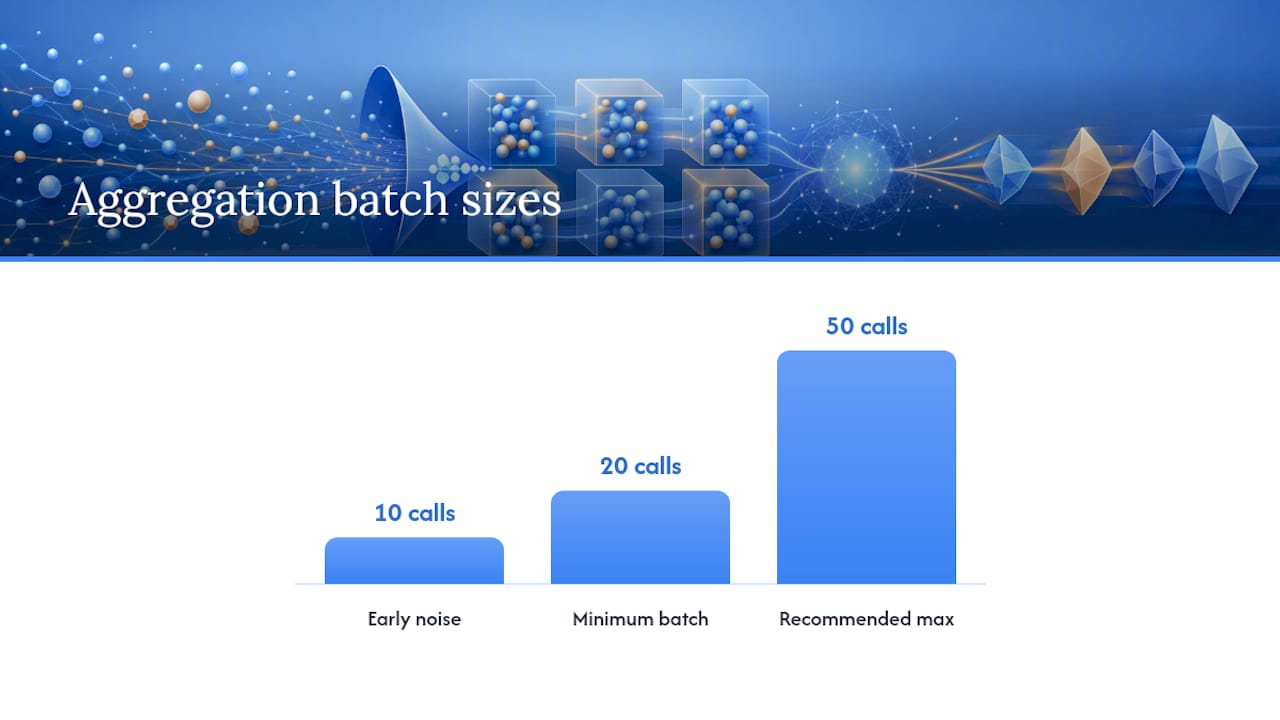
- Objection patterns become reliable only after analyzing at least 20 to 50 calls to avoid noise impacting the insights.
- Accurate detection relies on high-quality transcription, speaker diarization, and a taxonomy tailored for distressed sellers’ emotional language.
- Building a team template with one-page battlecards and daily drills helps reps handle the most common objections more effectively.
- Monitoring metrics like objection resolution rate, talk ratio, and next-step confirmation reveals whether coaching efforts are improving call performance.
- Proper consent, secure data storage, and regular spot checks are essential procedural steps to ensure legal compliance and data accuracy during implementation.
Table of Contents
- What Is AI Objection Detection for Cold Calls?
- How Detection Works End to End: A Pipeline You Can Implement
- Turning AI Objection Data Into a Practice Routine
- Which Metrics Actually Show the Program Is Working?
- Implementation Checklist and Privacy Basics
- Dave’s Take: Where AI Wins and Where Coaching Still Has to Show Up
- Practice the Exact Objections AI Just Found You
- Sources
- FAQ
What Is AI Objection Detection for Cold Calls?
AI objection detection is not a single feature. It’s a chain of steps that starts with raw audio and ends with a labeled, searchable database of every pushback a seller gave you.
The process begins with a transcript, but a plain transcript isn’t enough. You need speaker diarization, the technology that separates “who said what” on the call, because an objection tagged to the wrong speaker is worse than no tag at all. Once the transcript is split by speaker, a classification model reads each sentence and decides whether it’s a question, a statement, or an objection, then assigns intent.
The harder part is catching what sellers don’t say directly. Implicit objections show up as hesitation, vague timelines, or conditional phrasing like “maybe if the price were different.” A model trained only on obvious keywords (“too expensive,” “not interested”) will miss these every time.
- Explicit objections: direct statements (“I’m not selling,” “that price is too low”)
- Implicit objections: hedges, stalling language, deflection to a third party
- Conditional objections: phrasing tied to an “if” that signals a real but unstated barrier
Accuracy depends heavily on having a taxonomy built for distressed sellers specifically, not generic B2B sales categories. Probate, pre-foreclosure, and divorce calls carry emotional language that a stock sales model will misclassify as noise.
How Detection Works End to End: A Pipeline You Can Implement
A workable objection detection pipeline has five stages, and skipping any one of them weakens everything downstream. The Nimitai framework breaks this into record, transcribe, measure, detect, and confirm, which maps cleanly onto cold-calling workflows for distressed sellers.
- Capture with consent. Record the call using a documented consent process, since this protects you legally and keeps your data usable for training.
- Transcribe with diarization and timestamps. Every objection needs a speaker label and a time marker so you can jump straight to that moment later.
- Classify and tag. The system labels each objection by type (price, timing, authority, need, trust, competition) and stores the literal quote alongside the tag.
- Store and link. Objections get filed into a searchable library and connected to the matching CRM record, so a rep can pull every “not the right time” objection from probate leads in one search.
- Aggregate in batches. Run analysis across a batch of calls to surface repeat objections, see how they cluster by call stage, and correlate objection type with deal outcome.
The output of that fifth step is what actually changes behavior: an objection ranking sorted by frequency, a battlecard for each top objection, and a short list of coaching tasks tied to specific reps. VOCAP’s workflow for extracting and aggregating objections follows this same logic, feeding straight into battlecard creation once transcripts have clean speaker separation.
Pro Tip: Don’t aggregate on your first ten calls. Wait for a batch of 20 to 50 calls in a segment before you trust the pattern. Anything smaller and you’re training your team on noise.
Turning AI Objection Data Into a Practice Routine
Detection only pays off once the objections become drills. This is where Dave’s coaching frameworks come in: the goal isn’t a database of tagged transcripts, it’s a rep who can handle “I’m working with another investor” without freezing.
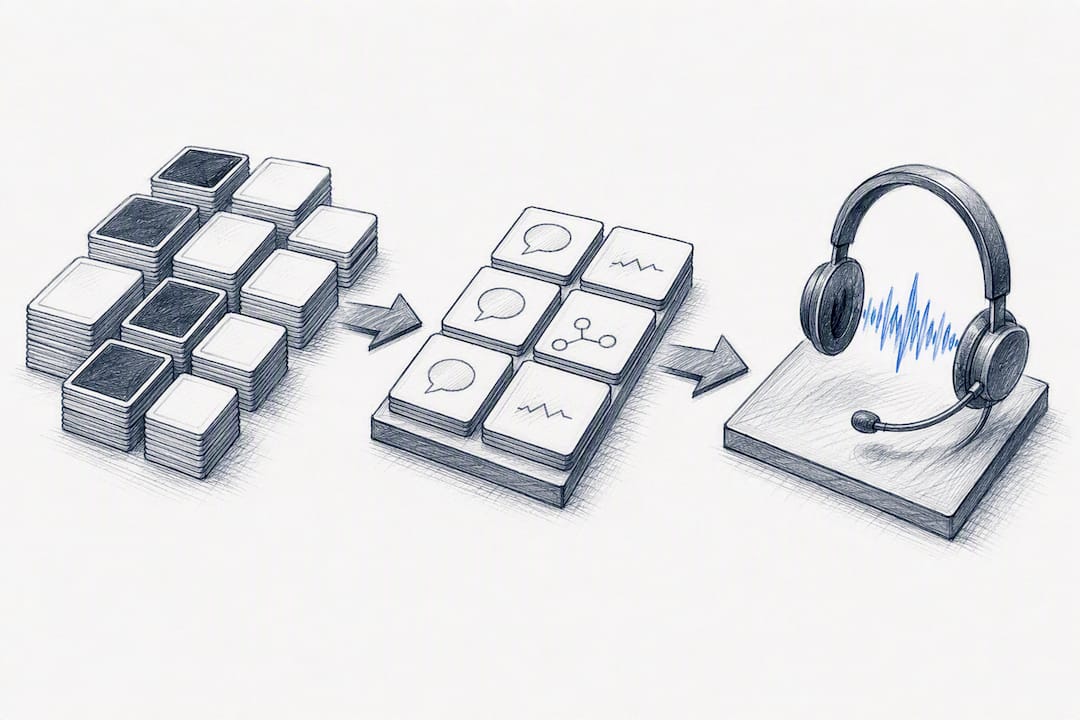
Start with a one-page battlecard for every objection that shows up repeatedly. Each card needs the anonymized literal quote pulled straight from the call, not a paraphrase, plus two or three hypothesized responses your team can test. Coldread’s analysis found that in most cold-calling datasets, four or five objections cover the large majority of calls, which means a handful of well-built battlecards can prepare a rep for nearly every conversation they’ll have that week.
From there, build the practice cadence:
- Run 90-second objection drills daily, cycling through the top battlecards under time pressure.
- Include multilingual variants where your lead lists include Spanish-speaking sellers, since phrasing shifts change how objections surface.
- Score each drill on resolution rate, empathy, and question quality using a scorecard, not a gut check.
- Review scorecard trends weekly per rep, then roll up pattern-level findings monthly for the whole team.
A rep who drills the same five objections daily for two weeks handles them differently than one reading a script cold on a live call. That’s the entire point of turning detection data into repetition instead of leaving it in a spreadsheet.
Teams that treat objections as clustered, predictable categories, rather than infinite variations, can build a small set of drills that covers most of what a cold-calling day throws at them, which matters even more in distressed-seller outreach where emotional variance runs high.
For specific scenario practice, foreclosure cold calling drills and inherited property roleplay give reps a way to rehearse the exact objection patterns tied to those seller types before they ever pick up a live call. Pair that with a documented objection handling framework so drills stay consistent across your whole team instead of drifting rep to rep.
Which Metrics Actually Show the Program Is Working?
Detection is only useful if you’re watching the right numbers move. Five metrics tell you whether coaching is landing or just generating reports nobody reads.
- Talk ratio. If a rep is talking more than 60% of the call, they’re not listening for objections, they’re steamrolling past them.
- Objection resolution rate. Track how many objections get a real answer versus a deflection. “Resolved” means the seller moves to a next step, not just stops talking.
- Objection timing. Objections surfacing late in a call and going unresolved are strongly tied to lost deals, according to Nimitai’s analysis. Objections handled early correlate with higher conversion.
- Next-step confirmation rate. A call without a confirmed follow-up is a call that quietly dies. Track how often reps lock in a specific next action.
- Rising frequency of a single objection. If “the price is too low” spikes across a batch, that’s a signal to revisit your offer positioning, not just your script.
Watch these together, not in isolation. A rep with a great resolution rate but no confirmed next steps is winning the argument and losing the deal.
Implementation Checklist and Privacy Basics
Before you turn on objection detection at scale, get the basics locked down. Skipping this step causes more bad training data than any weakness in the AI model itself.
- Write and use a consistent consent script on every call, and check your state’s recording laws before you start.
- Pick a transcription provider that supports diarization out of the box, since retrofitting speaker separation later is painful.
- Store recordings and transcripts in secure, access-controlled storage with a defined retention window.
- Map objection tags directly to the contact or deal record in your CRM so coaching tasks generate automatically.
- Anonymize literal quotes before using them in team-wide training materials.
Pro Tip: Spot-check 5 to 10% of your AI-tagged calls by hand every week. Diarization errors and misclassified objections compound fast if nobody’s watching for them.
The most common pitfalls aren’t technical, they’re procedural: sampling only your best calls, ignoring diarization mistakes because “the transcript looks fine,” and trusting AI tags without ever listening to the underlying audio.
Dave’s Take: Where AI Wins and Where Coaching Still Has to Show Up
AI is faster than any human at finding patterns across hundreds of calls. It’ll surface a repeat objection you’d never notice manually and free up coaching time for the moments that actually need a person in the room.
But AI still misreads sarcasm, regional phrasing, and the specific emotional weight a probate seller puts on “I just don’t know yet.” That’s where a coach has to step in, listen to the actual audio, and decide whether the tag matches reality. The tool finds the pattern. The coach decides what it means.
— Dave
Practice the Exact Objections AI Just Found You
Detection tells you which objections are costing you deals. ClosersLeague is where your team actually fixes it, with AI roleplay built around nine distressed-seller types, including probate, pre-foreclosure, and divorce, so reps practice the real phrasing sellers use instead of a generic sales script.
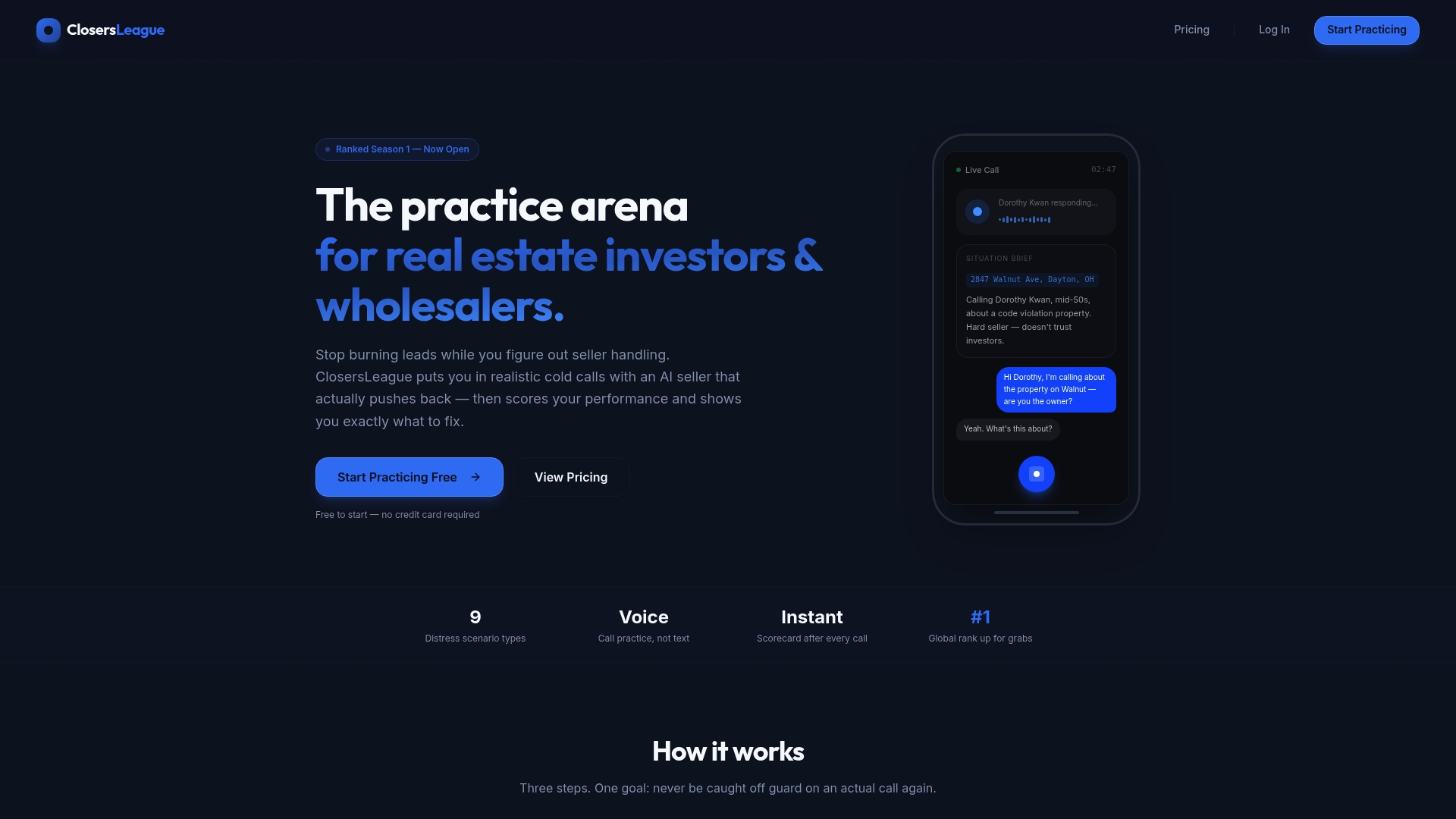
Every drill ends in a scorecard, not a vague “good job.” You see resolution rate, empathy, and question quality scored per call, then compare your numbers against the team leaderboard to see where you actually rank. If your battlecards show “trust” and “timing” objections spiking this month, run reps through pre-foreclosure practice or vacant property scenarios until the resolution rate moves.
Plans start at $5 a month on the Starter tier, scaling up through Growth and Pro as your call volume grows. Start a trial and run your first scored drill today.
Sources
- How to Analyze Sales Calls with AI (Nimitai blog)
- How AI Analyzes Sales Calls (Coldread blog)
- Detect and Analyze Objections in Sales Calls with AI (VOCAP)
FAQ
How Accurate Is AI Objection Detection?
Accuracy depends on transcription quality and diarization, but well-built systems reliably catch explicit objections; implicit ones need a taxonomy built for distressed-seller language and periodic human spot checks.
How Many Calls Do I Need Before the Patterns Are Reliable?
Most guidance points to 20 to 50 calls per segment before objection patterns stabilize enough to build a battlecard around them.
Is It Legal to Record and Analyze Cold Calls?
Recording laws vary by state, so always use a clear consent script and check your local rules before recording; consent, not the AI analysis itself, is the legal issue.
Does ClosersLeague Use AI Objection Detection in Its Training?
ClosersLeague builds its roleplay scenarios and scorecards around common objection patterns across nine distressed-seller types, turning detected objections into drills reps actually practice.
What’s the Difference Between Explicit and Implicit Objections?
Explicit objections are direct statements like “the price is too low,” while implicit ones show up as hesitation, vague timelines, or conditional phrasing that signals a real but unstated concern.