
Cold calling motivated sellers is the process of proactively reaching out to distressed property owners through strategic phone conversations designed to generate qualified leads and close wholesale deals. In real estate investing, the industry term for this practice is outbound seller prospecting, and mastering it separates investors who wait for deals from those who create them. Knowing how to cold call motivated sellers means combining clean data, proven scripts, legal compliance, and persistent follow-up into one repeatable system. This guide covers every layer of that system, from the tools you need before your first dial to the follow-up cadence that actually converts leads into contracts.
What do you need before you cold call motivated sellers?
The quality of your data determines the quality of your results before you ever say a word. Bad phone numbers consume nearly 25% of cold calling time, and verified mobile direct dials can lift connection rates from 2.7% to over 25%. That gap is not a minor inefficiency. It is the difference between a productive day and a wasted one.
Here is what your setup must include before you start dialing:
- Verified lead lists: Use skip-tracing services to confirm current phone numbers for property owners in foreclosure, probate, tax delinquency, or divorce situations. Stale data kills momentum.
- Do Not Call compliance: DNC violations cost between $500 and $1,500 per call. Scrub every list against the National Do Not Call Registry before dialing. No deal is worth that exposure.
- Dialing technology: Power dialers and AI-assisted platforms automate the mechanical work of dialing so you focus on conversations. An AI-assisted workflow handles dialing, qualification, and follow-up scheduling while you focus on approvals and negotiations.
- CRM integration: Log every call, note the seller’s situation, and set follow-up reminders. Without a CRM, warm leads fall through the cracks.
| Setup Element | Why It Matters |
|---|---|
| Verified direct dials | Raises connection rate from 2.7% to 25%+ |
| DNC scrubbing | Avoids fines of $500–$1,500 per call |
| Power dialer | Increases daily dial volume without burnout |
| CRM with reminders | Captures follow-up opportunities automatically |
Pro Tip: Before your first dial session, pull a sample of 50 numbers from your list and test connection rates. If fewer than 10 connect, your data source needs to change before you waste hours on dead numbers.
How do you open a cold call to get a motivated seller talking?
Your opening 10–20 seconds either earn you a conversation or end the call. Referencing specific property context early in the call increases seller receptivity significantly. Sellers respond to cold calls when they feel the caller knows something real about their situation, not when they hear a generic pitch.
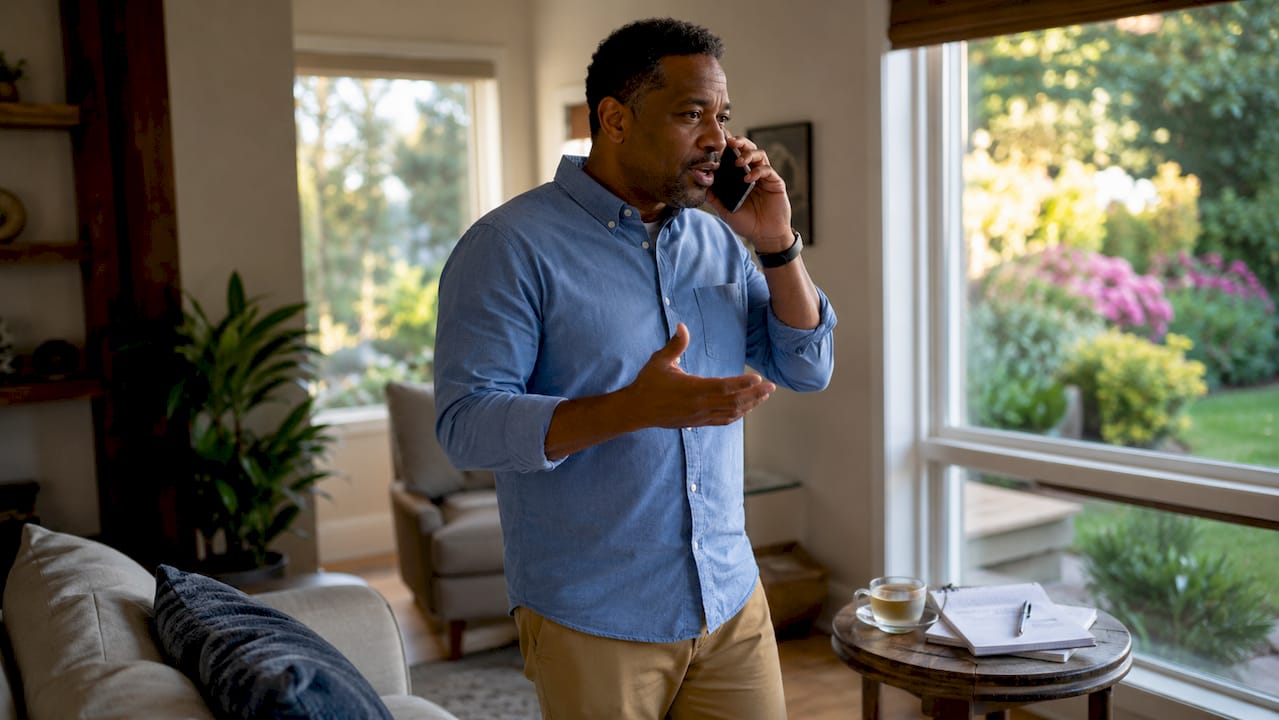
The most effective openers use a pattern interrupt. Instead of “Hi, I’m calling about your property at 123 Main Street, are you interested in selling?” try something like: “Hey, is this John? John, how have you been? I’m reaching out about the property on Elm Street. I work with investors in the area and wanted to see if you’d had any thoughts about your options there.”
That approach works for three reasons:
- It sounds human, not scripted.
- It references the specific property immediately, which signals you are not a random robocaller.
- It asks an open-ended question that invites the seller to talk.
Once the seller responds, your job is to listen more than you speak. Effective cold calling targets a talk-to-listen ratio of roughly 55/45, with the caller speaking slightly less. Sellers who feel heard are far more likely to share their real situation, including timelines, financial pressure, and flexibility on price.
Open-ended questions that consistently unlock seller motivation include:
- “How long have you owned the property?”
- “What would need to happen for you to feel good about moving forward?”
- “Have you had any other conversations about the property recently?”
Pro Tip: Write your opener on a notecard and read it out loud ten times before your first call session. Familiarity with your own words removes hesitation from your voice, and sellers hear that confidence immediately.
For ready-to-use language, the distressed seller scripts on the ClosersLeague blog give you word-for-word frameworks for foreclosure, probate, and divorce situations.
How do you handle objections from motivated sellers?
Objections are not rejections. 73% of seller objections are protective responses, not literal statements of disinterest. When a seller says “I’m not interested,” they usually mean “I don’t trust you yet” or “I don’t understand what you’re offering.” That distinction changes everything about how you respond.
The right move is never to argue or push harder. Instead, use what experienced investors call a bridge question. A bridge question redirects the conversation toward the seller’s underlying concern without challenging their stated objection.
Here are four common objections and effective responses:
- “I’m not interested.” Reply: “Totally understand. I’m not here to pressure you at all. Can I ask, have you thought about what you’d do with the property if the right situation came along?”
- “I already have an agent.” Reply: “That’s great. I actually work differently than agents. I buy directly, so there are no commissions or listing fees. Would it be worth a quick conversation just to compare options?”
- “I want full market value.” Reply: “That makes sense. Can I show you what the net proceeds would look like after commissions, repairs, and closing costs on a traditional sale versus a direct offer?” Showing net proceeds after fees builds trust far more effectively than defending a low number.
- “I need to think about it.” Reply: “Of course. What’s the main thing you’d want to think through? Maybe I can answer it now and save you some time.”
The goal of every objection response is to ask one more question, not to close the deal on the spot. Discovery is the job. The offer comes later.
Pro Tip: After each call, write down the exact objection you heard and the response you gave. Review ten of these weekly. Patterns will emerge, and you will get sharper at handling the three or four objections that come up most often.
For a deeper breakdown of the most common pushback, the ClosersLeague guide on handling “I’m not interested” walks through the psychology and exact language in detail.
What follow-up strategy converts motivated seller leads into deals?
Most investors lose deals not because they called the wrong sellers, but because they stopped calling too soon. 93% of eventual conversations with sellers happen by the third call attempt. Yet nearly half of all callers never follow up after the first attempt. That persistence gap is where your deals are hiding.
Aim for 100–200 dials per day to generate 20–30 live conversations, with a realistic conversion rate of 1–3% to quality leads. Those numbers mean follow-up is not optional. It is the system.
| Contact Attempt | Recommended Timing | Channel |
|---|---|---|
| Attempt 1 | Day 1 | Phone call |
| Attempt 2 | Day 3 | Phone call + voicemail |
| Attempt 3 | Day 7 | Phone call + text |
| Attempt 4 | Day 14 | Text or email |
| Attempt 5+ | Monthly | Rotating channels |
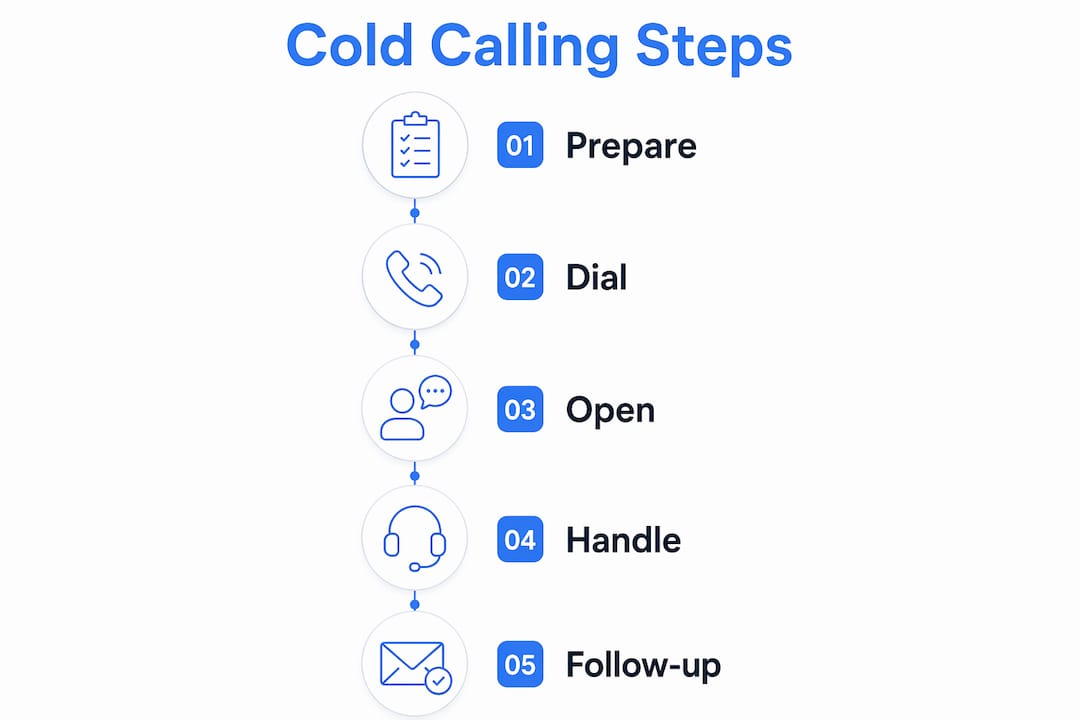
Text messages after a missed call dramatically increase callback rates. Keep texts short: “Hey John, this is [Your Name]. I called earlier about the property on Elm Street. Happy to chat whenever works for you.” No pressure, no pitch.
Email follow-ups work best for sellers who gave you their address during a previous conversation. A brief note referencing your last call keeps you top of mind without feeling aggressive.
Pro Tip: Set a CRM task immediately after every call, even if the seller said no. Situations change. A seller who was not ready in January may be highly motivated by March after a missed mortgage payment or a family change.
Cold calling lead generation fundamentals from ClosersLeague cover how to build a full pipeline using these same cadence principles.
Key takeaways
Cold calling motivated sellers converts at the highest rate when clean data, a strong opener, disciplined objection handling, and structured follow-up work together as a single system.
| Point | Details |
|---|---|
| Data quality is foundational | Verified direct dials raise connection rates from 2.7% to over 25%. |
| Open with property context | Referencing the specific property in the first 20 seconds increases seller engagement. |
| Objections are not rejections | 73% of objections mask deeper concerns; use bridge questions to uncover them. |
| Follow up at least three times | 93% of conversations happen by the third attempt, yet most callers quit after one. |
| Training drives conversion | Deliberate skill practice lifts cold call conversion rates by 38%. |
Why most investors are one skill away from better results
I have worked with hundreds of real estate investors and wholesalers, and the pattern I see most often is this: they have decent data, a passable script, and genuine motivation. What they lack is the ability to stay calm and curious when a seller pushes back. That one skill, staying in diagnostic mode instead of defensive mode, is what separates investors who close deals from those who collect objections.
Modern cold calling is a diagnostic process, not a pitch. Your job on the phone is to ask targeted questions and listen for the real story underneath the seller’s words. The investor who can do that consistently will outperform the one with a fancier dialer every single time.
I also want to be direct about rejection. Every “no” is data. It tells you something about your timing, your opener, your list quality, or your question sequence. Investors who treat rejection as feedback improve faster than those who treat it as a verdict on their worth. Stop winging it. Start drilling. Training lifts conversion rates by 38%, and that number compounds over hundreds of calls.
The investors I have seen grow the fastest share one habit: they practice their calls before they make them. They roleplay objections, they record themselves, and they review what worked. That deliberate repetition is what turns a nervous first call into a confident, productive conversation.
— Dave
Practice smarter with ClosersLeague’s AI cold calling platform
If you are serious about improving your seller calls, the fastest path forward is deliberate, structured practice against realistic scenarios.
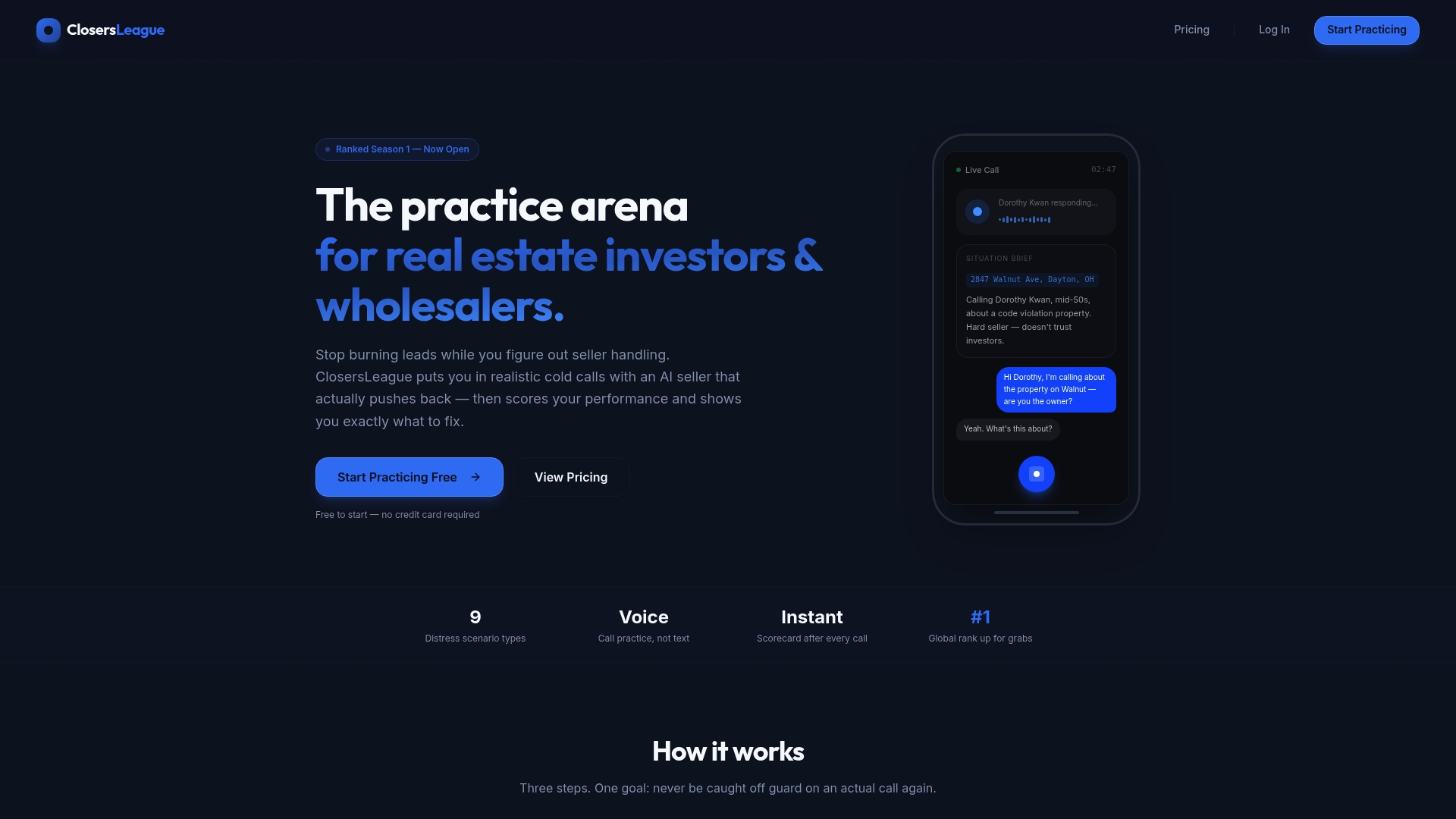
ClosersLeague is an AI-powered cold calling training platform built specifically for real estate investors and wholesalers. You can practice live AI seller roleplay across every major seller type, including foreclosure, probate, divorce, and tax delinquent situations. The platform scores your calls, flags weak spots, and gives you coaching feedback after every session. You do not need to wait for a live seller to get better. You can drill the exact scenarios that challenge you most, on your schedule, and track your improvement over time. Stop losing deals to hesitation. Start building the skills that close them.
FAQ
What is the best opening line for a motivated seller cold call?
Reference the specific property and ask an open-ended question within the first 20 seconds. Sellers respond to cold calls when they feel the caller knows their situation, not when they hear a generic pitch.
How many calls does it take to reach a motivated seller?
93% of conversations happen by the third call attempt. Plan for at least three to five contact attempts across multiple channels before moving a lead to inactive status.
What are the legal risks of cold calling sellers?
Failing to scrub your list against the National Do Not Call Registry can result in fines of $500 to $1,500 per violating call. Always verify compliance before each new dialing campaign.
How do I handle a seller who says they want full market value?
Show them the net proceeds after agent commissions, repair costs, and closing fees on a traditional sale versus a direct offer. Comparing net numbers, not gross prices, shifts the conversation to real value.
How many dials per day should a real estate investor make?
Aim for 100–200 dials per day to generate 20–30 live conversations, with a 1–3% conversion rate to qualified leads. Consistent volume combined with quality follow-up is what builds a reliable pipeline.