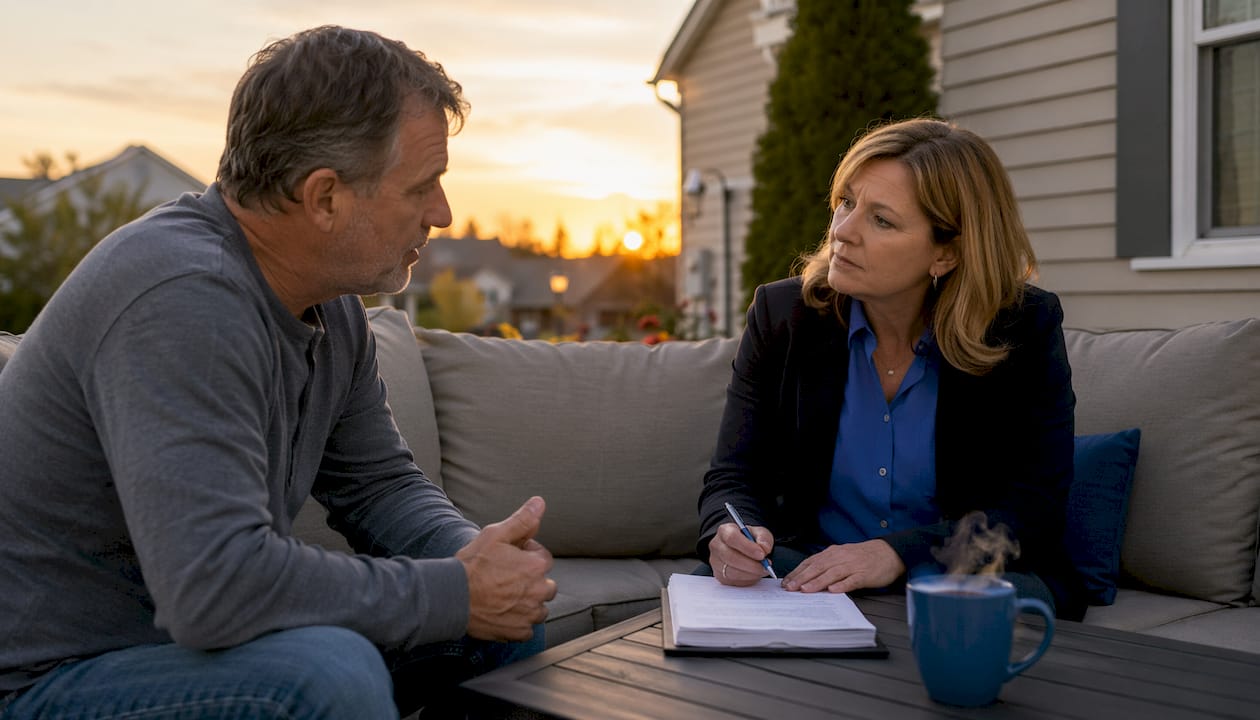
Talking to distressed homeowners is defined as the practice of using empathetic, structured communication to engage sellers facing foreclosure, probate, or divorce. These conversations require more than a sales pitch. They demand emotional intelligence, precise timing, and a clear understanding of each homeowner’s legal and financial situation. Real estate professionals who master how to talk to distressed homeowners close more deals, build stronger reputations, and create genuine value for people in crisis. This guide delivers the frameworks, scripts, and follow-up strategies you need to do exactly that.
What are the key emotional and legal challenges distressed homeowners face?
Distressed homeowners carry a weight most buyers and investors never see. Understanding that weight is the first step toward communicating effectively with them.
The emotional pressure varies by situation, but the intensity is consistent across all three major scenarios:
- Foreclosure: Homeowners feel shame, fear, and urgency. They often avoid calls because they associate contact with bad news. Many are in denial about their timeline.
- Probate: Heirs and executors are grieving. They face unfamiliar legal processes while managing family dynamics and property decisions simultaneously. Patience is not optional here.
- Divorce: Both parties are often in conflict with each other, not just with their financial situation. Emotions run high, and trust in outside parties is low.
Legal complexity compounds the emotional stress. Probate timelines average 6–18 months, meaning decisions move slowly and require multiple touchpoints. That timeline matters because it shapes how you pace your outreach. Foreclosure cases involve strict legal deadlines that create urgency on the homeowner’s side. Divorce sales require court approval in many states, adding procedural layers that delay decisions.
These factors directly affect how and when you communicate. A foreclosure homeowner needs fast, clear information. A probate heir needs space and consistency. A divorcing couple needs strict neutrality. Recognizing these differences before you pick up the phone separates professionals from amateurs.
What communication strategies build trust with distressed homeowners?
Tactical empathy is the most effective communication tool for distressed homeowners. It means identifying what a homeowner is feeling, naming it out loud, and responding without judgment. This technique, used by top-producing agents, keeps conversations grounded when emotions spike.

The core principle is simple: acknowledge before you advise. If a homeowner says, “I don’t know what to do,” the wrong response is to immediately list your services. The right response is, “It sounds like you’re carrying a lot right now.” That one sentence lowers defenses and opens the door to a real conversation.
Practical strategies that build trust include:
- Label emotions explicitly. Say “It sounds like this has been really stressful” rather than jumping to solutions.
- Ask open-ended questions. “What matters most to you right now?” tells you far more than “Are you interested in selling?”
- Avoid pressure language. Phrases like “limited time offer” or “you need to act fast” destroy trust with distressed sellers.
- Listen more than you talk. A 70/30 ratio of listening to speaking is a reliable target for first calls.
- Respond calmly to frustration. Homeowners may push back hard. Stay even-toned and validate their concern before redirecting.
Pro Tip: When a homeowner goes silent or gives short answers, resist the urge to fill the space. Silence often means they are processing. Give them 3–5 seconds before speaking again.
Prompt communication also builds credibility. Agents who deliver bad news quickly, validate frustration, and focus on next steps retain trust even when the news is hard. Stalling or softening facts too much signals that you are not a reliable partner.
How to tailor outreach timing for probate, foreclosure, and divorce cases
Each distressed scenario has its own optimal contact cadence. Using the wrong timing signals that you do not understand the homeowner’s situation.
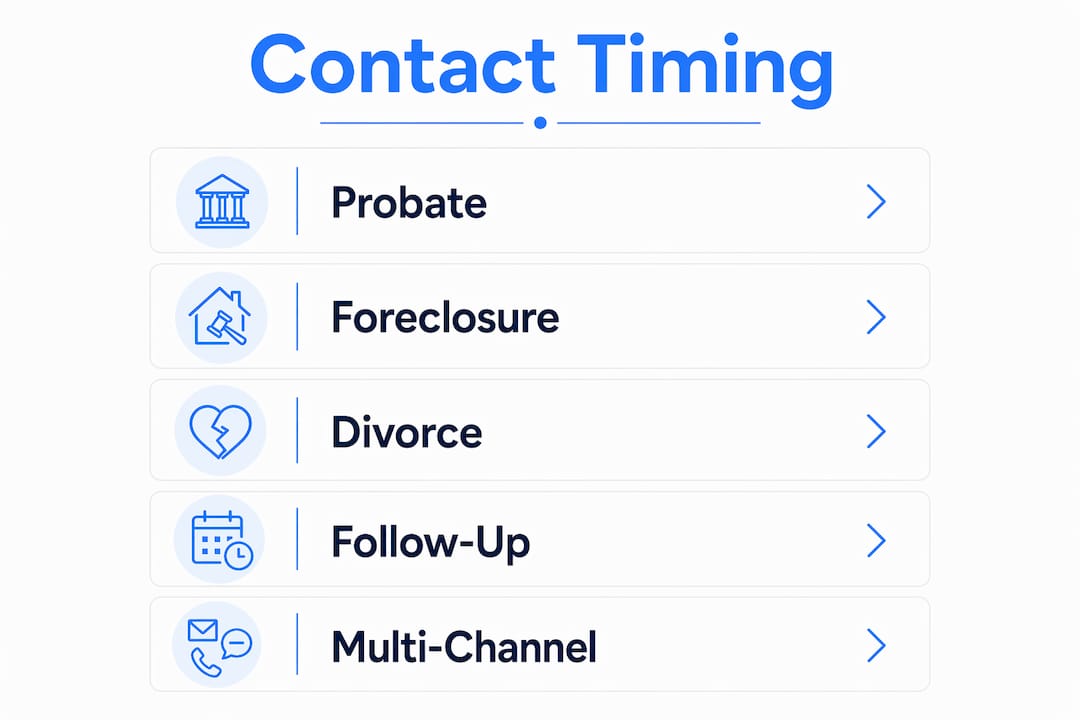
| Scenario | Initial Contact | Follow-Up Cadence | Timeline |
|---|---|---|---|
| Probate | Wait 7–14 days after filing | Every 2–3 weeks | 6–18 months |
| Foreclosure | Within 5 minutes to 24 hours | Weekly during active period | 30–90 days |
| Divorce | After both parties are confirmed | Bi-weekly, written preferred | 3–12 months |
For probate, agents responding within 5 minutes are 21 times more likely to qualify leads than those who wait 30 minutes. That statistic applies to the first contact after the initial waiting period ends. Speed matters once the window opens.
For foreclosure, 24-hour outreach boosts conversion rates by 65% compared to delayed contact. Homeowners in pre-foreclosure have a narrow decision window. Reaching them early positions you as a resource, not a vulture.
For divorce, written communication is the standard. Email with both parties copied on every message prevents misunderstandings and protects you legally. Texting one party creates the appearance of favoritism and can derail a deal entirely.
Pro Tip: Use multi-channel outreach across all three scenarios. Combine phone calls, emails, handwritten notes, and educational mailers to stay visible without feeling aggressive. Different homeowners respond to different channels.
What conversational scripts work best with distressed homeowners?
The right opening phrase sets the tone for the entire relationship. Distressed sellers respond to language that signals help, not hustle.
Strong opening frameworks include:
- Empathy opener: “Hi, my name is [Name]. I work with homeowners in situations like yours, and I’m not here to pressure you. I just want to understand what you’re dealing with and see if there’s anything I can help with.”
- Goal clarification question: “What’s the most important outcome for you right now. Is staying in the home an option you’re exploring, or are you open to other paths?”
- Solution framing: “There are a few options people in your situation have used. Loan modifications can reduce payments by a significant amount. A fair cash offer gives you control over timing. I can walk you through both with no obligation.”
- Objection response: If they say “I’m not interested,” try: “That’s completely fair. Can I ask what your biggest concern is right now? I’m not trying to sell you anything today.”
Scripts for distressed sellers work best when they follow a clear structure: empathy first, questions second, options third. Never lead with your offer. The homeowner needs to feel heard before they will consider any solution you present.
Avoid sensitive conversations in public spaces or with neighbors present. Distressed homeowners guard their privacy fiercely. A call overheard by a neighbor can shut down the relationship permanently. Always confirm you are speaking privately before discussing financial details. For a deeper look at proven language frameworks, cold calling scripts tailored to distressed sellers provide ready-to-use templates.
How to manage divorce disputes, unresponsive homeowners, and emotional volatility
Difficult situations are the norm in distressed homeowner communication, not the exception. Having a clear protocol for each scenario protects you and the deal.
For divorce cases, verbal agreements are unreliable and legally risky. Every decision must be confirmed in writing and signed by both parties. This is not optional. One party agreeing verbally while the other disputes it later can collapse a transaction at closing.
Key practices for managing difficult situations:
- Document everything. Confirm all decisions via email immediately after calls. Never rely on verbal confirmation alone.
- CC all parties. In divorce and probate cases with multiple heirs, copy all involved parties on every communication to prevent triangulation.
- Recognize when to pause. If a homeowner asks for space, honor it. Set a specific date to follow up and stick to it. Pushing too hard after a request for space ends the relationship.
- Build a long-term nurture sequence. Most sales require 5–12 contact attempts, but most agents quit after four. A structured follow-up sequence covering calls, emails, and mailers keeps you in the conversation without burning bridges.
- Know when to bring in professionals. If legal disputes escalate or a homeowner mentions attorney involvement, recommend they speak with their counsel before proceeding. Trying to work around legal advisors destroys trust.
“The agents who close the most distressed deals are not the most aggressive. They are the most consistent. They show up, they document, they respect boundaries, and they are still there six months later when the homeowner is finally ready to move.”
Emotional volatility is common in foreclosure calls. A homeowner may raise their voice or accuse you of predatory behavior. Stay calm, validate the frustration, and redirect to their goals. Saying “I understand why you’d feel that way” and then pausing is more effective than defending yourself.
Key Takeaways
Effective communication with distressed homeowners requires tactical empathy, scenario-specific timing, and documented follow-up to build trust and close deals ethically.
| Point | Details |
|---|---|
| Use tactical empathy | Label emotions before offering solutions to lower defenses and open real dialogue. |
| Match timing to scenario | Probate needs patience over 6–18 months; foreclosure demands contact within 24 hours. |
| Write everything down | In divorce and probate cases, document all decisions in writing and copy all parties. |
| Follow up persistently | Most deals close after 5–12 contacts; build a structured sequence and stick to it. |
| Script with empathy first | Open with acknowledgment, ask goal-clarifying questions, then present options. |
Why empathy is the real edge in distressed homeowner deals
The investors I see struggle most with distressed homeowners are the ones who treat every call like a transaction. They have a script, they hit their talking points, and they wonder why nobody calls them back. The problem is not the script. It is the mindset behind it.
Tactical empathy is not a soft skill. It is a closing skill. When you name what a homeowner is feeling before they have to say it, you signal that you actually understand their situation. That signal is rare. Most people calling distressed homeowners are focused on the deal. The ones who focus on the person first win the deal later.
I have also seen investors burn out on probate and divorce leads because they expect quick results. These are long-cycle deals that reward structure and patience. The agent who sends a handwritten note at month three, checks in at month six, and is still available at month nine is the one who gets the call when the homeowner is ready. Consistency is the competitive advantage most investors ignore.
The hardest part of communicating with distressed sellers is staying neutral when emotions run high. In divorce cases especially, one party will try to pull you to their side. The moment you take sides, you lose both parties and the deal. Strict written communication and equal treatment of both parties is not just good practice. It is the only way to survive a contested divorce sale with your reputation intact.
— Dave
Practice these conversations before they count
Real conversations with distressed homeowners do not wait for you to feel ready. The stakes are high, the emotions are real, and one wrong phrase can end a relationship before it starts.

ClosersLeague gives you a place to practice before the real call happens. The AI roleplay platform puts you in live simulated conversations with foreclosure, probate, and divorce seller types. You get real-time feedback on your tone, your empathy, your objection handling, and your timing. No judgment, just reps. If you want to build the confidence to handle any distressed seller conversation, cold calling practice with ClosersLeague is where you start.
FAQ
How do you open a call with a distressed homeowner?
Open with empathy and no pressure. A phrase like “I work with homeowners in tough situations and I just want to understand what you’re dealing with” signals help rather than sales and keeps the homeowner on the line.
What is tactical empathy in real estate?
Tactical empathy means identifying and naming a homeowner’s emotions to help them feel understood. Top agents use it to lower defenses and guide distressed sellers toward logical decisions without pressure.
How often should you follow up with a probate lead?
Follow up every 2–3 weeks after an initial waiting period of 7–14 days. Probate timelines average 6–18 months, so consistent, patient outreach over the full cycle is the standard approach.
How should you handle communication in a divorce sale?
Use email for all communication and copy both parties on every message. Document all decisions in writing immediately after calls. Verbal agreements are unreliable and legally risky in contested divorce transactions.
What do you say to a homeowner facing foreclosure?
Lead with empathy and present options clearly. Mention that loan modifications can significantly reduce payments, and offer a fair cash offer as an alternative. Never pressure. Frame yourself as a resource, not a buyer.