
A seller pipeline is defined as a structured CRM system that tracks potential property sellers through specific stages, from first contact to closed deal. Real estate investors and wholesalers use this system to manage leads from foreclosure, probate, divorce, and tax-delinquent situations. A well-built seller pipeline, which mirrors what sales professionals call a sales pipeline, gives you a clear picture of where every lead stands and what action comes next. Without it, follow-up becomes inconsistent, deals fall through timing gaps, and revenue stays unpredictable. This guide covers the seller pipeline definition, its stages, segmentation strategies, and the multi-channel outreach methods that keep it full.
What is a seller pipeline in real estate?
A seller pipeline is a CRM-based lead tracking system that moves potential sellers through defined stages until a deal closes or a lead is disqualified. Each stage represents a specific point in the relationship between you and a homeowner. The pipeline gives your entire operation a shared language: every lead has a status, every status has a next action, and nothing falls through the cracks.
The core benefit is visibility. You can look at your pipeline on any given day and know exactly how many leads are in follow-up, how many have received offers, and how many are stalled. That visibility is what separates investors who close deals consistently from those who rely on luck and memory.

The seller pipeline process also enforces discipline. When a lead sits in the same stage for 30 days with no movement, the pipeline makes that visible. You can then decide whether to push harder or disqualify the lead and protect your time.
What are the common stages of a real estate seller pipeline?
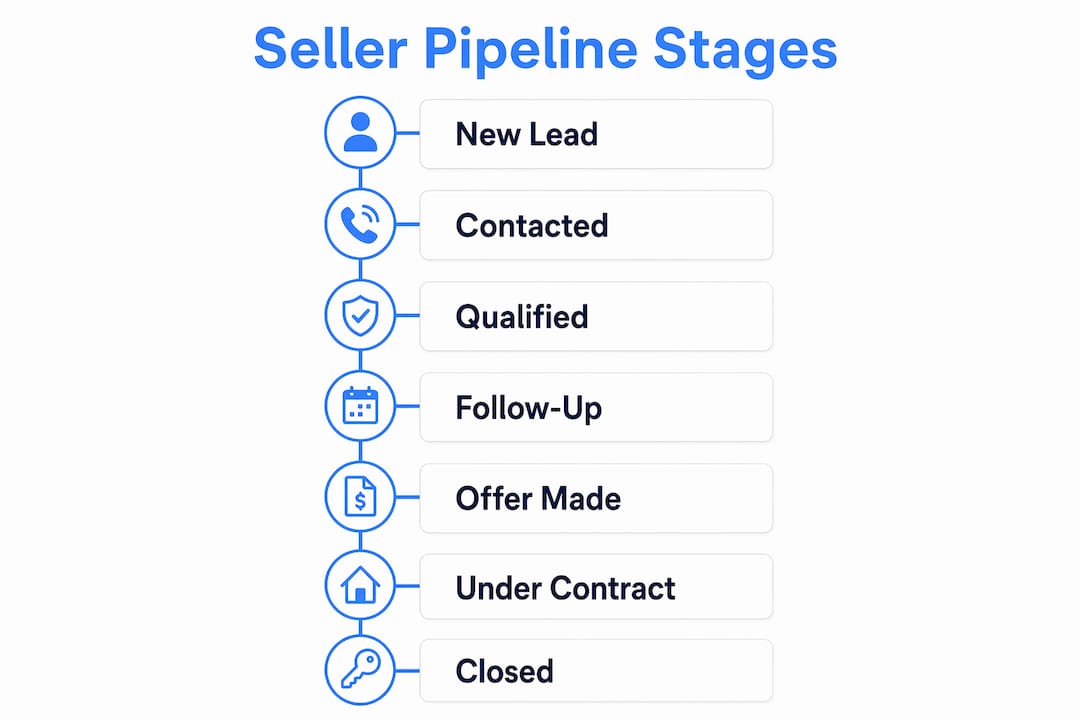
Typical pipeline stages include New Lead, Contacted, Qualified, Follow-Up, Offer Made, Under Contract, and Closed. Each stage has a specific purpose and a clear exit criterion before a lead advances.
| Stage | Purpose | Exit criterion |
|---|---|---|
| New Lead | Lead enters the system from any source | Attempt first contact within 5 minutes |
| Contacted | Initial outreach made | Live conversation or confirmed callback |
| Qualified | Motivation and property condition confirmed | Seller meets your buying criteria |
| Follow-Up | Lead is interested but not ready | Scheduled next touchpoint with a date |
| Offer Made | You have submitted a written offer | Seller accepts, counters, or declines |
| Under Contract | Signed purchase agreement in place | Due diligence completed |
| Closed | Deal funded and recorded | Funds received |
The exit criterion column is the part most investors skip. Moving a lead from Contacted to Qualified without a live conversation that confirms motivation is how pipelines get clogged with dead weight. Clear gating criteria at each stage prevent unqualified leads from consuming your follow-up time and distorting your conversion numbers.
Probate leads, for example, often sit in the Follow-Up stage for months because the estate is still being settled. Knowing that in advance lets you set realistic follow-up intervals instead of burning out your team with weekly calls on a lead that legally cannot move yet. Understanding how cash buyers handle probate homes helps you set the right expectations at the Qualified stage.
How do lead segmentation and timeline-based follow-up improve results?
Segmenting seller leads by timeline to sell is the single most effective way to improve pipeline efficiency. Treating a homeowner who needs to sell in 30 days the same as one who is thinking about selling in 18 months wastes your best leads and annoys your cold ones.
The three categories that work in practice are:
- Hot leads: Sellers with a timeline of 0–90 days. They face active pressure from foreclosure, divorce, probate deadlines, or job relocation. Follow up weekly, and vary your contact method each time.
- Warm leads: Sellers with a 3–6 month timeline. They are motivated but not urgent. Follow up every two weeks with value-added touches like a market update or a comparable sale in their neighborhood.
- Cool leads: Sellers with a 6–18 month horizon. They are exploring options. Monthly contact is enough. A single aggressive call can push them away permanently.
The average American homeowner has lived in their home for approximately 12 years before selling. That means pipeline timing gaps are real and costly. A lead you contacted in march may be ready to move in october. If your follow-up system does not account for that gap, a competitor closes the deal you planted.
Pro Tip: Set calendar-based reminders in your CRM for every cool lead with a note about their stated timeline. When that date approaches, shift them to warm status and increase your contact frequency automatically.
Motivation level matters as much as timeline. A homeowner facing foreclosure has a different emotional state than one who simply wants to downsize. Tailoring your language to uncover seller motivation early in the conversation lets you place leads in the right category from day one.
What multi-channel lead generation strategies support a healthy pipeline?
A healthy seller pipeline requires a steady flow of new leads from multiple sources. High-volume investors maintain predictable pipelines by mastering 3–4 consistent lead generation systems rather than relying on a single channel. When one source dries up, the others keep the pipeline moving.
The top lead generation channels for real estate investors in 2026 are:
- Cold calling: Direct outreach to homeowners in foreclosure, probate, tax-delinquent, or divorce situations. High effort, high return when done with a practiced script and strong objection handling.
- Direct mail: Postcards and letters sent to targeted lists. Works best when combined with a follow-up call after 14 days.
- Pay-per-click ads: Google and Meta campaigns targeting motivated sellers searching for cash buyers. Cost varies by market.
- Social media ads: Facebook and Instagram campaigns targeting homeowners with 5+ years of tenure. Home valuation campaigns on these platforms convert at 15–25% to listing presentations.
- SEO and content marketing: Blog posts and landing pages that attract sellers researching their options organically.
- Referrals: Attorneys, financial advisors, and past sellers who send motivated homeowners your way.
Response time is a critical variable that most investors underestimate. AI voice agents are now commonly used to make initial contact in under 5 minutes across all lead sources. A lead that waits 24 hours for a callback has already called three other investors.
Layering AI cold calls with direct mail after 14 days doubles seller lead response rates compared to single-channel outreach. The mail primes the homeowner, and the call arrives when recognition is highest. Running 3–4 channels deeply for 90 days produces better results than spreading thin across seven channels at once.
Pro Tip: Do not launch a new lead channel every month. Pick your top three sources, run them hard for a full quarter, and measure cost per qualified lead before adding anything new. Consistency beats variety every time.
Mastering cold calling basics is the fastest way to fill the top of your pipeline without waiting for ads or mail to produce results. It is the one channel you control completely.
How do you manage leads to prevent pipeline rot and increase conversion?
Lead rot is the silent killer of seller pipelines. It happens when unresponsive leads accumulate in your pipeline, inflating your numbers while consuming follow-up time that should go to real prospects.
The fix is a clear disqualification rule. After 8–10 unsuccessful contact attempts over 60 days, mark the lead as dead and remove it from your active pipeline. That threshold is firm. Chasing a lead beyond that point rarely produces a deal and always costs you time.
Best practices for keeping your pipeline clean:
- Set contact attempt limits. Log every call, text, and mail piece. When you hit 8–10 attempts with no response, disqualify and archive.
- Gate every stage. A lead only moves from Contacted to Qualified after a live conversation that confirms motivation and property condition. No exceptions.
- Schedule reactivation campaigns. Archived leads are not deleted. Set a 6-month reactivation trigger to re-engage them with a fresh outreach sequence.
- Use CRM automated reminders. Manual follow-up systems fail. Automated reminders tied to stage and date keep every lead on schedule.
- Track timing gaps. A lead that goes 30 days without a touchpoint in the Follow-Up stage is a warning sign. Review it immediately.
Pipelines without gating fill with unqualified leads that reduce team productivity and make your conversion metrics meaningless. A pipeline with 200 leads and a 2% close rate is less valuable than one with 60 leads and a 12% close rate. Quality beats volume every time.
A property lead checklist applied at the Qualified stage gives you a consistent standard for what a real prospect looks like. Use it every time, without exception.
Key Takeaways
A seller pipeline works because it combines structured stages, disciplined gating, segmented follow-up, and multi-channel lead generation into one system that converts motivated homeowners into closed deals.
| Point | Details |
|---|---|
| Define your stages clearly | Use seven standard stages from New Lead to Closed, each with a specific exit criterion. |
| Gate every stage | Only advance leads after confirming motivation with a live conversation. |
| Segment by timeline | Assign hot, warm, or cool status based on seller timeline and adjust contact frequency accordingly. |
| Diversify lead sources | Run 3–4 channels consistently for 90 days rather than spreading thin across many sources. |
| Disqualify decisively | Archive leads after 8–10 failed contacts over 60 days and trigger reactivation at 6 months. |
What I have learned from watching pipelines fail
Most seller pipelines I have seen fail for the same reason: investors build them once and never refine them. They set up seven stages in their CRM, import a list, and assume the system will do the work. It does not.
The pipelines that produce consistent deals share one trait. The investor treats the pipeline as a living document. They review it weekly, ask why leads are stalling at specific stages, and adjust their follow-up scripts or timing based on what the data shows. That kind of discipline is rare, and it is exactly what separates the top 10% of investors from everyone else.
The other mistake I see constantly is treating every lead the same. A probate seller who just lost a parent needs a different conversation than a landlord who is tired of tenants. Blending those two into one generic follow-up sequence produces mediocre results with both. Segment your leads, tailor your language, and your conversion rate will reflect the difference.
Multi-channel integration is not optional anymore. Cold calling alone, or direct mail alone, leaves too much on the table. The investors closing the most deals in 2026 are the ones who call, mail, and follow up with a text, all within a coordinated sequence tied to their CRM. That is not complicated. It just requires commitment to the process.
— Dave
Build the cold calling skills your pipeline depends on
A seller pipeline is only as strong as the conversations that move leads through it. If your cold calling skills are inconsistent, your pipeline stalls at the Contacted and Qualified stages no matter how many leads you generate.

ClosersLeague gives real estate investors and wholesalers a way to practice those conversations before they happen live. The platform uses AI roleplay to simulate calls with foreclosure sellers, probate leads, tired landlords, and vacant property owners. You get scored on objection handling, emotional tone, and qualification technique. Practice cold calling with AI across every seller type your pipeline contains, and show up to real calls with the confidence and speed that converts. Stop winging it. Start drilling.
FAQ
What is the seller pipeline definition in real estate?
A seller pipeline is a CRM system that tracks potential property sellers through defined stages from initial contact to closed deal. It gives investors visibility into every lead’s status and the next required action.
How many stages should a seller pipeline have?
Most effective seller pipelines use seven stages: New Lead, Contacted, Qualified, Follow-Up, Offer Made, Under Contract, and Closed. Each stage requires a specific action before a lead advances.
How do you prevent lead rot in a seller pipeline?
Disqualify leads after 8–10 unsuccessful contact attempts over 60 days and archive them for a reactivation campaign at the 6-month mark. Clear gating criteria at each stage prevent unqualified leads from accumulating.
What is the best follow-up cadence for seller leads?
Hot leads with a 0–90 day timeline need weekly contact. Warm leads get outreach every two weeks, and cool leads with a 6–18 month horizon need monthly touches. Matching frequency to motivation level drives higher conversion.
How does multi-channel outreach improve a seller pipeline?
Layering AI cold calls with direct mail after 14 days doubles response rates compared to single-channel outreach. Running 3–4 channels consistently for 90 days produces more qualified leads than rotating through many channels briefly.