
Consistent follow-up is the single most reliable driver of deal closure in real estate sales. 80% of deals require 5–8 follow-ups to close, yet 44% of salespeople quit after just one attempt. That gap is where your deals live or die. For real estate investors and wholesalers working distressed leads, including foreclosure, probate, and divorce situations, the importance of follow-up cannot be overstated. Sellers in those situations rarely say yes on the first call. They need time, trust, and repeated contact before they commit.
Why follow-up increases deals: the core mechanics
Follow-up works because it keeps you in front of a prospect until they are ready to act. Most homeowners facing distress do not make fast decisions. They weigh options, talk to family members, and sometimes stall for weeks. A single call rarely captures that window.
The data backs this up. Only 8% of salespeople follow up five or more times, which means the majority of investors hand their best leads to the small group willing to stay persistent. That 8% closes a disproportionate share of deals simply by showing up when others have walked away.
Follow-up also works as a trust signal. Each touchpoint tells the seller you are serious, organized, and not going away. That perception matters enormously when you are asking someone to sell their home under difficult circumstances. Consistent follow-up transforms outreach from guesswork into a repeatable system with predictable results.

How does timing affect follow-up response rates?
Timing is not a minor detail. It is one of the biggest variables in whether a follow-up gets a response or gets ignored.
Leads contacted within 5 minutes convert 100 times better than leads reached after 30 minutes. That number is not a rounding error. It reflects how quickly a seller’s attention shifts after they have expressed interest. Speed on the first contact sets the tone for every follow-up that follows.
After the initial contact, spacing matters just as much as speed. Research shows that multi-touch cadences increase reply rates by up to 160% compared to single-touch outreach. The key is not hammering a prospect daily. It is reaching them at the right intervals, when their situation may have shifted.
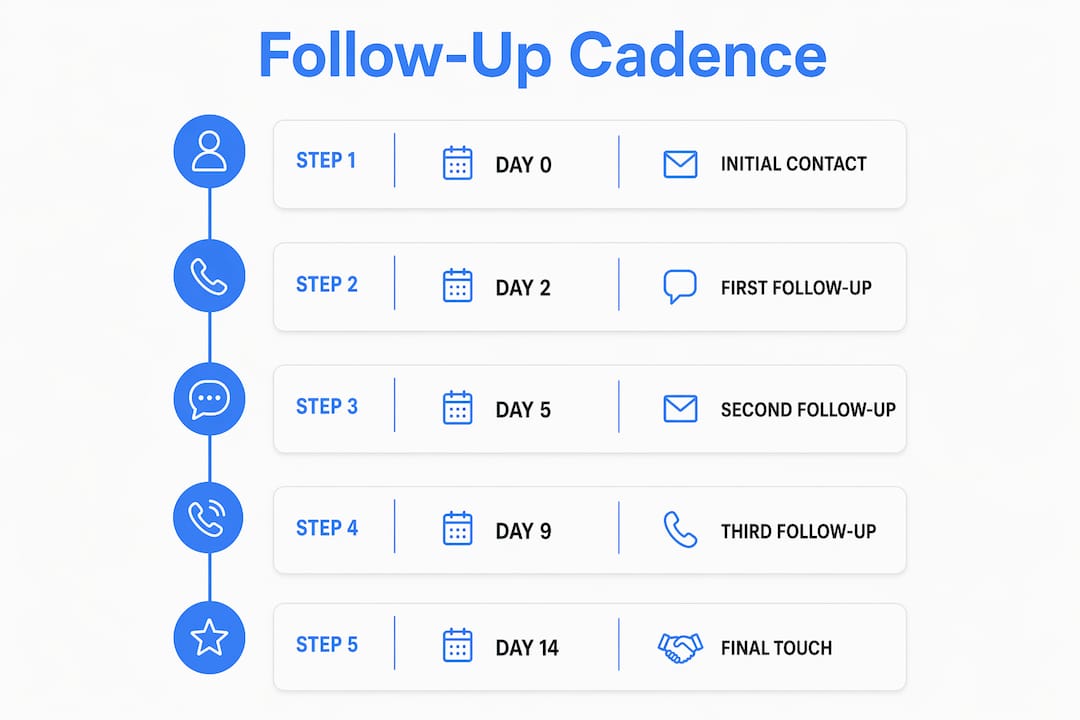
Here is what a well-timed cadence looks like in practice:
- Day 0: First call or contact attempt immediately after lead comes in
- Day 2: Follow-up call or text referencing the first conversation
- Day 5: Check-in with a new piece of value, such as a market update or offer detail
- Day 9: Voicemail or email addressing a specific concern they raised
- Day 14: A direct, low-pressure message asking if their situation has changed
This Fibonacci-style spacing prevents fatigue while keeping you present. It mirrors how real decisions actually unfold for distressed sellers.
Pro Tip: Align your follow-up timing to buyer signals, not just your calendar. If a seller mentions they are waiting on a court date for probate, schedule your next contact for right after that date. Signal-grounded timing gets responses that generic scheduling misses.
What are the psychological benefits of follow-up in real estate?
Follow-up does more than remind a seller you exist. It builds the kind of trust that moves deals forward.
Sellers in distress, whether facing foreclosure, an inherited property, or a divorce, are often dealing with emotional weight alongside financial pressure. When you follow up consistently and professionally, you signal reliability. You become the investor who keeps their word. That reputation is worth more than any single pitch.
“Effective follow-up requires shifting from mere reminders to delivering new information and addressing specific buyer concerns.” — The Lost Art of Following Up
This shift from reminder to relationship is where real estate investors separate themselves. Transactional outreach asks, “Are you ready to sell yet?” Relationship-based follow-up asks, “Has anything changed? Here is what I can offer given your current situation.” That second approach builds loyalty.
The financial case for loyalty is clear. A 5% increase in client retention can raise revenue by 25% to 95%. Acquiring a new lead costs five times more than keeping an existing one engaged. In real estate investing, that means your follow-up list is one of your most valuable assets.
Personalization amplifies every one of these effects. Personalized follow-up hooks lift reply rates from 2.1% to 9.4% on equivalent offers. A message that references a seller’s specific situation, their timeline, their property condition, outperforms a generic check-in by a wide margin.
Common follow-up mistakes that kill deals
Most investors do not fail at follow-up because they are lazy. They fail because they repeat the same mistakes without realizing it.
The most common errors include:
- Sending generic messages: “Just checking in” is not a follow-up. It is noise. Sellers delete it without reading past the first line.
- Following up too frequently: Contacting a prospect every day signals desperation, not professionalism. It also damages reply rates by over 50% once you push past 8 contacts without a response.
- Using only one channel: Calling exclusively, or emailing exclusively, limits your reach. Sellers respond differently across phone, text, and email. Using all three increases your chances of landing in the right moment.
- Ignoring deal blockers: Many deals stall because of hidden obstacles like frozen budgets, family disagreements, or legal delays. Generic follow-up never surfaces these. Persistent, targeted follow-up uncovers hidden blockers that would otherwise kill the deal silently.
Fear of being annoying holds many investors back. That fear is largely misplaced. Only 21% of prospects find consistent follow-up annoying. The other 79% view it as neutral or positive persistence. You are far more likely to lose a deal by going quiet than by following up one too many times.
Pro Tip: Use a CRM or rental listing follow-up software to log every touchpoint with notes on what the seller said. Your next follow-up should reference something specific from the last conversation. That one habit separates professional investors from forgettable ones.
Best practices for building a real estate follow-up cadence
A follow-up cadence is a structured sequence of contacts designed to move a prospect from cold to committed. Without one, you are improvising. With one, you are running a system.
Most effective cadences run 5–8 touches. Research confirms that a sequence plateaus in return after 5–6 touches, so pushing well beyond that without engagement wastes time and risks damaging the relationship. The goal is to stay present without becoming a burden.
Fibonacci-style scheduling, spacing contacts at days 0, 2, 5, 9, and 14, works because it mirrors natural decision cycles. Early contacts are frequent when interest is fresh. Later contacts give the seller breathing room while keeping you in their awareness.
The table below compares three common cadence models used by real estate investors:
| Cadence model | Structure | Best for | Drawback |
|---|---|---|---|
| Aggressive daily | Contact every 1–2 days for 2 weeks | Hot leads with stated urgency | Burns out prospects quickly |
| Fibonacci spacing | Days 0, 2, 5, 9, 14, 21 | Most distressed seller leads | Requires disciplined scheduling |
| Long-tail nurture | Monthly touches over 6–12 months | Cold leads not ready to sell | Slow to convert, easy to forget |
The break-up message deserves special attention. Used as a final outreach attempt, a well-written break-up message, one that honestly acknowledges the seller may not be interested and offers to close the loop, consistently generates the highest reply rates of any message in the sequence. It also uncovers hidden deal blockers that earlier messages missed.
Pro Tip: After a break-up message, do not delete the lead. Re-queue them for a long-tail nurture sequence. Distressed sellers often come back 3–6 months later when their situation worsens. Staying in their inbox, even monthly, keeps you first in line when they are finally ready.
For a deeper breakdown of follow-up strategies for investors, the ClosersLeague blog covers cadence design specific to real estate wholesaling and investing.
Key Takeaways
Consistent, well-timed, personalized follow-up is the most reliable method for closing more real estate deals and building lasting seller relationships.
| Point | Details |
|---|---|
| Persistence closes deals | 80% of deals need 5–8 touches; most investors quit after one, leaving deals on the table. |
| Speed on first contact matters | Reaching a lead within 5 minutes increases conversion 100 times over a 30-minute delay. |
| Personalization drives replies | Personalized follow-up lifts reply rates from 2.1% to 9.4% compared to generic messages. |
| Cadence structure prevents burnout | Fibonacci-style spacing keeps you present without overwhelming prospects or damaging reply rates. |
| Break-up messages recover stalled deals | A final, honest break-up message generates the highest reply rates and surfaces hidden blockers. |
The follow-up habit most investors skip
Real estate investors spend a lot of time debating which script to use on the first call. That debate is mostly a distraction. The first call rarely closes anything. What closes deals is what happens after.
I have watched investors with average phone skills outperform sharp talkers simply because they followed up. Not aggressively. Not daily. Just consistently, with messages that showed they had actually listened to the seller the first time. That is not a talent. It is a habit.
The shift that changed my thinking was moving away from “checking in” messages entirely. Every follow-up needs a reason to exist. A market update, a change in your offer terms, a question about their timeline. Something that gives the seller a reason to respond beyond just being polite.
Automation made that sustainable for me. Manual follow-up is easy to skip when your pipeline gets busy. Automated sequences, built around real seller signals, keep the cadence running even when you are focused on closing other deals. The investors who build that infrastructure early are the ones with full pipelines later. For a practical look at how to build that infrastructure, the ClosersLeague guide on real estate follow-up strategies is worth your time.
— Dave
ClosersLeague trains you to follow up like a closer
Knowing the right cadence is one thing. Executing it under pressure, with a real seller who is emotional, skeptical, or stalling, is another skill entirely.
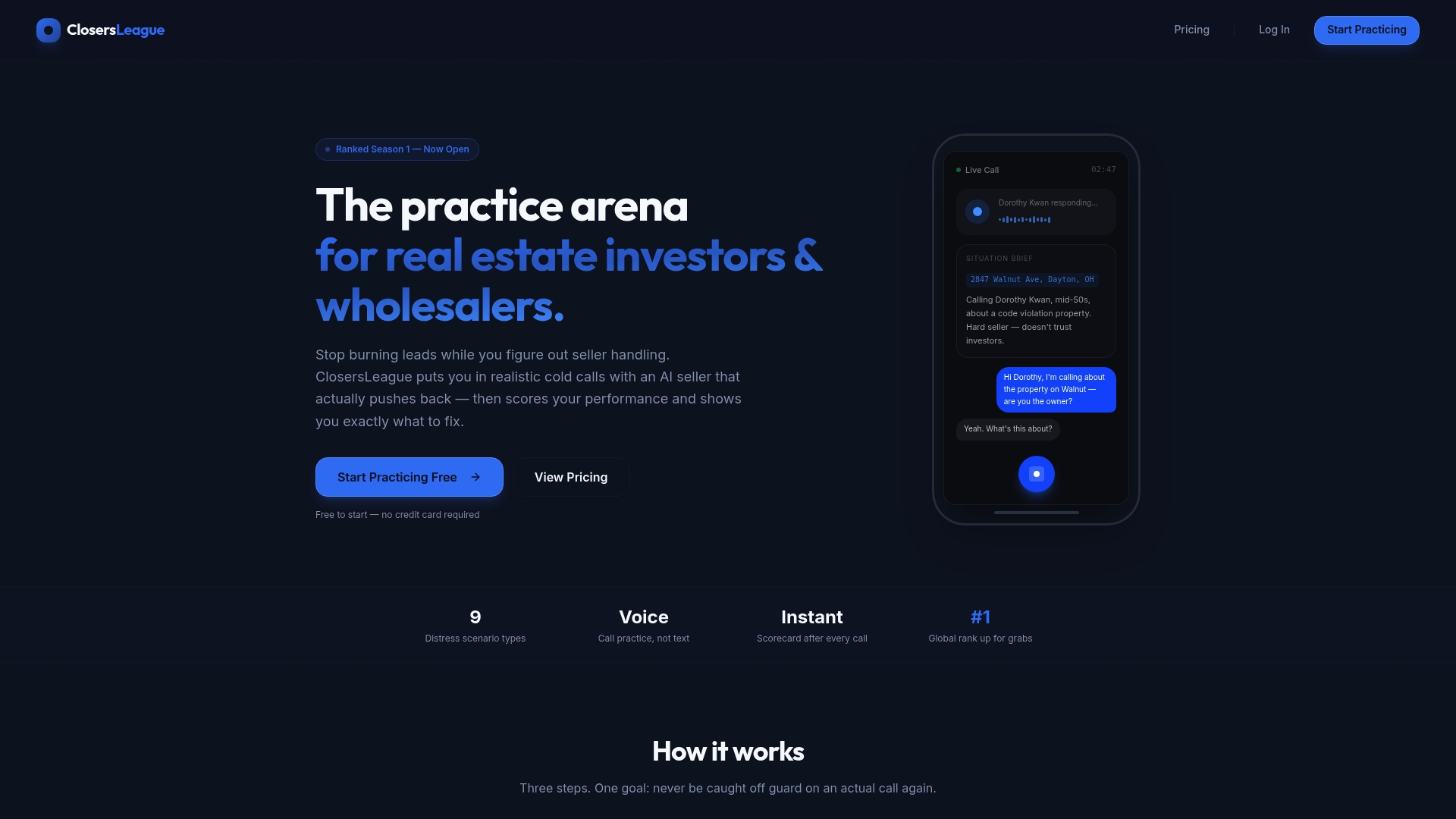
ClosersLeague is an AI-powered cold calling training platform built for real estate investors and wholesalers. The platform lets you practice follow-up roleplays across every seller type, including inherited property, foreclosure, probate, and code violation leads. You get scored on your messaging, your timing, and how well you handle objections. If you work inherited property leads specifically, the inherited property cold calling practice module puts you through realistic follow-up scenarios before you ever risk a live deal. Stop winging your follow-ups. Start drilling them.
FAQ
How many follow-ups does it take to close a real estate deal?
Most deals require 5–8 follow-ups to close. Only 8% of salespeople follow up that many times, which is why persistence alone creates a significant competitive edge.
Why do most investors stop following up too early?
Fear of being annoying is the most common reason. Research shows only 21% of prospects find consistent follow-up annoying, meaning the risk of going quiet is far greater than the risk of one extra touchpoint.
What is the best follow-up cadence for distressed sellers?
A Fibonacci-style cadence, contacting leads on days 0, 2, 5, 9, and 14, works best for most distressed seller situations. It maintains presence without overwhelming the prospect.
Does personalization really make a difference in follow-up?
Personalized follow-up messages lift reply rates from 2.1% to 9.4% compared to generic outreach. Referencing a seller’s specific situation is the single biggest driver of response rates.
When should I send a break-up message?
Send a break-up message after 5–6 unanswered contacts. It consistently generates the highest reply rates in any sequence and often surfaces deal blockers that earlier messages missed.