You can stop cold call anxiety from running your business with three moves: graded exposure that builds tolerance in stages, a fixed call routine that removes decision fatigue, and a two-minute micro-debrief after every block. This fear is common, it’s biological, and it responds to practice. Right now, do one thing: take a 60-second box breath, then call a friend or a local shop just to say hello. That single rep starts rewiring your response to the phone.
TL;DR:
- Repeating low-stakes practice calls, especially with scripted openers and targeted lists, significantly reduces cold call anxiety over time.
- Structuring daily call routines at the same time, with clear goals like rejection targets, accelerates confidence building through graded exposure.
- Using brief breathing exercises and reframing nervous energy as excitement before calls can measurably lower perceived anxiety.
- Practicing with simulated scenarios such as AI roleplay or recorded reviews helps overcome reluctance, especially for those with stage fright or over-preparation habits.
- Small, consistent efforts, like making one more call when wanting to quit, compound into lasting confidence without needing extraordinary breakthroughs.
Table of Contents
- Fast Checklist to Cut Call Anxiety Before You Dial
- Why Does Cold Calling Trigger So Much Anxiety?
- A 30-Day Practice Plan to Rebuild Your Dialing Confidence
- What Do You Actually Say on the Call?
- Which Practice Method Actually Reduces the Fear?
- What I’ve Learned Coaching Anxious Callers
- Sources
- FAQ
Fast Checklist to Cut Call Anxiety Before You Dial
You don’t need a personality transplant to make calls without dreading them. You need a routine that removes the guesswork, because most of the anxiety lives in the uncertainty right before you dial, not the call itself.
- Block a sacred call time. Same hour, every day, treated like a client appointment you can’t cancel.
- Pre-load a targeted list. Random dialing invites overthinking; a list built around warmer segments like past clients, neighbors, or FSBOs gives you a reason to call before you even pick up.
- Use a 3-sentence opener and a voicemail script. Scripted openers exist so you never have to improvise under pressure.
- Run two body resets. Box breathing (four counts in, four hold, four out) and swapping “calm down” for “I’m excited” before you dial.
- Micro-debrief after each block. Write one win and one tweak. That’s it.
Pro Tip: Reframing nervous energy as excitement rather than trying to suppress it can measurably lower how anxious a call feels in the moment, according to research on emotional reappraisal in high-stakes tasks.
Why Does Cold Calling Trigger So Much Anxiety?
Your brain doesn’t distinguish well between social rejection and physical danger. Anticipating a hang-up or a curt “not interested” activates the same threat-processing circuitry that fires when you sense actual danger, which is why your pulse spikes before the phone even rings.
Phone calls strip away the nonverbal cues (facial expressions, body language) your brain normally uses to read a room, so it compensates by over-preparing. That’s the mental loop where you rehearse a script fifteen times and still feel unready. Add in the timing mismatch, discomfort happens immediately when you dial, but the reward (an appointment, a deal) shows up much later, and avoidance starts to feel rational even though it wrecks your pipeline.
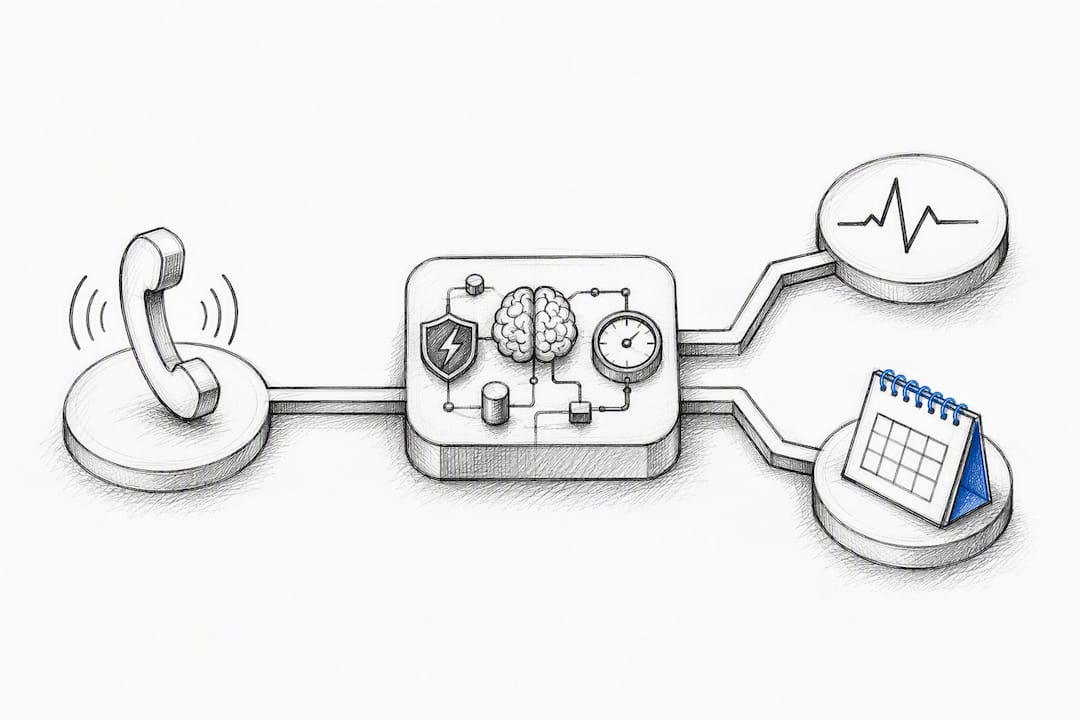
This isn’t one universal fear either. Researchers have cataloged roughly a dozen distinct types of call reluctance, from over-preparation and telephobia to stage fright and role rejection. An agent who over-scripts needs a different fix than one who simply freezes at the dial tone, which is why generic pep talks rarely stick. Diagnosing your specific pattern matters more than motivation ever will.
A 30-Day Practice Plan to Rebuild Your Dialing Confidence
Confidence on the phone is a byproduct of repetition, not a prerequisite for it. This plan uses graded exposure, the same principle behind clinical exposure therapy, where controlled, repeated contact with a feared trigger reduces the fear response over time.
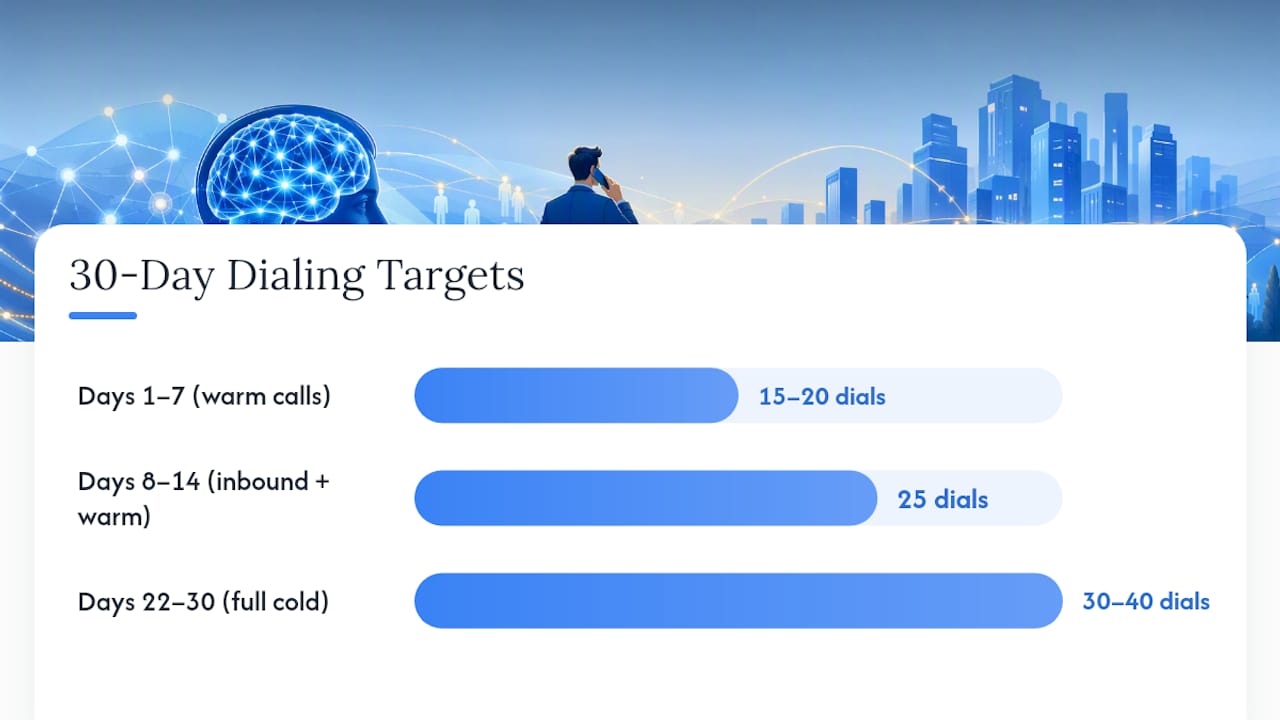
- Days 1 to 7: warm calls only. Past clients, referrals, people who already know your name. Target: 15 to 20 dials a day.
- Days 8 to 14: inbound and warm-ish leads. People who requested info or interacted with a listing. Target: 25 dials a day.
- Days 15 to 21: mixed warm and cold. Introduce fresh distressed-property leads (probate, pre-foreclosure) alongside warmer contacts.
- Days 22 to 30: full cold dialing. Target 30 to 40 dials daily, tracked by conversations and appointments booked, not just dials made.
Structure every call block the same way: a two to three minute warm-up (breathing, one practice line said out loud), the focused dialing session itself, then a two-minute debrief logging what worked and what didn’t. Track dials, live conversations, talk time, and appointments set, since raw dial count alone hides whether you’re actually improving.
Coaching accelerates this. Side-by-side call blocks with a mentor and recorded-call reviews work because they let you separate a confidence problem from a skill problem. If you perform fine in role-play but still avoid live dials, that’s a will problem, not a training problem, and it needs graduated independence rather than more scripts. Some coaches build this into a 30/60/90 framework: supervised action in the first two weeks, structured independence through day 45, then habit ownership after that.
Pro Tip: Set a weekly “no” goal, five rejections, ten, whatever stretches you. Chasing rejections instead of dreading them flips the entire emotional frame of the call block.
One caveat: if the anxiety escalates into full panic symptoms (chest tightness, dizziness, an inability to function beyond the call itself), that’s outside what a coaching plan should try to fix. Talk to a licensed therapist. Exposure works for everyday call reluctance; it isn’t a substitute for clinical care when symptoms are severe.
What Do You Actually Say on the Call?
Freezing usually happens because you don’t know what comes next, not because you lack confidence in general. Fix the words first and the nerves often follow.
- Three-sentence opener: who you are, why you’re calling, and one clear ask. Example: “Hi, this is [name] with [company], I help homeowners in [area] who need to sell quickly for cash, do you have 15 minutes to talk about your property on [street]?”
- Voicemail template: keep it under 20 seconds and give a callback reason, not just your name and number, so you’re not replaying it in your head all day wondering if it landed.
- “Not interested”: “Totally understand, mind if I ask what’s holding you back, just so I don’t waste your time in the future?”
- “Send me info”: “Happy to, quick question first so I send the right numbers, what’s your timeline on the property?”
- “I have an agent”: “Good to know, this is actually a cash offer path outside the traditional listing process, worth two minutes to compare?”
Before you dial, smile once, physically, out loud on the phone this sounds different, and take one slow breath. Your voice carries the tension in your shoulders whether you mean it to or not.
Which Practice Method Actually Reduces the Fear?
Live cold calls carry real consequences, an actual seller, an actual “no”. Simulated practice removes the stakes while keeping the mechanics identical, which is exactly why repeated, low-stakes repetition works faster than sporadic live dialing.
- Peer role-play works well for agents whose issue is wording or nerves under mild pressure; a colleague can push back just enough to simulate friction.
- Recorded-call reviews expose habits you can’t hear in the moment, filler words, rushed pacing, a voice that trails off.
- AI roleplay practice fits agents who need high-frequency reps at odd hours, with graduated difficulty and objective scoring on tone, objection handling, and emotional read.
Diagnosing your reluctance type first tells you which format to lean on. Someone with stage fright benefits most from sheer repetition; someone with over-preparation habits needs practice that forces them off-script.
What I’ve Learned Coaching Anxious Callers
Confidence doesn’t come before the calls. It comes after them, once you’ve built a small stack of evidence that you survived the “no” and picked up the phone again anyway. The single ritual I push hardest is “one more call”: whenever you want to quit a block, dial exactly one more, then decide. That rule alone has rescued more sessions than any script I’ve written.
Small, consistent reps compound faster than most agents expect. You don’t need a breakthrough day. You need forty ordinary ones in a row.
— Dave
Sources
For deeper context on the ideas covered here: the University of Florida’s extension summary on call reluctance breaks down the specific reluctance types referenced above. The APA’s overview of exposure therapy explains the clinical mechanics behind graded practice. Sales Gravy and Mojo Dialer both offer practitioner-level detail on daily routines and real estate targeting.
Ready to put the 30-day plan into action without waiting on a training partner’s schedule? ClosersLeague’s AI roleplay platform lets you run graduated, scenario-based practice calls against seller objections and emotional states across probate, pre-foreclosure, divorce, and other distressed situations, with scorecards that show exactly where your reluctance is coming from. You can also review the foundational cold calling tips built for investors or brush up on activity-based dialing routines before you start your first call block. And if presentation nerves are part of your pre-call ritual, a professional property readiness checklist can help you walk into listing conversations feeling sharper too.
- Sales call reluctance: types and solutions (University extension)
- Exposure therapy overview (American Psychological Association)
- Prospecting reluctance in real estate (Mojo Dialer blog)
FAQ
What Is the 80/20 Rule in Cold Calling?
It generally refers to spending roughly 20% of the call talking and 80% listening, letting the seller do most of the talking so you can qualify their situation and respond to what they actually need instead of pitching blind.
Is Cold Calling Dead in Real Estate?
No. Distressed property owners, probate, pre-foreclosure, tax delinquent, out-of-state, still respond to direct outreach, and targeted lists built around warmer segments consistently outperform random dialing.
What Are the 5 Stages of Cold Calling?
Most frameworks describe them as: research and list building, the opener, qualifying questions, objection handling, and the close or next-step ask. Skipping the research stage is one of the most common cold calling mistakes agents make.
How Do I Get Rid of Anxiety When Cold Calling?
Combine graded exposure (warm calls before cold ones), a fixed daily call block, a scripted opener, and a short breathing or reframe technique before each session. Anxiety fades with repeated, low-stakes practice, not with waiting to feel ready.