
Cold calling is defined as direct outbound phone outreach to property owners who have not yet expressed interest in selling. For real estate investors and wholesalers, it remains one of the highest-ROI lead generation methods available. To close more deals cold calling, you need three things working together: a structured conversation framework, disciplined timing, and consistent follow-up. This article breaks down each element with 2026 industry data and proven techniques so you can increase your appointment rate and convert more motivated sellers.
How to close more deals cold calling: the core system
The foundation of any effective cold calling system is volume paired with structure. Effective cold calling systems target 50–80 dials per hour with a 1–2% lead conversion per 100 calls. That means you need both the right tools and the right process to make those numbers work in your favor.

Tools every investor needs before dialing
Your setup determines your ceiling. Without the right infrastructure, you burn time on manual tasks instead of conversations. These are the non-negotiables:
- Auto-dialer: Handles call volume efficiently, letting you reach 50–80 contacts per hour instead of 15–20 with manual dialing.
- CRM system: Logs every call, records outcomes, and sets automatic follow-up reminders. Without it, leads fall through the cracks.
- Pre-call research: Pull the property address, ownership history, and any public records (Notice of Default, probate filing, tax delinquency) before you dial. Personalized calls convert at a higher rate.
- Lead-type scripts: A foreclosure script differs from a probate script. Match your language to the seller’s situation.
- KPI tracking: Measure dial-to-contact rate, contact-to-conversation rate, and appointment-to-show rate every week.
73% of investors fail to calculate their true cold calling ROI because they skip KPI tracking. That gap is why most investors plateau. You cannot improve what you do not measure.
Pro Tip: Set up a simple spreadsheet or CRM dashboard that tracks your three core KPIs daily. Review them every Friday and adjust your script or timing based on what the numbers show.
| KPI | What it measures | Target benchmark |
|---|---|---|
| Dial-to-contact rate | How many dials result in a live answer | 10–15% |
| Contact-to-conversation rate | How many contacts engage past 30 seconds | 30–40% |
| Appointment-to-show rate | How many booked appointments actually show | 60–70% |
How do you structure a cold call to get more appointments?
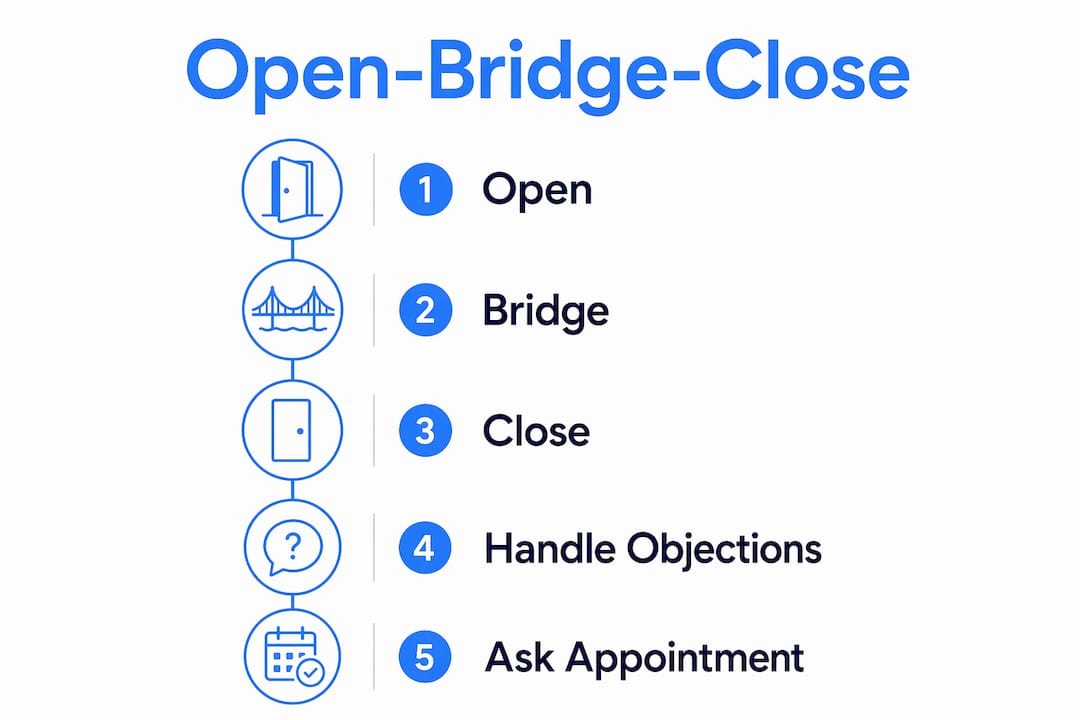
The Open-Bridge-Close framework is the most reliable call structure for real estate cold calling. It organizes the conversation into three phases that build trust before asking for anything. Agents who use this framework and ask for appointments on every qualifying call book three times more appointments than those who wait for a natural opening.
Phase 1: Open
Your first 15 seconds determine whether the call continues. Do not pitch the property or your offer immediately. Instead, earn permission to keep talking. Slow your speech slightly, use the homeowner’s name, and state a clear reason for calling that centers on them, not you. A pattern interrupt works well here. Try: “I know this is out of the blue. I’m a local investor and I came across your property on [street name]. I had a quick question for you.” That framing is disarming and specific.
Phase 2: Bridge
The Bridge phase is pure discovery. Your goal is to understand the seller’s motivation, timeline, and pain points before you say anything about price or process. Ask open-ended questions: “How long have you owned the property?” “Have you thought about what you’d do if you sold?” “Is there anything about the property that’s been a challenge?” Active listening here is not optional. Reflect back what you hear. Sellers who feel understood are far less likely to hang up or object aggressively.
Phase 3: Close
Once you have confirmed motivation, ask for the appointment directly. Do not hint at it. Do not ask if they “might” be open to meeting. Offer two specific time choices: “I have time Thursday at 10 AM or Friday at 2 PM. Which works better for you?” This assumptive close technique removes the yes/no decision and replaces it with a scheduling decision.
When objections come up, use the Validate-Question-Redirect method. Validate the concern (“That makes sense”), ask a clarifying question (“What would need to be true for this to make sense for you?”), then redirect to a benefit. This keeps the conversation moving without pressure.
Pro Tip: Write your close question on a sticky note and put it on your monitor. Investors who forget to ask for the appointment on qualifying calls leave appointments on the table every single session.
When should you call, and how often?
Timing is not a minor detail. Calling FSBO leads within 72 hours produces a 22% conversion rate. Wait one week and that rate drops to 8%. Speed to contact is one of the highest-leverage variables in your entire system.
The 3-3-3 sequencing approach structures your follow-up around three psychological stages. The 3-3-3 method yields 34% higher conversions than standard timing sequences. Here is how it works:
- Within hours (urgency): First contact as soon as possible after the lead comes in. Reference something specific about their situation.
- 3 days later (value): Follow up with a value-based message. Share a relevant data point about their neighborhood or a recent comparable sale.
- 3 weeks later (relationship): Check in with a low-pressure message focused on their timeline, not yours.
Most sellers need multiple touches before they engage. The average motivated seller requires 8 or more interactions before a real conversation happens. Giving up after two calls is the single most common reason investors miss deals that were already in their pipeline.
Combining direct mail with cold calling improves contact rates by 200–300% and reduces deal cost by 20–40%. Multi-touch outreach is not extra work. It is the system that makes your calls land.
Pro Tip: The best calling windows are Tuesday through Thursday, between 8–9 AM and 4–6 PM local time. Avoid Monday mornings and Friday afternoons. Log every attempt in your CRM so you never lose track of where a lead stands.
| Day and time | Contact rate | Notes |
|---|---|---|
| Tuesday–Thursday, 8–9 AM | High | Homeowners are reachable before work obligations peak |
| Tuesday–Thursday, 4–6 PM | High | Post-work window, homeowners are home |
| Monday AM / Friday PM | Low | Avoid; contact rates drop significantly |
How do you handle objections with distressed homeowners?
Distressed homeowners facing foreclosure, probate, or divorce are not typical sales prospects. They are people under serious financial and emotional pressure. Aggressive tactics backfire immediately. Empathy-led calls using public records data reduce defensive reactions and increase genuine connection with troubled homeowners.
Before you call a pre-foreclosure lead, pull the Notice of Default date from public records. Reference it carefully: “I saw the property came up in public records recently, and I just wanted to reach out in case you were exploring options.” That one sentence demonstrates expertise and signals that you are informed, not guessing. Sellers respond differently when they sense you have done your homework.
“The most common mistake investors make with distressed sellers is treating the call like a transaction. These homeowners need to feel heard before they will consider any offer. Lead with empathy, ask about their situation, and let them talk. The deal follows the trust.”
Key qualifying questions for distressed leads include:
- “What’s your timeline looking like right now?”
- “Have you spoken with your lender about your options?”
- “Is staying in the home still a possibility, or are you open to other paths?”
- “What would a good outcome look like for you?”
Regulatory compliance is non-negotiable. The Telephone Consumer Protection Act (TCPA) and the National Do-Not-Call Registry carry real penalties. Scrub your lists before every calling session. For guidance on calling distressed homeowners within legal and ethical boundaries, build compliance checks into your workflow from day one.
Sellers who feel pressured will not call you back. Sellers who feel respected will. That distinction closes more deals than any script line ever will.
Key Takeaways
Closing more real estate deals through cold calling requires structured conversation frameworks, fast lead response, multi-touch follow-up, and empathy-led communication with distressed sellers.
| Point | Details |
|---|---|
| Use the Open-Bridge-Close framework | Agents who ask for appointments on every qualifying call book three times more than those who wait. |
| Contact FSBO leads within 72 hours | Conversion drops from 22% to 8% when you delay contact by one week. |
| Apply the 3-3-3 sequencing method | Urgency, value, and relationship messages in sequence yield 34% higher conversions. |
| Track your core KPIs weekly | 73% of investors miss ROI gains because they skip dial-to-contact and appointment-to-show tracking. |
| Lead with empathy on distressed calls | Homeowners in foreclosure or probate respond to problem-solving, not pressure. |
What I have learned after years of real estate cold calling
Cold calling fatigue is real, and most investors underestimate it. Rotating calls in 2-hour blocks with breaks prevents the robotic tone that kills conversion. After about 90 minutes of intensive dialing, your energy drops and sellers hear it. Schedule your blocks deliberately.
The investors I have seen improve fastest are the ones who treat every call session as a practice session, not just a production session. They record calls, review them, and refine their scripts based on what actually happened, not what they thought happened. Roleplay is not optional if you want to get better fast. Stop winging it. Start drilling.
Rejection is part of the math, not a signal to stop. If your dial-to-contact rate is 12% and your contact-to-conversation rate is 35%, you know exactly how many dials you need to book one appointment. That math removes the emotional sting from every “no.” Track your numbers, work your blocks, and understand your true ROI before you decide whether cold calling is working for you.
— Dave
Practice the calls that close deals with ClosersLeague
Real estate cold calling is a skill. Skills improve with deliberate practice, not just repetition.
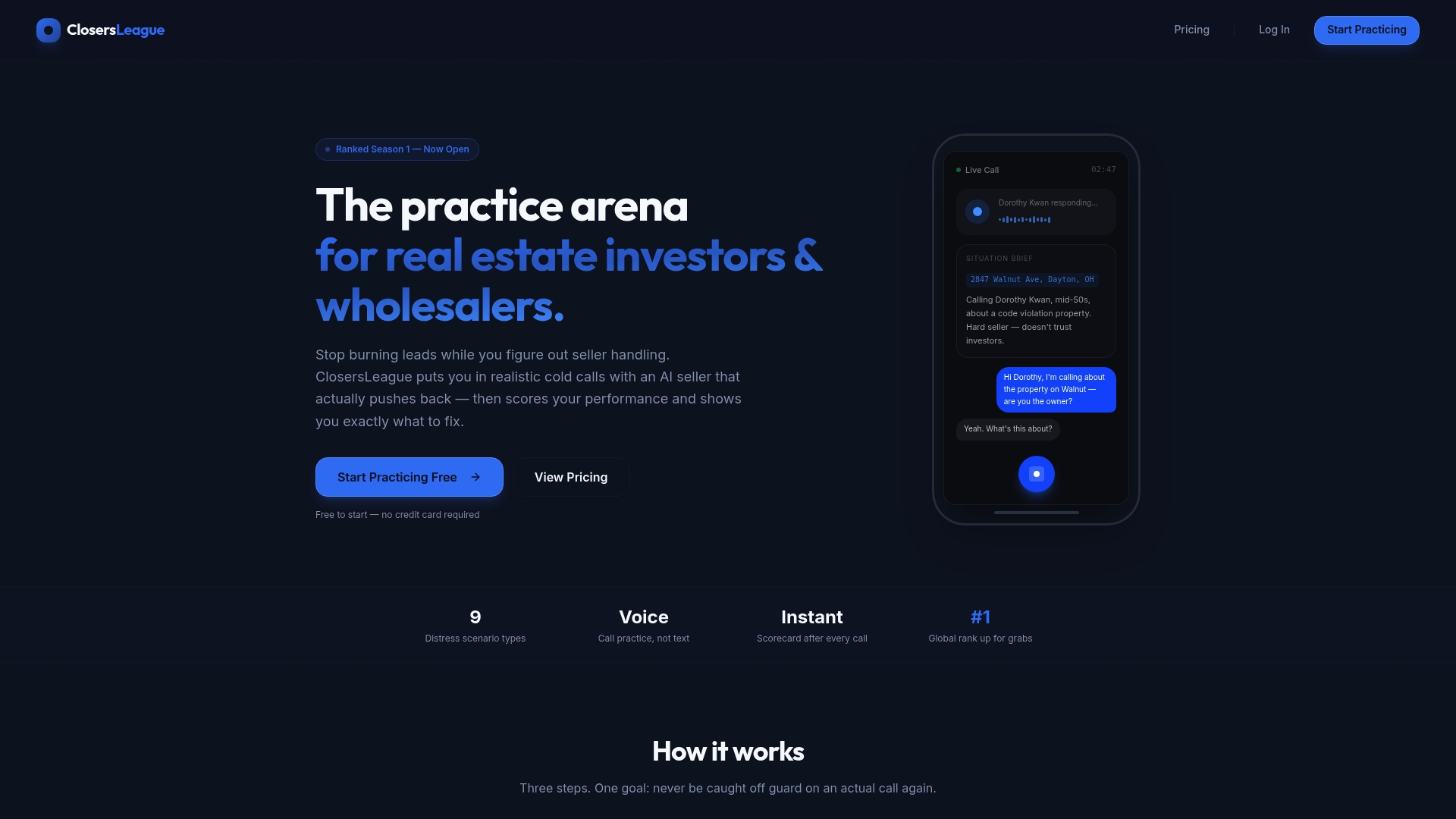
ClosersLeague is an AI-powered cold calling training platform built specifically for real estate investors and wholesalers. You can practice live seller conversations for specialty property types including inherited property cold calling, code violation leads, and vacant property outreach. The AI simulates realistic seller objections so you build confidence before you dial real leads. If you want to set more appointments and close more deals, practice the conversations that matter most.
FAQ
What is the best cold calling framework for real estate investors?
The Open-Bridge-Close framework is the most effective structure for real estate cold calls. Agents who ask for appointments on every qualifying call using this method book three times more appointments than those without a structured approach.
How quickly should you call a new FSBO lead?
Call within 72 hours. Conversion rates for FSBO leads drop from 22% to 8% when contact is delayed by one week, making speed to contact one of the highest-impact variables in your system.
How many times should you follow up with a cold calling lead?
Most motivated sellers require eight or more interactions before a real conversation happens. A 3-3-3 sequencing approach combining urgency, value, and relationship messages produces 34% higher conversions than standard follow-up timing.
How do you handle objections from pre-foreclosure homeowners?
Use the Validate-Question-Redirect method and lead with empathy. Referencing public records data like Notice of Default dates demonstrates expertise and reduces defensive reactions, making sellers more open to a real conversation.
What KPIs should real estate investors track for cold calling?
Track dial-to-contact rate, contact-to-conversation rate, and appointment-to-show rate every week. These three metrics reveal exactly where your pipeline breaks down and where to focus your improvement efforts.