
Following up with distressed property sellers is not about persistence alone. It’s a deliberate, empathy-driven system that combines the right message, the right channel, and the right timing to convert motivated homeowners into closed deals. Here’s what effective seller follow-up looks like in practice:
- Move fast. Contact new leads promptly after capture to stay ahead of competing buyers. Sellers in foreclosure or probate situations are often talking to multiple buyers simultaneously.
- Lead with empathy, not an offer. Your first few touches should focus on understanding the seller’s situation, not pitching a cash price.
- Segment by urgency. Hot leads get personal calls. Cold leads get automated drip sequences with educational content.
- Go multi-channel. Calls, texts, direct mail, and email together outperform any single channel.
- Stay consistent. Many deals close after consistent follow-up beyond the first week. Quitting early is the most expensive mistake you can make.
- Track everything. Log every touchpoint in a CRM. Adjust your messaging based on what’s working.
Table of Contents
- How to craft empathy-based messages for distressed sellers
- Why you should build trust before making cash offers
- How to segment sellers by urgency and build custom workflows
- Common follow-up mistakes that cost you deals
- How ClosersLeague helps investors master seller follow-up
- Practical follow-up strategies for distressed sellers
- When and how often should you follow up with sellers?
- Using multiple communication channels effectively
- How to track and measure your follow-up effectiveness
- How to handle seller objections and rejections
- Key Takeaways
- FAQ
How to craft empathy-based messages for distressed sellers
Distressed sellers — those facing foreclosure, probate, divorce, or tax delinquency — are not just looking for a buyer. They’re looking for someone who understands what they’re going through. Your messaging has to reflect that.
- Avoid aggressive sales language. Phrases like “I’ll give you cash fast” can feel predatory to a seller who is already overwhelmed. Lead with help, not urgency.
- Offer value before asking for anything. Share a relevant resource, explain their options, or acknowledge their specific situation before any ask.
- Personalize every message. Reference the property address, the seller’s name, and any detail from a prior conversation. Generic templates get ignored.
- Use soft call-to-actions. Instead of “Are you ready to sell?”, try “Would it be helpful to talk through your options this week?” Low-pressure invitations get more responses.
- Build credibility through consistency. Empathy-based messaging differentiates you from predatory buyers and positions you as a trusted resource, not just another investor.
Pro Tip: Your opening line on a follow-up call should lead with help, not a pitch. Something like: “I’m not calling to pressure you — I just want to make sure you have all the information you need” sets a completely different tone.
Why you should build trust before making cash offers
Pushing a cash offer too early is one of the fastest ways to lose a distressed seller. When someone is behind on mortgage payments or dealing with probate, they need clarity before they can commit to anything.
- Educate first. Help sellers understand their debt situation, market realities, and available options. Becoming a trusted advisor, rather than just a buyer, leads to higher seller receptiveness and better deal outcomes.
- Present all options honestly. Even options that don’t immediately benefit you, like loan modification or refinancing, build enormous trust when mentioned upfront.
- Be transparent about your process. Sellers who understand what a cash sale involves are far less likely to back out after an offer is accepted.
- Respect their timeline. Distressed sellers often need time to process. Patience here pays off in conversion.
How to segment sellers by urgency and build custom workflows
Not every lead deserves the same level of attention on the same schedule. Segmenting leads by urgency lets you allocate your time where it counts most while keeping every prospect warm.

Hot leads (active foreclosure, auction date set, seller has expressed readiness): Call within 15 minutes. Follow up daily for the first week. These sellers have a deadline, and so do you.
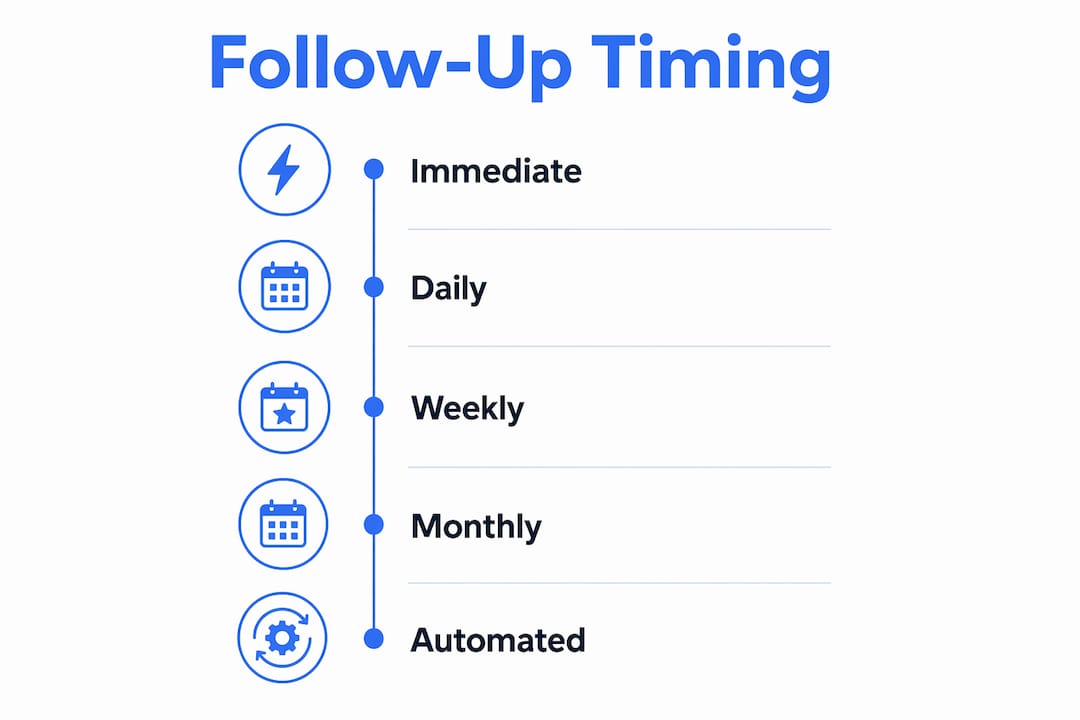
Warm leads (motivated but not urgent, exploring options): Two to three touches per week across mixed channels. Blend personal calls with value-driven texts or emails.
Cold leads (early-stage, no clear timeline): Enroll in an automated drip campaign with educational content. Monthly check-ins keep you top of mind without burning the relationship.
Use a CRM like REISift or Follow Up Boss to tag each lead with urgency level, source, and last contact date. This structure prevents over-contacting warm leads and under-serving hot ones.
Common follow-up mistakes that cost you deals
Most investors don’t lose deals because of bad offers. They lose them because of poor follow-up execution. Here’s what to stop doing:
- Waiting too long on first contact. Delay beyond 15 minutes and you’ve already lost ground to competing buyers.
- Relying on one channel. Email-only or call-only follow-up misses sellers who prefer texts or respond better to direct mail.
- Quitting before day 14. Most deals with distressed sellers surface after the first week of consistent outreach. Stopping at day three is leaving money on the table.
- Sending generic messages. “Hi, I’m interested in your property” tells the seller nothing about why you’re the right person to call back.
- Failing to log responses. If a seller says “call me back in two weeks” and you don’t record it, that deal is gone.
- Being pushy. Pressure tactics with distressed sellers destroy trust instantly. One aggressive call can end a relationship that took weeks to build.
Check out this overview of property selling mistakes from the seller’s perspective — understanding what sellers fear helps you avoid triggering those fears in your outreach.
How ClosersLeague helps investors master seller follow-up
Knowing the right follow-up strategy is one thing. Executing it under pressure, on a live call with a grieving probate seller or a homeowner facing foreclosure, is another. That’s exactly where ClosersLeague delivers.
ClosersLeague is an AI-powered cold calling training platform built specifically for real estate investors and wholesalers. It gives you a safe environment to practice the conversations that matter most before they happen in the real world.
- AI roleplay simulations put you in realistic scenarios: foreclosure, probate, divorce, tax delinquent. You practice empathy, objection handling, and timing without risking a real lead.
- Data-backed coaching shows you exactly where your calls break down, so you can fix specific weaknesses instead of guessing.
- Scenario-specific training means your practice matches the distressed seller situations you actually face in the field.
- Ongoing skill development keeps your follow-up sharp as market conditions shift.
Investors who train deliberately close more deals. Stop winging it. Start drilling.
Practical follow-up strategies for distressed sellers
Distressed sellers respond best to outreach that feels personal and low-pressure. A multi-touch sequence combining calls, texts, and mail consistently outperforms single-channel approaches.
Start with a warm introductory call focused entirely on listening. Then follow up with a text summarizing what you discussed and offering a helpful next step. Layer in a handwritten or professional direct mail piece that positions you as a knowledgeable local resource. Space these touches across the first two weeks, then shift to weekly check-ins. The goal is steady presence without pressure. Sellers in distress often need to see your name several times before they feel comfortable enough to engage seriously. Pair this with distressed homeowner communication skills to sharpen every touchpoint.
When and how often should you follow up with sellers?
Timing matters as much as message content. Contact a new lead within 15 minutes of capture. For hot leads, daily outreach in the first week is appropriate. For warm leads, two to three touches per week keeps momentum without overwhelming the seller.
After the first two weeks, shift to weekly follow-ups for warm leads and monthly check-ins for cold ones. Successful investors use many touches over the full life of a lead to maintain engagement. Most distressed seller deals close well after the first conversation, so a long-term cadence is not optional — it’s the strategy.
Using multiple communication channels effectively
No single channel reaches every seller. Calls build rapport fastest. Texts get read quickly and feel less intrusive. Direct mail stands out in a digital-heavy world. Email works well for sharing resources and maintaining a paper trail.
The most effective approach layers all four. Send a text after a call to recap the conversation. Follow a direct mail piece with a phone call referencing it. Use email to share a helpful guide on foreclosure options or probate timelines. Combining channels maintains visibility without overwhelming the seller, and it signals that you’re a serious, organized professional.
How to track and measure your follow-up effectiveness
A follow-up system without tracking is just guessing. Your CRM should log every call, text, email, and mail piece with timestamps and outcomes. Key metrics to watch:
| Metric | What it tells you |
|---|---|
| Contact rate | How often you’re actually reaching sellers |
| Response rate | Whether your messaging resonates |
| Days to first response | How long your nurture sequences need to run |
| Conversion rate by channel | Which outreach method closes more deals |
Review these weekly. If your response rate drops, adjust your messaging. If one channel consistently outperforms others, weight your sequence toward it. Tools like REISift and Follow Up Boss automate much of this tracking, so you spend time on calls, not spreadsheets. Learn more about boosting deal closures through structured follow-up systems.
How to handle seller objections and rejections
A “no” from a distressed seller is rarely final. It usually means “not yet” or “I don’t trust you enough.” Your job is to stay in the conversation.
When a seller says they’re not interested, acknowledge it without pushing back. Ask one open question: “Is there anything that would make this worth revisiting down the road?” Then log their response and schedule a future touch. When a seller goes silent, don’t interpret it as rejection. Send a low-pressure text: “No pressure at all — just want you to know I’m here if anything changes.” Practice these responses through cold calling roleplay so they feel natural when it counts.
Key Takeaways
Consistent, empathy-driven follow-up across multiple channels, starting within 15 minutes of lead capture and sustained over weeks, is what separates investors who close deals from those who don’t.
| Point | Details |
|---|---|
| Speed-to-lead matters | Contact new leads within 15 minutes to stay ahead of competing buyers. |
| Empathy before offers | Build trust through value-focused messaging before pitching any cash price. |
| Segment by urgency | Hot leads need daily personal outreach; cold leads need automated drip sequences. |
| Multi-channel wins | Combining calls, texts, mail, and email consistently outperforms single-channel follow-up. |
| Most deals with distressed sellers surface between days 8 and 14 of consistent outreach. |
FAQ
How soon should you contact a new seller lead?
Contact new leads promptly after capture to stay ahead of competing buyers. Delay beyond that window lowers conversion because distressed sellers are often engaging multiple buyers at once.
What is a seller follow-up sequence?
A seller follow-up sequence is a structured series of touches, across calls, texts, email, and mail, designed to build trust and keep you top of mind until the seller is ready to move forward.
How many times should you follow up before giving up?
Successful investors use up to 60–180 touches over the life of a lead. Most distressed seller deals don’t close in the first two weeks, so persistence with a value-driven approach is the standard, not the exception.
What questions should you ask sellers during follow-up?
Focus on open-ended questions: “What’s your ideal timeline?” “What would make this easier for you?” “Have your circumstances changed since we last spoke?” These invite conversation without pressure.
How does ClosersLeague help with seller follow-up?
ClosersLeague provides AI-powered roleplay training for real estate investors, letting you practice cold calling scenarios for foreclosure, probate, and divorce sellers before you’re on a live call. The platform builds the confidence and skill to handle objections, build rapport, and convert more distressed leads into closed deals.