
A seller discovery call is defined as a structured, 10-minute intake conversation where a real estate investor or wholesaler uncovers a seller’s motivation, timeline, property condition, and decision-making factors before committing to an in-person walkthrough. In the real estate investing world, this call is also called a motivated seller intake call. Both terms describe the same gatekeeping step. The purpose of seller discovery is simple: qualify the lead before you spend time or money on it. ClosersLeague trains investors and wholesalers to run this call with precision, using proven frameworks that separate serious sellers from casual inquiries.
What is a seller discovery call and why does it matter?
A seller discovery call is a focused, structured conversation that takes approximately 10 minutes. That short window is enough to determine whether a deal is worth pursuing. Investors who skip this step waste hours on property walkthroughs with sellers who were never motivated to begin with.
The call matters because the actual deal is won or lost by the quality of data captured before any property visit. A seller who calls about foreclosure has a different urgency than one dealing with probate or a divorce. Knowing which situation you are walking into changes everything: your tone, your offer range, and your timeline expectations.

The benefits of seller discovery calls go beyond simple lead filtering. A well-run intake call builds rapport, establishes trust, and positions you as a problem-solver rather than a buyer hunting for a discount. That framing matters enormously when sellers are in distress.
What key information should you uncover during the call?
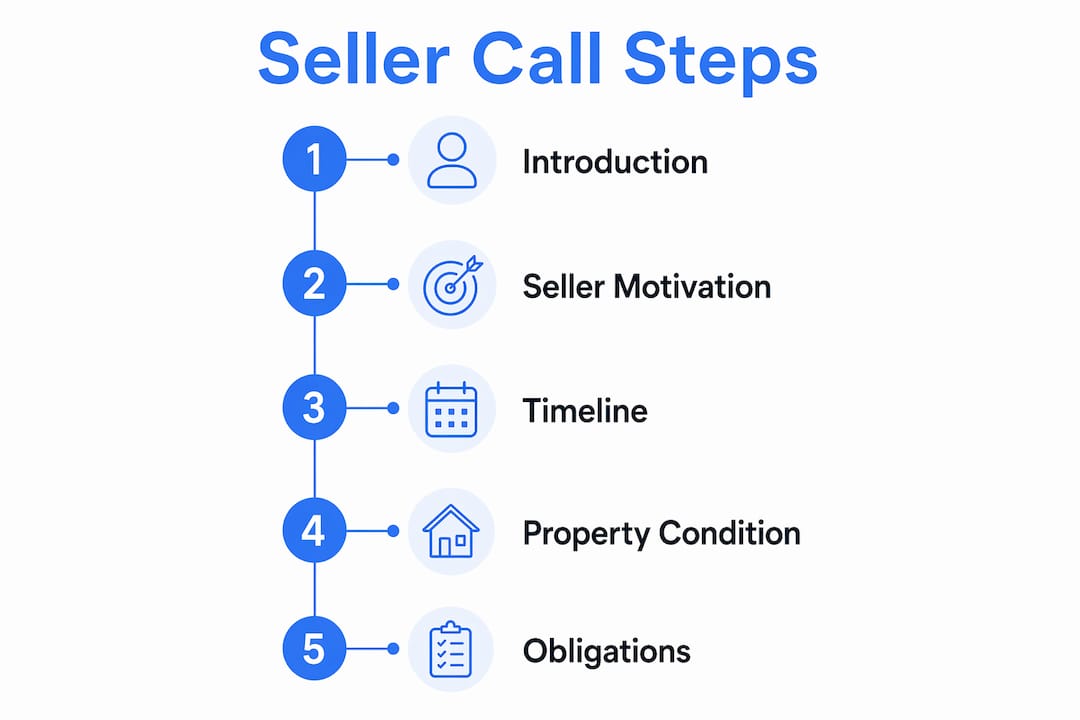
A motivated seller intake call must capture six core data points before you ever see the property. Missing any one of them leads to dead-end leads and wasted appointments.
The six data points are:
- Relationship to the property. Is the seller the owner, an heir, or a co-owner? Multiple decision-makers on title can stall or kill a deal.
- Motivation for selling. Probate, foreclosure, tax delinquency, divorce, relocation, and tired landlord situations each carry different urgency levels and price flexibility.
- Timeline and hard deadlines. A seller facing a foreclosure auction in 30 days is far more motivated than one who “would consider selling if the price is right.”
- Property condition. Major repairs, deferred maintenance, and code violations affect your offer. Get a rough picture before the walkthrough.
- Financial obligations. Outstanding mortgage balances, liens, back taxes, and HOA arrears all affect the net you can offer.
- Next steps and decision process. Who else needs to approve the sale? What does the seller need to see from you before moving forward?
Pro Tip: Ask the seller directly, “What happens if you don’t sell in the next 60 days?” The answer tells you more about urgency than any other question on your list. Vague answers like “we’d just stay” signal low motivation. Hard consequences signal a real deal.
Quantifying seller pain and deadlines is the single most reliable way to distinguish serious sellers from casual browsers. Hard deadlines drive urgency. Urgency drives price flexibility. Price flexibility is where deals get made.
How to conduct seller calls effectively
Preparation before the call separates top producers from average ones. Real preparation dramatically increases close rates, and the investors who do it consistently outperform those who wing it every time.
Follow this sequence for every discovery call:
- Research the lead before dialing. Pull CRM data, lead source notes, and any website behavior signals. Know whether the lead came from a probate list, a driving-for-dollars campaign, or a pay-per-click ad. That context shapes your opening.
- Send a pre-call message. A brief text or voicemail before you dial sets expectations, qualifies interest, and improves engagement. This tactic is underused despite its effectiveness and takes less than two minutes to execute.
- Open with empathy, not an offer. Start by acknowledging the seller’s situation. “I understand you may be going through a tough time with the property” opens more doors than “I’m calling to make you an offer.”
- Ask open-ended questions and listen. In a high-performing discovery call, the seller speaks 70–80% of the time. Investors who talk more than 30% of the call risk missing the motivations that make or break a deal.
- Avoid pitching. Your job on this call is to gather data, not to sell yourself. Position yourself as someone who solves problems related to probate, foreclosure, or divorce. That framing builds trust faster than any sales script.
- Manage the clock. Keep the call to roughly 10 minutes. Longer calls often drift into negotiation territory before you have enough information to negotiate well.
Pro Tip: Use an empathy loop when a seller shares something painful. Repeat back what they said in your own words: “So if I’m hearing you right, the bank is moving fast and you need this resolved in the next few weeks.” That one technique builds more trust than five minutes of rapport-building small talk.
You can also review a proven investor script workflow to see how top wholesalers structure their calls from the opening line to the close of the intake conversation.
Common mistakes that kill your lead quality
Most investors fail by treating the discovery call as a closing call. That single mistake wastes more time than any other error in the seller discovery process.
The most common pitfalls are:
- Pitching too early. Jumping to your offer or your company’s credibility before you understand the seller’s situation kills trust and shuts down information flow.
- Accepting vague answers. “We’re flexible on timing” and “we’d consider the right offer” are not qualification signals. Push for specifics: exact dates, exact financial pressures, exact consequences.
- Skipping the decision-maker question. Discovering after a walkthrough that a spouse, sibling, or attorney also needs to approve the sale is a deal-killer that a single question could have prevented.
- Ignoring low-motivation signals. If a seller cannot name a consequence of not selling, they are not a motivated seller. Exit the call gracefully and keep the door open for future contact.
“The goal of the discovery call is to determine if your service aligns with the seller’s problem, not to pitch your company. Successful investors position themselves as problem-solvers helping with probate, divorce, and foreclosure. That alignment of solution to problem builds the trust that closes deals.”
Exiting an unqualified lead gracefully is a skill in itself. A simple “I don’t think we’re the right fit right now, but I’d love to stay in touch if your situation changes” preserves the relationship without wasting more of your time. You can also use a property lead checklist to score leads consistently and decide which ones deserve a follow-up call.
For sellers dealing with distress situations, understanding seller motivation is the foundation of every productive conversation you will have.
How technology and scripts improve call outcomes
Integrated tools make the seller discovery process faster and more consistent. Pre-call preparation using CRM data and lead source information leads to better qualification and higher close rates. The difference between a prepared investor and an unprepared one shows up immediately in the first 60 seconds of a call.
The table below compares two approaches to running discovery calls:
| Approach | Key features | Outcome |
|---|---|---|
| Manual, unscripted calls | No pre-call research, improvised questions, no intake form | Missed data, inconsistent qualification, low close rates |
| Systematic, scripted intake | CRM-backed research, structured questions, logged call notes | Complete data capture, consistent qualification, higher close rates |
AI-powered call scoring adds another layer of precision. Motivation discovery accounts for 25% of call success and directly determines price flexibility, urgency, and close likelihood. Scoring each call against that framework tells you exactly where your intake process is leaking deals.
Script workflows for discovery calls work best when they are built around the six data points covered earlier. A script is not a rigid script to read word-for-word. It is a structured sequence of questions that keeps the call on track without sounding robotic. Pair that structure with a distressed seller calling script and you have a repeatable system that produces consistent results across every seller type.
Before you walk into any property, use a tool like PEAR to organize your pre-walkthrough data and make sure the intake information you captured actually informs your offer strategy.
Key Takeaways
A seller discovery call is the single most important qualification step in real estate wholesaling, and running it well requires preparation, structured questions, and disciplined listening.
| Point | Details |
|---|---|
| Define the call’s purpose | Use the discovery call to qualify leads, not to close deals or pitch your company. |
| Capture six data points | Always gather motivation, timeline, condition, financial obligations, decision-makers, and next steps. |
| Listen more than you talk | The seller should speak 70–80% of the time; your job is to ask and absorb. |
| Quantify seller pain | Hard deadlines and real consequences separate motivated sellers from casual inquiries. |
| Prepare before every call | CRM research, pre-call messages, and structured scripts consistently produce higher close rates. |
What I’ve learned from watching investors run this call wrong
The most common mistake I see is investors who treat the discovery call like a pitch meeting. They spend the first five minutes explaining who they are, what they buy, and why they are trustworthy. By the time they ask the seller a question, the seller has already decided this is just another investor call and started mentally checking out.
The investors who close the most deals do the opposite. They ask one empathetic question in the first 30 seconds and then go quiet. They let the seller talk. They take notes. They follow up with clarifying questions that show they were actually listening. That approach builds more credibility in 10 minutes than any pitch could build in an hour.
Preparation is the other separator. The investors who qualify real estate leads consistently are the ones who know the lead source, the property address, and the likely seller situation before they dial. That context lets them open with relevance instead of a generic script opener.
The uncomfortable truth is that most investors are not losing deals at the negotiation table. They are losing them on the discovery call, by going on appointments they should have screened out or by missing the motivation data that would have told them how to price the deal. Fix the intake call and you fix the pipeline.
— Dave
Practice your seller discovery calls with ClosersLeague
Knowing the framework is one thing. Executing it under pressure with a real seller is another. ClosersLeague gives real estate investors and wholesalers a low-risk environment to practice exactly that.

The AI-powered cold calling practice platform simulates real seller conversations across every major seller type: probate, foreclosure, divorce, vacant property, tired landlord, and out-of-state owner. Each roleplay session scores your performance on motivation discovery, rapport, objection handling, and data capture. You get specific feedback after every call, not generic tips. Stop winging it. Start drilling.
FAQ
What is the purpose of a seller discovery call?
The purpose of a seller discovery call is to qualify a lead before committing to an in-person property walkthrough. It captures motivation, timeline, property condition, and financial obligations in roughly 10 minutes.
How long should a seller discovery call last?
An effective seller discovery call takes approximately 10 minutes. Calls that run longer often drift into premature negotiation before enough qualifying data has been gathered.
What questions should I ask on a seller discovery call?
Ask about the seller’s reason for selling, their timeline and hard deadlines, the property’s condition, any outstanding financial obligations, and who else needs to approve the sale. These six areas determine whether a lead is worth pursuing.
How do I know if a seller is truly motivated?
A motivated seller can name a specific consequence of not selling, such as a foreclosure date, a court deadline, or a relocation deadline. Vague answers like “we’d just stay” indicate low motivation and a low-priority lead.
Can I use a script for seller discovery calls?
A structured script works well as a question sequence, not a word-for-word read. The best scripts keep the call on track while leaving room for the seller to speak 70–80% of the time, which is where the most useful information comes from.