When a seller says “I have a realtor,” the right response is to acknowledge it without backing down: “That’s great. Most sellers I talk to are exploring a couple of options at once. Can I ask what’s most important to you in this sale? Speed, price, or just avoiding hassle?” That single line respects the seller’s choice, states your value in passing, and keeps the call alive with a question instead of a goodbye.
TL;DR:
- Most sellers who mention having a realtor are still exploring options, not necessarily actively listed, so understanding their specific situation guides your response.
- Asking about their listing timeline and confirming whether the property is actively listed helps determine if you should present an offer or wait.
- Respectfully matching your script to the seller’s tone and owning the conversation builds trust while avoiding aggressive or pushy tactics.
- Follow-up timing and recording key details ensure you stay relevant without annoying the seller or overstepping legal boundaries during active listings.
- Practicing objection handling daily, especially via AI roleplay, sharpens tone and delivery, making you more confident in pivoting past “I have a realtor” in live calls.
Table of Contents
- I Have a Realtor: Three Scripts That Keep the Call Alive
- How Do You Pivot Past the Realtor Objection?
- Is the Seller’s Realtor Actually Active?
- When to Back Off and Respect the Agent Relationship
- Practicing These Scripts Until They Feel Natural
- Logging the Call and Setting Your Follow-Up Cadence
- Why Do Sellers Bring Up Their Realtor So Often?
- Building Trust When Another Agent Is Already in the Picture
- Presenting Your Offer Without Undermining Their Agent
- When Should You Follow Up Without Becoming a Nuisance?
- Dave’s Take: Objections Are the Job, Not the Obstacle
- Practice the Exact Objection Before Your Next Call
- Related Reading on Objection Handling
- Sources
- FAQ
I Have a Realtor: Three Scripts That Keep the Call Alive
The words “I have a realtor” aren’t a door slam. Treat the phrase like any other objection: a sign the seller is still on the line and still willing to talk, according to MaverickRE’s cold-calling framework, which recommends listening, validating, questioning, and pivoting rather than arguing. Here are three scripts built on that structure.
Script A: Empathetic validation. “Good for you, having someone in your corner. Out of curiosity, has your agent given you a timeline for how fast this could close?” This works when the seller sounds calm and cooperative. You’re not competing with the agent, just asking a question the agent may not have answered.
Script B: Value first. “Totally understand. I’m not trying to replace your realtor, I just buy houses directly, as-is, with no showings, no repairs, and no commission. If that ever becomes more appealing than the traditional route, would you want a number to compare against?” Use this when the seller sounds rushed, stressed, or financially strapped, since speed and no-repair terms hit harder there.
Script C: Appointment fallback. “No problem at all. Would it be okay if I checked back in a few weeks in case things change with the listing?” Use this when the seller is polite but closed off. It costs them nothing to say yes, and it gets you a legitimate reason to call again.
- Match Script A to seller tone: warm and open, not defensive.
- Match Script B to seller tone: practical, motivated by numbers.
- Match Script C to seller tone: guarded, short answers, low engagement.
Pro Tip: Never lead with Script B on a call where the seller sounds defensive. Validate first, always. Jumping straight to your pitch reads as pushy and burns the lead before you learn anything.
How Do You Pivot Past the Realtor Objection?
The pivot isn’t a trick, it’s a redirect. Agree with the seller’s decision, then ask a question that surfaces what the realtor relationship actually looks like. DealMachine’s research on wholesaling objections found that experienced wholesalers treat pushback as a prompt to dig deeper, not a stop sign.
- Validate first: “That makes sense, a lot of sellers go that route.”
- Pivot with a conditional: “If your realtor can’t get it sold in your timeframe, would you consider a backup offer?”
- Frame yourself as Plan B, not competition: “I’m not here to replace anyone, just to give you options.”
Pro Tip: Ask about timeline before you ask about price. Sellers guard their numbers but usually share timelines freely, and timeline answers tell you more about urgency than price ever will.
Is the Seller’s Realtor Actually Active?
Not every “I have a realtor” means an active listing. Some sellers are interviewing agents, some are stalling politely, and some genuinely have a signed contract. Ask directly:
- “Is the home listed yet, or are you still working with the agent on that?”
- “About when did you sign with them?”
- “What price are they suggesting, and does that line up with your timeline?”
A quick MLS search can confirm an active listing in most markets. If the seller hesitates or gives vague dates, that’s usually a sign they’re still deciding, not locked in, which is exactly the opening Script B was built for.
When to Back Off and Respect the Agent Relationship
If the seller confirms an active listing with a signed agreement, don’t push. Realtors operate under exclusive representation agreements, and calling around one creates real ethical and legal exposure, not just a bad look. Reporting on unsolicited investor calls shows homeowners are frequently confused by who’s calling and why, which makes clear, respectful boundaries even more important.
- Ask permission before following up: “Would it be alright if I checked back after the listing period ends?”
- Log the agent’s name, listing date, and price in your CRM the moment you hear them.
- Leave one useful offer on the table, then disengage. Don’t call again inside an active exclusive period.
Practicing These Scripts Until They Feel Natural
Reading a script off a page and saying it under pressure are two different skills. Close found that practice with feedback, not memorization alone, is what removes the stiff, robotic delivery sellers can spot instantly.
A 15-minute daily drill works better than an hour once a week:
- Two-minute warm-up: read your three scripts out loud, adjusting tone for each.
- Six roleplay calls, simulating a different seller mood each time: calm, rushed, defensive, distracted, skeptical, and silent.
- Five-minute review: score each call, flag your weakest response, and drill it twice more before you stop.
Pro Tip: Record yourself during roleplay and listen back once. You’ll catch filler words and dead air you never notice in the moment. Scenario-based AI practice calls run exactly this kind of drill, with scorecards that flag hesitation and tone before it costs you a real lead. Daily micro-practice like this is what turns call reluctance into a scripted reflex, according to Indeed’s cold-calling guide, which also recommends offering sellers multiple contact options to lower rejection.
Logging the Call and Setting Your Follow-Up Cadence
Every “I have a realtor” call needs three fields logged immediately: seller status (active listing, interviewing, or brush-off), agent name and listing date if given, and your reason for following up.
Cadence matters more than volume here:
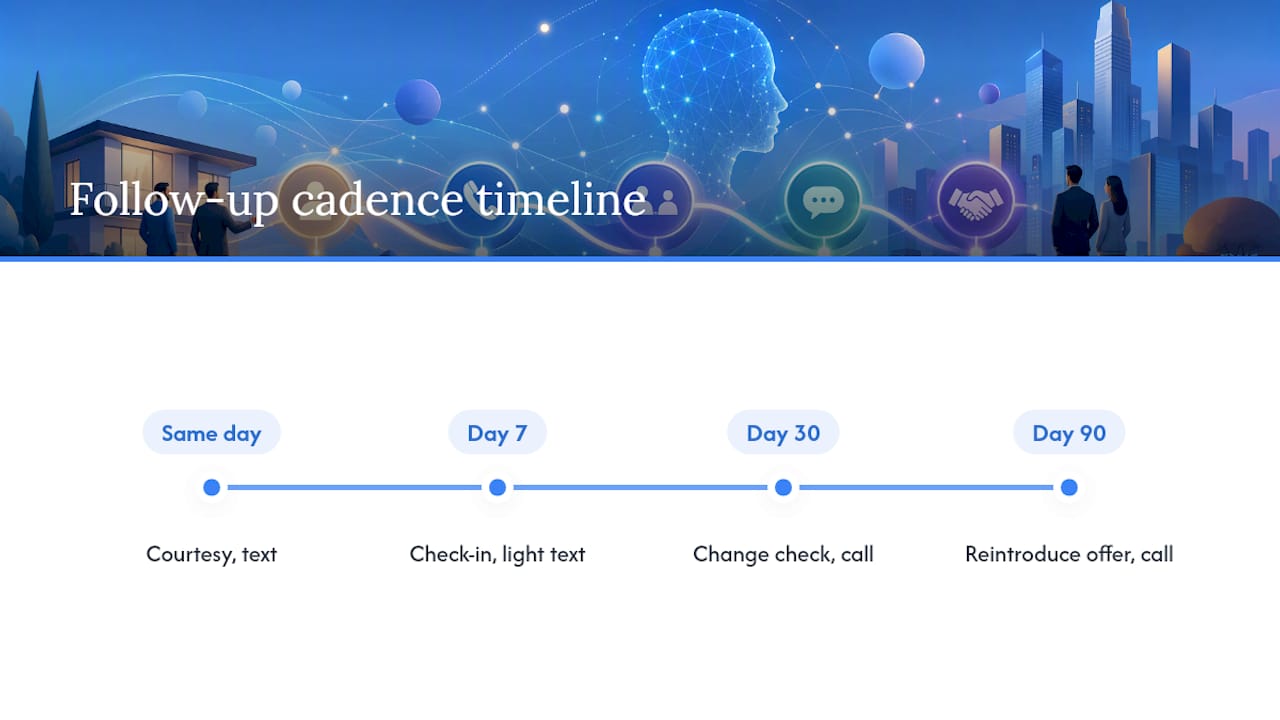
- Immediate: a same-day text thanking them for their time, no pitch.
- Seven days: a light check-in, “just circling back, no pressure.”
- Thirty days: ask if anything’s changed with the listing.
- Ninety days: reintroduce your offer, since listings expire and circumstances shift.
Use your notes from the first call, mentioned agent, stated timeline, price expectations, to personalize every message that follows. A generic follow-up text reads as spam. One referencing their actual situation reads as attentive.
Why Do Sellers Bring Up Their Realtor So Often?
“I have a realtor” is rarely a lie. It’s usually one of three things: a genuine active listing, a polite way to end the call fast, or a hedge while they’re still deciding between options. Reporting on cold-call outreach to homeowners confirms that many sellers hear from multiple investors and default to naming an agent as the easiest exit line, according to coverage of unsolicited “we buy houses” calls.
The implication matters for how you respond. A seller three months from listing expiration with no offers is a very different lead than one who signed a contract yesterday. Sellers under real financial pressure, facing foreclosure, probate, or a tax lien, often mention a realtor precisely because they’re testing whether a faster or simpler option exists. They haven’t ruled out the traditional path, but they haven’t committed to it fully either.
That’s why the goal on this call isn’t to disprove the realtor claim. It’s to figure out which of the three situations you’re actually in, then respond accordingly. A firm, confirmed listing gets a respectful exit. A vague or recent mention gets a qualifying question. And a defensive, rushed answer often means the seller is more stressed about the situation than the realtor comment lets on.
Building Trust When Another Agent Is Already in the Picture
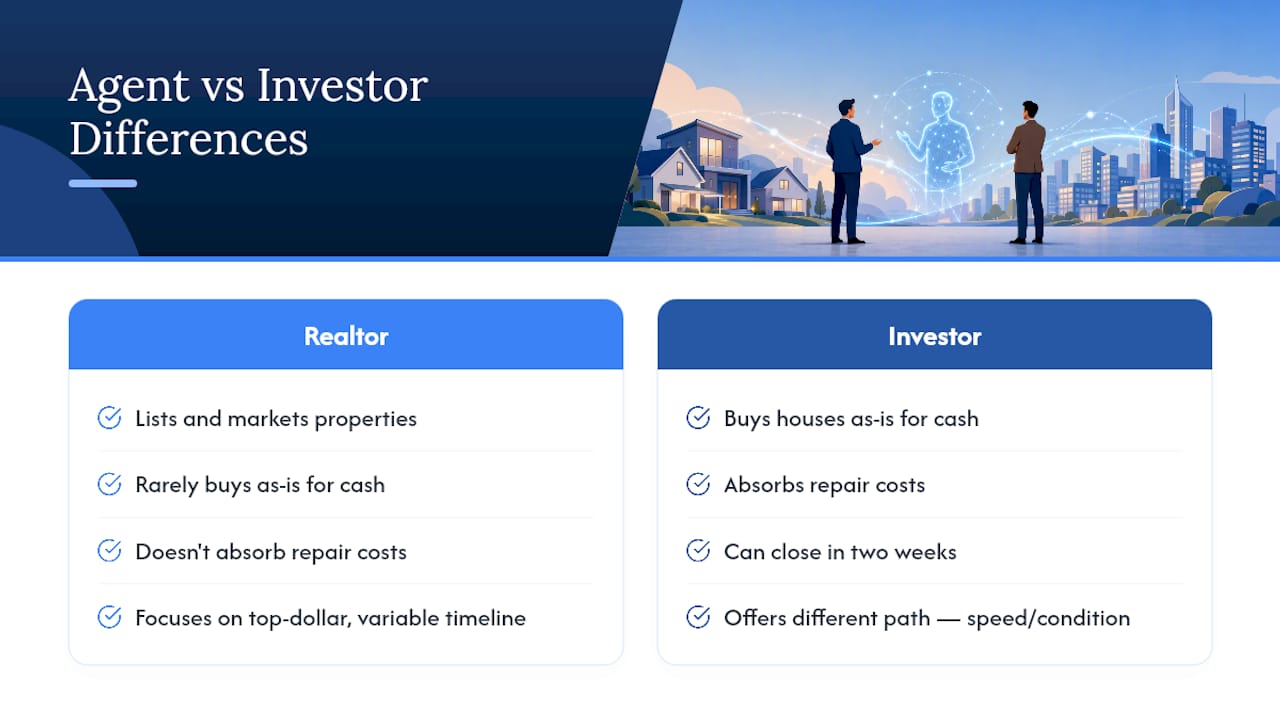
Trust doesn’t come from discrediting the agent. It comes from being useful in a lane the agent doesn’t cover. Realtors list and market properties; they don’t typically buy houses as-is for cash, absorb repair costs, or close in two weeks. Naming that distinction, without knocking the agent’s work, is what separates a credible investor call from a desperate one.
Keep your language collaborative: “Your agent’s going to handle the traditional sale side well. I just offer a different path if speed or condition becomes a bigger factor than getting top dollar.” That framing respects the seller’s existing relationship while giving them a real reason to keep you in mind.
Tone carries more weight than wording here. A rushed, salesy voice undoes even a well written script. Slow down, let the seller finish sentences, and avoid stacking three questions in a row. Sellers open up to callers who sound like they’re actually listening, not reading from a page. That’s also why ClosersLeague’s guide to cold calling scripts that convert stresses tone drills alongside word choice.
Small consistency signals build credibility too. If you say you’ll follow up in two weeks, follow up in two weeks. Sellers who’ve been burned by inconsistent callers notice when someone actually keeps their word.
Presenting Your Offer Without Undermining Their Agent
Differentiation works best as addition, not subtraction. Don’t tell a seller their agent is slow, overpriced, or wrong. Tell them what you offer that a traditional listing doesn’t: a cash purchase, no repair requirements, no showings disrupting their daily life, and a closing date they can pick.
Frame it as optionality: “I’m not asking you to cancel anything. I just want you to have a number in hand in case the listing route takes longer than expected, or repairs come up that change the math.” This respects the agent’s role in the traditional sale, while giving the seller a concrete alternative to weigh it against.
Specificity beats generic pitches every time. “I can close in 14 days” lands harder than “I buy houses fast.” “No repairs, I buy it in current condition” lands harder than “I make it easy.” Sellers remember concrete numbers and terms, not vague promises.
If the seller is weighing a full sale against another exit entirely, some investors compare a straight cash purchase to strategies like holding versus flipping when explaining why your offer terms look the way they do. That context can help a hesitant seller understand your pricing logic instead of just seeing a lower number.
When Should You Follow Up Without Becoming a Nuisance?
Timing separates a persistent caller from an annoying one. The cadence outlined earlier, same day, seven days, thirty days, ninety days, works because each touch has a different job: the first is a courtesy, the second is a check-in, the third tests for changes, and the fourth reintroduces your offer once enough time has passed for circumstances to shift.
Match the channel to the touch. A text on day one feels light. A call at day thirty feels appropriate once you’ve built some history. Stacking three calls in one week reads as pressure, and pressure is what makes sellers block your number.
Watch for natural triggers instead of just calendar dates. Listing agreements typically run 90 to 180 days, so a call placed near that expiration window often lands better than one dropped randomly in the middle of an active listing. If a seller mentioned a specific date, “we signed last month,” calculate roughly when that agreement might lapse and time your check-in around it.
Dave’s Take: Objections Are the Job, Not the Obstacle
Every “I have a realtor” is a seller still on the phone with you. That’s engagement, not rejection. My mindset shift for callers: spend two to five minutes a day running one objection out loud before your shift starts. Not memorizing, saying it until it sounds like you, not a script. That small habit is what separates callers who freeze up from callers who convert.
— Dave
Practice the Exact Objection Before Your Next Call
This platform gives you what a script on a page can’t: a live seller pushing back in real time, scored feedback on your tone and pacing, and repeat reps until “I have a realtor” stops rattling you. The AI roleplay lets you rehearse this exact objection, along with probate, pre-foreclosure, and inherited-property scenarios, as many times as it takes before you’re back on the phones.

A trial run puts you through sample calls modeled on real seller resistance, then hands you a scorecard breaking down where you hesitated, where you sounded scripted, and where you actually landed the pivot. If distressed and inherited leads make up a chunk of your list, the inherited property practice module drills that specific conversation until it’s reflexive. Start a free trial and run your first six roleplay calls today.
Related Reading on Objection Handling
For more scripts and workflow templates, see ClosersLeague’s guides on cold calling objection workflows and closing more deals from cold calls.
Sources
- Who To Cold Call In Real Estate (2025)
- Does cold calling work in real estate? (Close blog)
- Top 10 Seller Objections in Real Estate Wholesaling
- “We Buy Houses.” What’s Behind All Those Phone Calls? – Memphis Flyer
- Real estate cold calling guide (Indeed)
FAQ
What Should I Say First When a Seller Says “I Have a Realtor”?
Validate their choice without arguing, then ask one open question about timeline or price, such as “That’s great, has your agent given you a timeline for closing?”
Does “I Have a Realtor” Always Mean the Home Is Listed?
No. It often means the seller is interviewing agents, stalling politely, or testing whether a faster option exists, not that a listing agreement is signed.
How Can I Tell if the Listing Is Actually Active?
Ask when they signed, check public MLS listings if available in your market, and listen for vague or hesitant answers, which usually signal an undecided seller rather than a confirmed listing.
Should I Keep Calling if the Seller Confirms an Active Listing?
Ask permission to follow up after the listing period ends, log the agent’s details in your CRM, and stop calling during the active exclusive agreement.
How Do I Get Better at Handling This Objection on Live Calls?
Daily roleplay with scored feedback works faster than memorizing a script alone. AI practice calls simulate this exact objection with scorecards that show where your delivery breaks down.