Scenario based call practice means roleplaying short, realistic conversations with a specific seller type, probate, pre-foreclosure, divorce, and getting scored feedback right after. It beats script memorization because you train the skill that actually closes deals: reading a seller’s emotional state and asking the right diagnostic question. An AI platform has been built around this kind of drilling, so investors and wholesalers can run it daily instead of occasionally.
TL;DR:
- Scenario-based call practice with AI simulates emotional seller types and provides immediate, objective feedback to improve diagnostic questioning skills.
- Using targeted templates for probate, pre-foreclosure, divorce, inheritors, taxes, and tired landlords enhances adaptability to different distressed seller situations.
- Short, frequent drills combined with scoring on rapport, questioning, and compliance lead to measurable skill improvement over time.
- Maintaining compliance by scrubbing call lists, recording consent, and following telemarketing regulations is essential during practice sessions.
- Tracking key KPIs such as connection rate, lead quality, and appointment set rate helps determine whether training translates into better call outcomes.
Table of Contents
- Why targeted scenario practice works
- Six scenario templates for distressed sellers
- Running sessions that build real skill
- Staying compliant while you practice and call
- Measuring whether practice is actually working
- What most callers get wrong first
- How Closers League scales this kind of practice
- FAQ
- Sources
Why targeted scenario practice works
Most cold callers lose deals in the first ten seconds of an objection, not because they lack a rebuttal, but because they argue instead of diagnosing, a key skill to help analyze rental deals in seconds. Objection handling works best as a diagnostic step: pause, listen, validate, then ask one question that uncovers what is really driving the resistance, money pressure, family conflict, or simple distrust of a stranger on the phone.
That diagnostic habit has to flex by seller type. A probate caller needs measured empathy. A pre-foreclosure caller needs urgency paired with permission to talk timelines without sounding pushy. Generic sales training rarely teaches that distinction.
Training platforms provide tools for this directly, including:
- AI roleplay that varies tone and emotional volatility by distress type
- Instant scorecards graded across multiple skill categories
- Targeted drills that repeat a caller’s weakest scoring area until it improves
- Leaderboards that turn practice into a habit instead of a chore
AI roleplay platforms can simulate emotional variability and provide consistent, objective scoring that two people practicing together usually cannot match reliably.
Six scenario templates for distressed sellers
Run each of these as a three to five minute roleplay. Assign one person the seller role, one the caller role, then switch.
- Probate seller. Objective: build trust with someone grieving and managing an estate. Opener: introduce yourself, acknowledge the loss briefly, ask if now is a reasonable time to talk. Diagnostic questions: “Who else is involved in deciding what happens with the property?” and “What would make this process easier for your family?” Common objections: “We’re not ready to think about this” and “Talk to my attorney.” Branch: validate, then ask what timeline would feel comfortable. See the probate practice modules for extended scripts.
- Pre-foreclosure seller. Objective: create urgency without pressure. Opener: state you buy houses and ask directly if they have received notices from the lender. Diagnostic questions: “How many months behind are you?” and “Have you talked to the bank about options?” Objections: “I’m handling it” and “How did you get my number?” Branch: acknowledge the stress, ask what outcome they are hoping for. Practice this one in the pre-foreclosure roleplay modules.
- Divorce seller. Objective: stay neutral between two parties. Opener: ask if they are the right person to speak with about the property. Diagnostic questions: “Has a decision been made about keeping or selling it?” and “What’s the timeline from the court?” Objections: “My ex handles this.” Branch: offer to speak with both parties separately if needed.
- Inherited property. Objective: clarify ownership and intent fast. Diagnostic questions: “Are you the sole owner now?” and “Have you thought about what you want to do with it?” Objection: “I haven’t decided yet.” Branch: ask what information would help them decide.
- Tax delinquent owner. Objective: surface the real reason taxes are unpaid. Diagnostic questions: “What’s made it hard to stay current?” and “Is this something you’re planning to resolve, or looking for other options?”
- Tired or out-of-state landlord. Objective: identify fatigue points. Diagnostic questions: “What’s been the most frustrating part of owning this property?” and “Have you thought about what you’d do without it?” Practice in the tired landlord modules or the vacant property scenarios.
Urgency in your voice reads as pressure when someone is grieving or in mid-conflict.
Running sessions that build real skill
Two formats cover most training needs.
15-minute micro-drill: 2 minutes warm-up, two roleplays at 3 to 4 minutes each, 4 minutes of feedback, 2 minutes writing down one fix to try next time.

30-minute coach-led session: 5-minute warm-up, four roleplays that increase in difficulty (calm seller, then distracted, then hostile, then emotionally volatile), 10 minutes of group feedback and scoring review, remaining time on action planning.
Score every roleplay on a simple five-category rubric:
- Rapport: did the opener earn 15 more seconds of attention?
- Questioning: were questions open-ended, not yes/no?
- Diagnostic follow-up: did the caller ask one question after an objection, not six?
- Objection handling: was the response validating before it was persuasive?
- Compliance: did the caller avoid prohibited claims or pressure tactics?
A rubric with five categories on a 1 to 5 scale is simple enough to use every session, and tracking it weekly tends to correlate with real improvements in call outcomes. Turn any category scoring below 3 into next week’s drill focus. For more structure on scaling this into a full training routine, see roleplay your way to better cold calling results.
Staying compliant while you practice and call
Build compliance into the drill itself, not as a separate checklist you review later.
- Confirm your list is scrubbed against the National DNC Registry before any session simulates a live list.
- Know your consent type: the FCC’s one-to-one consent rule took effect January 27, 2025 for autodialed or prerecorded calls, and the TCPA still requires prior express consent for those methods.
- Document consent records the same way you would for a real call, even in practice, so the habit sticks.
- Review NAR’s telemarketing guidance and the Code of Ethics restrictions on unsolicited contact before scaling outreach volume.
- Factor registry access costs into planning: the FTC’s FY2027 fee schedule sets single area-code access at $85 and full nationwide access at a maximum of $23,425.
Pro Tip: Add a compliance checkpoint to your scorecard. A caller who nails rapport but skips consent language should still score low overall.
Measuring whether practice is actually working
Track five numbers, not one. Connection rate, qualified lead rate, appointment set rate, average scorecard rating, and objection-to-next-question conversion (how often an objection leads to a diagnostic follow-up instead of a pitch).
- Review connection rate and scorecard ratings weekly since they shift fast with practice volume.
- Review qualified lead rate and appointment set rate monthly to catch real trend movement.
- Run a simple experiment: alternate two opener variations across matched call lists for a week and compare qualified lead rate between them.
| KPI | Review cadence | What it tells you |
|---|---|---|
| Connection rate | Weekly | Whether your calling times and numbers are working |
| Average scorecard rating | Weekly | Whether drills are improving skill |
| Qualified lead rate | Monthly | Whether diagnostic questions are surfacing real motivation |
| Appointment set rate | Monthly | Whether rapport and urgency are converting to next steps |
Practitioners who vary drill difficulty, background noise, emotional volatility, truncated answers, tend to see that scorecard progress transfer faster to live calls.
What most callers get wrong first

The most common beginner mistake is rushing past an objection to get back to the pitch instead of asking one more question. Fix it with a single habit: after every objection, force a pause and ask “why” before you respond.
Dave’s background in real estate sales and cold calling informs this framework, including outcomes observed across investor and wholesaler training sessions, client case studies on objection handling improvement, and user feedback on scorecard-driven progress. Pick one scenario from this list and run it five times this week before you touch a live list.
— Dave
How Closers League scales this kind of practice
Running scenario drills with a practice partner works until your schedule gets busy or your partner runs out of patience for being yelled at by a fake angry landlord. The training is available whenever you have ten minutes, with AI roleplay that adjusts tone and resistance by seller type instead of repeating the same flat script.
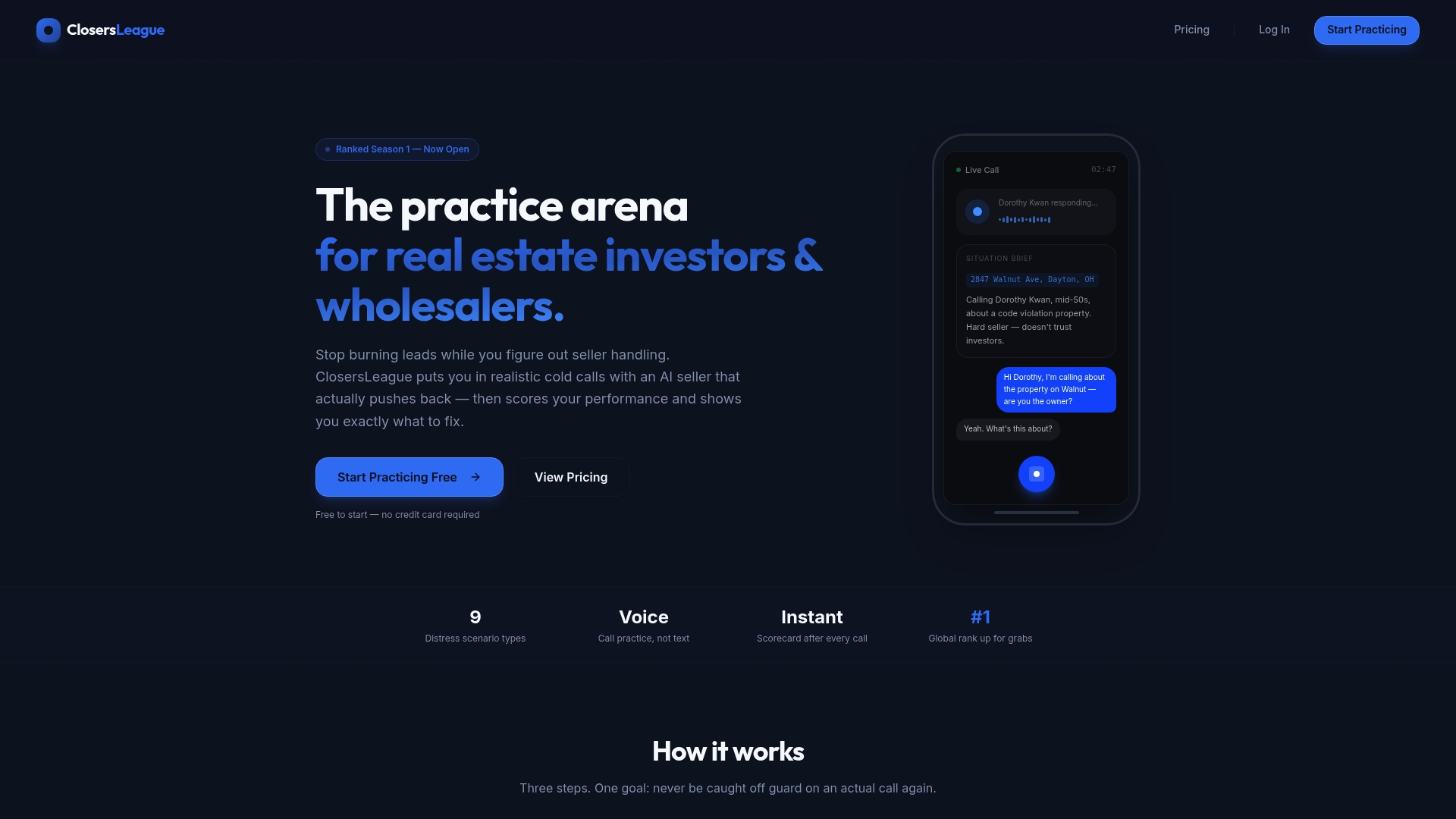
Features include:
- Scenario-specific AI calls across multiple distressed seller types
- Instant scorecards with category-level feedback after every call
- Targeted drills that focus on lowest-scoring skills
- Leaderboards for teams practicing together
Plans run Starter at $5 per month, Growth at $10 per month, and Pro at $18 per month, all listed on the pricing page. Start a free trial and run your first probate or pre-foreclosure scenario today through the Closers League practice platform.
FAQ
What is scenario based call practice in real estate investing?
It is roleplay built around a specific distressed seller type, like probate or pre-foreclosure, paired with scored feedback right after each call. The goal is training diagnostic questioning and emotional reading, not memorizing a script.
How often should I run scenario based roleplay drills?
Short, frequent sessions beat occasional long ones for building the habit. A 15-minute micro-drill most days, with a longer coach-led session weekly, tends to produce steadier scorecard improvement than one marathon session a month.
Is cold calling distressed homeowners legal?
Yes, when you follow TCPA consent rules and scrub against the National DNC Registry, and the FCC’s one-to-one consent rule effective January 27, 2025 applies specifically to autodialed or prerecorded calls. Document consent and review NAR’s telemarketing guidance before scaling call volume.
What should a call practice scorecard measure?
A simple five-category rubric covering rapport, questioning, diagnostic follow-up, objection handling, and compliance works well on a 1 to 5 scale. Reviewing it weekly helps you spot which skill to drill next.
Sources
- Highspot — Objection handling
- FTC announces 2027 telemarketer fees to access the National Do Not Call Registry
- NAR — Telemarketing & cold-calling