
Data-driven cold calling is defined as targeted outreach informed by enriched property and prospect data, not random dialing from a generic list. The role of data in cold calling is to replace guesswork with precision, connecting you with homeowners who actually have a reason to sell. For real estate investors and wholesalers, that means reaching people facing foreclosure, probate, divorce, or tax delinquency before anyone else does. When you build your calls around verified data signals, your contact rate climbs, your conversations get sharper, and your pipeline fills with leads that are worth your time.
What is the role of data in cold calling for real estate?
Data is the single biggest driver of cold calling performance. Research across over 16,000 campaigns shows that 80% of the performance gap between top and average cold callers comes from list quality and data accuracy, not tone or scripting. That finding flips the conventional wisdom that says you just need a better pitch. The truth is, you need better data first.
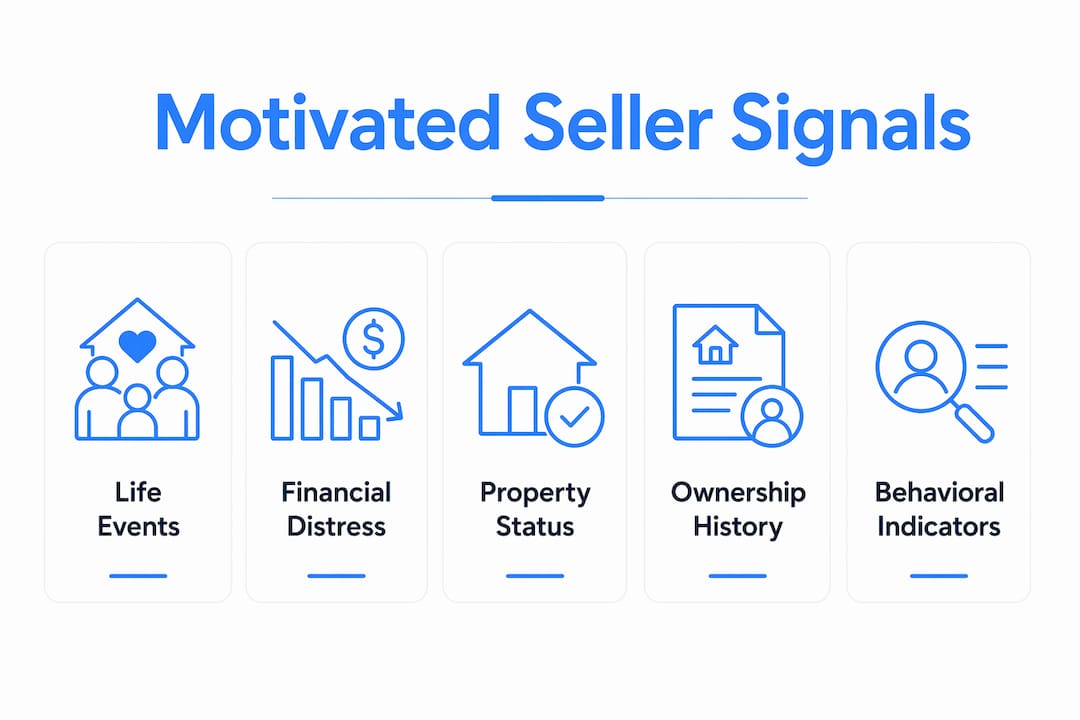
Data-driven cold calling works by layering multiple signals about a property and its owner to identify who is most likely to sell. Those signals include life events like divorce filings and probate notices, financial distress markers like tax liens and foreclosure notices, and property condition flags like code violations and vacancy records. When you combine these signals, you build a picture of motivation before you ever pick up the phone. That picture is what separates a productive call from a wasted one.

The industry term for this approach is predictive lead scoring, sometimes called motivation scoring. It uses weighted data points to rank prospects by their likelihood to transact. ClosersLeague trains real estate investors and wholesalers to call into these ranked lists with scripts built around the specific situation each seller faces.
How does enriched, multi-source data improve cold calling outcomes?
Raw data is a liability. Campaigns using unenriched lists suffer bounce rates of 20–30% and negligible conversion rates, while enriched lists with verified mobile IDs and emails achieve match rates up to 80%. That gap is not a minor inefficiency. It is the difference between a productive calling session and hours of dead air.
Enrichment means pulling from multiple sources and layering them together. Public records give you ownership history and deed data. Skip tracing adds verified mobile numbers and personal emails. Behavioral data shows recent activity like missed mortgage payments or utility shutoffs. Life event databases flag divorce filings, probate cases, and job loss notices. When you stack these sources, you get a complete picture of the owner, not just the property.
One critical pitfall in real estate data is the Current Resident Error. This happens when deed records list an LLC or shell entity as the owner instead of the actual decision-maker. Calling the LLC gets you nowhere. Proper enrichment resolves the LLC back to the beneficial owner and surfaces a direct mobile number for that person. Without that step, you are calling a wall.
The practical result of multi-source enrichment is that you reach real people who can actually say yes. Finding off-market property owners through enriched ownership data is one of the most consistent advantages investors use to build deal flow ahead of the competition.
What data signals indicate a motivated seller?
Motivated sellers do not appear randomly. They show up in the data before they ever list a property or respond to a mailer. The key is knowing which signals to watch.
The strongest signals fall into four categories:
- Life event triggers: Divorce filings, probate cases, and job loss notices. Life event leads convert at 3x the rate of random homeowner lists, with appointment rates around 11% versus 3% for cold outreach.
- Financial distress markers: Tax liens, foreclosure notices, and missed mortgage payments. These indicate a seller who needs to move, not just one who might consider it.
- Property condition flags: Code violations, vacancy records, and deferred maintenance reports. A property with open code violations and no active utility account is almost certainly a distressed situation.
- Market timing overlays: Rising interest rates, neighborhood comp drops, and days-on-market trends. These add context to individual signals and help you prioritize timing.
When you combine two or more of these signals for a single property, motivation probability rises sharply. A homeowner in probate with a tax lien and an open code violation is not a maybe. That is a high-priority call.
Pro Tip: Build a simple scoring sheet that assigns points to each signal. A probate flag earns 3 points, a tax lien earns 3 points, a code violation earns 2 points. Any lead scoring 6 or above goes to the top of your daily call list.
How do AI and predictive analytics sharpen cold calling results?
Predictive analytics takes motivation scoring from a manual process to an automated one. AI models analyze 40 or more data points per property and assign a propensity score that ranks leads by their likelihood to sell. The results are measurable. AI-scored leads with a motivation rank above 75 produce a 340% higher connect rate compared to random dialing, with connect rates jumping from 3% to 11%.
That number matters because your time is finite. Calling 100 random leads to get 3 conversations is exhausting. Calling 100 AI-scored leads to get 11 conversations changes the economics of your entire operation. You close more deals with fewer calls, and your callers stay motivated because they are having real conversations instead of hitting voicemail walls.
AI also improves scripting. Data-informed AI scripting combined with list segmentation increased qualified lead rates from 4.2% to 13.8% within 30 days for real estate investor campaigns. That is a 200%+ improvement in one month. The script adapts to the specific situation flagged in the data, so a probate call sounds different from a foreclosure call, and the homeowner feels heard from the first sentence.
Pro Tip: Treat your AI score as a starting point, not a final verdict. Always cross-reference the score with a quick manual check of the property address and ownership history before calling. Scores above 75 are reliable, but a 30-second review catches obvious errors.
The shift from broad dialing to intent-driven outreach is the defining change in how top real estate investors approach cold calling. Volume is no longer the goal. Precision is.
What are the most common data mistakes in cold calling?
Most cold calling failures trace back to three data mistakes. Fixing them does not require expensive tools. It requires discipline.
-
Using a single data source. Public records alone miss verified contact details. Skip tracing alone misses motivation signals. Single-source lists create tunnel vision. You see the property but not the person, or the person but not the situation. Multi-source stacking solves this by giving you both.
-
Calling from outdated lists. Data decays up to 70% per year. A list that was accurate in january is significantly degraded by april. Calling stale data means wrong numbers, disconnected lines, and owners who already sold. Any list older than 90 days needs re-enrichment before you dial.
-
Treating all leads equally. Calling a low-motivation lead with the same urgency as a high-motivation lead wastes both your time and the homeowner’s patience. Scoring by motivation, using the signals described above, lets you prioritize your highest-probability calls and adjust your approach for each tier.
Pro Tip: Schedule a monthly data audit. Pull your call logs, flag every disconnected number or wrong contact, and send those records back through a skip tracing service. Clean data compounds over time. Dirty data compounds your losses.
The importance of data in sales is not theoretical. Every one of these mistakes has a direct cost in time, money, and missed deals.
How do you implement data-driven cold calling step by step?
Getting started with a data-driven workflow does not require a massive budget. It requires a clear process.
- Step 1: Choose and combine your data sources. Start with county public records for ownership and distress signals. Add a skip tracing service to verify mobile numbers and emails. Layer in a life event database for divorce, probate, and foreclosure triggers.
- Step 2: Enrich every contact record. Before any call goes out, verify that you have a direct mobile number for the beneficial owner, not the LLC or property address. This single step eliminates the Current Resident Error and dramatically improves your reach rate.
- Step 3: Score each lead by motivation. Use the signal-based scoring system described earlier. Assign weighted points to each distress indicator and rank your list from highest to lowest. Call the top tier first, every session.
- Step 4: Integrate data with your dialer and CRM. Your scored list should feed directly into your calling workflow. Tag each lead with its motivation signals so your script adapts to the situation. A proven investor script workflow built around data signals converts at a measurably higher rate than a generic pitch.
- Step 5: Track your cold calling success metrics. Monitor contact rate, appointment rate, and conversion rate by lead tier. Follow-up tracking is especially critical. A 68% follow-up success rate shows that persistence backed by data tracking significantly increases conversions. Most deals close on the second or third call, not the first.
Continuous testing closes the loop. Review your metrics weekly, re-enrich your lists monthly, and adjust your scoring weights based on what is actually converting. Data-driven cold calling is not a setup. It is a practice.
Key Takeaways
Data quality, not script quality, is the primary driver of cold calling success in real estate. Investors who build their outreach on enriched, scored, and regularly refreshed data consistently outperform those who rely on volume alone.
| Point | Details |
|---|---|
| Data quality drives performance | 80% of the gap between top and average callers comes from list quality, not scripting. |
| Enrichment multiplies reach | Enriched lists achieve match rates up to 80%, versus 20–30% bounce rates on raw data. |
| Life event triggers convert best | Divorce and probate leads convert at 3x the rate of random homeowner lists. |
| AI scoring changes the math | AI-scored leads above rank 75 produce a 340% higher connect rate than random dialing. |
| Data freshness is non-negotiable | Data decays up to 70% per year; lists older than 90 days need re-enrichment before use. |
What I’ve learned after watching thousands of real estate cold calls
Most investors I work with come in thinking their problem is the script. They want a better opener, a sharper objection handler, a smoother close. And yes, those things matter. But when I look at the actual call data, the pattern is almost always the same. The callers who struggle are working bad lists. The callers who win are working great data.
I have seen investors completely change their results without changing a single word of their script. They just stopped calling random homeowner lists and started calling probate and divorce leads with verified mobile numbers. Their connect rate tripled. Their conversations got easier because the homeowner actually had a reason to talk.
The mindset shift that matters most is moving from “how many calls can I make today” to “how good is the list I am calling today.” Volume is a trap. It feels productive, but it burns out your callers and produces thin results. Quality data forces you to slow down on the front end, and it pays you back on the back end with real appointments.
AI tools for real estate investors have made this shift more accessible than ever. You do not need a data science team. You need a clear process, a reliable enrichment source, and the discipline to score your leads before you dial. That combination beats raw hustle every time.
— Dave
ClosersLeague trains you to call the leads that data finds
Cold calling with good data is only half the equation. You still need to handle the conversation when a motivated seller picks up. ClosersLeague is built for exactly that moment.
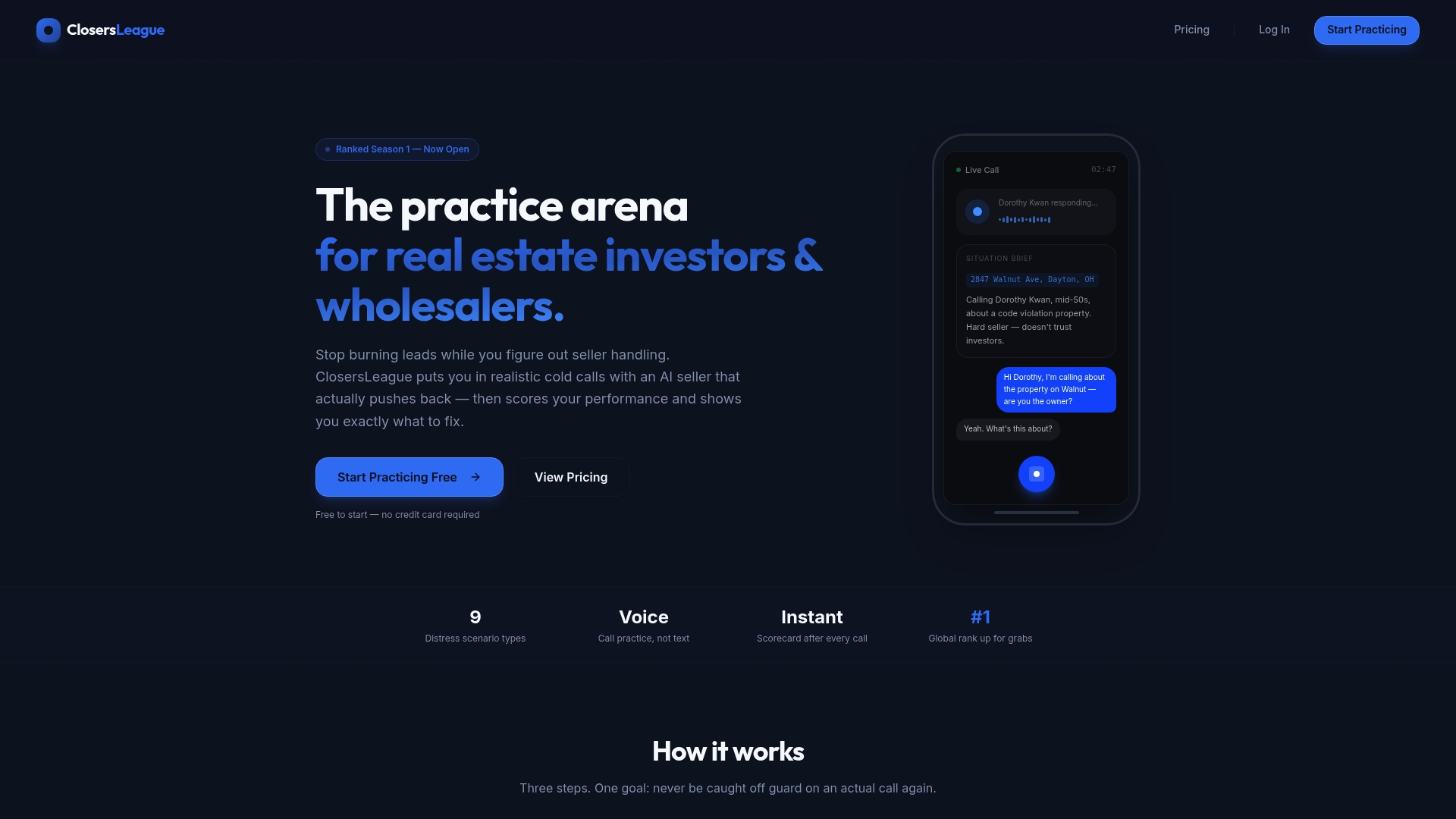
ClosersLeague’s AI roleplay modules put you in live practice scenarios built around the most data-rich lead types in real estate. The inherited property cold calling practice trains you to navigate the emotional and logistical complexity of probate situations. The code violation cold calling practice prepares you for distressed owners who are often frustrated and defensive. Both modules adapt to your responses in real time, so you build the muscle memory to handle real calls with confidence. Stop winging it. Start drilling.
FAQ
What is data-driven cold calling in real estate?
Data-driven cold calling is outreach targeted by enriched property and prospect data, including life event triggers, financial distress signals, and verified contact details. It replaces random dialing with precision-ranked lead lists built around seller motivation.
How much does data quality affect cold calling results?
Data quality accounts for 80% of the performance gap between top and average cold callers, based on analysis of over 16,000 campaigns. List accuracy and enrichment matter far more than scripting or tone.
What are the best data signals for finding motivated sellers?
The strongest signals are life event triggers like divorce and probate, financial distress markers like tax liens and foreclosure notices, and property condition flags like code violations and vacancy records. Combining two or more signals for one property significantly raises motivation probability.
How often should you refresh your cold calling list?
Any list older than 90 days needs re-enrichment before use. Data decays up to 70% per year, meaning a list that was accurate in january will have significant errors by april.
How does AI improve cold calling for real estate investors?
AI scoring ranks leads by their propensity to sell using 40 or more data points per property. Leads scoring above 75 produce a 340% higher connect rate than random dialing, turning cold calling from a volume game into a precision activity.
Recommended
- 10 proven cold calling tips for real estate investors – ClosersLeague Blog
- Master Real Estate Lead Generation: Cold Calling Basics – ClosersLeague Blog
- Real estate prospecting process: proven steps for cold calling
- Real Estate Cold Calling Practice — AI Roleplay for Every Seller Type | ClosersLeague