
Virtual wholesaling is the practice of completing every step of a real estate wholesale deal remotely, without visiting the property or meeting sellers and buyers face to face. The industry term is “remote wholesaling,” though virtual wholesaling has become the widely accepted label among investors. You source leads, negotiate contracts, and close deals entirely through digital tools including phone calls, video, e-signatures, and wire transfers. This approach removes the geographic ceiling that limits traditional wholesalers, letting you work in Phoenix while living in Cleveland. Platforms like DocuSign, MLS data services, and remote-friendly title companies have made this model not just possible but repeatable at scale.
What is virtual wholesaling and how does it differ from traditional wholesaling?
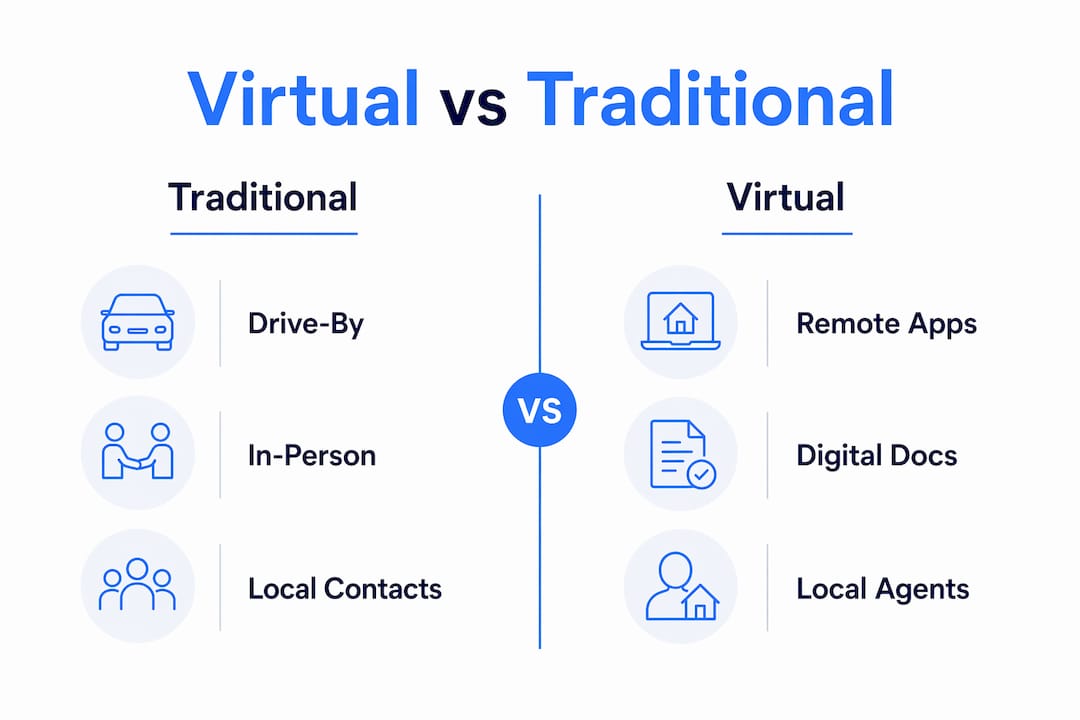
Traditional real estate wholesaling requires you to drive neighborhoods, walk properties, and sit across a table from motivated sellers. Virtual wholesaling replaces every one of those physical touchpoints with digital equivalents. The core strategy stays identical: you secure a property under contract at a below-market price, then assign that contract to a cash buyer for a fee. You never own the property, and you never renovate it. What changes is how you gather information, communicate, and execute paperwork.
The assignment fee is the profit engine in both models. Fees typically range from 5% to 10% of the property value, depending on deal complexity and market conditions. That means a $150,000 distressed property could generate $7,500 to $15,000 per deal without you ever setting foot on the lawn.
Here is a direct comparison of the two approaches:
| Factor | Traditional wholesaling | Virtual wholesaling |
|---|---|---|
| Property inspection | In-person drive-by or walkthrough | Remote photos, video, satellite imagery |
| Seller communication | Face-to-face meetings | Phone, text, email, video calls |
| Contract signing | Physical signatures | DocuSign, HelloSign, or similar platforms |
| Market reach | Local or regional | National, multi-market |
| Closing coordination | In-person at title company | Remote wire transfer and e-docs |
Pro Tip: If you are new to wholesaling, start with one out-of-state market rather than three. Mastering one remote market builds the systems you need before you scale.
What tools and technologies enable virtual wholesaling?
Deal management and communication happen entirely through digital infrastructure in virtual wholesaling. The right stack determines whether your operation runs smoothly or collapses under information gaps. Here are the core categories you need covered:
- Property data platforms: MLS access, county tax records, Zillow, PropStream, and BatchLeads give you comps, ownership history, and property details without a site visit. Satellite imagery through Google Maps fills in neighborhood context.
- CRM software: Tools like REsimpli, Podio, or FreedomSoft track leads, follow-up schedules, and buyer lists in one place. Without a CRM, deals fall through the cracks when you are managing multiple markets.
- Communication tools: Phone dialers like CallTools or Mojo Dialer, plus text platforms and Zoom for video calls, replace in-person conversations. Motivated sellers increasingly accept remote transactions, especially when speed is the priority.
- E-signature platforms: DocuSign and HelloSign allow contracts to be signed digitally from any device. This is non-negotiable for remote closings.
- Title companies with remote closing capability: Not every title company handles wire transfers and digital documentation. Identify remote-friendly title companies in your target market before you lock up your first deal.
- Local verifiers: A local agent, contractor, or bird dog can walk the property and send photos or video. This is your substitute for the drive-by, and it is critical for accurate repair estimates.
Pro Tip: Build your local verifier relationship before you need it. Post in local real estate investor Facebook groups in your target market and offer a flat fee per walkthrough. Having someone on call saves deals.
What are the key legal and compliance considerations in virtual wholesaling?
Wholesaling is regulated at the state level, and the rules that apply to your deal are tied to the property’s location, not where you live. A wholesaler based in Texas operating in Florida must follow Florida’s rules. This is one of the most overlooked risks in virtual wholesaling, and it catches beginners off guard.
The legal landscape breaks down into four areas you must address before you operate in any new market:
- Licensing requirements: Some states require a real estate license to market or assign contracts. Research your target state’s real estate commission website before sourcing a single lead there.
- Assignment clause language: Purchase agreements must include a valid assignment clause for the contract transfer to hold up. Missing or vague language is one of the most common deal killers in virtual wholesaling.
- Disclosure obligations: Misleading sellers about timelines, prices, or your role as a wholesaler creates legal exposure and destroys your reputation. Sellers who feel misled can back out, file complaints, or pursue legal action.
- Jurisdiction-specific rules: When wholesaling across state lines, applicable rules are tied to the property location. Local jurisdiction research is not optional. It is the foundation of a compliant operation.
Working with a real estate attorney in your target market for a one-time contract review is worth every dollar. A title company experienced in assignments will also flag compliance issues before closing. Pair that with thorough real estate due diligence and you reduce your legal risk significantly.
How to start and scale a virtual wholesaling business successfully
Building a virtual wholesaling operation requires systems before speed. Investors who rush into multiple markets without documented processes burn through leads and lose deals to avoidable errors. Follow this sequence to build a repeatable operation:
- Choose your target market with data. Look for markets with high distressed property inventory, active cash buyers, and investor-friendly title companies. Use tools like PropStream or the ATTOM Data Solutions database to identify zip codes with high foreclosure or tax-delinquent rates.
- Build your lead generation system. Cold calling remains the highest-conversion channel for motivated seller outreach. Pair a quality skip-traced list with a wholesale cold calling script tailored to your seller type, whether that is probate, foreclosure, or divorce.
- Establish your local team. Identify a title company, a local verifier, and ideally a real estate attorney in your target market before you lock up a deal. These relationships are your operational backbone.
- Lock up your first contract. Use a purchase agreement with a clear assignment clause. Send it via DocuSign. Confirm the title company can handle remote closing before you go under contract.
- Market to your buyer list. Send deal details including photos, comps, and your asking price to your cash buyer list via email or text blast. Platforms like REI BlackBook or Mailchimp work well for this.
- Assign the contract and close. The title company facilitates closing and pays your assignment fee via wire transfer. You never touch the property or the funds directly.
- Document your process and repeat. After your first deal, write down every step. That document becomes your SOP for the next market you enter.
What are common pitfalls in virtual wholesaling and how to avoid them?
The most frequent failure point in virtual wholesaling is information gaps about property condition. Without a physical visit, you are relying on seller disclosures, photos, and local verifiers. When any of those inputs are incomplete or inaccurate, your repair estimate is wrong, your offer is wrong, and your buyer walks.
Here are the pitfalls that trip up virtual wholesalers most often, and how to counter each one:
- Skipping the local verifier. Never rely solely on seller-provided photos. Pay a local contact to walk the property and send timestamped video. This single step prevents the majority of condition-related surprises.
- Missing or weak assignment clauses. A contract without a clear assignment clause cannot be transferred. Have a real estate attorney review your template once so every deal uses airtight language.
- Poor seller communication. Remote deals depend entirely on trust built over the phone. If your cold calling skills are weak, sellers disengage before you can build rapport or get accurate property information.
- Choosing markets without research. High-competition markets with thin margins punish beginners. Use data to identify markets where distressed inventory is high and cash buyer activity is strong.
- Ignoring state-specific wholesaling laws. Operating in a state that requires licensing without one exposes you to fines and contract voidance. Research before you dial.
| Pitfall | Prevention strategy |
|---|---|
| Property condition gaps | Hire a local verifier for every deal |
| Contract errors | Use attorney-reviewed templates with assignment clauses |
| Seller miscommunication | Practice remote objection handling before calling |
| Wrong market selection | Analyze distressed inventory and buyer activity with data tools |
| Legal non-compliance | Research state rules before entering any new market |
Key takeaways
Virtual wholesaling succeeds when remote systems, compliant contracts, and local partnerships replace the physical presence that traditional wholesaling depends on.
| Point | Details |
|---|---|
| Core definition | Virtual wholesaling is the complete wholesaling process done remotely using digital tools. |
| Profit model | Assignment fees of 5% to 10% of property value are earned without owning or renovating the property. |
| Critical tools | DocuSign, MLS platforms, CRM software, and remote-capable title companies are non-negotiable. |
| Legal compliance | Rules apply based on the property’s state, not the wholesaler’s location. Research before operating. |
| Top failure point | Information gaps on property condition are the leading cause of deal failures in virtual wholesaling. |
Why virtual wholesaling is harder than it looks, and worth it anyway
I have watched a lot of investors treat virtual wholesaling like a shortcut. They assume that removing the drive-by removes the hard work. It does not. What it removes is the geographic ceiling. The hard work just moves to a different place: your phone, your systems, and your ability to read a seller’s situation without ever being in the room.
The investors I have seen succeed at this consistently share one trait. They treat their remote communication skills as seriously as any other business asset. A motivated seller in a probate situation does not care where you are located. They care whether you sound credible, whether you understand their situation, and whether you can actually close. If you stumble through objections or fail to ask the right questions, you lose the deal regardless of how good your DocuSign setup is.
The geographic flexibility is real and it is powerful. You can work markets in Florida, Ohio, and Texas simultaneously from a single laptop. But that flexibility only pays off when your systems are tight and your conversations are sharp. Advanced roleplaying for distressed property calls is one of the most underused preparation tools I have seen. Investors who practice their scripts before calling close at a measurably higher rate than those who wing it.
Start with one market. Build the system. Then scale.
— Dave
Practice the calls that close virtual wholesale deals
Virtual wholesaling lives or dies on the quality of your seller conversations. You can have the best CRM and the cleanest contracts, but if you freeze up when a probate seller pushes back or a code-violation homeowner gets defensive, the deal is gone.
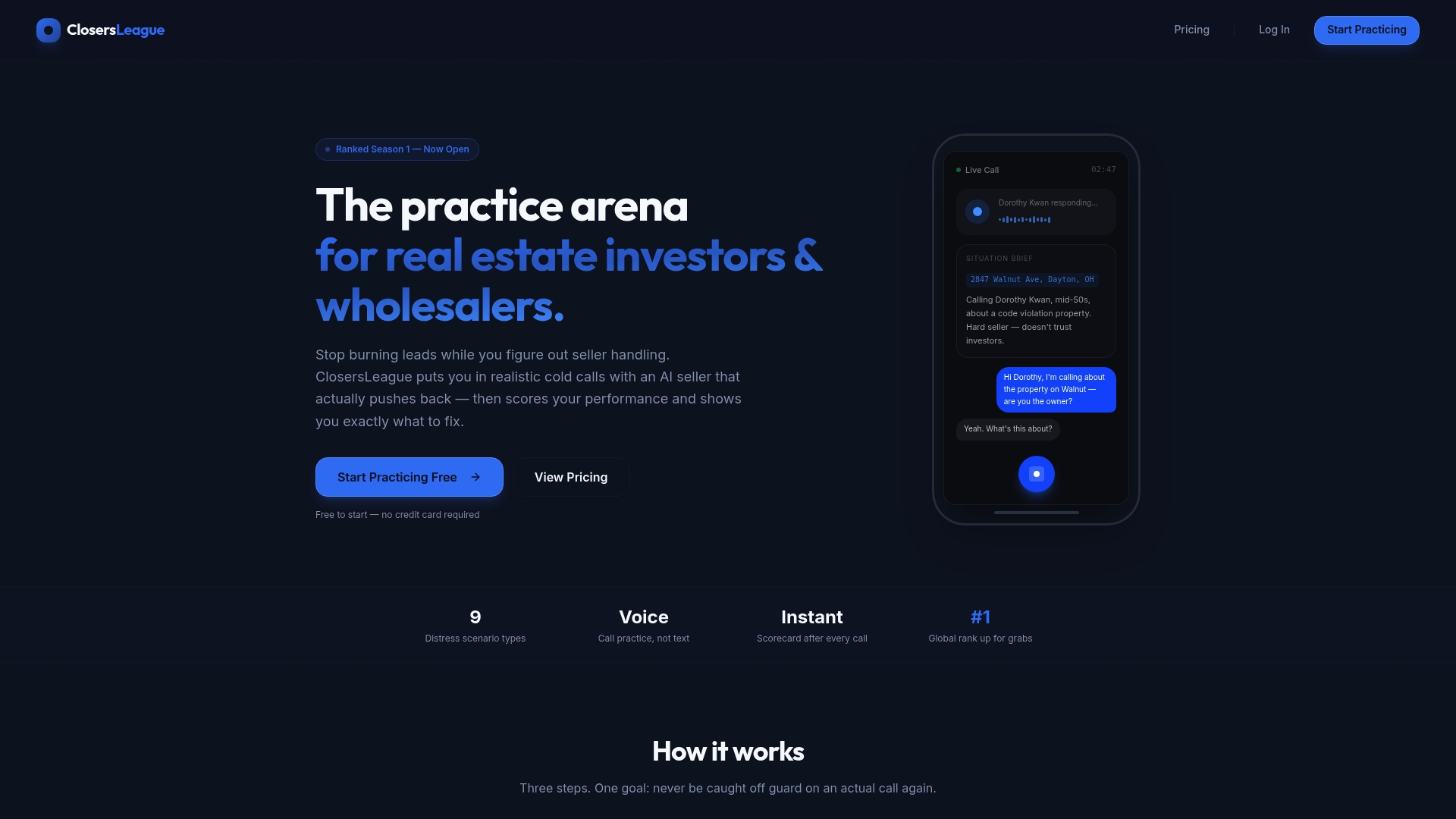
ClosersLeague is an AI-powered cold calling training platform built specifically for real estate investors and wholesalers. You can practice inherited property cold calls with AI roleplay simulations that score your performance and flag weak spots in real time. For properties with code violations, the code violation cold calling practice module puts you through realistic seller scenarios before you ever dial a real lead. Stop winging it. Start drilling.
FAQ
What is virtual wholesaling in real estate?
Virtual wholesaling is the process of wholesaling real estate deals entirely remotely, using digital tools for lead generation, negotiation, contract signing, and closing without visiting the property or meeting parties in person.
How much can you make with virtual wholesaling?
Assignment fees in virtual wholesaling typically range from 5% to 10% of the property value, meaning a $150,000 deal can generate $7,500 to $15,000 per transaction without owning or renovating the property.
Do you need a real estate license for virtual wholesaling?
Licensing requirements vary by state and are determined by the property’s location, not the wholesaler’s residence. Some states require a license to market or assign contracts, so you must research the rules in every market you enter.
What is the biggest risk in virtual wholesaling?
The leading risk is information gaps about property condition caused by the inability to conduct physical inspections. Successful virtual wholesalers counter this by hiring local verifiers to walk properties and provide photos and repair estimates.
How do you close a virtual wholesale deal remotely?
Remote closings use e-signature platforms like DocuSign for contract execution and wire transfers for funds, with a remote-capable title company managing documentation and paying the assignment fee at closing.