Cold calling wins on speed and cost when you need volume fast; door knocking wins on trust and conversion when you’re building a farm area. Most investors who scale past their first few deals stop treating this as an either/or choice and run both as one system. Build listings quickly and you dial first. Own a neighborhood and you knock first. Want to stop paying for expensive leads long term, run both together.
TL;DR:
- Running both cold calling and door knocking as a system over 90 days yields the best results, with each channel’s effectiveness dependent on your goals and territory.
- Cold calling costs up to $300 per month and can generate a 1.7% dial-to-appointment rate with top performers exceeding 5%, especially with consistent effort.
- Door knocking has a higher per-contact conversion rate of 2% to 3% but requires more time, effort, and materials, making it suitable for neighborhood branding and local trust-building.
- Combining multiple touches like calls, texts, and mailers increases appointment rates, with reputation and persistence reducing cancellations for door knocking.
- Testing both methods in comparable market segments for 90 days provides clear insights into which channel delivers better efficiency and results for your specific market.
Table of Contents
- Door Knocking vs Cold Calling: A Side-By-Side Look
- What Do Real Benchmarks Say About ROI?
- When Cold Calling Works and Where It Falls Short
- When Door Knocking Works and Where It Falls Short
- How to Test Door Knocking vs Cold Calling in Your Market
- Scripts and Coaching Checkpoints That Actually Move the Needle
- Why Systems Beat One-Off Tactics
- Practice the Calls Before You Make Them Count
- Sources
- FAQ
Door Knocking vs Cold Calling: A Side-By-Side Look
Every serious prospecting decision comes down to five things: who answers, what it costs you, how fast you can scale, what you’re trying to accomplish, and what stands in your way. Here’s how the two methods stack up against each other.
- Contact and conversion: Cold calling typically converts around 1.7% of dials into appointments, with top performers hitting 5% or better. Door knocking runs hotter per contact, landing 2% to 3% conversion on doors actually opened.
- Cost per contact: Cold calling costs almost nothing in cash, mostly your time and a dialer subscription. Door knocking costs more time per contact and adds gas, printed materials, and physical wear on your schedule.
- Speed and scale: A disciplined dialer can hit 80 to 120 calls in a single session. A door knocker covers maybe 40 to 60 doors in the same window, fewer in rural areas with long driveways.
- Best for: Cold calling suits absentee owners, expired listings, and anyone outside your immediate area. Door knocking suits FSBOs, probate leads tied to a specific address, and any neighborhood where you want to be the recognized name.
- Barriers: Cold calling has to navigate voicemail, gatekeepers, and TCPA/DNC compliance. Door knocking has to navigate no-solicitation signs, weather, and personal safety.
If you’re short on time but have a phone and a list, pilot cold calling first. If you have flexible hours and want to dominate three or four zip codes, pilot door knocking. If you have both, don’t choose. Run them in parallel and let 90 days of data decide where you double down.
What Do Real Benchmarks Say About ROI?
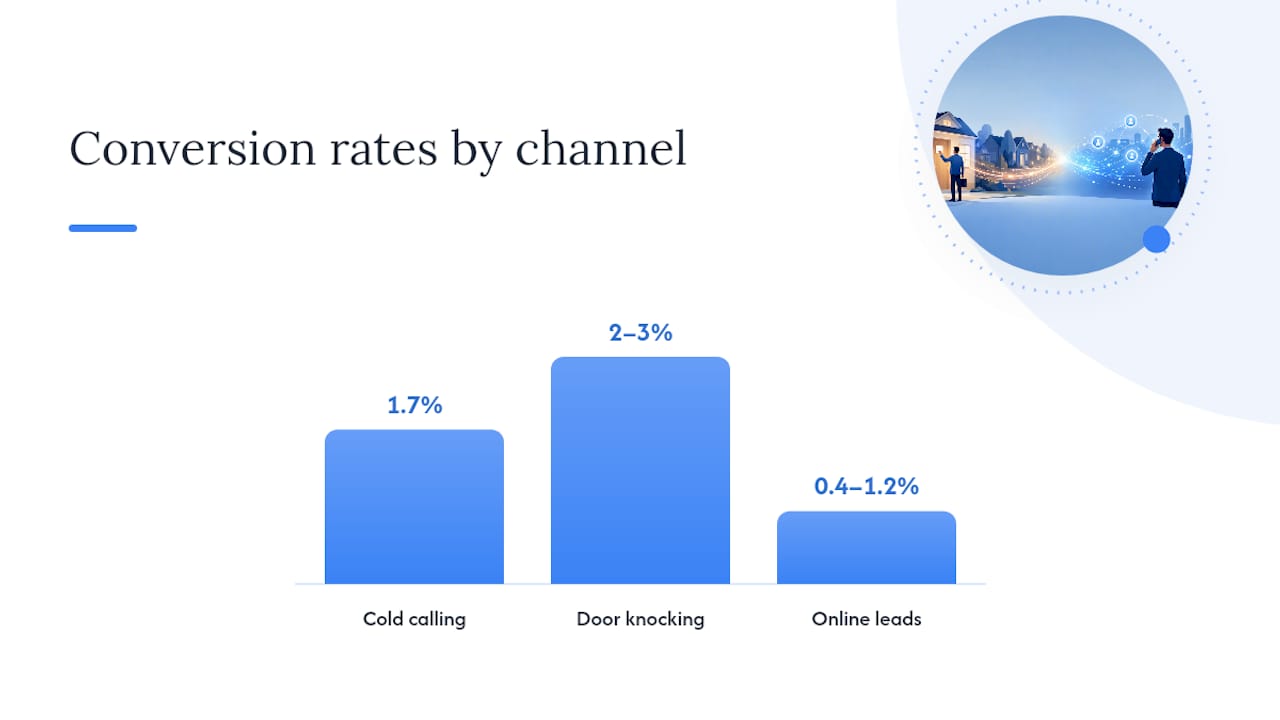
The numbers only mean something once you attach a timeline and a follow-up plan to them. Cold calling’s 1.7% average dial-to-appointment rate sounds thin until you realize top performers push it past 5% simply by dialing consistently for 90 straight days instead of quitting after two weeks. Door knocking’s 2% to 3% per-contact conversion beats most online lead channels outright, and some practitioners report ROI spikes as high as 1,000% on a single listing pulled from around 500 doors, though results like that swing wildly depending on scale, territory, and how well you follow up after the knock.
By the Numbers: Cold calling averages roughly 1.7% dial-to-appointment, while door-to-door contact converts at 2% to 3%, both figures well above the 0.4% to 1.2% range typical of online lead channels.
Monthly costs tell a similar story. A disciplined cold-calling operation runs $0 to $300 a month for dialer software, skip-traced lists, and DNC scrubbing, compared to $1,000 or more for many paid lead sources. Door knocking’s costs shift toward time and materials, door hangers, one-sheets, mileage, but rarely approach four figures unless you’re running a large team.
| Factor | Cold Calling | Door Knocking |
|---|---|---|
| Typical conversion | ~1.7% dial-to-appointment | 2% to 3% per contact |
| Monthly cost | $0 to $300 | Time, gas, printed materials |
| Contacts per session | 80 to 120 dials | 40 to 60 doors |
| Attempts to reach a prospect | 6 to 8 average | 1 to 2 per address |
The 90-day rule matters for both channels, just differently. Calling requires repeated attempts because most prospects need 6 to 8 touches before they engage. Door knocking compounds through reputation. Show up in the same neighborhood three or four times over a season, and homeowners start recognizing your face before you even knock. That recognition reduces appointment cancellations compared to appointments set purely over the phone.
Layering channels changes everything. A call followed by a text, then a mailer, then a retargeting ad, consistently produces higher appointment rates than any single touch alone. Treat the knock or the dial as the opening move in a longer sequence, not the whole game.
When Cold Calling Works and Where It Falls Short
Cold calling remains the fastest way to fill a CRM with names, and it costs almost nothing to start. You control volume entirely: dial more, get more conversations, no scheduling around daylight or weather. The catch is that gatekeepers, voicemail, and call fatigue chip away at your connect rate if you’re not sequencing your list intelligently. Ignore TCPA and Do Not Call rules and you’re risking real legal exposure, not just a wasted call.
A solid cold-calling operation looks like this:
- Pull lists from expired listings, FSBOs, and absentee owners, the highest-intent segments available.
- Use a dialer that logs dispositions automatically into your prospecting workflow so nothing falls through the cracks.
- Commit to 80 to 120 dials per session, five days a week, for a minimum of 90 days before judging results.
- Score every call in your CRM by outcome (no answer, not interested, callback, appointment) so you can see patterns over time.
- Scrub every list against the national DNC registry and respect calling-window laws before you dial.
Pro Tip: Block your dialing sessions at the same time every day. Consistency trains your own discipline just as much as it trains the list. A structured daily cadence beats sporadic marathon sessions almost every time.
When Door Knocking Works and Where It Falls Short
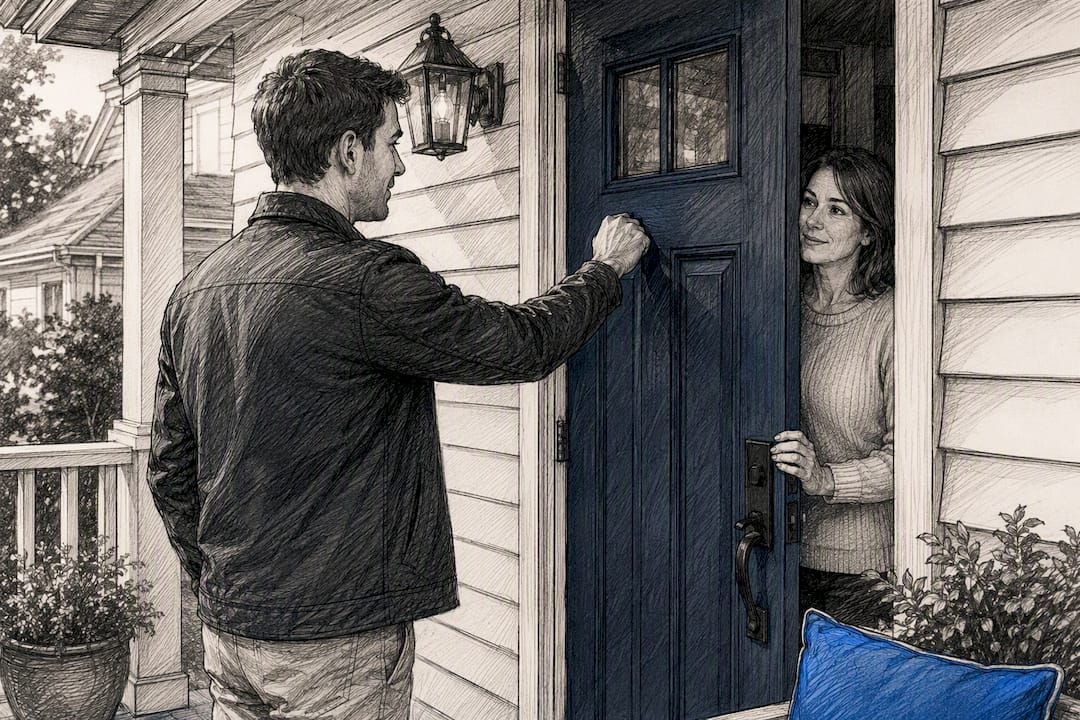
Door knocking wins on trust. A face at the door converts skeptics faster than a voice on the phone ever will, and it builds the kind of hyperlocal reputation that turns you into “the investor who works this street.” That reputation compounds: knock the same neighborhood repeatedly and homeowners start recognizing you before you say a word. The tradeoff is time. Covering ground takes hours you can’t spend anywhere else, weather and daylight limit your season, and not every homeowner welcomes an unannounced visitor. Safety and neighbor complaints are real considerations, not footnotes.
Run it like a field operation, not a random walk:
- Print door hangers and a simple one-sheet before you ever knock, so you leave something behind when nobody answers.
- Knock during realistic windows, typically late afternoon through early evening on weekdays, and Saturday mornings.
- Script your opener and roleplay objections beforehand so you’re not improvising on someone’s porch.
- Log every address into your CRM the same day, tagging source, disposition, and next action.
- Follow every knock with a text or postcard within 48 hours to lock in the contact before the memory fades.
Structured territory canvassing consistently outperforms random door knocking. Teams that plan routes and measure results door by door convert better than those who wing it street by street.
How to Test Door Knocking vs Cold Calling in Your Market
Neither method proves itself in theory. Run a fair test and let your own numbers settle the door-knocking versus cold-calling debate for your market.
- Pick two comparable segments. Choose two neighborhoods of similar size and price point, or two list segments (say, expireds vs. absentee owners) with roughly equal counts.
- Define your KPIs upfront. Track contacts made, appointments booked, and appointments that convert to signed listings or contracts.
- Set a minimum run time. Thirty days gives you an early signal. Ninety days gives you a defensible conclusion, especially for cold calling, where the six-to-eight-attempt average means early weeks undercount your true rate.
- Set daily activity targets. Aim for 80 to 120 calls per session or 150 to 200 doors per week, and log every disposition without exception.
- Add the right CRM fields. Track source, number of touches, attempt count, disposition, and next scheduled action for every lead.
- Segment your results. Break performance down by lead type (FSBO, probate, absentee) so you don’t average away a channel’s real strength.
- Apply the decision rule. After 90 days, scale whichever channel delivers more appointments per hour of effort and a better appointment-to-listing conversion rate.
Scripts and Coaching Checkpoints That Actually Move the Needle
A cold-call opener that works: “Hi, this is [name] with [company]. I noticed your property on [street], and I work with homeowners in situations like yours to figure out options fast. Do you have two minutes?” A door-knock opener: “Hey, sorry to interrupt. I buy houses in this neighborhood and wanted to introduce myself in person. Here’s my card, no pressure at all.”
Follow up within 48 hours with a text: “Great talking with you today, here’s my direct line if anything changes.” Or a postcard reinforcing the in-person visit.
Coaching checklist for either channel:
- Roleplay objection handling weekly, not just once during onboarding.
- Score recorded calls or debrief door-knock sessions against a rubric: opener, objection handling, close, tone.
- Review scorecards every two weeks to catch drift before bad habits calcify.
Tools like AI-powered roleplay platforms exist specifically to make that repetition possible without burning real leads on practice attempts.
Why Systems Beat One-Off Tactics
The debate over which channel wins misses the real point. Investors who treat cold calling or door knocking as a single campaign rarely see the compounding returns that come from running either as a repeatable system over 90 days. A script matters less than the discipline behind it, showing up every day, logging every disposition, adjusting based on what the data actually says. Personalization and genuine curiosity about the seller’s situation outperform any clever line you memorize. Pick your channel, commit to the cadence, and let three months of consistent activity tell you what’s working.
— Dave
Practice the Calls Before You Make Them Count
Reading a script is easy. Delivering it naturally when a distressed seller pushes back on price, timeline, or trust takes reps, and most investors get those reps live, on calls that actually mattered. AI-powered roleplay platforms let you drill objection handling, probate conversations, and pre-foreclosure calls against a realistic AI seller before you ever dial a real homeowner, with scorecards that show exactly where your delivery breaks down.
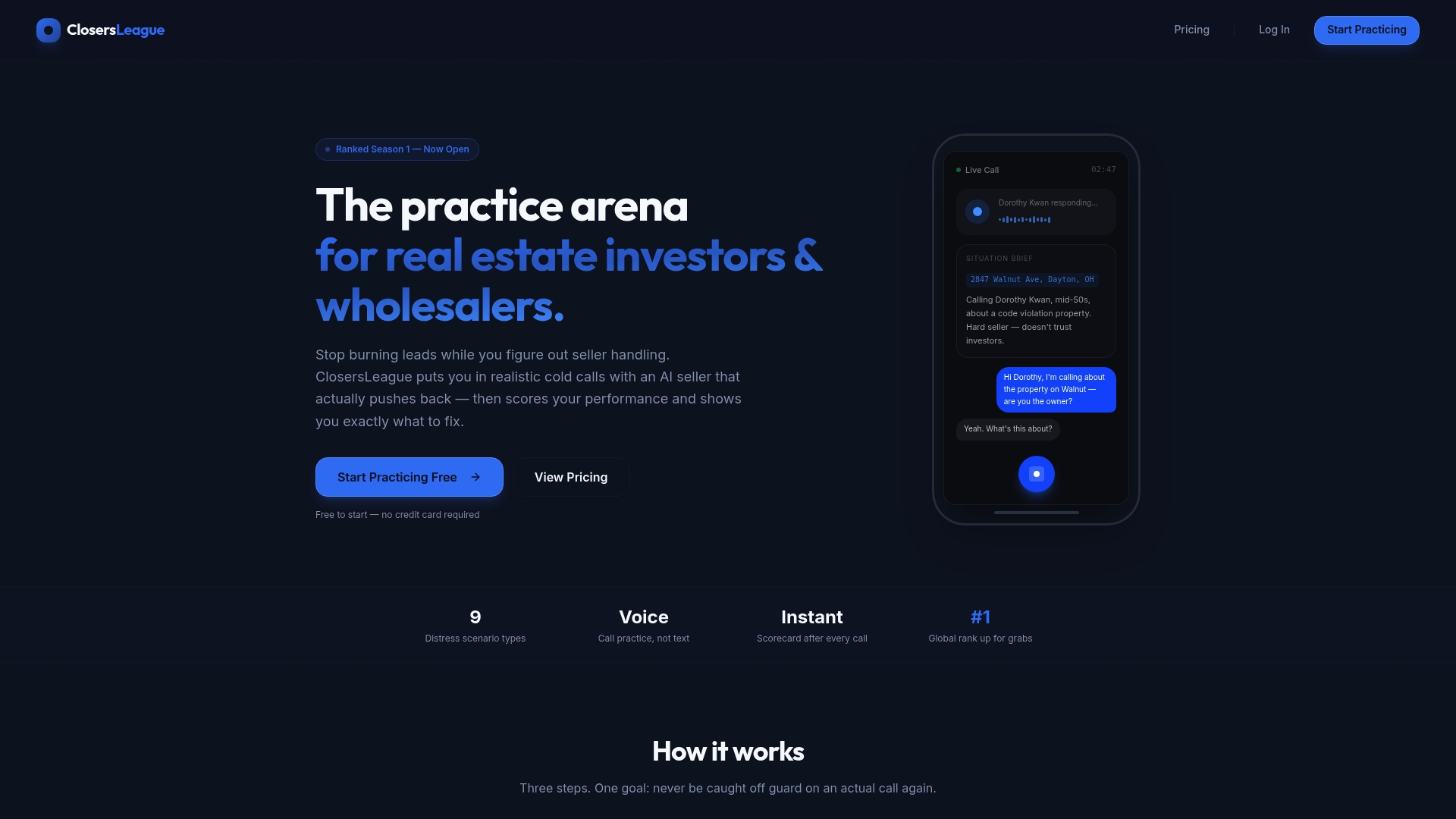
Whether you’re working inherited properties, vacant houses, or a mixed list of distressed leads, the AI roleplay practice platform drills scenario-specific objections and tracks your improvement call over call, not just session over session. A free trial gives you a set number of practice calls to see how your scoring holds up before you commit to a paid plan. If you’re ready to stop guessing why calls stall and start seeing exactly where they break, start a free trial and run your first scored session today.
Sources
- Door Knocking for Real Estate: The Ultimate Guide + Scripts
- Real Estate Cold Calling 2026 | Is It Still Worth It?
- Ultimate Cold Calling System for Real Estate Investors 2026 | Televista Blog
- Cold Canvassing vs Cold Calling: What Works Better in Modern Field Sales?
FAQ
Is cold calling still effective in real estate?
Yes. Cold calling still averages around 1.7% dial-to-appointment, and top performers exceed 5% when they dial consistently for at least 90 days instead of quitting early.
What are the stages of a cold-calling campaign?
A typical campaign moves through list building, scrubbing against DNC registries, scripted outreach, objection handling, and disposition tracking, with each stage feeding the next through consistent CRM logging.
Does cold calling actually work anymore?
It works when run as a system rather than a one-off push. Investors who combine calls with texts, mailers, and retargeting ads see meaningfully higher appointment rates than those relying on the phone alone.
Should I door knock or cold call first?
Cold call first if you need fast, low-cost volume across a wide area. Door knock first if you’re trying to dominate a specific neighborhood where higher trust and repeat visibility pay off over time.