
Empathy in cold calls is defined as the deliberate practice of recognizing and responding to a prospect’s emotional state before presenting any offer or solution. The role of empathy in cold calls goes far beyond being “nice” on the phone. It is a cognitive skill, validated by psychological research and 2026 field studies, that separates closers who build trust from callers who just read scripts. For real estate investors and wholesalers calling homeowners in foreclosure, probate, or divorce situations, empathy is not optional. It is the difference between a conversation and a hang-up.
How does empathy improve cold call effectiveness?
Empathy-first calls consistently outperform script-driven calls on every measurable metric. Shifting to empathy-first outreach increases lead-to-conversion rates from 18% to 34%, and admission show rates from 65% to 82%. Those numbers reflect a fundamental change in how prospects experience the call.
The mechanism is straightforward. When a homeowner facing foreclosure picks up the phone, their first instinct is defensiveness. A script-driven caller triggers that defense immediately. An empathy-first caller recognizes the emotional state and responds to it. Empathy-first calls average 12–20 minutes in duration, compared to 5–8 minutes for script-driven calls. Longer calls mean deeper engagement, and deeper engagement means more disclosed information and higher trust.

The empathy gap in sales describes what happens when reps prioritize pitch mechanics over understanding. It is the primary cause of low response rates in cold calling. Emotional intelligence paired with genuine empathy delivers better connections than any scripted outreach sequence.
Here is what the data shows across call types:
| Metric | Script-driven calls | Empathy-first calls |
|---|---|---|
| Average call duration | 5–8 minutes | 12–20 minutes |
| Lead-to-conversion rate | 18% | 34% |
| Admission show rate | 65% | 82% |
The pattern is clear. Empathy does not slow down the sales process. It accelerates it by removing the friction that kills deals before they start.
What types of empathy matter most in cold calling?
Two distinct types of empathy apply to sales, and confusing them costs you deals.
Cognitive empathy is perspective-taking. It is the analytical ability to understand what a prospect is thinking, what motivates them, and what fears are driving their hesitation. Cognitive empathy improves selling outcomes by enabling sellers to identify buying signals and tailor offers without making unnecessary concessions. When you call a probate seller, cognitive empathy tells you they are not just selling a house. They are managing grief, legal complexity, and family pressure simultaneously.
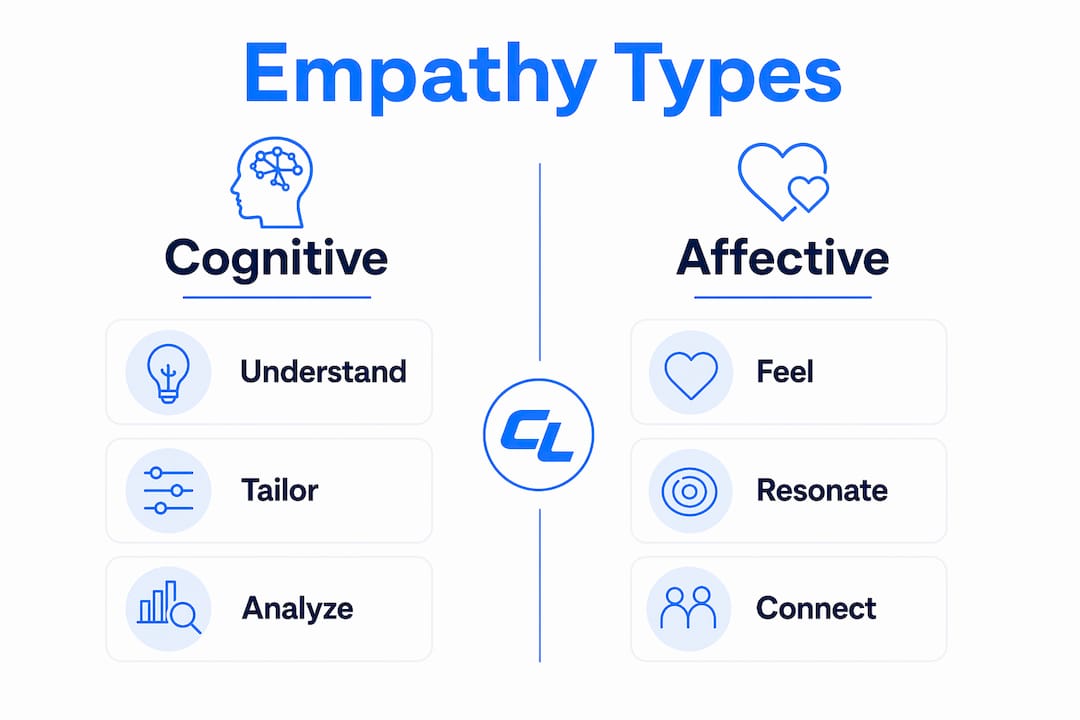
Affective empathy is emotional resonance. It is the ability to genuinely feel what the prospect feels, at least enough to communicate that you understand their situation. Affective empathy builds trust and loyalty faster than any rapport script. A homeowner in a distressed situation can tell within 30 seconds whether you actually care or whether you are running a sequence.
The risk comes when sellers confuse empathy with sympathy. Effective professional empathy requires identifying feelings without losing your expert advisory role. Sympathy collapses that boundary. You start agreeing with every objection, over-discounting, and abandoning your position. The homeowner stops seeing you as a solution and starts seeing you as another person who feels bad for them but cannot help.
Pro Tip: Practice cognitive empathy before every call by writing down three things the homeowner is likely worried about based on their situation, whether that is foreclosure, probate, or tax delinquency. This primes your brain to listen for those signals instead of waiting for your next talking point.
The table below shows how to apply each type strategically:
| Empathy type | Primary use | Risk if overused |
|---|---|---|
| Cognitive | Identifying objections, tailoring offers | Can feel clinical or detached |
| Affective | Building trust, creating emotional safety | Can collapse into sympathy |
| Tactical | Labeling emotions to reduce defensiveness | Can feel scripted if not genuine |
Empathy training that combines both types requires practice with real scenarios, structured feedback, and repeated observation. Reading about it is not enough. You have to drill it.
How to implement empathy techniques during cold calls
Empathy in practice comes down to four specific behaviors. Each one is learnable, and each one requires deliberate repetition to become automatic.
-
Use active listening, not active talking. Most callers treat silence as a problem to fix. Silence after open-ended questions allows prospects to reveal hidden needs. Empathy begins with creating reflective space. Ask “What’s your biggest concern about the property right now?” and then stop talking. Let the homeowner fill the silence. What they say next is your real script.
-
Label emotions early. Tactical empathy means explicitly naming a prospect’s negative emotions early in the call to disarm defensive reactions. Saying “It sounds like this situation has been really stressful” does not validate the problem. It signals that you see the person, not just the transaction. That single move shifts a homeowner from fight-or-flight mode into cooperation mode.
-
Treat objections as emotional signals. Pricing resistance is often fear, not a logical cost calculation. When a homeowner says “your offer is too low,” they may actually be saying “I’m scared of making the wrong decision.” Recognizing that distinction changes your entire response. You stop defending your number and start addressing the fear underneath it.
-
Balance expert posture with emotional understanding. You are not a therapist. You are a real estate investor who solves problems. Emotionally intelligent sellers accelerate deals by encouraging open collaboration rather than adversarial negotiation. Hold your position while staying genuinely curious about the homeowner’s situation. That combination builds credibility faster than any closing technique.
Pro Tip: Before your next call, review the seller’s situation type, whether foreclosure, divorce, or probate, and identify the one emotional concern most common to that situation. Address it within the first 90 seconds. You will notice an immediate shift in how the homeowner responds.
Understanding how to handle real estate objections with empathy is a skill that compounds over time. The more you practice reading emotional signals, the faster you can redirect conversations toward solutions.
What business outcomes does empathy-driven calling produce?
The business case for empathy is not abstract. A 230-person field study confirmed that emotional influence tactics paired with empathy significantly enhance sales performance. Coercive tactics, by contrast, showed no measurable impact. That finding should change how you evaluate your current cold calling approach.
Empathy also shortens the sales cycle. Sales professionals who prioritize empathy create psychological safety, which reduces defensiveness and promotes transparency. When homeowners feel safe, they share more. When they share more, you can solve the actual problem faster. Deals that might take three follow-up calls with a script-driven approach often close in one or two calls with an empathy-first approach.
The long-term value compounds through referrals and reputation. Modern buyers evaluate emotional risk more than features and price. A homeowner who felt heard during a difficult situation will refer you to their neighbor facing the same problem. That referral costs you nothing and arrives with built-in trust.
“Empathy is a high-level analytical skill that enables sellers to act as expert guides and indispensable partners rather than replaceable vendors. The sellers who master it do not just close more deals. They build businesses that grow on trust.”
For investors working distressed property leads, the empathy advantage is especially pronounced. Homeowners in foreclosure or probate are not shopping around for the best price. They are looking for someone they can trust to solve a painful problem. Empathy is what makes you that person.
You can also apply these principles when talking to tired landlords, where the emotional weight of property management burnout requires a different kind of listening than a standard seller conversation. Understanding seller challenges in property transactions reinforces why emotional awareness matters at every stage of the deal.
Key Takeaways
Empathy in cold calling is a measurable cognitive skill that directly increases conversion rates, shortens sales cycles, and builds the trust that drives long-term referral business.
| Point | Details |
|---|---|
| Empathy drives conversion | Empathy-first calls raise lead-to-conversion rates from 18% to 34%. |
| Two types work together | Cognitive empathy reads motivations; affective empathy builds trust. |
| Tactical labeling reduces resistance | Naming a prospect’s emotion early moves them from defense to cooperation. |
| Objections are emotional signals | Treat pricing resistance as fear, not logic, and respond accordingly. |
| Practice builds the skill | Empathy requires deliberate drilling with real scenarios and structured feedback. |
Why most callers get empathy completely wrong
Here is the uncomfortable truth I have seen play out repeatedly: most sales professionals think they are already empathetic because they are polite. Politeness and empathy are not the same thing. Politeness is a social script. Empathy is an analytical act.
The callers who struggle most are often the ones who have memorized the best scripts. They know exactly what to say, but they are so focused on executing the sequence that they stop listening. Active listening requires cognitive capacity, and reps focused on perfect delivery sacrifice that capacity entirely. The result is a technically correct call that feels completely hollow to the homeowner.
What I have found actually works is treating every call as a diagnostic conversation, not a pitch. Your job in the first two minutes is not to sell anything. Your job is to understand what this specific person is carrying right now. A homeowner in probate is not the same as a homeowner in foreclosure, even if the property situation looks similar on paper. The emotional weight is completely different, and your approach needs to reflect that.
The other mistake I see constantly is confusing empathy training with role-playing generic objections. Real empathy training requires simulating the actual emotional conditions of a distressed seller, not just practicing rebuttals. That is why AI-powered practice tools that replicate real seller scenarios are so much more effective than traditional script drilling. You need to feel the discomfort of a grieving probate seller or an angry foreclosure homeowner before you can respond to it with genuine empathy.
Rethink your performance metrics too. If you are only tracking call volume and conversion rate, you are missing the signals that predict long-term success. Track call duration, emotional tone shifts, and how often homeowners voluntarily share personal context. Those are the real indicators that empathy is working.
— Dave
Build your empathy skills with ClosersLeague
Real empathy on cold calls does not come from reading about it. It comes from practicing it under realistic conditions, getting scored on your performance, and drilling the specific scenarios where you lose deals.

ClosersLeague is an AI-powered cold calling training platform built specifically for real estate investors and wholesalers. The platform simulates real homeowner conversations across foreclosure, probate, divorce, and tax delinquent situations, so you can practice empathy-driven cold calling before it counts. You get scored on emotional tone, active listening, objection handling, and rapport-building, not just whether you hit your talking points. Stop winging it. Start drilling with scenarios that actually match the calls you make every day.
FAQ
What is the role of empathy in cold calls?
Empathy in cold calls is the practice of recognizing and responding to a prospect’s emotional state before presenting any offer. It shifts the conversation from a pitch to a trust-based exchange, which directly improves engagement and conversion rates.
How does empathy differ from sympathy in sales?
Empathy means understanding a prospect’s feelings while maintaining your expert advisory role. Sympathy means absorbing those feelings to the point where you lose your position, which leads to over-conceding and weakened deals.
What is tactical empathy in cold calling?
Tactical empathy involves labeling a prospect’s emotions early in the call to reduce defensiveness. Naming what the homeowner feels, such as stress or uncertainty, moves them from a guarded state into a more cooperative mindset.
How can I practice empathy for real estate cold calls?
Empathy training requires practice with real-scenario simulations, structured feedback, and repeated observation of emotional cues. AI roleplay platforms that replicate distressed seller situations are the most effective way to build this skill quickly.
Does empathy actually improve cold call conversion rates?
Yes. Empathy-first calls raise lead-to-conversion rates from 18% to 34% and increase admission show rates from 65% to 82%, based on 2026 industry data. The improvement comes from deeper engagement and higher trust, not from better scripts.