
A CRM (Customer Relationship Management) system is defined as the central operating system that manages every lead, contact, and deal in a wholesaling business. The role of CRM in wholesaling goes far beyond storing phone numbers. It automates follow-ups, tracks pipeline stages, and prevents deals from slipping through the cracks. Real estate wholesalers who rely on spreadsheets consistently miss follow-ups, lose motivated sellers to faster competitors, and burn time on manual data entry. A CRM fixes all three problems at once. Platforms like ClosersLeague train wholesalers to make better calls, and a CRM gives those calls a system to land in.
What are the primary functions of CRM in real estate wholesaling?
A CRM in real estate wholesaling acts as a single hub for every lead, buyer, and deal your business touches. Without it, contacts live in spreadsheets, text threads, and sticky notes. That fragmentation kills deals.
The core functions wholesalers rely on include:
- Lead and contact centralization. Every seller lead, cash buyer, and referral lives in one searchable database. You never ask “where did I put that number?” again.
- Automated follow-ups and task reminders. The CRM sends texts, emails, or call reminders on a schedule. You set it once and it runs without you.
- Pipeline visualization. Kanban-style boards show every deal by stage: new lead, contacted, offer made, under contract, closed. You see your entire business at a glance.
- Integrated communication tools. The best CRM software for wholesalers connects directly to SMS, phone dialers, and email so every conversation is logged automatically.
- Buyer and seller interaction tracking. Every call note, text reply, and offer detail attaches to the contact record. Your team picks up any conversation without starting from scratch.
Pro Tip: Set up a separate pipeline for your cash buyer list. Track when each buyer last purchased, what they buy, and what zip codes they want. That data turns cold outreach into targeted conversations.
The importance of CRM in distribution and wholesaling is not theoretical. Wholesalers who use these functions consistently close more deals because they never rely on memory alone.

How does a CRM reduce lost deals in wholesaling?
Most wholesalers do not have a lead generation problem. They have a lead management problem. Leads come in, get a call or two, and then disappear into a spreadsheet never to be touched again. That is where deals die.
“The true asset of a wholesaling business is a consistent, trackable lead management process enabled by CRM automation, not just the leads themselves. Lead processes that move leads from new to contract automate follow-ups and task creation at every stage.”
Televista Blog, CRM Integrations That Make Wholesaling Scalable in 2026
The math on missed follow-ups is straightforward. Missed follow-ups as low as two per week can represent lost deals every quarter. That is not a small number when each wholesale deal can generate thousands of dollars in assignment fees.
Automation workflows solve this directly. When a seller lead enters the CRM, the system triggers a sequence: an immediate text, a follow-up call reminder in 48 hours, and a drip email sequence over the next 30 days. None of that requires you to remember anything. The CRM acts as a sales manager who never sleeps and never forgets.
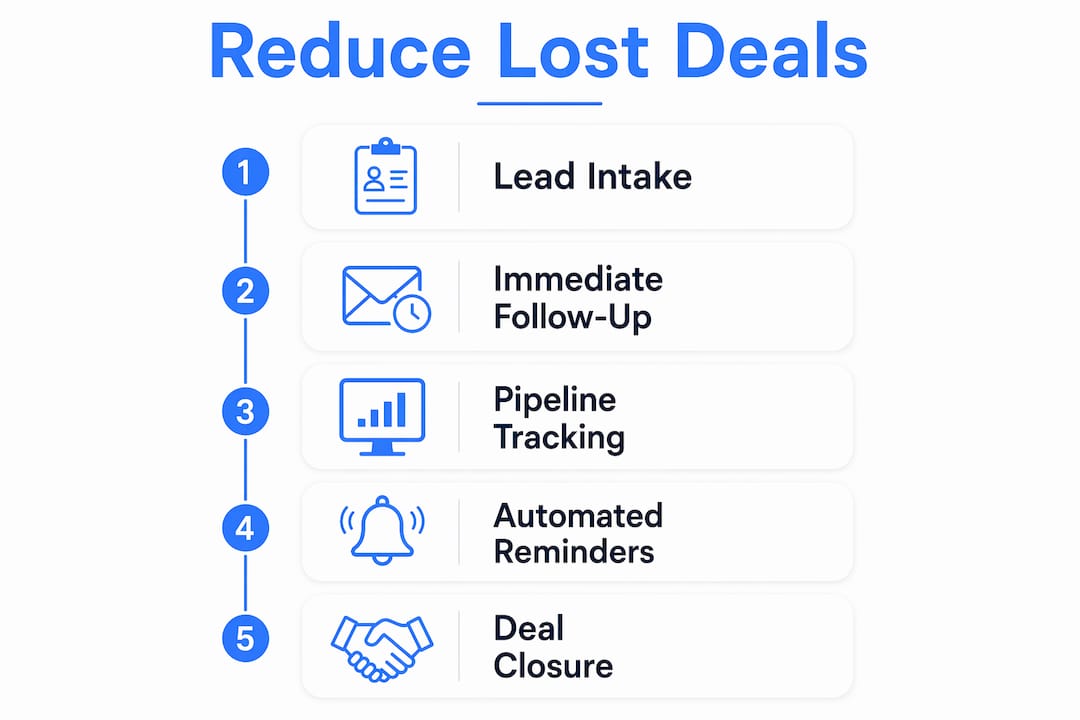
Treating CRM as a sales manager with pipeline stage automations eliminates dependency on human memory and increases close rates. Each pipeline stage auto-triggers the next step so no deal stalls without a reason. That is the real impact of CRM on wholesale sales: it removes the human bottleneck from the follow-up process.
Switching from spreadsheets to a CRM typically costs $50 to $200 per month but recovers about one lost deal per quarter through automated follow-ups. For most wholesalers, one recovered deal more than covers a full year of software costs.
What features should wholesalers prioritize in CRM software?
Not every CRM is built for wholesaling. Generic contact managers miss the features that actually move deals forward. Here is how to evaluate what matters.
Integration with real-time data
A CRM that integrates pricing, inventory, and order data creates real-time visibility that sales reps need to avoid toggling between systems. In real estate wholesaling, this means your CRM should connect to your skip tracing tools, your dialer, and your property data sources. Disjointed systems cause adoption drop and reduce CRM effectiveness over time.
Pipeline automation over flashy add-ons
Wholesalers should focus on CRM core features that support repeat outreach and long-term seller relationships rather than add-ons that look impressive but go unused. The ideal CRM acts as a single source of truth, not a collection of disconnected tools. Ask yourself: does this feature help me contact more sellers or close more deals? If the answer is no, skip it.
The features that actually matter for wholesaling management with CRM:
| Feature category | Why it matters for wholesalers |
|---|---|
| Automated lead routing | Assigns new leads to the right team member instantly |
| Pipeline stage triggers | Auto-creates next tasks when a deal moves forward |
| SMS and dialer integration | Logs every call and text without manual entry |
| Mobile access | Lets you update deals from the field or a showing |
| Custom pipeline stages | Matches your exact wholesaling workflow, not a generic sales process |
Pro Tip: Before buying any CRM, map your current deal flow on paper first. List every step from first contact to closing. Then confirm the CRM can automate at least three of those steps out of the box. If it cannot, keep looking.
The biggest misconception in wholesaling is that CRM tracks only conversations. It must also track commerce and seller context, connecting your team with real-time property data and pricing information. A CRM that cannot do both will get abandoned within 90 days.
Understanding common red flags when selling property also helps wholesalers build smarter lead qualification stages inside their CRM pipelines.
How can wholesalers apply CRM best practices to scale?
Scaling a wholesaling business without a CRM is like running a call center without a phone system. You can do it for a while, but volume will break you. Here is how to build a CRM-driven operation that grows with you.
-
Know when to make the switch. Beginners may start with spreadsheets, but handling 50 or more leads and experiencing frequent missed follow-ups signals the need to upgrade. Do not wait until you lose a deal to act.
-
Start with follow-up automation first. Before building complex pipelines, automate your most critical task: the follow-up sequence for new leads. A simple three-step text and call sequence running automatically is worth more than a perfectly designed pipeline you never use.
-
Keep your data clean from day one. A CRM full of duplicate contacts, missing phone numbers, and outdated statuses is worse than a spreadsheet. Assign one person to audit the database weekly. Set a standard for what “complete” looks like for every contact record.
-
Build pipeline stages that match your actual workflow. Generic stages like “prospect” and “qualified” mean nothing in wholesaling. Use stages like “initial contact made,” “offer presented,” “seller considering,” and “contract sent.” Each stage should trigger a specific next action automatically.
-
Use your CRM data to improve your calls. Every interaction logged in the CRM tells you something. If sellers consistently go cold after the second follow-up, your pitch needs work. Review your follow-up strategies regularly and adjust your scripts based on what the data shows.
-
Avoid reverting to manual methods. The most common failure point is wholesalers who use the CRM for two weeks and then go back to texting from their personal phone. Commit to logging every interaction in the system. Consistency is what makes the automation work.
A property lead checklist built into your CRM intake process ensures every new lead gets the same quality of information captured from the start.
Key Takeaways
A CRM is the single most important operational tool a wholesaler can adopt because it replaces memory, manual follow-up, and scattered data with a system that runs consistently at scale.
| Point | Details |
|---|---|
| CRM replaces manual tracking | Spreadsheets break at 50+ leads; a CRM automates follow-ups and prevents missed deals. |
| Automation is the core benefit | Pipeline stage triggers auto-create next tasks so no deal stalls without a reason. |
| Integration determines adoption | A CRM that connects to your dialer, skip tracing, and data tools gets used; siloed tools get abandoned. |
| Start with follow-up automation | Automating the first three follow-up touches delivers the fastest return on your CRM investment. |
| Data quality drives results | Clean, complete contact records make every automation and every call more effective. |
Why most wholesalers underuse their CRM
I have watched wholesalers spend $150 a month on a CRM and use it as nothing more than a glorified address book. They log contacts, maybe add a note after a call, and then wonder why they are not closing more deals. The tool is not the problem. The process is.
The wholesalers I have seen grow fast treat their CRM like a sales manager. Every stage in the pipeline has a rule attached to it. When a seller says “call me back in two weeks,” that does not go on a sticky note. It goes into the CRM as a task with a date, a reminder, and a follow-up text queued up. The system does the remembering so the wholesaler can focus on the conversation.
The other mistake I see constantly is buying a CRM with every feature available and using none of them. Start with three things: a contact database, a follow-up sequence, and a pipeline with five stages. Get those working before you add anything else. Complexity kills adoption.
The wholesalers who get the most out of their CRM are also the ones who practice their calls. A CRM can get a seller on the phone. What happens next is on you. That is where deliberate practice, not just better software, makes the difference.
— Dave
ClosersLeague and the skills that make your CRM work
Your CRM gets sellers on the phone. What you say next determines whether you close the deal.
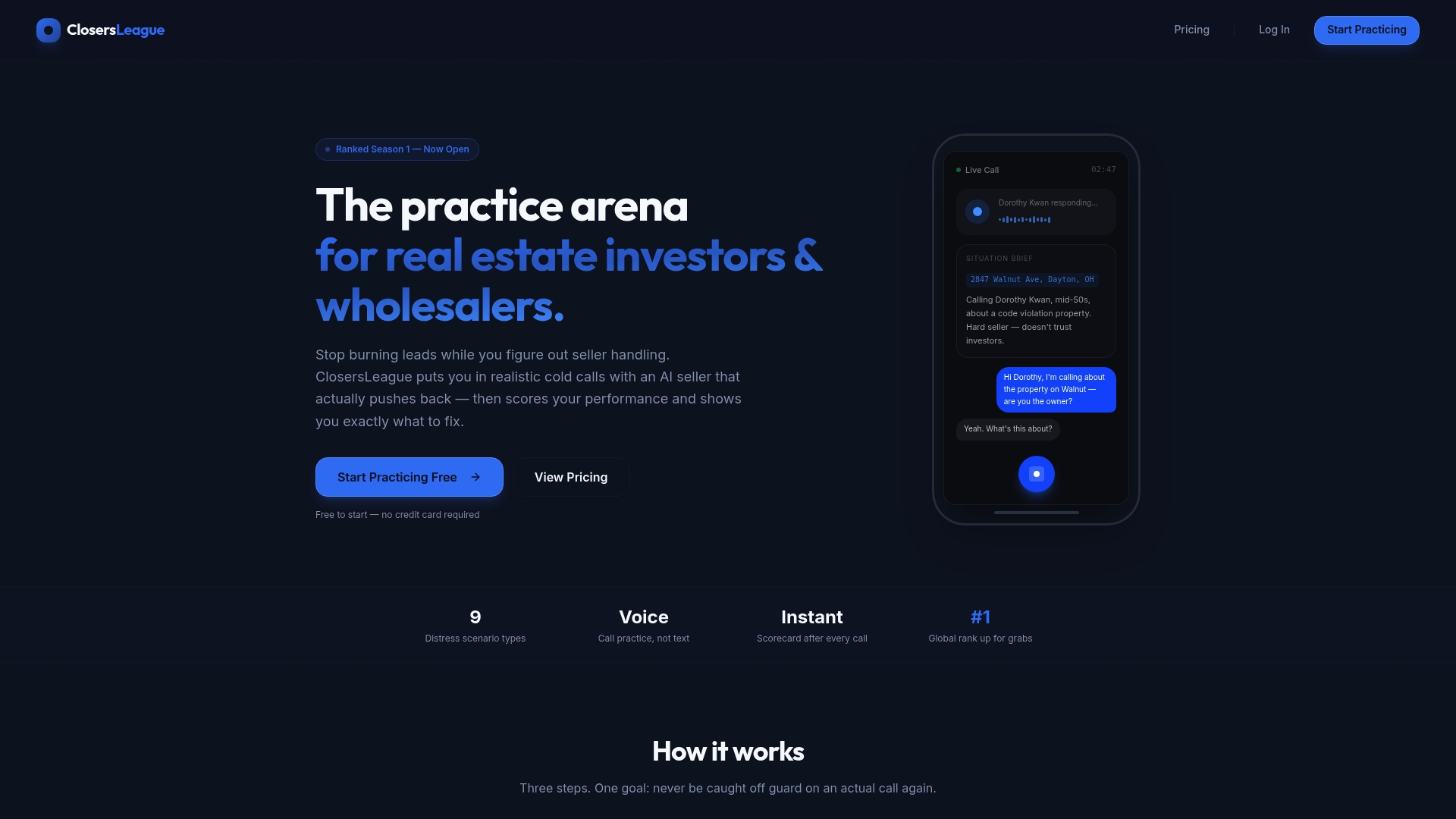
ClosersLeague is an AI-powered cold calling training platform built specifically for real estate investors and wholesalers. You practice live conversations with AI-simulated homeowners in foreclosure, probate, divorce, and other distressed situations. The platform scores your calls and shows you exactly where you lost the seller. Pair that with a CRM that automates your follow-ups, and you have a system that generates opportunities and converts them. Try AI cold calling practice built for wholesalers and start closing the deals your CRM is already setting up for you.
FAQ
What is the role of CRM in wholesaling?
A CRM manages every lead, contact, and deal in a wholesaling business by centralizing data and automating follow-ups. It replaces manual tracking and prevents missed opportunities across the sales pipeline.
When should a wholesaler switch from spreadsheets to a CRM?
The right time to switch is when you are managing 50 or more leads or missing two or more follow-ups per week. Those missed follow-ups directly translate to lost deals each quarter.
What CRM features matter most for real estate wholesalers?
Pipeline stage automation, integrated SMS and dialer tools, automated task creation, and mobile access are the features that drive the most value. Core functionality beats add-ons every time.
How does CRM automation improve deal close rates?
CRM automation triggers follow-up sequences at every pipeline stage so no seller goes cold due to human error or forgetfulness. Consistent outreach is the single biggest driver of higher close rates in wholesaling.
Can a CRM replace a sales manager in a wholesaling business?
A CRM with properly configured pipeline automations handles the task-creation and follow-up functions a sales manager would otherwise manage manually. It does not replace judgment on calls, but it removes the operational gaps that cost deals.