
A wholesale deal in real estate is defined as a transaction where an investor contracts a property below market value and assigns that contract to an end buyer for a profit, without ever taking ownership of the property. The investor, called a wholesaler, earns an assignment fee rather than buying and selling the home outright. Typical wholesale deals close in 14–30 days, with assignment fees ranging from $5,000 to $25,000. Understanding wholesale transactions gives you a low-capital entry point into real estate investing, since you never need a mortgage or down payment to profit from a deal.
What is a wholesale deal and how does it work step by step?
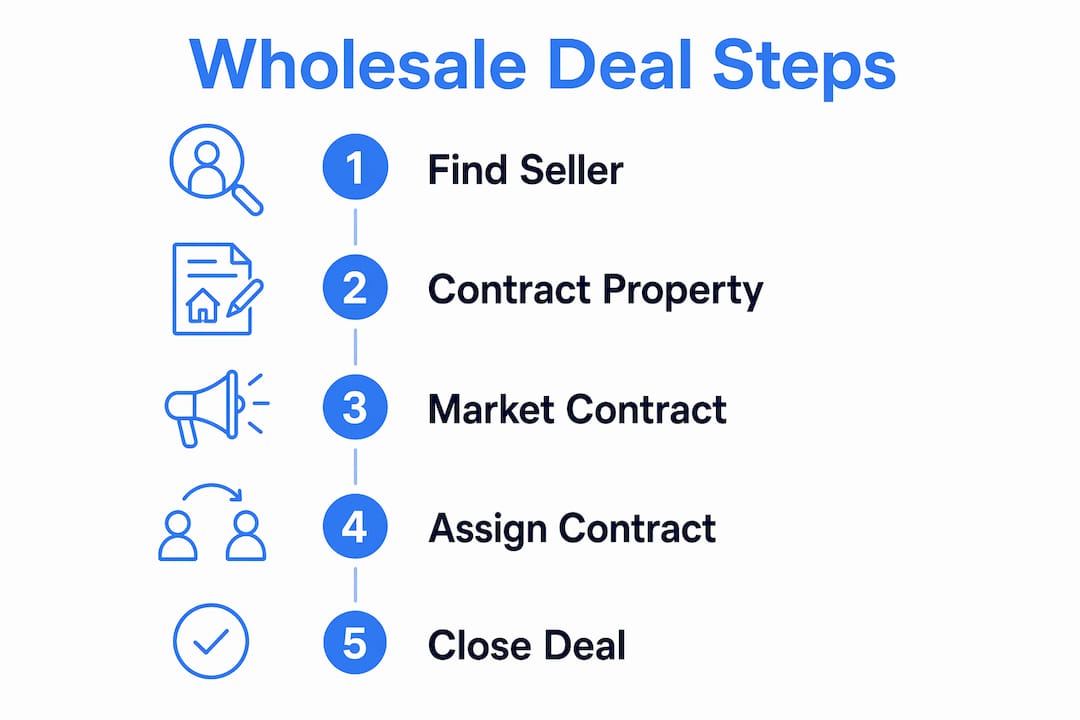
The wholesale deal process follows a clear sequence. Each step builds on the last, and skipping one creates problems down the line.
-
Find a motivated seller. Distressed homeowners facing foreclosure, probate, divorce, or tax delinquency are the most common sources. These sellers often prioritize speed over price, which creates room for a below-market offer. Cold calling is one of the most direct ways to reach them before they list with an agent.
-
Evaluate the property. Estimate the after repair value (ARV), which is what the property will sell for once fully renovated. Then calculate repair costs and add a 15% contingency buffer. Wholesalers add a 15% contingency on repair estimates to account for unexpected costs, and skipping this step is one of the most common reasons deals fall apart.
-
Sign a purchase agreement with an assignment clause. This clause gives you the legal right to transfer the contract to another buyer. Without it, you cannot assign the deal. The agreement locks in your purchase price with the seller.
-
Calculate your maximum allowable offer (MAO). The 70% rule formula is: MAO = (ARV x 70%) minus repair costs minus your assignment fee. This protects both your profit and your buyer’s margin.
-
Market your contract rights to cash buyers. You are not selling the property. You are selling your equitable interest in the contract. Send the deal to your vetted buyer list with the purchase price, ARV, and repair estimate.
-
Execute the assignment agreement and close. Once a buyer agrees, both parties sign an assignment agreement. The buyer pays your assignment fee at closing, typically within 21–30 days of your original contract date.
Pro Tip: Always collect earnest money from your end buyer when they sign the assignment agreement. This protects you if they back out and shows they are serious about closing.
What legal considerations and licensing rules affect wholesale deals?
Wholesaling sits in a specific legal space. Getting it wrong can cost you thousands in fines or void your contracts entirely.
The legal foundation for wholesaling is the equitable interest doctrine. When you sign a purchase agreement, you own the rights to that contract, not the property itself. Equitable interest means you hold contract rights before closing, which legally allows assignment without a real estate license in most states. This principal status is what distinguishes a wholesaler from an unlicensed broker.
The critical distinction is what you market. Marketing equitable interest (your contract rights) instead of the physical property keeps you on the right side of the law. Your advertising must use phrases like “assignment of contract” rather than “property for sale.” Marketing the property itself, as if you own it, is what triggers unlicensed brokerage enforcement.
Key legal points every wholesaler must know:
- State disclosure requirements: By 2026, some states mandate written disclosure to sellers about the wholesaler’s intent to profit. Penalties can include fines up to $25,000 and unenforceable contracts.
- Assignment vs. double closing: An assignment transfers your contract directly to the buyer. A double closing involves two separate transactions where you briefly take title. Double closings require transactional funding and extra closing costs, but offer the cleanest legal position for high-volume wholesalers.
- Double closing does not bypass disclosure: Double closings are scrutinized similarly to assignments. In states like Oklahoma, full disclosure of the wholesaler’s profit is still required.
- Documentation protects you: Keep every signed agreement, disclosure form, and communication in writing. This is your defense if a seller or buyer later claims they were misled.
Pro Tip: Consult a real estate attorney in your state before your first deal. A one-hour consultation costs far less than a $25,000 fine or a voided contract.
How is wholesale pricing determined and what is the 70% rule?
The 70% rule is the core pricing formula in wholesaling. It sets the maximum price you can pay a seller while still leaving enough profit for your buyer and yourself.

The formula works like this:
MAO = (ARV x 70%) minus repair costs
Your assignment fee comes out of that spread. Experienced wholesalers calculate buy price based on the buyer’s MAO and never rely on guesswork. Here is a concrete example:
| Variable | Amount |
|---|---|
| After repair value (ARV) | $200,000 |
| 70% of ARV | $140,000 |
| Estimated repairs | $30,000 |
| Maximum allowable offer (MAO) | $110,000 |
| Your contract price with seller | $95,000 |
| Assignment fee to wholesaler | $15,000 |
In this example, you contract the property at $95,000 and assign it to a buyer at $110,000. Your buyer pays $110,000, covers $30,000 in repairs, and ends up with a property worth $200,000. That $60,000 spread is their profit margin, which is what makes the deal attractive to them.
A few pricing rules that protect every party:
- Always estimate repairs conservatively and add the 15% contingency.
- Build your assignment fee into the MAO calculation before you make an offer.
- If the spread is too thin, walk away. A bad deal is worse than no deal.
Check out this guide on wholesaling ROI to understand how to evaluate whether a deal is worth pursuing before you sign anything.
How do you find and vet buyers and sellers for wholesale deals?
Success in wholesaling depends more on relationships and a vetted buyer list than on any formula. A great deal with an unreliable buyer still fails.
Finding motivated sellers
Motivated sellers are homeowners under financial or personal pressure. The most productive sources include:
- Homeowners in foreclosure, probate, or divorce proceedings
- Tax-delinquent property owners
- Absentee landlords with problem tenants
- For-sale-by-owner (FSBO) listings where sellers want speed
Cold calling remains the most direct method for reaching these sellers before they list publicly. Practicing your conversations with realistic objections and distressed seller scenarios sharpens your ability to build rapport fast. ClosersLeague trains wholesalers on exactly these calls, including distressed property conversations that cover foreclosure, probate, and divorce situations.
Building and maintaining your buyer list
Your buyer list is your most valuable asset. Maintaining a private buyer list protects wholesalers from legal risks and improves how fast deals close. A private list, shared only with vetted buyers, keeps you out of public advertising that could be interpreted as unlicensed brokerage.
Vet every buyer before adding them to your list:
- Confirm proof of funds or a recent bank statement.
- Ask about their buy criteria (location, property type, price range).
- Track their closing history. A buyer who has closed three deals with you is worth ten untested contacts.
- Collect earnest money when they commit to a deal. Non-performing buyers cause deal failures and loss of earnest money deposits.
A CRM system helps you track every contact, follow-up date, and deal status. The role of CRM in wholesaling is covered in depth for anyone building a repeatable deal pipeline.
My honest take on what actually makes wholesale deals work
Wholesaling looks simple on paper. Find a motivated seller, run the numbers, assign the contract, collect the fee. The math is straightforward. The execution is not.
The biggest mistake I see new wholesalers make is treating this like a numbers game instead of a relationship business. They blast out cold calls with no real preparation, stumble through objections, and lose sellers who were genuinely ready to move. A motivated seller in foreclosure is not just a lead. That person is scared, often embarrassed, and deciding in real time whether to trust you. If you cannot hold that conversation with confidence and empathy, the deal dies before the numbers even matter.
The second mistake is legal sloppiness. Advertising a property you do not own, skipping disclosure forms, or assuming a double closing makes everything clean are all shortcuts that create serious liability. Transparency in disclosures is not just a legal requirement. It is a competitive advantage. Sellers and buyers who trust you come back and refer others.
My practical advice: calculate your walk-away number before you ever call a seller. Know the ARV, know the repair estimate, know your minimum assignment fee. When you are on the phone, you negotiate from a position of clarity instead of guessing. That confidence comes through, and sellers feel it. Stop winging it. Start drilling your numbers and your conversations until both are automatic.
— Dave
ClosersLeague and the art of the wholesale conversation
Knowing the wholesale deal process is one thing. Executing the seller conversation under pressure is another skill entirely.
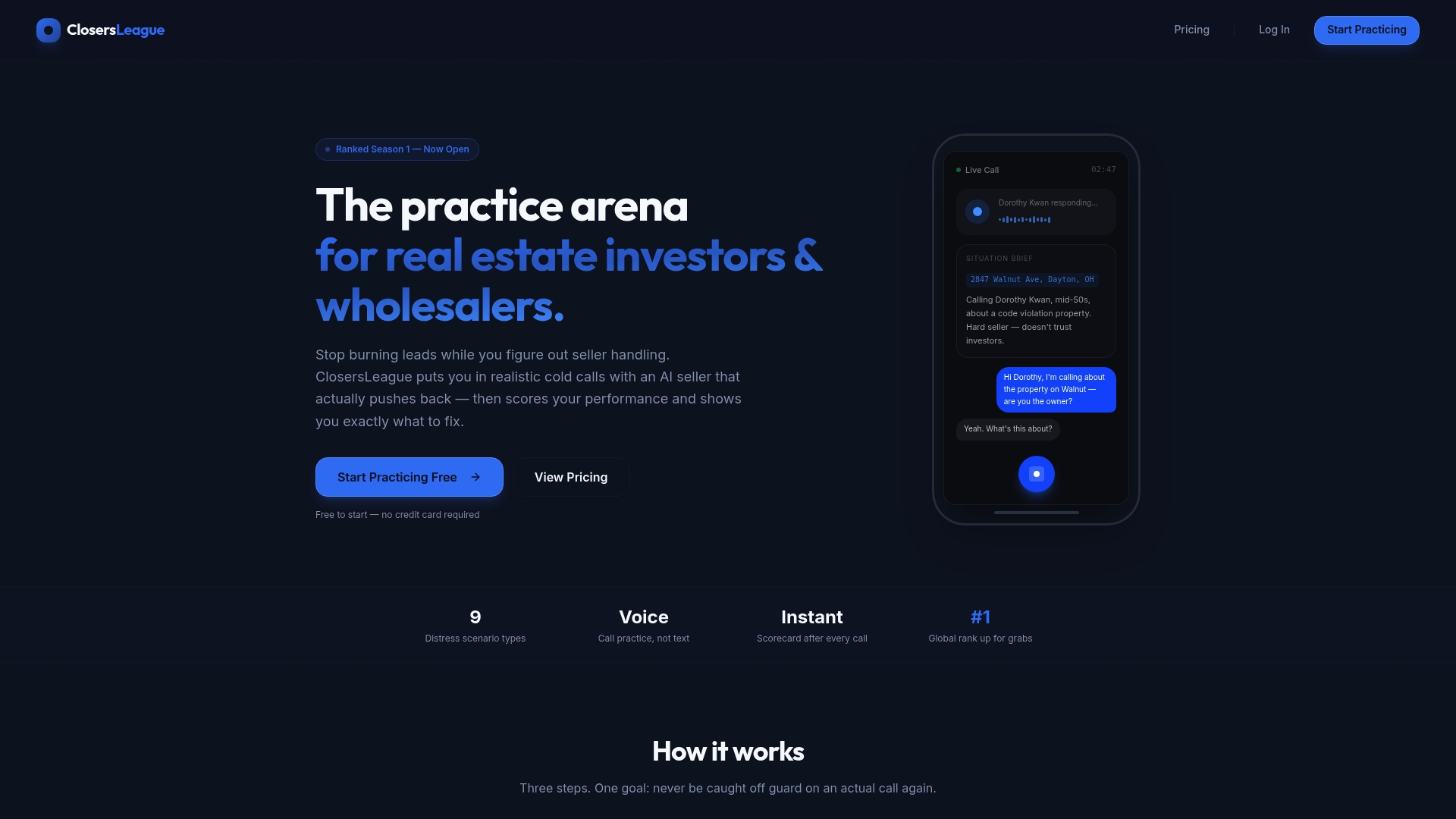
ClosersLeague is an AI-powered cold calling training platform built specifically for real estate investors and wholesalers. You can practice every seller type, from foreclosure and probate to divorce and tax-delinquent situations, in realistic AI roleplay sessions that score your performance and highlight where you lose momentum. The platform simulates real objections so you build confidence before a real call is on the line. If you want to practice cold calling and sharpen the conversations that source your next wholesale deal, ClosersLeague is where that work happens.
FAQ
What is a wholesale deal in simple terms?
A wholesale deal is when an investor contracts a property below market value and sells the contract to another buyer for a fee, without ever owning the property. The profit comes from the assignment fee, not from buying and selling real estate.
Do you need a real estate license to wholesale?
In most states, you do not need a license if you are marketing your contract rights (equitable interest) rather than the property itself. However, some states have added disclosure and licensing requirements by 2026, so check your state’s rules before starting.
How much can you make on a wholesale deal?
Assignment fees typically range from $5,000 to $25,000 per deal, depending on the property’s value and the spread between your contract price and the buyer’s maximum allowable offer.
What is the 70% rule in wholesaling?
The 70% rule sets your maximum offer at 70% of the property’s after repair value minus estimated repair costs. This formula protects your buyer’s profit margin and leaves room for your assignment fee.
How long does a wholesale deal take to close?
Most wholesale deals close in 14–30 days. Experienced wholesalers with strong buyer relationships often close faster because they can match deals to buyers quickly.
Key takeaways
A wholesale deal is profitable only when the assignment fee, repair costs, and buyer margin all fit within the 70% rule formula before you sign any contract.
| Point | Details |
|---|---|
| Core definition | A wholesaler contracts below market value and assigns the contract for a fee, never owning the property. |
| The 70% rule | MAO equals ARV times 70% minus repairs; your assignment fee must fit inside this spread. |
| Legal foundation | Equitable interest lets you assign contracts without a license, but state disclosure rules vary significantly in 2026. |
| Buyer list quality | A vetted cash buyer list with proof of funds closes deals faster and prevents costly failures. |
| Conversation skills | Cold calling confidence with distressed sellers is the skill that sources deals before the numbers ever matter. |