Yes, cold calling can cause burnout when chronic rejection, heavy call volume, and thin support go unmanaged. Today, try slow breathing plus grounding, then run a short micro-plan: fewer dials, one skill goal, one debrief. The CDC and APA frame burnout this way, and we offer practice tools later in this article.
TL;DR:
- Burnout involves ongoing exhaustion, cynicism, and reduced effectiveness that rest does not resolve; the free Copenhagen Burnout Inventory screens personal, work, and client burnout.
- Replace skipped calls with brief, structured exposure: make a few calls, set one skill goal, and debrief, scoring that skill rather than prospect outcomes.
- Managers can reduce strain by adjusting unrealistic quotas, protecting debrief time, training staff for distressed callers, and defining performance beyond closed deals.
- Each dial block can include two work sets of 25 minutes, a reset lasting five minutes, and a debrief; track one skill daily.
- During a crisis, call or text 988 for free, confidential help; seek professional care if functioning falters, sleep stays disrupted, or hopelessness takes hold.
Table of Contents
- Why does cold calling feel so hard on your brain and your job?
- How can you tell burnout from normal cold-call nerves?
- What can you do on your own to rebuild resilience?
- What can managers and organizations change?
- When should you seek professional help, and what does recovery look like?
- What does a compact daily resilience plan look like?
- What do we see in training?
- How can we help you practice without the pressure?
- FAQ
- Sources
Why does cold calling feel so hard on your brain and your job?
Rejection registers in the brain as a threat, not just a bad outcome. That is why a hang-up can make your chest tighten and your next dial feel heavy. Over time, the body learns to avoid the thing that hurts, which is how call reluctance starts.
The reward structure makes it worse. The sting arrives in seconds, but a closing may be weeks away. When the feedback you get most is “no,” motivation erodes.
Job design adds fuel. Research on salespeople finds that angry or distressed customers raise the risk of anxiety and depression, and that job control and manager support soften the damage. Work on sales teams also finds that outcome-based controls and ambidextrous roles raise emotional exhaustion, meaning being judged only on results while juggling selling and service.
A study of telecommunication sales managers found that high demands, low control, and low social support predict burnout. Your reaction is not weakness. It is a predictable response to the setup.

How can you tell burnout from normal cold-call nerves?
Burnout has three parts: ongoing emotional exhaustion, cynicism or distance from the job, and a feeling that you are no longer effective. A chronic, work-related syndrome that normal rest does not resolve, it differs from pre-call jitters, which fade once the dial block ends.
Typical signs in sellers include:
- Trouble sleeping, even on days off
- Constant irritability with prospects, teammates, or family
- Poor concentration during calls
- Low motivation that does not lift after a weekend
- A growing “what’s the point” attitude toward leads
If a long weekend resets you, you are likely tired or nervous. If you return to work already drained and detached, take burnout seriously. The Copenhagen Burnout Inventory is a free screening tool that helps separate personal, work-related, and client-related burnout. It is not a diagnosis.
Some signs call for urgent help: severe sleep loss, inability to function, or thoughts of suicide. If that is you, skip ahead to the recovery section now.
What can you do on your own to rebuild resilience?
Start with regulation, then build skill. Healthy coping, per CDC and NIOSH, includes setting boundaries, mastery-based activities, and using an Employee Assistance Program (EAP).
- Box breathing before a block: inhale four counts, hold four, exhale four, hold four, repeated briefly.
- Grounding: notice things around you and feel your feet on the floor between tough calls.
- Micro-breaks: stand, stretch, and look away from the screen between dial blocks.
- Mastery goals: score each call on one skill, such as opening or objection handling, instead of on whether the prospect said yes.
- Targeted lists: call your best-fit prospects first so early calls go better.
- Rejection scripts: prepare two calm replies to “not interested” so you never freeze. Our guide to handling “I’m not interested” has examples.
- Practice before the shift: run short roleplay rounds, as in our roleplay training guide.
- Recovery basics: protect sleep, move your body, and stop work after hours.
Avoidance feels like relief but backfires. Research on rehabilitation finds that avoidance-oriented coping predicts nonrecovery, while mastery activities help. Swap skipping calls for a small, structured exposure: make a few calls, choose a skill goal, and debrief.
Pro Tip: Write one skill goal on a sticky note before every block, and grade yourself on that goal only.
What can managers and organizations change?
Individual grit has limits. The APA says burnout arises from excessive workloads, low support, and low control, and Dr. Christina Maslach describes it as a workplace-worker fit problem that needs organizational change. Workplace experiments show that more supervisor support and schedule control reduce reactions to daily stressors.
Requests you can bring to your manager:
- Adjust quotas or call volume when the numbers stop being realistic
- Add protected debrief time after dial blocks
- Provide training for hostile or distressed callers
- Clarify what “good” looks like beyond closed deals
- Share EAP details
A trained manager can also spot early withdrawal and reduced engagement before burnout sets in.
Try this one-minute check-in: “My calls are draining me and my results are slipping. Can we talk about volume and a weekly debrief?”
Pro Tip: Bring one specific request, not a general complaint. Managers can act on “add a debrief” far more easily than on “I’m stressed.”
When should you seek professional help, and what does recovery look like?
Recovery timelines vary, and progress may take time. Trials show that acceptance and commitment therapy combined with a workplace intervention improved symptoms and reduced sickness absence for workers with depression, anxiety, or exhaustion disorder.
Seek help when:
- You cannot function at work or at home
- Sleep is badly disrupted for weeks
- Hopelessness takes hold
- You have thoughts of suicide
If you are in crisis, the CDC points to free, confidential help through 988.
To start, call your EAP, which is usually free and confidential, or book a visit with a primary care doctor or therapist. Expect questions about your symptoms, sleep, and work demands. Ask the provider about adjusting your workload while you recover.
What does a compact daily resilience plan look like?
Keep it simple enough to repeat every shift.
- Pre-shift ritual (5 minutes): box breathing, review your one skill goal, and scan your target list.
- Dial block (60 minutes): two focused sets of 25 minutes with a 5-minute reset between them.
- Reset breaks: stand, grounding exercise, water.
- Post-block debrief: write what worked, what stalled, and one change for the next block.
- Single metric: rate your rejection handling and track it daily.
Once a week, use a short burnout check. Ask whether you feel drained, detached, or ineffective, and note the trend. If the scores climb, shrink the plan and talk to your manager. Our post on cold-call anxiety lays out a longer version.
What do we see in training?
In coaching, callers can stop treating every call as a verdict. They run short experiments, score one skill at a time, and track the numbers instead of replaying the worst call at midnight. Try it consistently and watch the trend, not the single bad day.
— Dave
How can we help you practice without the pressure?
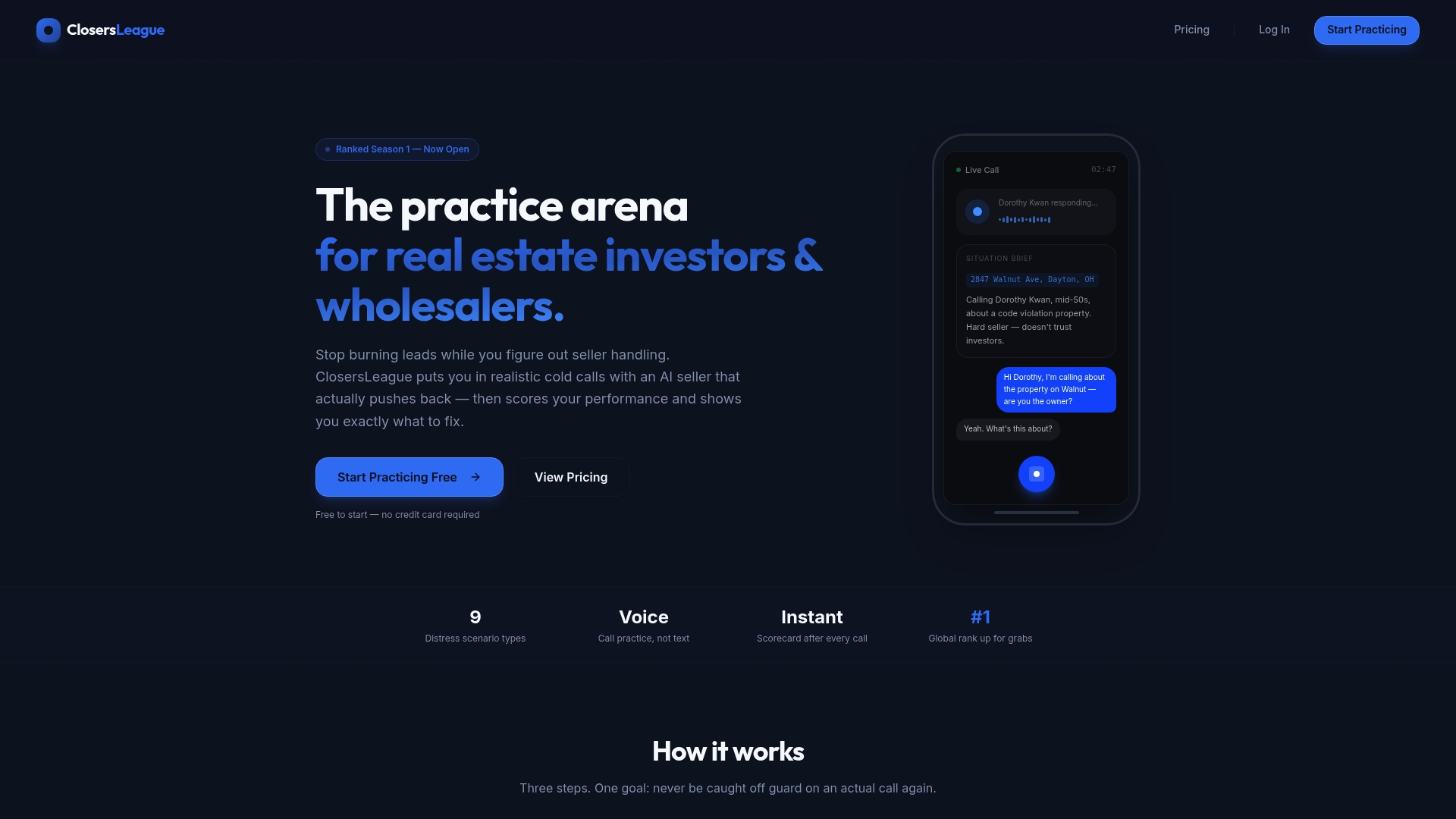
Practice is where confidence gets built, and we built ClosersLeague for it. Our AI roleplay puts you on calls with realistic sellers in distress situations like probate, pre-foreclosure, and divorce, then gives you an instant scorecard, detailed feedback, and targeted drills. That turns calls into skill reps you can measure.
We are a companion to workplace support and professional care, not a clinical treatment. Plans run Starter at $5 per month, Growth at $10, and Pro at $18, and you can start with a free trial. See how it works on our real estate cold calling practice page, then book your first practice round today.
This article is general information, not a substitute for advice from a qualified doctor. Consult a qualified healthcare professional about your own circumstances before acting on anything here.
FAQ
How do you go about cold calling without burning out?
Treat each block as skill practice, not a pass/fail test. Call your best-fit prospects first, set one skill goal per block, and debrief afterward. Protect breaks and sleep so recovery keeps pace with effort.
Is cold calling a good job?
It can be, especially when you have training, realistic targets, and manager support. The same job turns harmful when demands are high and control and support are low, per the APA. Fit and setup matter as much as the work itself.
What is phone call anxiety?
It is fear or dread about making or taking calls, often tied to expecting rejection or negative judgment. It can show up as a racing heart, avoidance, or putting off dials. Practice and regulation techniques usually help, and a therapist can help if it persists.
How do you get rid of anxiety when cold calling?
Use slow breathing and grounding before and between calls, and rehearse your responses to common objections. Short roleplay rounds before a shift make real calls feel familiar. If anxiety keeps interfering with work, talk to your EAP or a clinician.
Sources
- Supporting Mental Health in the Workplace | NIOSH Science Bulletin | CDC
- Employers need to focus on workplace burnout: Here’s why
- Cdc