The most effective distressed property outreach workflow runs on five modules: source, prioritize, enrich, sequence, and human escalation with tracking. Multi-touch, multi-channel campaigns beat single-touch blasts because Sequenced outreach across mail, email, phone, and text keeps you top of mind while automation stops human error from killing your later touches.
Here’s the checklist to start today:
- Source — pull foreclosure, probate, tax delinquent, and code violation lists from public records
- Prioritize — rank by urgency signals like auction dates and filing recency
- Enrich — skip-trace for verified phone numbers and scrub against DNC
- Sequence — build a 3-4 week, multi-channel cadence
- Escalate & track — route replies to a human immediately and log every touch in your CRM
Your immediate action: pull 100 prioritized leads from your highest-urgency list today, then run one roleplay session on your opening script before you dial the first name.
Key Takeaways
A distressed property outreach workflow works when public-record sourcing, urgency-based prioritization, and empathy-first scripts run on a sequenced 3 to 4 week cadence with human escalation on every reply.
| Point | Details |
|---|---|
| Follow the 5-module system | Source, prioritize, enrich, sequence, and escalate replies to a human caller immediately. |
| Prioritize by urgency | Rank leads with auction dates 30 to 45 days out above older, lower-signal filings. |
| Lead with empathy, not pitches | Empathy-first openers with options outperform blunt sales lines on appointment rate. |
| Protect compliance at every step | Scrub DNC, call only 8 a.m. to 9 p.m. local time, and wait 30 to 60 days on probate leads. |
| Track connect and appointment rates weekly | Watch connect rate and appointment rate per connect first; they expose script problems early. |
| Practice the live call before you dial real leads | ClosersLeague’s AI roleplay lets you drill seller-type scripts and objections before working your prioritized list. |
Table of Contents
- How the Distressed Property Outreach Workflow Fits Together
- Where to Source and How to Prioritize Distressed Leads
- What Should a Multi-Channel Cadence and Script Look Like?
- What Compliance Rules Apply to Distressed Property Outreach?
- Which KPIs Actually Matter for This Workflow?
- Who’s Behind This Distressed Property Workflow?
- The Workflow Advice Nobody Wants to Hear
- How ClosersLeague Fits Into Your Outreach Workflow
- Sources
- FAQ
How the Distressed Property Outreach Workflow Fits Together
Each module hands off a specific output to the next. Sourcing produces a raw list. Prioritization turns that list into a call order. Enrichment turns names into verified, dialable contacts. Sequencing turns contacts into a scheduled campaign. Escalation turns replies into appointments.
The split between automation and human work matters more than most investors think. Automation should own the repetitive stuff: scheduled letters, drip emails, and text reminders. The moment a lead replies or shows any sign of motivation, that thread needs a human voice, because the first live conversation is where real motivation gets clarified, not the fifth automated text.
A realistic cycle looks like this over 3 to 4 weeks:
- Day 1: Personalized letter drops
- Day 3: First call attempt
- Day 5: Email with property-specific info
- Day 8: Second call attempt
- Day 12: Text message check-in
- Day 17: Third call attempt
- Day 24: Final call plus closing letter
That’s seven touches, matching the cadence many practitioners run to keep leads warm without becoming a nuisance.
Pro Tip: Build your sequence in a tool that auto-pauses on reply. A missed sixth touch, right when a seller finally responds, is one of the most common failure points in manual follow-up.
Where to Source and How to Prioritize Distressed Leads
Your lead sources determine everything downstream. Pull pre-foreclosure filings from county recorder or trustee sale notices, probate dockets from the county court clerk, tax delinquency rolls from the county treasurer, and code violation lists from municipal code enforcement departments. Update foreclosure and code violation lists weekly since they change fast. Probate and tax delinquency lists usually only need a monthly refresh.
Prioritization is where most lists fail. Not every lead deserves the same urgency.
- Sort auction-adjacent foreclosure leads first, since motivation peaks when a sale date sits 30 to 45 days out
- Flag high-equity properties, since owners with more to lose (or gain) tend to engage faster
- Weight by filing recency; a notice filed last week outperforms one filed three months ago
Skip tracing adds cost per record but usually pays for itself in connect rate, since a raw public record with no working phone number is worthless. Phone appends from cheaper bulk services save money but carry more bad numbers, so budget for a second-pass verification if you go that route.
Before you dial anything, run a scrub: check every number against the national Do-Not-Call registry, strip duplicates across your source lists, and pull any case that’s already resolved (sale completed, probate closed, taxes paid). This single-hour step regularly saves investors from wasted calls and compliance headaches. For a ready-made version of this process, the foreclosure prospecting checklist walks through exactly what to pull and when.

What Should a Multi-Channel Cadence and Script Look Like?
A cadence template only works if every touch has a distinct job. Here’s a workable 4-week structure:
- Week 1: Letter (introduction, low pressure) + first call attempt
- Week 2: Email with property-specific detail + second call attempt
- Week 3: Text check-in + third call attempt
- Week 4: Final letter + last call attempt, then move to a monthly nurture track
Personalize using property-level facts. Assessed value, tax status, or a specific violation on file are fair game. Steer clear of anything that signals you’ve dug into someone’s private life. Mentioning a specific divorce filing detail or a family member’s name in probate cases reads as invasive, not helpful, and can torch trust before you’ve said a word.
Script frameworks should lead with empathy and a low-friction ask, never a pitch. Practitioner testing shows empathy-first openers with options outperform blunt “I buy houses” lines on connect-to-appointment rate.
- Pre-foreclosure: “I saw your property came up in a public filing, and I wanted to check in, not sell you anything. Do you have a plan in place yet?”
- Probate: “I’m sorry for your loss. I work with families handling inherited property and wanted to share a few options in case they’re useful.”
- Divorce: “I know this is a tough time. I help people sort out property decisions quickly so it’s one less thing to manage.”
Automated sequences should pause the instant a reply comes in, whether it’s a callback, a text response, or an email reply, and route straight to a live caller. The probate seller cold call workflow has more script variations if you’re building probate-specific tracks.
What Compliance Rules Apply to Distressed Property Outreach?
Compliance failures cost more than a bad script ever will. Build these checks into your workflow, not as an afterthought:
- Verify every number against the Do-Not-Call registry before the first dial
- Call only between 8:00 a.m. and 9:00 p.m. local time to stay inside TCPA guidance
- Document consent and log every opt-out request immediately
- Rotate calling numbers regularly to protect deliverability and avoid spam flags
Probate outreach needs its own timing rule. Most practitioners recommend waiting 30 to 60 days after the filing before first contact, and leading with condolences and educational resources rather than a sales pitch.
Pro Tip: Keep a single opt-out log across every channel. A lead who texts “STOP” but still gets a cold call two weeks later isn’t a system glitch, it’s a compliance risk and a burned relationship.
Which KPIs Actually Matter for This Workflow?
Track these in order of priority: connect rate, appointment rate per connect, cost per appointment, and close rate on booked appointments. Micro-conversions like objection-to-engagement ratios tell you where a script is breaking down long before your close rate does.
Sequence automation earns its keep on two fronts: it protects email deliverability by pacing sends properly, and it enforces cadence faithfulness so no lead silently drops out of your pipeline. CRM sync matters just as much, since a call that isn’t logged is a follow-up that never happens.
When you’re picking tools, check for:
- Data freshness on public record pulls
- Native CRM or dialer integration
- Built-in DNC scrubbing
- Call recording and scorecard features for coaching
The top follow-up strategies guide breaks down which metrics to watch week over week as you refine cadence and scripts.
Who’s Behind This Distressed Property Workflow?
This workflow reflects what ClosersLeague coaches investors and wholesalers on daily: building repeatable systems for reaching distressed sellers across probate, pre-foreclosure, tax delinquent, and divorce situations. Dave, who covers cold-calling strategy and seller psychology for ClosersLeague, focuses on where scripts break down in live conversations.
For deeper practice on the pieces covered here:
- Why use multi-channel marketing for distressed sellers
- Cold calling foreclosure properties: investor’s guide
- Real estate outreach: proven methods for investors
The Workflow Advice Nobody Wants to Hear
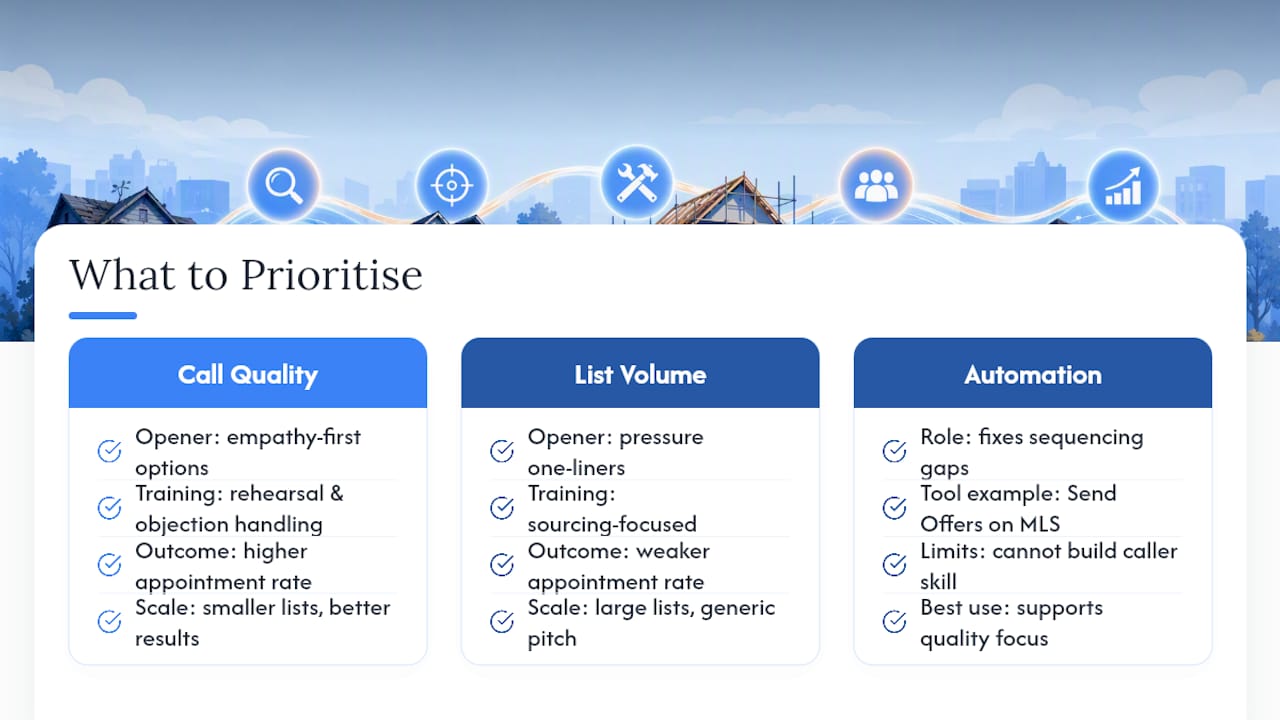
Every investor wants a better list. Almost nobody wants to admit their script is the actual problem. The research here is consistent: empathy-first openers that offer options beat pressure tactics on appointment rate, yet most training still centers on objection-crushing one-liners instead of the first eight seconds of a call.
The conventional advice treats sourcing as the hard part. It isn’t. Public records are public. Skip tracing is a commodity now. The differentiator is what happens when a seller actually picks up, and that’s exactly where most workflows have zero structure. Investors build elaborate five-week cadences and then wing the actual conversation.
If you’re prioritizing one thing first, prioritize call quality over list volume. A smaller list with a sharper opener and better objection handling will outperform a bloated list worked with a generic pitch. Automation can fix your sequencing gaps with tools like Send Offers on MLS Listings with State Approved Contracts. It cannot fix a caller who freezes up when a probate lead starts crying on the phone. That skill only comes from repetition, and most investors get their repetitions live, on real sellers, which is the most expensive classroom there is.
How ClosersLeague Fits Into Your Outreach Workflow
Every module in this workflow eventually funnels into one moment: a live conversation with a distressed seller. That’s the part no letter, text, or email can handle for you, and it’s the part most investors never actually practice before it counts.
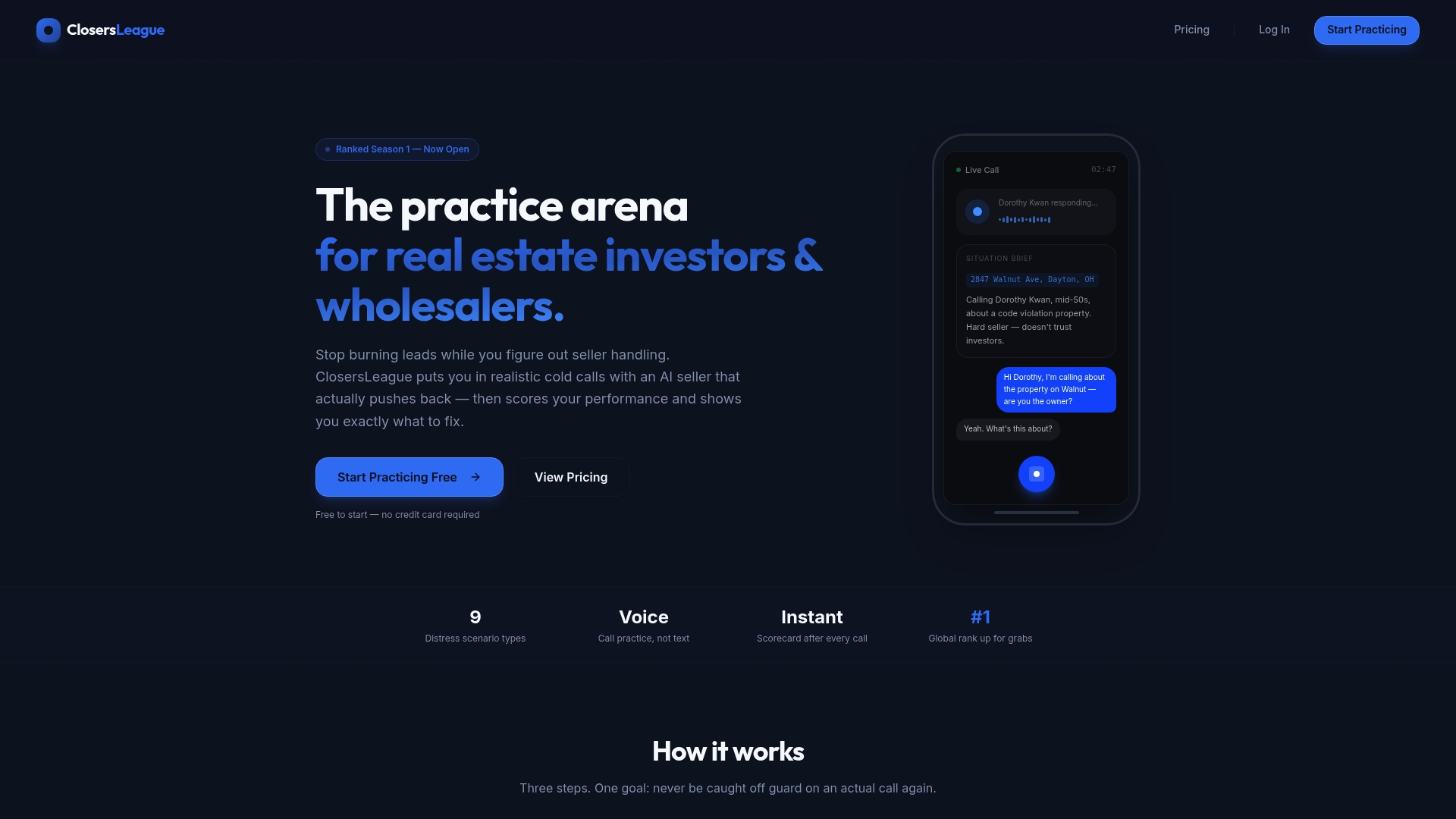
ClosersLeague is built around that exact gap. Instead of burning real leads while you find your footing on probate or pre-foreclosure calls, you run scenario-based voice practice against AI sellers modeled on the same distress types this workflow targets, probate, pre-foreclosure, divorce, tax delinquent, and more. Real-time coaching flags where your empathy-first opener loses momentum, performance scorecards show your objection-handling gaps, and skill drills let you rep the exact moments (a seller who breaks down mid-call, an owner who hangs up defensive) until they stop rattling you. If your workflow’s cadence and sourcing are solid but your appointment rate still lags, the caller is usually the leak, not the list. Start a free trial and run your first roleplay session on the AI cold-calling practice platform before your next batch of prioritized leads hits your dialer.
Sources
- Automated Outreach to Property Owners: Sequences That Get Replies (2026) | NextAutomation
- Cold Calling Distressed Properties: Best ROI in 2026 | Televista Blog
- 4 Common Mistakes When Calling Pre-Foreclosure Homeowners (And How to Avoid Them) | BatchDialer
- 5 Critical Ethical Guidelines for Contacting Probate… | ProbateData
FAQ
What Is a Distressed Property Outreach Workflow?
It’s a repeatable system for finding, prioritizing, and contacting homeowners facing foreclosure, probate, tax delinquency, or other distress situations, using a sequenced multi-channel cadence and human follow-up on replies.
How Many Touches Should a Distressed Seller Outreach Sequence Have?
A practical starting cadence uses about 7 touches spread across 3 to 4 weeks, mixing letters, calls, email, and text.
When Should You Contact a Probate Lead?
Most practitioners recommend waiting 30 to 60 days after the probate filing and opening with condolences rather than a sales pitch.
What Calling Hours Are Allowed for Distressed Property Outreach?
Calls should stay within 8:00 a.m. to 9:00 p.m. local time, with every number scrubbed against the Do-Not-Call registry first.
How Can I Improve My Connect-to-Appointment Rate?
Lead with empathy and offer options instead of a direct pitch, since that framing consistently outperforms blunt “I buy houses” openers, and practice objection handling before you call real leads using a platform like ClosersLeague.