
Multi-channel marketing is the single most reliable way to raise contact rates with distressed property owners. Relying on one channel — cold calls alone, or direct mail alone — means one bad list or one compliance change can kill your pipeline overnight. Spreading touches across phone, SMS, direct mail, email, and targeted ads means you reach owners where they already are, at the moment they’re ready to respond.
The short answer: Use multiple channels because distressed sellers don’t all respond the same way. A pre-foreclosure owner might ignore a letter but answer a call. A probate heir might delete a voicemail but reply to a text. Coordinated touches across channels increase your odds of hitting the right moment.
Quick-start checklist:
- Pick two inbound channels (phone + SMS) and two outbound channels (direct mail + email or paid ads)
- Load all contacts into one CRM and track every touch
- Set consent and opt-out flags before your first send
- Schedule AI cold-calling practice before week one of any campaign
Table of Contents
- Why does multi-channel marketing work for distressed-property outreach?
- Which channels should investors use, and what does each one do?
- How do you integrate channels so they act like one program?
- How do you measure ROI across channels?
- A 6-week multi-channel campaign for finding distressed sellers
- How does AI cold-calling training fit into a multi-channel program?
- Key Takeaways
- What actually moves the needle in multi-channel outreach
- ClosersLeague sharpens every conversation your multi-channel program generates
- Useful sources and further reading
- FAQ
Why does multi-channel marketing work for distressed-property outreach?
The core reason is behavioral. Distressed sellers don’t live on one channel, and their decision to sell is rarely made in one moment. Harvard Business Review frames this as a customer-journey problem: brands must fit into how people already behave across channels, not force them onto a single path.

For investors, that means a pre-foreclosure owner might see your postcard on a Tuesday, get your call on Thursday, and finally respond to your SMS on Saturday. Each touch reinforces the last. Remove any one of them and the sequence breaks.
Ascend2 research backs this up: 95% of marketers report that integrated channels improve targeting accuracy. For distressed-seller outreach, that targeting precision translates directly to fewer dead ends and more usable conversations per list.
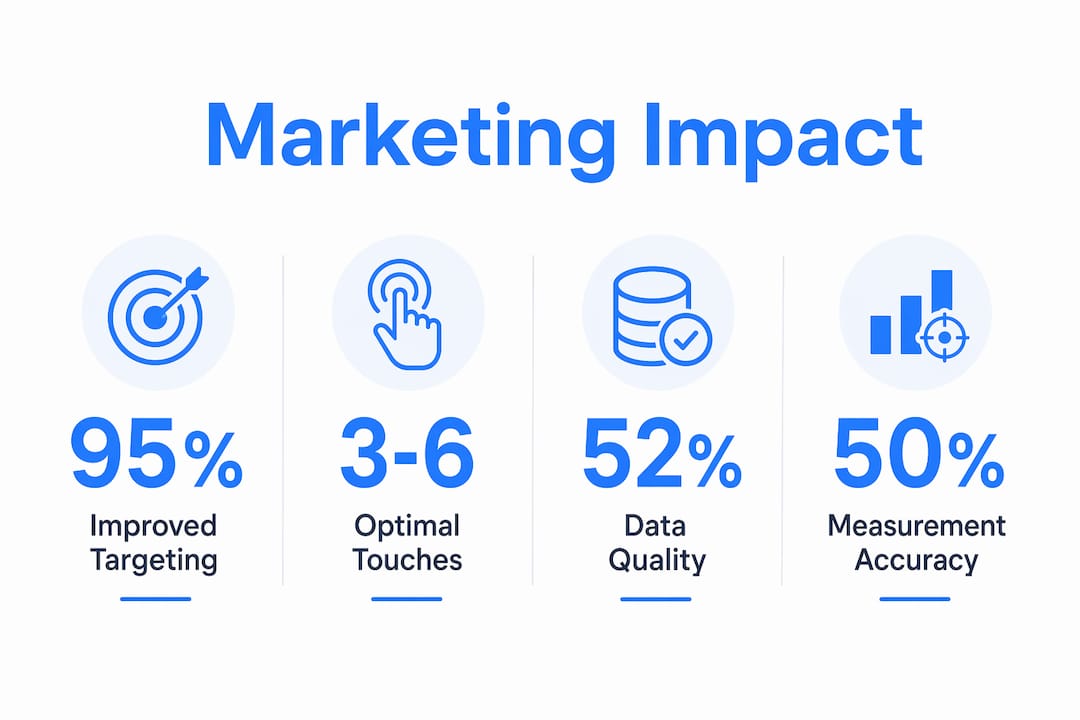
The practical payoff is faster prioritization. When you track which owners respond to which channel, you learn quickly who’s worth a high-touch follow-up call and who needs more time in a nurture sequence.
Which channels should investors use, and what does each one do?
Each channel has a specific job in your outreach stack. Use them together, not as substitutes for each other.
- Cold calls: Real-time qualification. Nothing replaces a live conversation for reading a seller’s emotional state and motivation level. Best for pre-foreclosure, probate, and tax-delinquent owners where timing is urgent. For a full breakdown of real estate telemarketing tactics, the ClosersLeague blog covers the mechanics in depth.
- SMS: High open rates and fast response windows. Best for following up after a call attempt or confirming an appointment. Requires explicit written consent under TCPA rules — see the ClosersLeague SMS marketing guide for compliant sequence templates.
- Direct mail: Reaches offline owners who don’t answer unknown numbers. Yellow letters and handwritten postcards work well for out-of-state owners, vacant properties, and inherited homes where the heir may not be digitally active.
- Email: Scalable nurture for longer-cycle sellers. Useful for tired landlords and owners who aren’t ready to sell today but might be in 60–90 days.
- Paid social and search ads: Captures higher-intent traffic when owners search for “sell my house fast” or similar terms. Pairs well with a landing page and a fast phone follow-up.
- Skip-trace and data vendors: Not a channel, but the targeting input that makes every channel more precise. List stacking — layering multiple distress signals on one owner — sharpens your list before the first touch.
Channel-to-seller pairings that work:
| Seller type | Primary channel | Secondary channel |
|---|---|---|
| Pre-foreclosure | Cold call | SMS follow-up |
| Probate / inherited | Direct mail | Cold call |
| Out-of-state owner | Direct mail | Email nurture |
| Vacant / code violation | Cold call | Direct mail |
| Tired landlord | Paid social retargeting |
Pro Tip: Start with direct mail or SMS to warm the owner, then escalate to a call within 48–72 hours of delivery. Owners who’ve already seen your name are measurably more receptive on the phone.
Legal note: US TCPA and Do-Not-Call rules apply to phone and SMS outreach. Always scrub lists against the National Do Not Call Registry and obtain written consent before sending marketing texts. Consult qualified legal counsel before launching any phone or SMS sequence.
How do you integrate channels so they act like one program?
The biggest threat to a multi-channel program isn’t budget. It’s fragmented data. Ascend2’s 2024 survey found that disconnected tech stacks grew as a pain point from 11% to 17% year over year, and siloed or conflicting data jumped from 11% to 19%. When your call data lives in one tool and your mail tracking lives in another, you lose the learning signal that makes multi-channel worth the effort.
Infrastructure checklist before you launch:
- Single CRM as the source of truth for all contacts and touches (see real estate CRM best practices)
- Unified contact and touch history — every call, text, mail piece, and email logged to one record
- Standardized lead status fields across all channels
- Common segmentation taxonomy (distress type, urgency tier, contact stage)
- Consent and opt-out flags visible at the contact level
Sequencing rules to prevent seller fatigue:
- Pause all outbound touches for 72 hours after a seller engages (call back, text reply, or form fill)
- Set a maximum of 3 touches per week per seller across all channels combined
- After 4 weeks with no response, move the contact to a lower-frequency nurture sequence rather than dropping them entirely
The Ascend2 2024 report identifies data quality (52%), accurate measurement (50%), and marketing automation (37%) as the most essential attributes of a successful multi-channel program. Automation is what keeps sequencing rules running without manual oversight.
How do you measure ROI across channels?
Use a mixed-measurement approach. No single method tells the full story. Google’s integrated measurement framework recommends combining marketing mix modeling (MMM) with multi-touch attribution and incrementality experiments for a complete picture.
| Method | Best for | Trade-off |
|---|---|---|
| Multi-touch attribution | Funnel-level channel credit | Requires clean CRM data; undercounts offline touches |
| Marketing mix modeling (MMM) | Budget allocation across channels | Needs historical spend data; less granular |
| Incrementality testing | Proving causal lift from a channel | Requires holdout groups; slower to run |
For most investors and small wholesaling teams, start with multi-touch attribution inside your CRM and run simple A/B experiments (mail vs. no mail for a list segment). Scale to MMM when paid media spend becomes material enough to warrant it.
Pro Tip: Google’s measurement guidance shows that feeding experimental lift results back into MMM inputs can significantly increase ROAS attribution accuracy. Apply the same logic to your outreach: test one channel variable per campaign cycle and use the result to recalibrate your channel mix.
A 6-week multi-channel campaign for finding distressed sellers
A coordinated 6-week sequence balances frequency against fatigue while generating enough data to optimize your next campaign.
Pre-launch setup (before week 1):
- Segment your list by distress type and urgency tier
- Verify consent flags for SMS contacts
- Set up CRM fields: touch date, channel, response type, lead status
- Complete at least 3 AI cold-calling practice sessions on your target seller type
Week-by-week cadence:
- Week 1: Direct mail drop (postcard or yellow letter). Log send date per contact. KPI: delivery rate.
- Week 2: First cold call attempt within 48 hours of estimated mail delivery. Log outcome. KPI: contact rate (target: 10–15% of dials reached).
- Week 3: SMS follow-up to non-responders (consented contacts only). KPI: reply rate.
- Week 4: Second call attempt + email to email-verified contacts. KPI: qualified lead rate.
- Week 5: Retargeting ads to list segments matched via Facebook Custom Audiences or Google Customer Match. KPI: cost per click, landing page conversion.
- Week 6: Final call attempt to warm leads. Move cold contacts to 30-day nurture. KPI: appointments set, cost per lead.
Track follow-up sequences carefully — most deals come from the 3rd through 6th touch, not the first.
How does AI cold-calling training fit into a multi-channel program?
Multi-channel increases the number of live conversations you get. AI cold-calling training determines how many of those conversations turn into appointments. The math is straightforward: if your contact rate doubles but your talk-to-offer ratio stays flat, you’ve only doubled your workload.
Ascend2’s 2024 data shows that 70% of marketers identify AI and machine learning as highly influential on multi-channel performance over the next few years. For investors, the most immediate application is call training.
ClosersLeague plugs directly into this workflow:
- Scenario-based practice: Rehearse channel-specific scripts — the mail follow-up opener, the SMS-to-call transition, the probate objection — before you’re live with a real seller.
- Performance scorecards: Identify exactly where calls break down (objection handling, emotional read, closing the appointment) so you fix the right thing.
- Seller objection analysis: ClosersLeague surfaces common objections by distress type (pre-foreclosure, probate, divorce) so you can test messaging variations across channels.
Metrics to watch after training:
- Talk-to-offer ratio (calls that reach a motivated seller vs. offers made)
- Objection-handling success rate per seller type
- Call-to-appointment conversion rate
Pro Tip: Schedule a 20-minute AI practice block into your weekly campaign standup. Feed the objections you heard that week back into your SMS and email message testing — what sellers say on calls tells you exactly what copy to write.
Key Takeaways
Multi-channel marketing works for distressed-seller outreach because coordinated touches across phone, SMS, mail, email, and ads reach owners at the moment they’re ready to act, while unified data and AI-powered call training convert that contact volume into actual deals.
| Point | Details |
|---|---|
| Channel mix matters | Pair cold calls and SMS for urgent sellers; use direct mail and email for longer-cycle nurture. |
| Integration beats channel count | Unify all touch data in one CRM before launch — siloed data destroys your learning signal. |
| Measure with mixed methods | Start with multi-touch attribution; add incrementality tests; scale to MMM when paid spend warrants it. |
| Legal compliance is non-negotiable | Scrub lists against the DNC Registry, obtain SMS consent, and consult legal counsel before launching. |
| ClosersLeague multiplies returns | AI cold-calling practice raises talk-to-offer ratios so rising contact volume from multi-channel converts into more appointments. |
What actually moves the needle in multi-channel outreach
Most investors add channels and expect results to follow automatically. They rarely do. The programs that produce consistent deal flow share two traits: their data is unified from day one, and their callers are trained before volume scales up.
The channel mix matters less than most guides suggest. A well-integrated two-channel program (mail plus phone) with a trained caller will outperform a five-channel program where the CRM is a mess and the caller wings every conversation. The research on customer-journey framing makes this point clearly: it’s not about being everywhere, it’s about showing up at the right moment with the right message. That requires data discipline and call skill in equal measure.
The other underrated factor is feedback loops. What sellers say on calls should directly inform your mail copy, your SMS scripts, and your ad headlines. Most investors treat these as separate workstreams. The ones closing deals treat them as one continuous conversation with the same seller.
ClosersLeague sharpens every conversation your multi-channel program generates
When your outreach program is firing on multiple channels, the bottleneck shifts fast. It moves from “can we reach enough sellers?” to “can we convert the ones we reach?” ClosersLeague is built for exactly that moment.
The platform gives you scenario-based AI roleplay across every distressed seller type: pre-foreclosure, probate, divorce, tax delinquent, inherited, out-of-state, vacant, and tired landlords. You practice the exact scripts your multi-channel campaign generates — the mail follow-up call, the SMS-to-conversation opener, the cold approach on a code-violation property. Performance scorecards show you where calls break down. Leaderboards keep your team sharp and competitive. Targeted skill drills fix the specific objections costing you appointments.
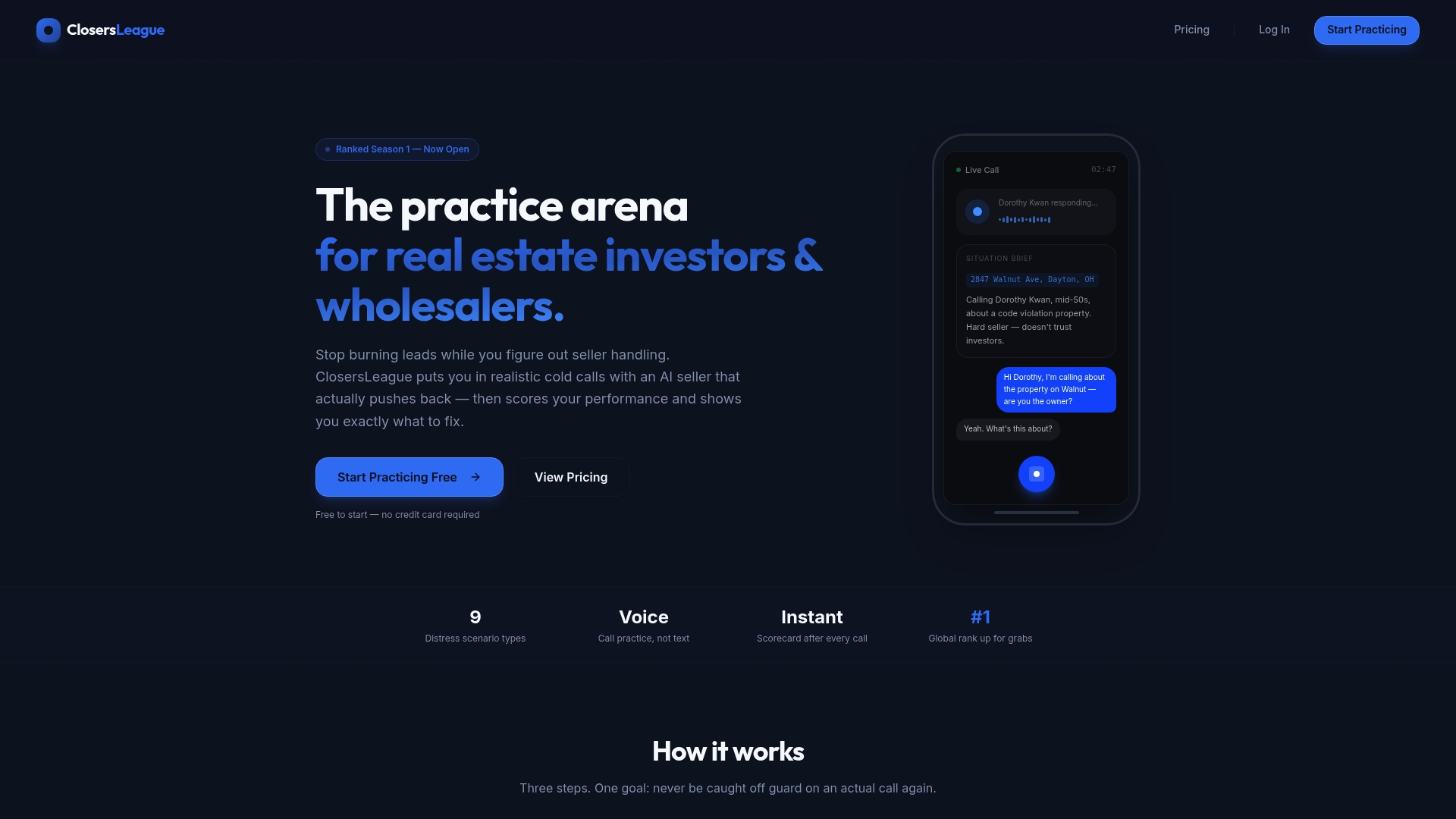
The result: higher contact-to-offer ratios, faster objection handling, and scripts that hold up under real seller pressure. Start your free trial at ClosersLeague and practice the calls your next campaign will generate before you make a single live dial.
Useful sources and further reading
The claims in this guide draw from a short list of authoritative sources. Each one is worth bookmarking.
- Harvard Business Review — How to Fit Into Your Customers’ Multi-Channel Lives: The foundational customer-journey framing for multi-channel strategy. Explains why message timing and channel fit matter more than channel count.
- Google — Integrated Measurement Framework: Google’s case for combining MMM, attribution, and experiments. The most practical measurement guide available at no cost.
- Google — Drive Business Goals with Modern Measurement: Covers how feeding experimental lift into MMM improves ROAS accuracy. Useful for investors scaling paid media.
- Ascend2 — Multi-Channel Marketing 2022: Survey data on integration benefits and attribution challenges. The 95% integration-improves-targeting finding comes from here.
- Ascend2 — Multi-Channel Marketing 2024: Updated benchmarks on data quality, automation, and AI impact. The 70% AI-influence figure and the disconnected-stack pain-point data are sourced here.
Key statistics at a glance:
| Statistic | Source | Year |
|---|---|---|
| 95% of marketers say integrated channels improve targeting | Ascend2 | 2022 |
| Data quality cited as essential by marketers | Ascend2 | 2024 |
| Accurate measurement cited as essential by marketers | Ascend2 | 2024 |
| 70% of marketers identify AI/ML as highly influential | Ascend2 | 2024 |
| Disconnected tech stacks as a pain point rose from 11% to 17% | Ascend2 | 2024 |
This article is general educational information, not legal or compliance advice. Verify current TCPA, Do-Not-Call, and SMS consent requirements with a qualified attorney before launching any outreach program.
FAQ
Why use multi-channel marketing instead of cold calling alone?
Single-channel outreach fails when one list goes stale or one compliance rule changes. Multi-channel marketing spreads risk across phone, SMS, mail, and email so you reach distressed sellers through whichever channel they respond to first.
What channels work best for reaching distressed property sellers?
Cold calls and SMS work best for urgent sellers like pre-foreclosure and tax-delinquent owners. Direct mail and email are more effective for probate heirs, out-of-state owners, and tired landlords who need more time before they’re ready to talk.
How does AI cold-calling training improve multi-channel results?
AI training raises your talk-to-offer ratio, so the higher contact volume generated by multi-channel outreach converts into more appointments. ClosersLeague offers scenario-based practice for every distressed seller type, with scorecards to identify exactly where calls break down.
What legal rules apply to multi-channel outreach in the US?
TCPA and the National Do Not Call Registry govern phone and SMS outreach. SMS requires explicit written consent before sending marketing messages. Always consult qualified legal counsel before launching a phone or SMS sequence.
How long before a multi-channel campaign shows results?
A well-structured 6-week campaign typically generates measurable contact rates by week two and qualified leads by weeks four through six. Most deals close from the 3rd through 6th touch, not the first.